MCP 0208-A17342 Panel Mount Double Pcb Rows Copper FR-4
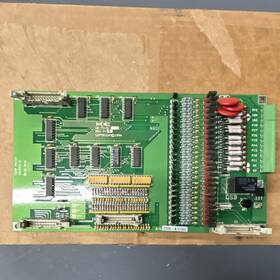
( Brand: Mcp ), ( Manufacturer Part Number: 0208-A17342 ), ( Part Type: Panel Mount ), ( Pcb Type: Double-sided Pcb ), ( Number Of Rows: 19 ), ( Number Of Tie-points: 40 ), ( Operating Voltage: 5v ), ( Material: Fr-4, Copper )
Review MCP Panel Mount Double sided Pcb Rows Fr-4 Copper
The **MCP0208-A17342 Panel-Mount Double-Sided PCB** is a high-performance, precision-engineered circuit board designed for demanding applications requiring compact, reliable, and efficient electronic integration. Manufactured using **FR-4 copper-clad laminate**, this PCB offers an optimal balance of mechanical stability, thermal conductivity, and electrical performance, making it ideal for embedded systems, industrial controls, automotive electronics, and telecommunications equipment. With a **double-sided construction**, it provides enhanced routing flexibility, allowing for complex circuit designs without the need for additional layers or costly multilayer assemblies. The board features **19 rows of through-hole and surface-mount pads**, meticulously arranged to accommodate a wide variety of passive and active components, including resistors, capacitors, connectors, and integrated circuits. Its **panel-mount design** ensures easy installation into enclosures, chassis, or backplanes, with precise cutouts and mounting holes pre-drilled for secure and repeatable assembly. The copper plating adheres to strict industry standards, ensuring excellent conductivity and durability, while the FR-4 substrate provides resistance to moisture, chemicals, and mechanical stress, extending the lifespan of the assembled circuitry. Whether used in prototyping, production, or high-reliability applications, this PCB delivers a robust foundation for custom electronic solutions, combining versatility with engineering precision to meet the most exacting performance requirements.
### **Pros and Cons of buying a MCP0208-A17342 (Panel-Mount, Double-Sided PCB, 19 Rows, FR-4 Copper)**
#### **Pros:**1. **Reliability and Durability** FR-4 is a widely used, high-quality fiberglass-reinforced epoxy laminate known for its stability, resistance to moisture, and long-term performance in electronic applications. It is suitable for general-purpose and moderate environmental conditions.
2. **Standardized Material** FR-4 is a well-documented material with extensive industry support, meaning you can easily find replacement parts, technical documentation, and compatibility with standard manufacturing processes.
3. **Cost-Effective** Being a common substrate, FR-4 is relatively inexpensive compared to specialized materials like Rogers or PTFE, making it a budget-friendly option for most applications.
4. **Ease of Manufacturing** Double-sided PCBs with FR-4 are widely supported by PCB manufacturers, reducing lead times and production costs. Many prototyping and mass-production facilities have optimized workflows for this material.
5. **Good Electrical Performance for Basic Applications** While not as high-performance as specialized substrates, FR-4 provides adequate dielectric properties for low-frequency and general-purpose circuits (e.g., control boards, sensors, simple signal processing).
6. **Mechanical Strength** FR-4 offers sufficient rigidity for panel-mount applications, ensuring the PCB can be securely fastened without excessive warping or bending under normal operating conditions.
7. **Availability of Copper Thickness Options** The standard 1 oz (35 m) copper thickness is sufficient for most current-carrying needs, though heavier copper (e.g., 2 oz) can be added if required for specific traces or power distribution.
8. **Compatibility with Soldering and Assembly** FR-4 is compatible with through-hole, surface-mount, and mixed-technology assembly processes, making it versatile for various design approaches.
9. **Proven Track Record** Used in countless consumer, industrial, and commercial products, FR-4 has a long history of successful deployment, reducing risk for new designs.
10. **No Special Handling Required** Unlike materials sensitive to humidity or temperature (e.g., certain flexible PCBs), FR-4 does not require additional storage or handling precautions.
---
#### **Cons:**1. **Limited High-Frequency Performance** FR-4 has higher dielectric loss and lower dielectric constant variability compared to materials like Rogers or PTFE, making it unsuitable for high-speed digital signals (e.g., GHz-range clocks, RF applications) without careful design (e.g., controlled impedance traces).
2. **Moisture Absorption** While FR-4 is relatively resistant to moisture, prolonged exposure to high humidity can lead to slight dimensional changes or increased dielectric constant, potentially affecting signal integrity in sensitive circuits.
3. **Thermal Limitations** FR-4 has a lower glass transition temperature ( 130 150 C) compared to some high-temperature laminates. Prolonged exposure to high temperatures (e.g., in power electronics or under-the-hood applications) may cause warping or delamination over time.
4. **Not Ideal for Flexible Applications** FR-4 is rigid and not designed for bending or flexible circuits. If your design requires flexibility, a flexible PCB (e.g., polyimide-based) would be more appropriate.
5. **Higher Dielectric Constant Variability** The dielectric constant (Dk) of FR-4 can vary more than specialized substrates, leading to unpredictable signal propagation speeds and potential reflections in high-speed traces. This requires careful trace length matching and termination.
6. **Limited Chemical Resistance** While FR-4 resists most common solvents and acids, it may degrade over time in harsh chemical environments (e.g., strong acids, solvents, or prolonged exposure to cleaning agents).
7. **Potential for Warping** If not designed with proper layer balance or cooling, FR-4 PCBs can warp during soldering or thermal cycling, especially in larger panels. This may require additional mechanical support or design adjustments.
8. **Lower Thermal Conductivity** FR-4 does not dissipate heat well, which can be a limitation in high-power applications. Additional heat sinks or thermal vias may be needed to manage junction temperatures.
9. **Not Suitable for Extreme Environments** FR-4 is not ideal for applications with extreme temperature fluctuations, high vibration, or exposure to UV radiation (e.g., outdoor enclosures without protection). Specialized laminates (e.g., CEM-3, polyimide) may be required.
10. **Signal Integrity Challenges in Dense Layouts** Due to its higher Dk and loss tangent, FR-4 can introduce more crosstalk and signal degradation in densely packed high-speed traces. Extra spacing, shielding, or differential pairs may be necessary.
---
### **Conclusion:**The **MCP0208-A17342 (panel-mount, double-sided FR-4 PCB with 19 rows)** is a **practical and cost-effective choice** for a wide range of general-purpose electronic applications, including control boards, sensor interfaces, low-speed digital circuits, and power distribution panels. Its strengths lie in its **reliability, ease of manufacturing, and compatibility with standard assembly processes**, making it ideal for prototyping, low-to-moderate volume production, and non-critical signal paths.
However, it is **not suitable** for high-frequency, high-speed, or high-precision applications where signal integrity is critical. If your design involves **GHz-range signals, RF circuits, or extreme environmental conditions**, a specialized substrate (e.g., Rogers 4003, PTFE, or polyimide) would be a better investment. Similarly, if **thermal management, flexibility, or chemical resistance** are key requirements, FR-4 may need supplementation (e.g., with heat sinks, thermal vias, or protective coatings).
For most **industrial, consumer, or general-purpose electronics**, FR-4 remains a **safe and economical default choice**, provided the design accounts for its limitations (e.g., controlled impedance traces, proper grounding, and thermal management).
---
### **Recommendation:** - **Buy the MCP0208-A17342 if:**- Your application is **low to moderate speed** (e.g.,
- You prioritize **cost efficiency and ease of manufacturing**.
- The PCB will operate in **moderate environmental conditions** (not extreme heat, vibration, or chemical exposure).
- You are prototyping or producing **small to medium volumes** where FR-4 s advantages outweigh its drawbacks.
- **Consider an alternative (e.g., Rogers, PTFE, or polyimide) if:**- Your design requires **high-speed signals, RF, or precise impedance control**.
- The PCB will be exposed to **extreme temperatures, humidity, or mechanical stress**.
- You need **better thermal conductivity or flexibility**.
- Signal integrity is **critical** (e.g., high-density interconnects, differential pairs with tight tolerances).
- **Additional Tips for FR-4 Use:**- Use **controlled impedance traces** if high-speed signals are present, even on FR-4.
- Ensure **proper grounding and decoupling** to minimize noise.
- Add **thermal vias or heat sinks** if power dissipation is a concern.
- Consider **panelization and mechanical reinforcement** (e.g., stiffeners) if warping is a risk.
- Test prototypes under **real-world conditions** to validate performance before mass production.
In summary, the MCP0208-A17342 is a **solid, no-frills PCB solution** for most standard applications, but its suitability depends on balancing cost, performance needs, and environmental factors. Always validate your design with simulations or prototypes before finalizing production.
Details:
MCP 0208-A17342 Panel Mount Double-Sided PCB, 19 Rows, FR-4 Copper.
part #: 0208a17342 price
- $199.95
specifications pcbemdev:
- brand: Mcp
- mpn: 0208-a17342
- part type: Panel Mount
- pcb type: Double-sided Pcb
- number of rows: 19
- number of tie-points: 40
- operating voltage: 5v
- material: Fr-4, Copper
returns pcbemdev:
- policy: No Returns
general pcbemdev:
- condition: Used
- Electronic Components Semiconductors > Circuit Boards Prototyping > Printed Circuit Boards PCBs
seller pcbemdev:
- # reviews: 0
- city: Grandview, Texas
- rating: 0.0%
offer pcbemdev:
- started: February 27, 2026
- best offers: True
- availability: In Stock
- options: Ship-to-home
- sold: 0
- quantity: 1
shipping pcbemdev:
- type: Calculated
- service: USPS Ground Advantage
- cost: $8.46
- carrier: USPS
- class: Standard
- transit: 5-11 Days
payments pcbemdev:
- credit card: Mastercard
- wallet: Paypal
- other