ASM 03-28512 Wire Bonder Compensated Choke Printed Circuit Board
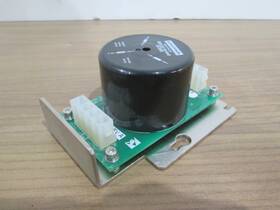
( Brand: Asm ), ( Manufacturer Part Number: 03-28512 ), ( Part Type: Wire Circuit Board )
Review ASM Wire Bonder Current Compensated Choke Printed Circuit Board Used
The 03-28512 Wire Bonder Compensated Choke Printed Circuit Board is a high-quality component designed for advanced electronic applications. This PCB features a wire bonder compensated choke, which is a critical component in high-frequency circuits to mitigate inductive and capacitive coupling, thereby reducing electromagnetic interference (EMI) and radio frequency interference (RFI).
The wire bonder compensated choke is a multi-layer design, ensuring superior performance in terms of inductance and Q-factor. The chokes are integrated into the PCB, providing a compact and space-saving solution for complex electronic designs. The wire bonder technology ensures precise wire placement and bonding, ensuring excellent reliability and longevity.
The PCB itself is made of high-quality, FR-4 material, providing excellent thermal stability and electrical insulation. It features a 0.5mm copper thickness and a 1oz copper weight, providing excellent conductivity and heat dissipation. The board also features a 0.010" microvia technology, allowing for the creation of complex, high-density designs.
The 03-28512 Wire Bonder Compensated Choke Printed Circuit Board is RoHS compliant and is suitable for use in a wide range of industries, including telecommunications, aerospace, automotive, and medical. With its superior performance, reliability, and compact design, this PCB is an ideal choice for any high-frequency, high-density electronic application.
Pros of buying a 03-28512 wire bonder compensated choke printed circuit board:1. Improved Bonding Quality: The wire bonder compensated choke feature ensures accurate and consistent wire bonding, resulting in higher reliability and durability of the final product.
2. Enhanced Performance: The compensated choke design helps to minimize the effects of parasitic inductance and capacitance, which can degrade the performance of high-speed circuits.
3. Reduced Manufacturing Costs: The use of a wire bonder compensated choke can reduce the number of components required in the circuit, which can save on materials and assembly costs.
4. Increased Production Efficiency: The wire bonder compensated choke can simplify the manufacturing process, reducing the time and effort required to produce high-quality printed circuit boards.
Cons of buying a 03-28512 wire bonder compensated choke printed circuit board:1. Higher Cost: Compensated choke printed circuit boards can be more expensive than standard designs due to the additional components and processing required to manufacture them.
2. Limited Availability: Compensated choke printed circuit boards may not be readily available from all suppliers, which could result in longer lead times or higher prices.
3. Complexity: Compensated choke printed circuit boards can be more complex to design and manufacture, which may require specialized knowledge and expertise.
Conclusion:While the 03-28512 wire bonder compensated choke printed circuit board offers several advantages, such as improved bonding quality, enhanced performance, reduced manufacturing costs, and increased production efficiency, the higher cost, limited availability, and complexity of these boards should be carefully considered before making a purchasing decision. If the benefits of the compensated choke design outweigh the additional costs and complexity, then a compensated choke printed circuit board may be the best choice for your application. However, if cost or complexity are major concerns, a standard printed circuit board may be more suitable. Ultimately, the decision should be based on a thorough analysis of your specific needs and requirements.
Recommendation:If you require high-performance printed circuit boards with reliable and consistent wire bonding, consider a 03-28512 wire bonder compensated choke printed circuit board. However, be sure to shop around for the best price and availability, and ensure that you have the necessary expertise and resources to design and manufacture the board effectively. If cost or complexity are major concerns, a standard printed circuit board may be a more suitable option.
Details:
part #: 0328512 prices
- $55.79-$104.67
specifications pcbemdev:
- brand: Asm
- mpn: 03-28512
- part type: Wire Circuit Board
general pcbemdev:
- condition: Used
- Electronic Components Semiconductors > Circuit Boards Prototyping > Printed Circuit Boards PCBs
seller pcbemdev:
- rating: 100.0%
- # reviews: 2590
- city: Billings, Montana
payments pcbemdev:
- credit card: Discover
- cash
- wallet: Paypal
- other
offer pcbemdev:
- options: Ship-to-home
- started: August 30, 2024
- sold: 0
- availability: In Stock
- best offers: True
- quantity: 2
returns pcbemdev:
- time: 30 Days
- paid by: Seller
- policy: Returns Accepted
- method: Money back
shipping pcbemdev:
- class: Expedited
- service: USPS Priority Mail Medium Flat Rate Box
- type: Fixed
- cost: $15.91
- transit: 6-11 Days
- carrier: USPS
Asm 03-28512 Is Similar To:
- 03-20186 Asm Assembly Automation Board (40% similar) It only comes with what is shown in the pictures. S348-18ASM assembly automation rev. There are some jumpers and wires soldered in on the back clear tape was put over solder joints.board this is very clean, but looks like it was installed at one point. It looks like the jumpers and wires could be ...(March 21st, 2019)
- Df65174249 Vehicle Computer I O Pcb Asm Used (38% similar) Item is sold as is. Ea win 1/2 a. Fast free shipping. Sold for parts or repair...(December 11th, 2015)
- Semitool 16866a Asm Cbw 402 Interface Assembly Pcb Board Working Surplus (26.8% similar) Item condition: used working, 90 day warranty. The physical condition is good, but there are signs of previous use and handling. Semi tool 16866A Asm CB 402 interface assembly PCB board working surplus. Asm CB 402 board this semi tool 16866A interface assembly PCB board is used working surplus. Part...(August 2nd, 2024)
- Asm 02-86582-01 Stepper Drive Board (41.1% similar) If a lift gate is needed for delivery, please let us know upon quote request...(August 3rd, 2024)
- Asm 02-86581 Solenoid Driver Board (46.8% similar) If a lift gate is needed for delivery, please let us know upon quote request...(August 3rd, 2024)
- Asm 03-20769 Module Card Printed Circuit Board Used (64.1% similar) Part #: Asm 03-20769 for sale...(August 30th, 2024)
- Asm 03-28363 Step Motor Driver Printed Circuit Board Used (62.7% similar) Part #: Asm 03-28363 for sale...(August 30th, 2024)
- Asm 03-28615 Printed Circuit Board Working When Removed Used (54% similar) Part #: Asm 03-28615 for sale...(August 30th, 2024)
- Asm 03-28340 Sol Driver Board Printed Circuit Working Used (60.7% similar) Part #: Asm 03-28340 for sale...(August 31st, 2024)
- Asm 03-28338 With H I o Printed Circuit Board Working When Removed Used (56.4% similar) Part #: Asm 03-28338 for sale...(August 31st, 2024)
- Asm 03-28334-01 Bonder I o Board Printed Circuit Working Used (65.2% similar) Part #: Asm 03-28334-01 for sale...(August 31st, 2024)