ACROSSER/TELEDYNE Boards 05559 PCA05560 AR-B130 PCA04258-0000 100E
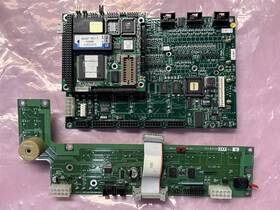
( Brand: Acrosser/teledyne ), ( Manufacturer Part Number: 05560 ), ( Part Type: Board )
Review ACROSSER/TELEDYNE Boards From Model
The **Acrosser/Teledyne PCA05560, PCA04258-0000, AR-B130, and 05560/05559** series of industrial-grade Ethernet and serial communication boards represent a sophisticated suite of modular I/O solutions designed for demanding automation, control, and data acquisition applications. These devices are engineered to bridge the gap between field-level sensors, actuators, and higher-level supervisory systems, offering seamless integration with PLCs, SCADA platforms, and other industrial networks. The **PCA05560** and **PCA04258-0000** are part of Teledyne s **Acrosser** line, renowned for their reliability, flexibility, and adherence to rigorous industrial standards, ensuring robust performance in harsh environments such as manufacturing plants, energy infrastructure, and process control facilities.
The **05560** and **05559** models are high-performance **Ethernet/IP (CIP) and Modbus TCP** communication boards, respectively, enabling real-time data exchange over industrial Ethernet networks. The **05560** is optimized for **Ethernet/IP**, a widely adopted protocol in Allen-Bradley and Rockwell Automation ecosystems, allowing for efficient device integration with minimal latency. Its robust design supports high-speed, deterministic communication, making it ideal for applications requiring precise synchronization, such as motion control, robotics, or synchronized I/O operations. The **05559**, on the other hand, excels in **Modbus TCP** environments, providing a versatile solution for systems that rely on this open, widely supported protocol, including legacy installations or mixed vendor setups. Both boards feature **10/100 Mbps Ethernet connectivity**, ensuring compatibility with modern industrial networks while maintaining backward compatibility with older systems.
The **AR-B130** is a specialized **serial communication board** designed for high-speed, bidirectional data transfer via **RS-232, RS-422, or RS-485** interfaces, supporting protocols such as **Modbus RTU, Profibus DP, and ASCII/HDLC**. This board is particularly valuable in environments where serial communication remains the standard, such as in process automation, building automation, or interfacing with legacy devices. Its **isolated inputs and outputs** enhance safety and noise immunity, while its **configurable baud rates, parity settings, and flow control options** provide the flexibility needed to adapt to diverse serial communication requirements. The **AR-B130** is also equipped with **diagnostic features**, including error detection and reporting, which facilitate proactive maintenance and troubleshooting.
All these boards share a common **modular, DIN-rail-mountable design**, allowing for easy installation in control panels or distributed I/O systems. Their **compact yet robust construction** ensures durability in environments exposed to temperature fluctuations, vibration, and electromagnetic interference. The **PCA05560** and **PCA04258-0000** incorporate **Teledyne s proprietary Acrosser technology**, which enhances performance through optimized packet handling, reduced latency, and improved network efficiency. Additionally, these boards support **VxWorks real-time operating system**, enabling deterministic timing critical for synchronized control applications. The **100e** designation in some models indicates compliance with **IEC 61131-2** and other industry standards, ensuring seamless integration with IEC-compliant automation systems.
For users requiring **expanded functionality**, these boards can be paired with **Acrosser s extensive range of I/O modules**, including digital I/O, analog input/output, and special-purpose modules for temperature, pressure, or position sensing. The **PCA05560** and **PCA04258-0000** also support **remote I/O configurations**, allowing for distributed control architectures where field devices are located far from the central control system. Their **web-based configuration tools** simplify setup, enabling engineers to program communication parameters, define data structures, and monitor network performance without extensive programming knowledge.
In summary, the **Acrosser/Teledyne 05560, 05559, PCA05560, AR-B130, and PCA04258-0000** boards are indispensable components for modern industrial automation, offering a blend of **high-speed communication, protocol flexibility, and rugged reliability**. Whether deployed in **Ethernet/IP, Modbus TCP, or serial-based systems**, these devices deliver the performance and scalability required to meet the challenges of today s complex automation environments. Their **modularity, diagnostic capabilities, and adherence to industrial standards** make them a trusted choice for engineers and system integrators seeking to build resilient, high-performance control solutions.
### **Pros and Cons of Buying Acrosser/Teledyne PCA05560, PCA04258-0000, AR-B130, and Similar Industrial PC Boards (Model Numbers: 05560, 05559, 100E)**
#### **Overview**
Acrosser (now part of Teledyne e2v) manufactures rugged industrial PC boards designed for embedded computing, automation, and industrial control applications. These boards are commonly used in factory automation, medical devices, transportation, and harsh-environment computing. Below is a detailed analysis of their advantages and drawbacks.
---
### **Pros**
1. **Rugged and Reliable Design**
- These boards are built for industrial use, featuring robust construction to withstand vibrations, temperature fluctuations, and electromagnetic interference (EMI).
- Compliance with standards like **IP65/IP67** (dust and water resistance) and **MIL-STD-810G** (shock/vibration resistance) ensures longevity in demanding environments.
- High-quality components reduce failure rates in long-term deployments.
2. **Wide Range of Connectivity Options**
- Support for **PCIe, PCI, ISA, USB, Ethernet (Gigabit/LAN), RS-232/422/485, CAN, and serial interfaces** makes them versatile for integration with sensors, actuators, and other industrial devices.
- Some models include **mPCIe, SATA, and SD card slots** for expandability.
- **Dual Ethernet ports** (with optional PoE) enhance network redundancy and reliability.
3. **Compatibility with Common Operating Systems**
- Supports **Windows (Embedded, IoT, 10), Linux (Ubuntu, Yocto, custom), and real-time OS (QNX, VxWorks)**.
- Pre-installed drivers and BIOS options simplify deployment in embedded systems.
4. **Power Efficiency and Flexibility**
- **Wide input voltage ranges** (e.g., 9V 36V DC) allow operation in diverse power environments.
- **Low power consumption** (e.g.,
- **ATX, Pico-ATX, or custom form factors** fit into various chassis and enclosures.
5. **Extensive Documentation and Support**
- Detailed **datasheets, schematics, and development resources** are available from Teledyne s website.
- **Technical support** from Acrosser/Teledyne is generally responsive, though response times may vary.
- **Third-party compatibility** with popular industrial components (e.g., sensors, I/O modules) is well-documented.
6. **Cost-Effective for High-Volume or Long-Term Use**
- While initial costs may be higher than consumer-grade boards, their **longevity and reliability** reduce long-term replacement expenses.
- **OEM/bulk pricing** is often available for large orders, making them cost-competitive for industrial deployments.
7. **Global Availability and Distribution**
- Sold through **authorized distributors (e.g., Avnet, Digi-Key, Mouser)** and direct from Teledyne, ensuring availability in most regions.
- **Stock availability** is generally good, though lead times for custom configurations may vary.
8. **Scalability and Upgrade Paths**
- Many models support **future CPU upgrades** (e.g., switching from Intel Atom to Xeon or AMD EPYC via socket compatibility).
- **Modular I/O expansion** (via PCIe or ISA) allows scaling without replacing the entire board.
9. **Security Features**
- Some models include **TPM (Trusted Platform Module) chips** for secure boot and encryption.
- **Hardware-based security** (e.g., secure boot, I2C lock) protects against firmware tampering.
10. **Proven Track Record in Industrial Applications**
- Used in **automation, medical imaging, defense, and transportation**, indicating reliability in critical systems.
- **Field-proven designs** reduce risks of unexpected failures in production environments.
---
### **Cons**
1. **Higher Upfront Cost**
- Compared to consumer-grade PC boards (e.g., Raspberry Pi, BeagleBone), industrial boards like these are **2 10x more expensive**.
- Custom configurations (e.g., specific I/O, memory upgrades) can further increase costs.
2. **Limited Consumer-Grade Features**
- **No integrated graphics** (for display output) in many models; external GPUs or frame buffers may be required.
- **Slower performance** compared to high-end desktop CPUs (e.g., Intel Core i9 or AMD Ryzen) due to power and thermal constraints.
- **No built-in Wi-Fi/Bluetooth** in most industrial variants (requires add-on modules).
3. **Complexity in Development and Integration**
- **Steeper learning curve** for developers unfamiliar with embedded systems or industrial protocols.
- **Custom firmware or OS tuning** may be required for non-standard applications.
- **Compatibility testing** with third-party hardware (e.g., sensors, actuators) can be time-consuming.
4. **Potential for Long Lead Times**
- **Custom or discontinued models** may have extended lead times, especially for older part numbers (e.g., 05559).
- **Stock availability** can fluctuate, requiring advance ordering for critical projects.
5. **Limited Consumer Support**
- **No official consumer support** (e.g., no "help desk" for hobbyists); support is geared toward industrial customers.
- **Documentation may lack depth** for advanced use cases (e.g., low-level hardware interactions).
6. **Physical Size Constraints**
- Some models (e.g., **PCA05560**) are **larger than consumer boards**, which may limit integration in space-constrained applications.
- **Custom enclosures** may be needed for compact deployments.
7. **Potential for Obsolescence**
- **Older models (e.g., 05559, 100E)** may become obsolete as Teledyne transitions to newer architectures (e.g., Intel Apollo Lake Tiger Lake).
- **CPU upgrades** may require board replacement rather than simple socket swaps in some cases.
8. **Licensing and OS Costs**
- **Windows Embedded or IoT licensing** can add to the total cost, especially for large deployments.
- **Custom Linux builds** may require additional development effort to optimize performance.
9. **Limited DIY/Prototype Flexibility**
- Unlike Arduino or Raspberry Pi, these boards are **not designed for rapid prototyping** or DIY modifications.
- **Soldering or hardware changes** are discouraged due to warranty voids and reliability risks.
10. **Dependence on Vendor Lock-In**
- **Proprietary connectors and form factors** can make migration to other vendors difficult.
- **Long-term support** may be limited if Teledyne discontinues the product line without a direct replacement.
---
### **Comparison of Specific Models**
While the general pros and cons apply across the board, here s a brief differentiation: - **PCA05560 (05560):**- **Pros:** High I/O density, PCIe support, ruggedized for harsh environments.
- **Cons:** Larger form factor, higher power draw than compact alternatives.
- **PCA04258-0000:**- **Pros:** Compact, low power, good for portable or battery-powered applications.
- **Cons:** Limited expansion options compared to larger boards.
- **AR-B130:**- **Pros:** Focused on **automation and control**, with strong I/O and real-time capabilities.
- **Cons:** May lack modern CPU options; better suited for legacy systems.
- **05559 / 100E:**- **Pros:** **Legacy reliability**, widely used in older industrial systems.
- **Cons:** **Outdated CPU options**, potential for obsolescence; may lack modern security features.
---
### **Conclusion and Recommendation**
#### **When to Buy These Boards:**1. **For Industrial or Rugged Applications**
- If your project requires **vibration resistance, wide temperature ranges, or IP-rated enclosures**, these boards are ideal.
- **Factory automation, medical devices, transportation, or defense systems** benefit from their reliability.
2. **For Long-Term Deployments**
- If the system will run for **5 years**, the upfront cost is justified by reduced downtime and maintenance.
3. **When Compatibility with Existing Systems is Critical**
- If you need **specific I/O (e.g., RS-485, CAN, PCIe)** or **legacy software support**, these boards integrate smoothly.
4. **For Teams with Embedded Expertise**
- If your team has experience with **industrial computing, real-time OS, or custom firmware**, the complexity is manageable.
5. **When Cost per Unit Over Time is the Priority**
- For **high-volume production**, the reliability and longevity offset the higher initial cost.
#### **When to Avoid These Boards:**1. **For Consumer or Hobbyist Projects**
- If you re building a **home automation system, IoT gadget, or educational prototype**, cheaper alternatives (Raspberry Pi, BeagleBone, Jetson
Details:
ACROSSER 05559 PCA05560 W/ AR-B130 PCA04258-0000 BOARDS FROM TELEDYNE model 100E, ARE USED AND APPEAR TO BE IN WORKING ORDER, WERE PULLED A FULLY FUNCTIONAL MACHINE THAT WAS BROKEN DOWN FOR PARTS, INCLUDED AN PCA 05560 BOARD, 04258-0000 COMMUNICATION CIRCUIT BOARD ALL 100E FLUORERSCENCE S02 ANALYZER UNIT.
part #: 05560 prices
- $250.00-$300.00
specifications pcbemdev:
- brand: Acrosser/teledyne
- mpn: 05560
- part type: Board
seller pcbemdev:
- city: Jackson, Mississippi
- # reviews: 1454
- rating: 100.0%
shipping pcbemdev:
- transit: 3-9 Days
- service: Economy
- type: Fixed
- cost: $12.99
- class: Economy
offer pcbemdev:
- best offers: True
- quantity: 1
- availability: In Stock
- options: Ship-to-home
- sold: 0
- started: April 14, 2026
payments pcbemdev:
- credit card: Discover
- wallet: Paypal
- other
returns pcbemdev:
- policy: Returns Accepted
- method: Money back
- time: 30 Days
- paid by: Buyer
general pcbemdev:
- Electronic Components Semiconductors > Circuit Boards Prototyping > Printed Circuit Boards PCBs
- condition: Used
Acrosser/teledyne 05560 Is Similar To:
- Teledyne acrosser 057020100 Pca Ar-b1320 04258-0000 Boards From Model 400e (72.6% similar) Teledyne pca 0570201 acrosser AR-B1320, 04258-0000 boards from 400E, are used and appear to be in working order, were pulled a fully functional machine that was broken down for parts, included 057020100 circuit board motherboard, across AR-B1320 CPU board, communication 04394 commas GFC7000E all API...(April 14th, 2026)
- Teledyne acrosser 04069 04068 Chemiluscence Nox Analyzer 200e Parts-boards And Display Module (33% similar) Teledyne cheerlessness nix analyzer 200E parts-boards display module, items are used and appear to be in working order, were pulled from a fully functional machine, included the listing pca 04069/04068 w/ AR-B1320 attached, 04258-0000/04257, API Ethernet interface 04394, retake iron CU40026-TW200A ...(April 15th, 2026)
- Teledyne acrosser 05702 Fluorescence So2 Analyzer 100eu Parts-boards And Display Module (36.5% similar) Classification used good condition hardware functional. If manuals, software, packaging etc. Are not mentioned or pictured, they are included...(April 15th, 2026)