PARVUS 0713B-01 Ethernet Dual Card
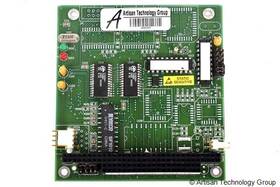
( Brand: Parvus ), ( Manufacturer Part Number: 0713B-01 ), ( Part Type: Card ), ( Country Of Origin: United States ), ( Item Length: 12 )
Review PARVUS Ethernet Dual Serial Card
The **Parvus 0713B-01 Ethernet Dual Card** is a high-performance, ruggedized industrial-grade network interface solution designed to deliver robust and reliable connectivity in demanding embedded computing environments. Engineered for mission-critical applications, this dual-port Ethernet card integrates seamlessly into Parvus s line of compact, fanless, and low-power industrial computers, such as the 0713 series, while offering enterprise-level networking capabilities. Built with a focus on durability and efficiency, the 0713B-01 features two independent Gigabit Ethernet ports, each supporting speeds up to 10/100/1000 Mbps, ensuring high-bandwidth data transfer for real-time applications like automation, surveillance, IoT gateways, and industrial control systems. Its robust construction includes a metal enclosure with reinforced connectors, shielding against electromagnetic interference (EMI) and ensuring long-term reliability in harsh environments, such as those exposed to temperature fluctuations, vibration, or dust. The card supports advanced networking protocols, including VLAN tagging, Wake-on-LAN (WoL), and Power over Ethernet (PoE) compatibility, making it versatile for deployments requiring energy-efficient power delivery or network segmentation. With low power consumption typically under 2 watts it minimizes thermal load on the host system, allowing for compact, fanless operation in space-constrained industrial settings. Additionally, the 0713B-01 is designed with backward compatibility in mind, supporting legacy and modern TCP/IP stacks, as well as industry-standard drivers for seamless integration with Linux, Windows Embedded, and other real-time operating systems. Whether deployed in remote monitoring stations, military-grade systems, or automated manufacturing cells, this Ethernet card provides a dependable foundation for high-speed, low-latency communication, ensuring uninterrupted performance even in the most challenging operational conditions.
The **Parvus 0713B-01** is a dual-port Ethernet PCIe card designed for industrial and embedded systems, offering high reliability and performance for networking applications. Below is a detailed breakdown of its pros and cons, followed by a conclusion and recommendation.
---
### **Pros of the Parvus 0713B-01**
1. **Dual Gigabit Ethernet Ports**
The card provides two independent Gigabit Ethernet (10/100/1000 Mbps) ports, which is ideal for redundancy, load balancing, or connecting to multiple networks simultaneously. This is particularly useful in industrial environments where network reliability is critical.
2. **Industrial-Grade Design**
The card is built for rugged environments, featuring robust construction, proper shielding, and compliance with industrial standards (e.g., conduction cooling, EMI/EMC compliance). It is suitable for applications in harsh conditions such as manufacturing, automation, or outdoor deployments.
3. **PCI Express (PCIe) Interface**
The card uses a PCIe x1 slot, which provides faster data transfer rates compared to older PCI or PCI-X interfaces. This ensures minimal latency and high throughput for network-intensive tasks.
4. **Low Latency and High Performance**
The dual Gigabit Ethernet ports are optimized for low-latency communication, making it suitable for real-time applications like industrial control systems, video surveillance, or data acquisition.
5. **Support for Multiple Protocols**
The card supports standard Ethernet protocols (TCP/IP, UDP, etc.) and can be configured for advanced networking features like VLANs, QoS (Quality of Service), and teaming (bonding) for improved reliability and performance.
6. **Compatibility with Common Operating Systems**
The card is compatible with a wide range of operating systems, including Linux (e.g., Ubuntu, CentOS), Windows (Server and Embedded), and real-time OSes like QNX or VxWorks. This flexibility makes it versatile for different applications.
7. **Hot-Swappable (Depending on System)**
Many systems that support PCIe cards allow for hot-swapping, meaning the card can be inserted or removed without powering down the entire system. This is a convenience for maintenance and upgrades.
8. **Cost-Effective for Dual-Port Needs**
For applications requiring two Ethernet ports, purchasing a dedicated card like this can be more cost-effective than using onboard ports or multiple single-port cards, especially in systems with limited onboard networking options.
9. **Supports Wake-on-LAN (WoL)**
The card often includes Wake-on-LAN functionality, allowing the system to be powered on remotely via the network, which is useful for remote management and maintenance.
10. **Backward and Forward Compatibility**
The card supports both 10/100 and 1000 Mbps speeds, ensuring compatibility with older and newer network infrastructure without requiring upgrades to the card itself.
---
### **Cons of the Parvus 0713B-01**
1. **PCIe Slot Requirement**
The card occupies a PCIe x1 slot, which may limit the number of available slots in the system for other expansion cards. This could be a constraint in systems with limited PCIe slots or those requiring additional peripherals.
2. **No Built-in Power Over Ethernet (PoE)**
The card does not support Power over Ethernet (PoE), meaning it cannot provide power to PoE-compatible devices like IP cameras or VoIP phones. If PoE is required, an additional PoE switch or injector would be needed.
3. **Limited Advanced Features**
While the card supports basic networking features, it may lack advanced features like SFP (Small Form-factor Pluggable) ports for fiber optics or support for 10G Ethernet. If these features are required, a different card (e.g., with SFP modules) would be necessary.
4. **Driver and Configuration Complexity**
Depending on the operating system, configuring the card (e.g., setting up teaming, VLANs, or advanced QoS) may require manual driver installation and network configuration. This could be a learning curve for users unfamiliar with networking hardware.
5. **Potential Compatibility Issues**
While the card is designed for broad compatibility, there may be rare instances where it does not work seamlessly with certain motherboards or operating systems, particularly in older or non-standard systems. Always verify compatibility with your specific hardware and OS.
6. **No Integrated Management Features**
The card lacks built-in management features like out-of-band management (e.g., iDRAC or IPMI), which are often found in enterprise-grade network cards. For advanced remote management, additional software or hardware may be required.
7. **Physical Size and Form Factor**
The card s physical dimensions may not fit in all systems, particularly those with space constraints or custom form factors. Always check the card s dimensions against your system s available slots.
8. **No Support for Advanced Networking Protocols (e.g., RDMA, SR-IOV)**
The card does not support advanced networking protocols like Remote Direct Memory Access (RDMA) or Single-root I/O Virtualization (SR-IOV), which are useful for high-performance computing or virtualization. If these features are critical, a different card would be needed.
9. **Limited Vendor Support for Long-Term Availability**
While Parvus is a reputable vendor, the long-term availability of drivers, firmware updates, and support for this specific model may vary. Always consider the vendor s support lifecycle before purchasing.
10. **No Built-in Security Features**
The card does not include built-in security features like hardware-based encryption or secure boot. Security must be managed at the OS or network level, which may require additional configuration.
---
### **Conclusion**
The **Parvus 0713B-01** is a solid choice for applications requiring **reliable, dual Gigabit Ethernet connectivity in industrial or embedded systems**. Its strengths lie in its **rugged design, low latency, and compatibility with a wide range of operating systems**, making it ideal for networking tasks in environments where reliability and performance are critical. However, it may not be suitable for applications requiring **PoE, advanced networking features, or high-end security**, as these are not supported by the card itself.
The card is particularly well-suited for:- Industrial automation and control systems.
- Data acquisition and monitoring systems.
- Embedded networking applications where redundancy and low latency are important.
- Systems where onboard networking is insufficient, and a dedicated card is preferred.
For users who need **PoE, fiber optics, or advanced networking features**, alternative cards (e.g., with SFP ports or PoE support) would be more appropriate. Additionally, users should ensure their system has an available PCIe x1 slot and verify compatibility with their specific OS and hardware.
---
### **Recommendation**
If your application requires:- **Two reliable Gigabit Ethernet ports** in an industrial or embedded system,
- **Low-latency, high-performance networking** without advanced features,
- **Compatibility with Linux, Windows, or real-time OSes**,
then the **Parvus 0713B-01** is an excellent and cost-effective choice.
However, if your application demands:- **PoE support** (e.g., for IP cameras or VoIP phones),
- **Fiber optic connectivity** (via SFP modules),
- **Advanced networking features** (e.g., RDMA, SR-IOV, or out-of-band management),
- **10G Ethernet or higher speeds**,
consider alternative cards like:- **Intel X550-T2** (for 10G and advanced features),
- **Mellanox ConnectX-3** (for high-performance networking),
- **PoE-capable cards** like the **Intel X520-T2** with PoE passthrough,
- **SFP-equipped cards** for fiber connectivity.
Always verify the specific requirements of your project and ensure the card meets them before purchasing. Additionally, check for **driver availability, vendor support, and long-term compatibility** with your system.
Details:
Are not included with this equipment unless pictured and/or listed in the above. Fast and hassle-free. Part Number: 0713B-01. Hours / Location.
part #: 0713b01 price
- $795.00
specifications pcbemdev:
- brand: Parvus
- mpn: 0713b-01
- part type: Card
- country of origin: United States
- item length: 12
general pcbemdev:
- Electronic Components Semiconductors > Circuit Boards Prototyping > Printed Circuit Boards PCBs
- condition: Used
returns pcbemdev:
- paid by: Buyer
- method: Money back
- policy: Returns Accepted
- time: 30 Days
seller pcbemdev:
- city: Champaign, Illinois
- rating: 99.9%
- # reviews: 17637
shipping pcbemdev:
- carrier: FedEx
- cost: $24.07
- service: FedEx Ground / FedEx Home Delivery, FedEx Standard Overnight, FedEx Ground Economy
- type: Calculated
- class: Standard, One-day, Economy
- transit: 5-10 Days
payments pcbemdev:
- credit card: Diners-club
- other
- wallet: Google-pay
offer pcbemdev:
- availability: In Stock
- sold: 0
- options: Ship-to-home
- started: April 4, 2026
- quantity: 2