PCB 149-27045 Precision Analog Board Module
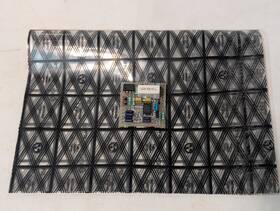
( Brand: Pcb ), ( Manufacturer Part Number: 149-27045 ), ( Part Type: Board Module )
Review PCB Precision Analog Board Assembly Module As Shown
The **PCB 149-27045 Precision Analog Board Module** is a high-performance, compact analog signal processing solution engineered for applications demanding exceptional accuracy, stability, and reliability in signal conditioning, amplification, and filtering. Designed with meticulous attention to component selection and circuit layout, this module integrates a robust combination of precision operational amplifiers, high-precision resistors, and low-noise capacitors to deliver superior performance across a wide range of analog signal applications. Its compact yet robust PCB construction ensures minimal thermal drift and electromagnetic interference (EMI), making it ideal for environments where signal integrity is paramount, such as industrial automation, medical instrumentation, aerospace avionics, and high-precision measurement systems.
At the core of this module lies a carefully optimized analog front-end architecture featuring **low-offset, low-drift op-amps** that maintain exceptional linearity and gain accuracy even under varying temperature conditions. The board incorporates **precision thin-film resistors** with tolerances as tight as 0.1% to ensure consistent performance in critical amplification and attenuation stages, while **high-stability ceramic or film capacitors** minimize phase shift and signal distortion. For applications requiring isolation or signal conditioning, the module may include **optocouplers or high-voltage isolation amplifiers**, depending on the specific variant, to safeguard sensitive circuitry from noise and ground loops while preserving signal fidelity.
The **PCB 149-27045** is built with a **multi-layer construction** to optimize signal routing, reduce crosstalk, and enhance impedance control, ensuring that high-frequency signals remain clean and well-defined. Surface-mount technology (SMT) components are strategically placed to minimize parasitic capacitance and inductance, while a **ground plane design** with controlled impedance paths further enhances signal integrity. The board s **through-hole or press-fit mounting options** provide flexibility for integration into larger systems, whether in a compact enclosure or on a chassis, while its **standardized pinout** simplifies interfacing with microcontrollers, ADCs, or other digital processing units.
For applications requiring **programmable gain or dynamic range adjustment**, the module may feature **digital potentiometers or configurable gain stages**, allowing users to fine-tune performance without physical component changes. Additionally, the board is designed with **overvoltage and short-circuit protection** to safeguard connected equipment, while **low-power consumption** ensures efficiency in battery-powered or energy-sensitive systems. The **PCB 149-27045** is also compatible with **industrial temperature ranges**, often operating reliably between **-40 C and 85 C**, making it suitable for harsh or variable environmental conditions.
Whether used in **sensor signal amplification, strain gauge conditioning, or high-precision analog filtering**, this module delivers a balance of performance, durability, and ease of integration. Its **modular design** allows for easy customization, whether through additional shielding, filtering components, or specialized connectors, ensuring that it can be tailored to meet the exact requirements of diverse analog signal processing tasks. With its emphasis on **precision engineering and signal integrity**, the **PCB 149-27045** stands as a dependable choice for engineers seeking a high-performance analog solution that minimizes errors and maximizes reliability in demanding applications.
The **PCB 149-27045 Precision Analog Board Module** is a specialized analog signal processing module often used in industrial, automotive, or high-precision measurement applications. Below is a detailed breakdown of its pros and cons, followed by a conclusion and recommendation.
---
### **Pros of buying a PCB 149-27045**
1. **High Precision and Accuracy**
The module is designed for precise analog signal processing, making it suitable for applications requiring accurate voltage/current measurements, filtering, or signal conditioning. Its analog components (e.g., op-amps, resistors, capacitors) are likely selected for low drift and high stability, which is critical in environments where small variations can affect performance.
2. **Modular and Flexible Integration**
As a standalone module, it can be easily integrated into larger systems without requiring extensive custom PCB design. This modularity reduces development time and simplifies troubleshooting, as issues can often be isolated to the module itself.
3. **Compatibility with Industrial Standards**
If this module is designed for industrial use (e.g., 4-20mA, RTD, thermocouple inputs), it may comply with standards like IEC 61131-2 or other automation protocols. This makes it a plug-and-play solution for control systems, PLCs, or data acquisition setups.
4. **Reduced Design Complexity**
For engineers or hobbyists working on analog projects, using a pre-built module eliminates the need to source and assemble discrete components like op-amps, filters, or amplifiers. This can lower the risk of errors in hand-soldering or component selection.
5. **Potential Cost-Effectiveness for Bulk Applications**
In high-volume production or industrial settings, purchasing pre-built modules may be cheaper than designing and manufacturing custom PCBs, especially if the module is reused across multiple projects.
6. **Documentation and Support**
Reputable manufacturers often provide detailed datasheets, schematics, and technical support, which can be invaluable for troubleshooting or customization. This is particularly useful for non-experts in analog design.
7. **Space Efficiency**
The module is likely compact, which can be advantageous in space-constrained applications (e.g., embedded systems, automotive ECUs, or portable devices).
8. **Pre-Tested and Reliable**
A well-manufactured module undergoes quality control testing, reducing the likelihood of defects compared to a DIY PCB assembly.
---
### **Cons of buying a PCB 149-27045**
1. **Limited Customization**
The module is likely designed for general-purpose use, meaning you may not be able to modify its internal components (e.g., changing gain settings, filter cutoffs, or input/output configurations). This can be restrictive if your application requires specific analog behavior.
2. **Potential for Overkill**
If your project only requires a fraction of the module s capabilities (e.g., you only need a single op-amp stage but the module includes a full signal chain), you may be paying for unused features. This could increase costs unnecessarily.
3. **Dependence on Vendor Support**
If the manufacturer discontinues the product or provides poor support, you may face difficulties obtaining replacements or technical assistance. This risk is higher with niche or older modules.
4. **Potential for Hidden Costs**
Additional expenses may arise from:- **Interface Components**: You might need to purchase connectors, shields, or mounting hardware not included with the module.
- **Power Supply Requirements**: The module may require a specific power supply (e.g., regulated voltage, current limits), which could add to your bill of materials.
- **Licensing or Software**: If the module requires proprietary software for configuration (e.g., calibration tools), there may be licensing fees.
5. **Compatibility Issues**
The module might not seamlessly integrate with your existing system due to:- **Signal Levels**: Mismatches in voltage/current ranges (e.g., the module expects 0-10V input but your sensor outputs 4-20mA).
- **Physical Interfaces**: Incompatible connectors or mounting requirements.
- **Software Protocols**: If the module communicates via a specific protocol (e.g., Modbus, CAN), your system may need additional hardware or firmware modifications.
6. **Potential for Obsolescence**
Analog modules, especially those with discrete components, may become obsolete over time as technology evolves. This could make future repairs or replacements difficult.
7. **Learning Curve for Analog Design**
If you lack experience with analog circuits, the module s behavior (e.g., noise performance, temperature drift, or nonlinearities) might be unclear without deeper understanding. This could lead to unexpected issues in your application.
8. **No Transparency in Component Selection**
Unlike designing your own PCB, you cannot verify the quality or specifications of the internal components (e.g., whether the op-amps are rail-to-rail or have low noise). This could impact performance in noise-sensitive applications.
---
### **Conclusion**
The **PCB 149-27045 Precision Analog Board Module** is a practical choice for applications where:- **Precision and reliability** are critical (e.g., industrial measurement, automation, or embedded control).
- **Time-to-market** is a priority, and you can benefit from a pre-built, tested solution.
- **Integration complexity** would be high if you were to design the analog section from scratch.
- **Cost savings** are achievable in bulk or long-term use due to reduced R&D and assembly efforts.
However, it may not be ideal if:- You require **highly customized analog behavior** that the module cannot provide.
- Your project has **strict budget constraints**, and the module s features are unnecessary.
- You lack **experience with analog circuits**, leading to potential misunderstandings of its limitations.
- **Long-term support** is a concern, and the module s availability or documentation is unreliable.
---
### **Recommendation**
1. **Verify Your Requirements**
Before purchasing, confirm that the module s specifications (e.g., input/output ranges, accuracy, environmental ratings) match your application. For example:
- Does it support the sensor signals you re working with (e.g., thermocouples, strain gauges)?
- Are the power and signal interfaces compatible with your system?
- What is the expected operating temperature range, and does the module meet it?
2. **Compare with Alternatives**
- **DIY PCB**: If you need minimal customization and have the skills, designing a simple analog circuit (e.g., using an op-amp like the LM358 or AD8605) could be cheaper and more flexible.
- **Other Modules**: Check if there are more feature-rich or cost-effective alternatives (e.g., Arduino-compatible analog shields, Raspberry Pi HATs, or FPGA-based solutions for complex signal processing).
- **Integrated ICs**: For simpler applications, a single IC (e.g., an ADC with built-in amplifiers) might suffice.
3. **Assess Long-Term Viability**
- Research the manufacturer s reputation and the module s lifecycle. Contact their support to gauge responsiveness.
- Consider whether the module can be easily replaced if components fail (e.g., is it soldered or pluggable?).
4. **Test Before Full Commitment**
If possible, request a prototype or evaluation kit to test the module in your specific environment. Pay attention to:- Noise performance in your application.
- Thermal behavior (e.g., does it overheat under load?).
- Ease of integration with your existing hardware/software.
5. **Budget for Additional Components**
Account for any extra hardware (connectors, shields, power supplies) and potential software tools needed to configure or interface with the module.
6. **Document and Validate Performance**
Once integrated, document the module s behavior in your system (e.g., calibration curves, noise floor) to ensure it meets your expectations. If performance falls short, you may need to adjust your design or seek a different solution.
---
### **Final Verdict**
The **PCB 149-27045** is a **strong choice for professionals or hobbyists** who need a reliable, pre-built analog solution without the hassle of designing from scratch. However, it is **not the best fit** for projects requiring deep customization, ultra-low cost, or those where analog expertise is lacking. **Always prioritize compatibility, long-term support, and cost efficiency** when evaluating whether this module aligns with your goals. If in doubt, consult with an analog design expert or test a sample before committing to bulk purchase.
Details:
The Unknown 149-27045 9 Precision Analog PCB Board Assembly Module is a specialized electronic component designed for prototyping and circuit board assembly. Includes ICL7650SCPA-1 U1 Super Chopper-Stabilized Operational Amplifier; LT1012CN8 U2 ; 1.0K 100V precision resistor; more. Untested but presumed to be working well. With its high-quality construction and precise design, the Unknown 149-27045 9 Precision Analog PCB Board Assembly Module is a valuable addition to any electronics project.
Ideal for businesses and industrial use, this assembly module is a reliable choice creating efficient electronic systems. Please see photos for all components included on this assembly.
part #: 14927045 price
- $34.99
specifications pcbemdev:
- brand: Pcb
- mpn: 149-27045
- part type: Board Module
seller Pcbemdev:
- rating: 99.8%
- # reviews: 7200
- city: Chicago, Illinois
returns Pcbemdev:
- policy: No Returns
payments Pcbemdev:
- other
- credit card: Visa
- wallet: Paypal
offer Pcbemdev:
- availability: In Stock
- started: April 16, 2026
- quantity: 1
- options: Ship-to-home
- best offers: True
- sold: 0
shipping Pcbemdev:
- transit: 4-5 Days
- service: UPS Ground Saver
- type: Calculated
- class: Economy
- carrier: UPS
- cost: $0.00
general Pcbemdev:
- condition: Used
- Electronic Components Semiconductors > Circuit Boards Prototyping > Printed Circuit Boards PCBs
Pcb 149-27045 Is Similar To:
- 0-51839-7 Reliance Irch Pcb Circuit Board (21.4% similar) Please for shipping cost. This listing is for one item at a time only. Reliance itch Pcb circuit board manufacturer refurbished in original box, sold as is. This listing is for one item at a time only...(December 4th, 2018)
- 001788l Opto Digital Pcb Circuit Board (22% similar) Opt 22 001788L digital Pcb circuit board...(January 16th, 2019)
- 001788m Opto Digital Pcb Circuit Board (22% similar) Opt 22 001788M digital Pcb circuit board...(January 16th, 2019)
- Card Serial 01-w3503b-04f Circuit Controller Module Vme Board Motorola Pcb (22.1% similar) width in inches dimensions l x w xx x all parts, including accessories and cables are only included if pictured or listed in the. USPS or ups ground. Our contact SC asset management, inc. DOA stands for dead on arrival, meaning that the item did not function properly when it arrived. Soldering ...(May 5th, 2015)
- Materials Pcb Applied Assembly Board 0100-09123 Wafer Sensor (35.1% similar) Pcb assembly wafer sensor board Pcb assay wafer sensor board manufacturer applied materials condition new, in original bag. Re stocking fees may apply...(June 4th, 2015)
- Controller Hp Mainframe 01090-66501 Lc Board 1090 Ctl Pcb Agilent (22.1% similar) Standard shipping prices are only good for the lower 48 states. If in doubt, please before purchasing. Dimensions l x w xx 13 x all parts, including accessories and cables are only included if pictured or listed in the. Please by sending a message through or calling. Hp agent CT mainframe controller...(May 7th, 2015)
- 02-810002-00 Liebert Scr Driver Pcb Board Used Great Condition (25.6% similar) Liberty scar driver Pcb board used great condition free shipping...(April 9th, 2018)
- Card Interface Printer Hp 02934-60053 Agilent Board Pcb Rs-232c 293x (30.2% similar) Connection ports are in excellent condition. Cosmetic scuffs scratches from handling. This unit has been used. Standard shipping prices are only good for the lower 48 states. Minimum handling charge is 75 onto a standard pallet and increases for custom pallet's. Soldering side is in excellent ...(May 1st, 2015)
- Card Board Varian Graphics Pcb Color 03-907588-00 Electronic Printed Circuit (17.7% similar) All pictures are taken in house. Dimensions l x w x8 x x 5/8 all parts, including accessories and cables are only included if pictured or listed in the. 30 day DOA warranty this product carries a 30 day DOA warranty. Minimum handling charge is 75 onto a standard pallet and increases for custom ...(May 13th, 2015)
- Detector Start Electron Remote Hp 05971-60009 Agilent Board Apg Pcb Ionization (25.5% similar) Board components are undamaged and in good condition. Please by sending a message through or calling. If in doubt, please before purchasing. Minimum handling charge is 75 onto a standard pallet and increases for custom pallet's. USPS or ups ground. Your satisfaction is extremely important to us. Are...(May 6th, 2015)
- 05985-60301 Input Ms Board Output Pcb Card Module Printed Hp Circuit (33.1% similar) length in inches 12. Some signs of previous use. If in doubt, please before purchasing. Dimensions l x w xx 10 x all parts, including accessories and cables are only included if pictured or listed in the. Do not lift up on the top plastic sheet or it'll make a mess. This unit has been used. Save ...(May 7th, 2015)