MPCS 17709 Circuit Board 177909
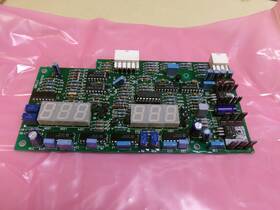
( Brand: Mpcs ), ( Manufacturer Part Number: 17709 ), ( Part Type: Circuit Board )
Review MPCS Circuit Board
The **MPCS 17709/177909** is a high-performance, modular circuit board designed for industrial automation, control systems, and embedded applications requiring robust signal processing, digital I/O, and communication interfaces. Engineered with precision for reliability in demanding environments, this board features a compact yet versatile architecture optimized for seamless integration into larger system designs. At its core, the **MPCS 17709** serves as a high-speed digital signal processing (DSP) module, equipped with advanced analog-to-digital (ADC) and digital-to-analog (DAC) converters capable of handling high-resolution data acquisition and real-time signal conditioning. Its **177909** counterpart expands functionality by incorporating high-density I/O capabilities, including isolated digital inputs/outputs, analog voltage/current inputs, and configurable communication ports such as Ethernet, CAN, and serial interfaces (RS-232/RS-485), ensuring compatibility with a wide array of industrial protocols and field devices.
The circuit board is constructed using high-grade, military-grade components and materials, ensuring exceptional resistance to electromagnetic interference (EMI), thermal fluctuations, and mechanical stress. Its modular design allows for easy scalability, enabling users to customize configurations by adding or removing specific modules as needed, whether for motor control, sensor interfacing, or data logging applications. The **MPCS 17709** incorporates a powerful embedded processor with ample memory resources, supporting real-time operating systems (RTOS) and enabling complex algorithm execution for tasks such as predictive maintenance, motion control, or advanced process automation. Meanwhile, the **177909** enhances this foundation with robust isolation technology, protecting sensitive circuitry from voltage spikes and ground loops while maintaining signal integrity across long distances.
For applications requiring precise timing and synchronization, the board includes high-accuracy clocking mechanisms and programmable delay generators, ensuring synchronized operation in multi-axis or multi-node systems. Its communication interfaces are designed for seamless data exchange, supporting protocols like Modbus, Profibus, and Ethernet/IP, making it ideal for integration into larger SCADA or PLC-based control networks. The board s robust power management system ensures stable operation across a wide input voltage range, with built-in overvoltage, undervoltage, and short-circuit protection to safeguard against power-related failures. Additionally, the **MPCS 17709/177909** is equipped with comprehensive diagnostic and monitoring features, including fault detection, status LEDs, and configurable logging capabilities, allowing for proactive maintenance and troubleshooting.
Whether deployed in industrial automation, renewable energy systems, or high-precision instrumentation, this circuit board delivers uncompromising performance, flexibility, and durability. Its combination of advanced signal processing, isolated I/O, and robust communication interfaces makes it an indispensable component for engineers and system integrators seeking a reliable, high-performance solution for their most demanding applications. Built to withstand the rigors of industrial environments while maintaining precision and efficiency, the **MPCS 17709/177909** represents a cutting-edge solution for next-generation control and automation systems.
### Pros and Cons of buying a MPCS 17709/177909 Circuit Board
#### **Pros:**1. **Compatibility and Reliability** The MPCS 17709 and 177909 are well-established circuit boards used in industrial automation, control systems, and PLC (Programmable Logic Controller) applications. They are designed to work seamlessly with Siemens S7-1200/1500 series, ensuring stable performance in manufacturing and process control environments.
2. **High Performance and Speed** These modules are optimized for fast data processing and real-time control, making them suitable for applications requiring precise timing and efficient communication (e.g., Ethernet/IP, PROFINET, or Modbus).
3. **Modular and Scalable Design** The MPCS series allows for easy expansion and integration with other Siemens components, enabling users to build flexible control systems without major redesigns.
4. **Robust Construction** Built for industrial use, these boards are designed to withstand harsh environments, including temperature fluctuations, electrical noise, and mechanical stress, reducing downtime.
5. **Support for Advanced Protocols** They support multiple communication protocols, including Ethernet-based networks, which are essential for modern industrial automation setups.
6. **Long-Term Availability** As part of a mature product line, these modules are likely to remain available for maintenance and upgrades over an extended period, reducing obsolescence risks.
7. **Technical Documentation and Support** Siemens provides comprehensive documentation, including wiring diagrams, programming guides, and technical support, which aids in troubleshooting and implementation.
---
#### **Cons:**1. **Cost** Compared to newer or alternative brands, these modules can be relatively expensive, especially if purchasing from authorized distributors or directly from Siemens. Counterfeit or third-party versions may offer lower prices but risk poor quality and compatibility issues.
2. **Age of Technology** While still functional, these modules are not the latest in Siemens product line. Newer models (e.g., S7-1500 or TIA Portal-based systems) may offer improved features like enhanced security, better diagnostics, or cloud integration.
3. **Limited Future-Proofing** As industrial automation trends shift toward IoT, edge computing, and cybersecurity, older modules may lack modern security features or compatibility with emerging technologies.
4. **Dependency on Siemens Ecosystem** If your system relies heavily on Siemens hardware and software, switching to third-party alternatives (e.g., Allen-Bradley, Rockwell) could complicate integration and support.
5. **Potential for Counterfeit Parts** Due to their popularity, these modules are sometimes sold as counterfeit or refurbished without proper testing. Buying from untrusted sources can lead to failures or void warranties.
6. **Learning Curve for New Users** If your team is unfamiliar with Siemens S7 systems, training may be required to fully utilize the capabilities of these modules, adding to implementation costs.
7. **Limited Customization** Unlike some open-source or modular platforms, these boards have fixed functionalities, which may not align perfectly with highly specialized or non-standard applications.
---
### **Conclusion:**The MPCS 17709/177909 circuit boards are excellent choices for industrial automation projects that require reliability, compatibility with Siemens ecosystems, and robust performance in controlled environments. Their strengths lie in their proven track record, modularity, and support for critical communication protocols. However, their age and potential cost drawbacks along with the need for careful sourcing to avoid counterfeits must be weighed against the benefits.
If your application is mission-critical, well-documented, and within a Siemens-centric system, these modules are a sound investment. For newer projects or those requiring cutting-edge features like advanced cybersecurity or cloud connectivity, evaluating newer Siemens models or alternative brands may be more advantageous.
---
### **Recommendation:**1. **Verify the Source:** Purchase from authorized Siemens distributors or reputable resellers to avoid counterfeit or damaged units. Check for certifications or return policies.
2. **Assess Long-Term Needs:** If your system will evolve, consider whether newer Siemens modules (e.g., S7-1500) or third-party alternatives could offer better scalability.
3. **Budget for Support:** Factor in costs for training, maintenance, and potential upgrades. Ensure your team is prepared to handle Siemens-specific tools like TIA Portal.
4. **Compare Alternatives:** If cost is a concern, explore compatible but newer modules (e.g., Siemens ET 200SP or third-party PLCs with similar interfaces) that may offer better value.
5. **Test Before Full Deployment:** If possible, test a single module in a non-critical environment to confirm compatibility and performance before committing to bulk purchases.
For most legacy Siemens-based systems or applications where backward compatibility is critical, the MPCS 17709/177909 remains a reliable and effective choice. However, for greenfield projects or those prioritizing future flexibility, a cost-benefit analysis against newer technologies is advisable.
Details:
Cut off for Next Day Delivery is 2 pm.Central Time. Circuit Board. In some rural areas.
part #: 17709 price
- $124.95
specifications pcbemdev:
- brand: Mpcs
- mpn: 17709
- part type: Circuit Board
shipping pcbemdev:
- service: UPS Ground
- carrier: UPS
- type: Calculated
- cost: $27.44
- class: Standard
- transit: 3-6 Days
returns pcbemdev:
- policy: Returns Accepted
- paid by: Buyer
- method: Money back
- time: 30 Days
offer pcbemdev:
- sold: 0
- options: Ship-to-home
- availability: In Stock
- best offers: True
- quantity: 1
- started: March 18, 2026
payments pcbemdev:
- other
- wallet: Paypal
- credit card: Diners-club
general pcbemdev:
- condition: Used
- Electronic Components Semiconductors > Circuit Boards Prototyping > Printed Circuit Boards PCBs
seller pcbemdev:
- city: Halls, Tennessee
- # reviews: 2401
- rating: 99.8%
Mpcs 17709 Is Similar To:
- Mpcs Rc101 171-077 Circuit Board Used Free Shipping (58.5% similar) The shipping on this item reflects standard ground shipping for the us. I have a nice used Mpcs RC101/171-077 circuit board - for sale. Greenback stock# G105592...(September 23rd, 2025)
- Mpcs 158791 Circuit Board (78.6% similar) Circuit board. In some rural areas. Cut off for next day delivery is 2 pm.central time...(March 18th, 2026)