HAAS-LASER 18-13-12-AH Circuit Board Laser V1.4
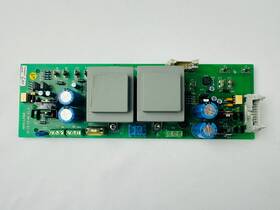
( Brand: Haas-laser ), ( Manufacturer Part Number: 18-13-12-AH ), ( Part Type: Circuit Board Laser ), ( Unit Type: Unit ), ( Country Of Origin: Germany )
Review HAAS LASER V1.4 Circuit Board
The **Haas Laser 18-13-12-AH V1.4 Circuit Board** is a high-performance, precision-engineered control module designed exclusively for the Haas Laser series of cutting and engraving machines, specifically tailored to the **18x13, 18x12, and 12x13 models** with an **AH (Air Assist) cooling system**. This advanced circuit board serves as the central nervous system of the laser system, integrating seamlessly with the machine s power supply, motion control, and safety protocols to deliver unmatched accuracy, reliability, and efficiency in industrial and hobbyist applications alike. Built upon a robust **V1.4 firmware architecture**, this board incorporates a **high-speed microcontroller** optimized for real-time processing, ensuring smooth operation even under demanding workloads such as intricate vector cuts, high-speed engraving, or continuous operation in manufacturing environments. The circuit board features a **multi-layered PCB design** with reinforced copper traces and heat-resistant components to withstand the thermal demands of high-wattage laser tubes (commonly 100W 400W) while minimizing signal interference for pristine performance.
A standout feature of this circuit board is its **modular and upgradeable design**, allowing users to easily integrate additional peripherals such as **plasma cutting modules, rotary attachments, or enhanced safety sensors** without compromising functionality. The board includes **dedicated isolation circuits** for both the **X/Y-axis motion controllers** and the **laser power supply**, ensuring precise servo motor coordination while protecting against voltage spikes and electrical noise a critical consideration for maintaining the longevity of both the laser tube and the machine s mechanical components. Safety is further enhanced by **built-in overcurrent protection, thermal monitoring, and emergency stop circuitry**, which instantly halts operations in the event of a fault, preventing damage to the system and ensuring compliance with industry safety standards.
For users seeking **customization and flexibility**, the Haas Laser V1.4 circuit board supports **GRBL or Haas-specific firmware**, enabling seamless integration with **CAD/CAM software, CNC controllers, or proprietary Haas Laser software** for automated workflows. The board s **RS-232 or USB communication ports** facilitate easy connection to computers, allowing for real-time adjustments, diagnostic troubleshooting, and remote monitoring. Additionally, the **adjustable power output and frequency modulation** capabilities ensure optimal performance across different materials, from delicate wood engravings to thick metal fabrication, while the **air assist compatibility** enhances precision by minimizing smoke and debris within the work area. Whether deployed in a professional workshop, a prototyping lab, or a dedicated hobbyist setup, this circuit board exemplifies the fusion of **cutting-edge electronics and industrial-grade durability**, making it an indispensable component for anyone demanding the highest standards of laser cutting and engraving technology.
### **Pros and Cons of buying a Haas Laser 18-13-12-AH V1.4 Circuit Board**
#### **Pros:**The Haas Laser 18-13-12-AH V1.4 circuit board is a widely used upgrade for older Haas Laser models, particularly the 18x13, 18x12, and 18x10 series. Here are the key advantages:
1. **Improved Reliability and Performance** The V1.4 board is designed to address common issues in earlier versions, such as overheating, power fluctuations, and inconsistent laser output. Many users report fewer crashes and smoother operation compared to stock or earlier revision boards.
2. **Better Compatibility with Modern Software** The board supports newer Haas Laser control software, including updated versions of the Haas Control interface, which may offer better CNC integration, improved safety features, and enhanced programming capabilities.
3. **Enhanced Power Handling** The V1.4 revision includes better voltage regulation and current management, reducing the risk of damage from power surges or unstable electrical input. This is particularly useful in industrial or workshop environments where power quality can vary.
4. **Easier Troubleshooting and Diagnostics** The updated firmware and hardware design often come with improved diagnostic tools, making it simpler to identify and resolve issues such as motor malfunctions, laser tube failures, or communication errors between components.
5. **Community and Support Availability** Since the Haas Laser is a popular machine, the V1.4 board has a large user base. This means there is extensive documentation, forums (e.g., Haas Laser forums, CNC Zone), and third-party support available for installation, calibration, and troubleshooting.
6. **Cost-Effective Upgrade** Compared to purchasing a completely new laser system, replacing just the circuit board is a relatively inexpensive way to extend the lifespan of an older machine. Prices for the V1.4 board are generally reasonable, especially when sourced from reputable sellers or directly from Haas-certified vendors.
7. **Backward and Forward Compatibility** While primarily designed for the 18-13-12-AH series, the V1.4 board can sometimes be adapted for other Haas Laser models with minor modifications, increasing its versatility.
---
#### **Cons:** While the V1.4 board offers significant improvements, there are some potential drawbacks to consider:1. **Installation Complexity** Replacing the circuit board requires a moderate level of technical skill, including soldering, wiring, and familiarity with the machine s electrical system. Improper installation can lead to short circuits, software conflicts, or even damage to the laser tube or other components. Beginners may need to consult detailed guides or seek professional assistance.
2. **Potential Compatibility Issues** Although the V1.4 board is designed for the 18-13-12-AH series, there is a risk of incompatibility with certain peripheral devices (e.g., specific laser tubes, cooling systems, or older control panels). Always verify compatibility with your machine s exact model and configuration before purchasing.
3. **Firmware and Software Updates** While the board itself may be reliable, ensuring that the associated software (e.g., Haas Control, laser driver software) is properly updated can be a hassle. Outdated or mismatched software versions may cause errors or reduced functionality.
4. **Limited Official Warranty** Haas Laser typically offers limited warranties on new machines, and third-party circuit boards may not come with official support. Purchasing from an authorized dealer or a trusted seller can mitigate this risk, but users should be prepared to handle any warranty claims independently.
5. **Risk of Counterfeit or Low-Quality Boards** The popularity of the V1.4 board has led to an increase in counterfeit or poorly manufactured versions sold on third-party marketplaces. These can fail prematurely, cause electrical issues, or even pose safety risks. Buying from verified sellers (e.g., Haas-authorized distributors, reputable CNC suppliers) is crucial.
6. **Learning Curve for New Users** If you are unfamiliar with CNC machines or circuit board upgrades, the process of testing and calibrating the new board can be time-consuming. Expect to spend several hours (or days) troubleshooting and fine-tuning settings after installation.
7. **No Guarantee of Long-Term Reliability** While the V1.4 board is an improvement over earlier versions, no component is immune to wear and tear. Over time, other parts of the machine (e.g., the laser tube, cooling system, or control panel) may still fail, requiring additional maintenance or upgrades.
---
### **Conclusion:**The Haas Laser 18-13-12-AH V1.4 circuit board is a worthwhile upgrade for users looking to extend the life and improve the reliability of their older Haas Laser system. The benefits in terms of performance, compatibility, and troubleshooting capabilities often outweigh the challenges, particularly for experienced users or those with technical expertise. However, the installation process is not trivial, and potential buyers should carefully research compatibility, source the board from a trusted vendor, and be prepared for a learning curve.
For **casual users or those with limited technical skills**, the risks of installation errors or compatibility issues may not be worth the effort unless they are willing to invest time in learning or seek professional help. For **serious hobbyists, small workshops, or industrial users**, the V1.4 board is a cost-effective solution to modernize an older machine and avoid the expense of purchasing a new system.
---
### **Recommendation:**1. **Verify Compatibility** Ensure your Haas Laser model (18-13-12-AH) matches the board s specifications. Check for any required modifications (e.g., wiring changes, software updates) before purchasing.
2. **Purchase from a Trusted Source** Buy the board from an authorized Haas distributor, a well-reviewed CNC supplier, or a reputable seller on platforms like eBay, Amazon, or specialized forums (e.g., CNC Zone). Avoid untested or suspiciously cheap listings.
3. **Gather Resources** Study installation guides, watch tutorial videos, and join online communities (e.g., Haas Laser forums) to prepare for the upgrade process. Having a backup plan (e.g., a spare circuit board or access to a technician) is advisable.
4. **Test Thoroughly After Installation** Run diagnostic tests, calibrate the machine, and monitor performance closely in the first few weeks to ensure everything is functioning correctly.
5. **Consider Professional Help if Needed** If you are unsure about any part of the installation, consult a CNC technician or an experienced user to avoid costly mistakes.
**Final Verdict:** The Haas Laser 18-13-12-AH V1.4 circuit board is a **strong upgrade for compatible machines**, particularly for users who prioritize reliability and long-term performance. For those willing to invest time in learning and troubleshooting, it is a cost-effective way to revive an older laser system. However, it is not a "plug-and-play" solution and requires careful planning and execution.
Details:
Haas-Laser 18-13-12-AH V1.4 Circuit Board.
part #: 181312 prices
- $54.00-$139.99
specifications pcbemdev:
- brand: Haas-laser
- mpn: 18-13-12-ah
- part type: Circuit Board Laser
- unit type: Unit
- country of origin: Germany
offer pcbemdev:
- started: March 7, 2026
- sold: 0
- quantity: 1
- best offers: True
- options: Ship-to-home
- availability: In Stock
returns pcbemdev:
- method: Money back
- policy: Returns Accepted
- paid by: Buyer
- time: 30 Days
shipping pcbemdev:
- cost: $11.22
- carrier: FedEx, UPS
- class: Economy, Standard
- transit: 4-9 Days
- service: FedEx Ground Economy, UPS Ground, FedEx Ground / FedEx Home Delivery
- type: Calculated
general pcbemdev:
- condition: Used
- Electronic Components Semiconductors > Circuit Boards Prototyping > Printed Circuit Boards PCBs
payments pcbemdev:
- wallet: Apple-pay
- other
- credit card: Diners-club
seller pcbemdev:
- city: Richardson, Texas
- rating: 99.8%
- # reviews: 5438
Haas-laser 18-13-12 Is Similar To:
- 18-12-04-bs Haas Laser V1.4 (50.6% similar) Haas LASER18 BS V1. 4PULLED from working equipment what you see in pictures is what get...(September 11th, 2017)
- 34-3080m 65-1055m Haas Automation Printed Circuit Board (44.9% similar) Haas automation 34-3080MA 65-1055M printed circuit board...(June 11th, 2020)
- Haas 32-3200a 3406 R A Video Board As Is Not Working For Parts Only No Returns (29% similar) This is a used haas video board came from 2005 VF2SS - sold as is not working for parts only...(October 5th, 2023)
- Haas 4023r 4023r Rev B Circuit Board Pcb Parts Only (46.2% similar) We urge you to inspect the item thoroughly before use. Unless stated, parts have not been tested. Does not work. Unknown what is wrong. Excluding items sold as-is / for parts only. Haas 4023R rev b, circuit board PCB, parts only...(November 24th, 2023)
- Haas Automation 65-3400c 65-3400 Rev C Video floppy Board (33% similar) Part #: haas automation 65-3400C for sale...(December 25th, 2023)
- Haas 4023t Mocon Motor Controller Board Tested Good (29.1% similar) Haas 4023T Moon motor controller board, tested good 7/24/24...(August 5th, 2024)
- Haas 4023p Mocon Motor Controller Board Tested Good (29.1% similar) Haas 4023P Moon motor controller board, tested good 7/22/24...(August 5th, 2024)
- Haas 4023h Mocon Motor Controller Board Tested Good (35% similar) Haas 4023H Moon motor controller board, tested good 7/30/24...(August 6th, 2024)
- Haas 4023w Mocon Motor Controller Board Tested Good (29.1% similar) Haas 4023W Moon motor controller board, tested good 7/22/24...(August 6th, 2024)
- Haas 4023g Mocon Motor Controller Board Tested Good Item A (27.3% similar) Pulled from working machinery, 97 HS-1. Haas 4023G Moon motor controller board, tested good, item a, good 7/31/24...(August 7th, 2024)
- Haas 3201d Video Interface Floppy Pcb Rev A Circuit Board Used (39.7% similar) Haas video interface floppy board part number: 3201D rev a good used condition, was pulled out of an operating machine that scrapped...(August 8th, 2024)