TEL TOKYO ELECTRON 2L81-050211-16 Pcb Pmif Top TMB229-1/PMIF
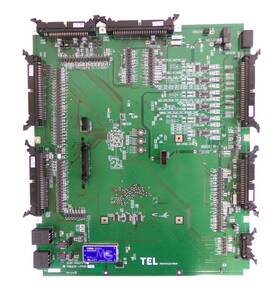
( Brand: Tel Tokyo Electron ), ( Manufacturer Part Number: 2L81-050211-16 ), ( Model: TMB229-1/PMIF ), ( Category: Semiconductor Tools Systems And Components )
Review TEL TOKYO ELECTRON Pcb Tmb229-1/pmif Top Working Surplus
The **TEL TOKYO ELECTRON 2L81-050211-16 PCB (TMB229-1/PMIF TOP)** is a high-performance, precision-engineered printed circuit board (PCB) designed for demanding industrial and electronic applications, particularly within telecommunications, automotive, and power management systems. This board is part of TEL Tokyo Electron s **TMB229 series**, a line of ruggedized, high-reliability PCBs optimized for environments requiring exceptional thermal dissipation, mechanical stability, and signal integrity. The **PMIF (Power Module Interface) TOP variant** is specifically tailored for use in power conversion modules, motor drives, and inverter circuits, where compact form factors and efficient heat management are critical.
Constructed from a **high-temperature-resistant substrate**, likely a reinforced epoxy or polyimide-based material, this PCB ensures long-term stability under extreme operating conditions, including high-voltage and high-current applications. The **16-layer construction** provides robust signal routing, reducing electromagnetic interference (EMI) and crosstalk while accommodating complex circuit designs with dense component placement. Each layer is meticulously laminated to maintain consistent dielectric properties, critical for maintaining signal fidelity in high-speed digital and analog circuits. The **fine-line and space capabilities** (as implied by the high-density design) allow for intricate trace patterns, enabling efficient power distribution and precise control signal routing essential for modern power electronics where miniaturization and performance are paramount.
The **2L81-050211-16 designation** suggests a specific form factor and pinout configuration, likely standardized for compatibility with TEL Tokyo Electron s power module interfaces, ensuring seamless integration with complementary components such as IGBTs, MOSFETs, or other semiconductor devices. The board s **PMIF TOP variant** is optimized for top-side mounting of power modules, maximizing thermal efficiency by allowing direct heat dissipation through the PCB s reinforced copper layers, which are typically plated with **ENIG (Electroless Nickel Immersion Gold)** or **HASL (Hot Air Solder Leveling)** for reliable soldering and corrosion resistance. This finish also enhances the board s durability in harsh environments, reducing the risk of oxidation or mechanical degradation over prolonged use.
Beyond its structural and thermal advantages, this PCB incorporates **high-current-capable copper fills and thickened traces**, which are strategically placed to handle substantial power currents without excessive voltage drops or thermal hotspots. The design likely includes **ground planes and power planes** that are segmented or partitioned to minimize loop inductance and capacitance, further improving efficiency in switching applications. Additionally, the board may feature **built-in test points, via-in-pad connections, or blind/buried vias** to facilitate assembly, debugging, and maintenance, ensuring compatibility with automated manufacturing processes and reducing assembly time.
Ideal for applications such as **industrial motor drives, renewable energy inverters, electric vehicle (EV) charging systems, and high-power server infrastructure**, the **TEL TOKYO ELECTRON 2L81-050211-16 PCB (TMB229-1/PMIF TOP)** represents a blend of precision engineering and reliability, catering to engineers who demand both performance and longevity in their electronic designs. Its robust construction, combined with TEL Tokyo Electron s reputation for high-quality materials and manufacturing standards, makes it a trusted component in mission-critical systems where failure is not an option. Whether used in a compact power module assembly or integrated into a larger control system, this PCB delivers the thermal management, signal integrity, and mechanical robustness required to meet the challenges of modern power electronics.
### **Pros and Cons of buying a TEL Tokyo Electron TMB229-1/PMIF Top PCB (TEL tokyo electron 2L81-050211-16)**
#### **Pros:**1. **High Quality and Reliability** TEL Tokyo Electron is a well-known manufacturer in the semiconductor and PCB assembly industry, known for precision engineering and durable components. Their products are often used in high-stakes applications, including aerospace, automotive, and industrial electronics, where reliability is critical.
2. **Compatibility and Performance** The TMB229-1/PMIF top PCB is designed for specific applications, likely related to semiconductor manufacturing or precision equipment. If you need a replacement part for an existing system, this PCB should fit seamlessly, reducing downtime and ensuring optimal performance.
3. **Long-Term Availability** Older, established components from reputable manufacturers like TEL Tokyo Electron tend to have better long-term availability compared to newer or niche suppliers. This reduces the risk of obsolescence, especially if the part is still in use in legacy systems.
4. **Technical Support and Documentation** TEL Tokyo Electron provides detailed technical specifications, schematics, and support resources, which can be invaluable for troubleshooting, integration, or maintenance. This is particularly useful if you are working with complex equipment.
5. **Resale and Replacement Market** Due to its reputation, this PCB may be easier to source from third-party suppliers, resellers, or refurbished markets if needed. This flexibility can be beneficial for budget-conscious buyers or those managing inventory.
6. **Compatibility with Industry Standards** The PCB likely adheres to industry standards for electrical performance, thermal management, and mechanical compatibility, ensuring it integrates well with other components in your system.
---
#### **Cons:**1. **High Cost** As a premium, high-quality component from a reputable manufacturer, this PCB will likely be more expensive than generic or off-the-shelf alternatives. The cost may be prohibitive for small-scale projects or budget-limited applications.
2. **Potential for Overkill** If you are not working in a high-reliability environment (e.g., consumer electronics, hobbyist projects), the robustness of this PCB may be unnecessary. A simpler or lower-cost alternative could suffice without sacrificing performance.
3. **Limited Customization** Since this is a standard or legacy part, you may not have the flexibility to modify it for specific requirements. Custom PCBs or modifications would require additional engineering work, increasing costs and complexity.
4. **Lead Times and Supply Chain Dependencies** Even for established manufacturers, lead times can vary, especially if the part is no longer in active production. You may need to rely on stockists or wait for restocks, which could delay projects.
5. **Compatibility Risks with Modern Systems** If the PCB was designed for older equipment, integrating it into a modern system might require additional interfacing components, adapters, or firmware updates. This could introduce compatibility issues or require extra effort to resolve.
6. **Potential for Counterfeit Parts** Due to its popularity, there is a risk of encountering counterfeit or refurbished parts from untrusted sources. Always verify the supplier s authenticity to avoid receiving substandard or unsafe components.
7. **Maintenance and Repair Challenges** If the PCB fails, sourcing replacements may be difficult, and repairs could require specialized knowledge or tools. This could lead to higher long-term maintenance costs.
---
### **Conclusion:**The **TEL Tokyo Electron TMB229-1/PMIF top PCB (2L81-050211-16)** is a high-quality, reliable component ideal for applications where precision, durability, and long-term availability are critical. It is particularly well-suited for industrial, aerospace, automotive, or semiconductor-related equipment where failure is not an option. However, its high cost, potential over-engineering for simpler applications, and supply chain dependencies make it less ideal for budget-sensitive or low-risk projects.
If you are maintaining legacy equipment, replacing a failed component, or working in a high-reliability field, this PCB is a strong choice. For other applications, evaluating whether a lower-cost alternative (e.g., a generic PCB with similar specifications) would meet your needs is advisable.
---
### **Recommendation:** - **Buy if:**- You are working with critical equipment where reliability is non-negotiable.
- The PCB is a direct replacement for existing hardware, and you need to minimize downtime.
- You have verified the supplier s authenticity to avoid counterfeit parts.
- Budget constraints are not a major concern, and the long-term benefits outweigh the upfront cost.
- **Avoid or Consider Alternatives if:**- You are working on a consumer or hobbyist project where cost efficiency is prioritized.
- The PCB s specifications exceed your actual requirements, making it unnecessarily complex.
- You are unable to source it quickly due to lead times or supply issues.
- You are open to exploring newer or slightly modified versions that offer similar performance at a lower cost.
**Final Suggestion:** If possible, consult with the equipment manufacturer or a technical expert to confirm compatibility and explore whether a newer or alternative part could serve your needs without sacrificing performance. Always purchase from authorized distributors or reputable resellers to ensure authenticity.
Details:
Item condition: Working, 90 Day Warranty. Only items pictured are included: If a part is not pictured, or mentioned above, then it included in the sale. Pictured test equipment is not included or available for sale. The physical condition is good, but there are signs of previous use and handling.
TEL Tokyo Electron 2L81-050211-16 PCB TMB229-1/PMIF TOP Working Surplus. Sale Details. Serial numbers or country of manufacture may vary. Model No: TMB229-1/PMIF This item is working surplus.
This unit has a broken clip see photos. Part No: 2L81-050211-16.
part #: 2l8105021116 price
- $2503.26
specifications pcbemdev:
- brand: Tel Tokyo Electron
- mpn: 2l81-050211-16
- model: Tmb229-1/pmif
- category: Semiconductor Tools Systems And Components
general pcbemdev:
- Electronic Components Semiconductors > Circuit Boards Prototyping > Printed Circuit Boards PCBs
- condition: Used
payments pcbemdev:
- credit card: Discover
- other
- wallet: Paypal
offer pcbemdev:
- options: Ship-to-home
- quantity: 1
- started: March 27, 2026
- availability: In Stock
- best offers: True
- sold: 0
returns pcbemdev:
- paid by: Buyer
- method: Money back
- policy: Returns Accepted
- time: 60 Days
seller pcbemdev:
- # reviews: 10279
- city: Albuquerque, New Mexico
- rating: 99.8%
shipping pcbemdev:
- type: Calculated
- service: FedEx Ground / FedEx Home Delivery
- cost: $0.00
- transit: 4-7 Days
- carrier: FedEx
- class: Standard
Tel Tokyo Electron 2L81-050211-16 Is Similar To:
- 340 Cvd-x Tokyo Electron Limited Tel Model Gas System Ctrl Unit Used (36% similar) Tel Tokyo Electron limited model 340 CVS-x 340CX gas system ctr unit, used includes: MC31007MC-31007MC-31009MC 3MC 1SG-2700...(January 8th, 2019)
- M340-cvd Tokyo Electron Limited Tel Model Gas System Ctrl Unit Used (36.2% similar) For local customer carrier pickup, example DHL, ups, etc. Whenever possible, unique identifiers such as part numbers, model etc. Be assured that these were not done intentionally. To make an appointment please via messaging. Buyer pays for return shipping...(October 31st, 2018)
- Mc-31002a Tokyo Electron Limited Tel (39.3% similar) Tel Tokyo Electron MC-31002A PM081006-0B pcb...(January 29th, 2018)
- Mc-31011a Tokyo Electron Limited Tel (39.3% similar) Pcb, MC-31011A...(January 25th, 2018)
- M-340 Tokyo Electron Limited Tel Model Cx Gas System Ctrl Unit Used (36.2% similar) For local customer carrier pickup, for example DHL, ups, etc. Be assured that these were not done intentionally. To make an appointment please via messaging. Whenever possible, unique identifiers such as part numbers, model numbers, etc. Buyer pays for return shipping...(August 16th, 2016)
- Oriental Motor A7792-0407y2c-2 Driver Pcb Tel Tokyo Electron 5086-423845-11 New (34.7% similar) Part no: A7792-0407Y2C-2. Oriental motor A7792-0407Y2C-2 driver pcb Tel Tokyo Electron 5086-423845-11 new. Tel Tokyo Electron part no: 5040-000167-11. The physical condition is great. Made in japan this oriental motor A7792-0407Y2C-2 driver pcb is new surplus. Pictured test equipment is not included...(November 14th, 2023)
- Tokyo Electron Hte-ac2-a-11 Tel Ac Control Board Pcb Working Surplus (56.1% similar) The physical condition is good, but there are signs of previous use and handling. Item condition: used working, 90 day warranty. Ac control board this Tel Tokyo Electron HTE-AC2-A-11 control board pcb is used working surplus. Part no: HTE-AC2-A-11. Pictured test equipment is not included or ...(November 15th, 2023)
- Tokyo Electron E2b403-11 numc Tel Pcb Board Densan E208-000043-11 Working Spare (50.7% similar) The physical condition is good, but there are signs of previous use and handling. Model no: E208-000043-11. Sale details. Pictured test equipment is not included or available for sale. Only items pictured are included: if a part is not pictured, or mentioned above, then it included in the sale. Tel ...(November 21st, 2023)
- Tel Tokyo Electron 2980-092300-11 Chemical I o Pcb Tob1015 Cpc-t0015a-11 New (49% similar) Part no: 2980-092300-11. Tel Tokyo Electron 2980-092300-11 chemical i/o pcb TOB1015 CPC-T0015A-11 new. Sale details. Serial numbers or country of manufacture may vary. Pictured test equipment is not included or available for sale. Model no: TOB1015. The physical condition is great. Only items ...(December 8th, 2023)
- Oriental Motor A7892-0407y5a-2 Driver Assembly 1 Pcb Tel 5086-423833-11 (30.8% similar) Part no: A7892-0407Y5A-2. Pictured test equipment is not included or available for sale. Serial numbers or country of manufacture may vary. Tel Tokyo Electron part no: 5086-423833-11. Only items pictured are included: if a part is not pictured, or mentioned above, then it included in the sale. Made ...(December 22nd, 2023)
- Ckd Amc-d-x1 Valve Pump Control Pcb Tel Tokyo Electron 012-007150-1 New Surplus (46.7% similar) Made in japan this CD valve AMC-D-X1 pump control pcb is new surplus. Model no: Mac-d. Pictured test equipment is not included or available for sale. Sale details. Tel Tokyo Electron part no: 012-007150-1. The physical condition is great. Part no: AMC-D-X1. CD valve AMC-D-X1 pump control pcb Tel ...(December 23rd, 2023)