CINCINNATI MILACRON 3-533-0721G Cpu Control Pcb Board APC16 QC-3
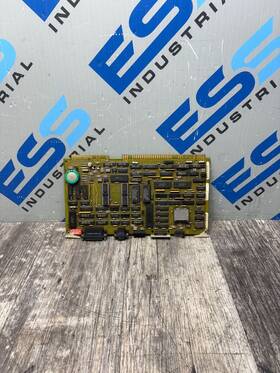
( Brand: Cincinnati Milacron ), ( Manufacturer Part Number: 3-533-0721G ), ( Type: Electrical/plc/automation ), ( State: South Carolina ), ( Country: United States )
Review CINCINNATI MILACRON Qc-3 Industrial Cpu Control Pcb Board
The **Cincinnati Milacron 3-533-0721G APC16 QC-3 CPU Control PCB Board** is a critical, high-performance printed circuit board (PCB) designed specifically for the **APC16** series of industrial control systems, originally developed for Cincinnati Milacron s advanced CNC (Computer Numerical Control) machines. This specialized board serves as the central processing unit (CPU) and control interface for the **QC-3** architecture, a robust and reliable platform engineered for precision machining applications such as milling, turning, and multi-axis CNC operations. The PCB integrates a sophisticated combination of analog and digital signal processing circuitry, memory modules, and high-speed communication interfaces, enabling seamless coordination between the machine s control logic, servo drives, and peripheral devices. Built to withstand the demanding environments of industrial manufacturing, this board features ruggedized components, including high-grade resistors, capacitors, and integrated circuits, ensuring long-term stability and resistance to electrical noise, thermal fluctuations, and mechanical stress. Its modular design allows for easy integration with existing Milacron control systems while providing backward and forward compatibility with updated firmware and software revisions. The **3-533-0721G** variant is particularly notable for its enhanced processing capabilities, optimized for applications requiring real-time motion control, adaptive feed rates, and precise toolpath execution. Whether used in legacy Milacron machines undergoing retrofitting or in newly commissioned systems, this PCB board exemplifies the precision engineering that defines Cincinnati Milacron s legacy in industrial automation, offering operators and technicians a dependable foundation for achieving superior machining accuracy and operational efficiency.
### **Pros and Cons of buying a Cincinnati Milacron 3-533-0721G APC16 QC-3 CPU Control PCB Board**
#### **Pros:**1. **Compatibility with Legacy Systems** This PCB board is designed specifically for the Cincinnati Milacron QC-3 series of CNC controls, ensuring seamless integration with existing machinery. It is a direct replacement part, reducing the need for costly system modifications.
2. **Reliability and Durability** Milacron (now part of Doosan Infracore) is a well-established manufacturer in industrial automation. The QC-3 series is known for robust performance, and the CPU board is built to withstand the demands of heavy-duty machining environments.
3. **Functionality Preservation** The APC16 CPU board retains the original control logic of the QC-3 system, including axis control, spindle management, and feedback processing. This ensures that the machine retains its intended functionality without compromising precision.
4. **Cost-Effective Replacement** Purchasing a new or refurbished PCB board is often more economical than attempting to repair a failing unit or investing in an entirely new CNC control system. It extends the lifespan of the machine without a full upgrade.
5. **Easier Maintenance and Repairs** Since the board is a standard replacement part, technicians familiar with the QC-3 system can diagnose and install it with relative ease. Spare parts availability may also be more straightforward than for discontinued or proprietary systems.
6. **Backward Compatibility** The QC-3 series was widely used in industrial settings, particularly in the 1980s and 1990s. Many manufacturers still service these machines, and the availability of replacement parts (including CPU boards) remains relatively stable compared to older, less common controls.
7. **Potential for Upgradability** While the board itself is a direct replacement, some users may explore software or firmware upgrades (if available) to improve functionality, such as adding modern monitoring features or enhancing communication protocols.
---
#### **Cons:**1. **Age and Obsolescence** The QC-3 series is now over 30 years old, meaning the PCB board may lack modern safety features, connectivity options (e.g., Ethernet, USB, or advanced communication protocols like OPC UA), or software support. This could limit integration with newer machinery or enterprise systems.
2. **Limited Technical Support** Original documentation, troubleshooting guides, and manufacturer support for the QC-3 may be scarce or outdated. Users may rely on third-party sources or experienced technicians for assistance, which can be time-consuming and costly.
3. **Software Dependencies** The QC-3 system relies on proprietary control software that may no longer be actively developed. If the software becomes corrupted or incompatible with modern operating systems, recovery may require specialized knowledge or legacy hardware.
4. **Hardware Limitations** The APC16 board may lack features found in contemporary CNC controls, such as:- **Higher resolution feedback** (e.g., encoder support beyond the QC-3 s native capabilities).
- **Advanced motion control algorithms** (e.g., adaptive feed rates, dynamic path optimization).
- **Built-in diagnostics or self-testing capabilities** common in modern controls.
- **Support for newer spindle or tooling interfaces** (e.g., digital spindle communication).
5. **Compatibility with Modern Peripherals** Connecting the QC-3 system to newer peripherals (e.g., modern HMI panels, PLCs, or CNC software) may require additional adapters or workarounds, increasing complexity and potential points of failure.
6. **Risk of Further Degradation** If the machine was not well-maintained prior to the CPU failure, other components (e.g., motors, drives, or wiring) may also be worn out. Replacing just the CPU board may not fully restore the machine s performance if underlying issues exist.
7. **Long-Term Viability Concerns** As industries shift toward more advanced and interconnected CNC systems, the QC-3 s lack of modern features (e.g., cloud connectivity, IoT integration, or AI-assisted programming) could make it less competitive in future applications.
---
### **Conclusion:** Buying the **Cincinnati Milacron 3-533-0721G APC16 QC-3 CPU Control PCB Board** is a pragmatic choice for users who:- **Prioritize immediate functionality** and need a direct replacement for a failing component.
- **Have a well-maintained machine** with no other critical failures.
- **Are operating in a controlled environment** where obsolescence is not a major concern.
- **Have access to technical expertise** familiar with the QC-3 system.
However, if the machine is intended for **long-term use, modern integration, or high-precision applications**, the limitations of the QC-3 system may outweigh the benefits. In such cases, evaluating a **full CNC control upgrade** (e.g., to a modern Siemens, Fanuc, or Doosan system) could be more cost-effective in the long run, despite the higher initial investment.
---
### **Recommendation:** 1. **If the machine is critical and must be operational immediately:**- Proceed with purchasing the **APC16 CPU board** from a reputable supplier (e.g., eBay, industrial surplus markets, or Milacron-authorized dealers). Verify compatibility with your specific QC-3 model and ensure the board is tested or refurbished if buying used.
- **Test the board** in a controlled environment before full installation to confirm functionality.
- **Document the machine s condition** thoroughly to assess whether other components need attention.
2. **If the machine is older or used in a less time-sensitive application:**- Consider **evaluating the total cost of ownership**, including potential future repairs, software limitations, and obsolescence risks.
- Explore **partial upgrades** (e.g., replacing only the CPU board while keeping other components) to extend usability without a full overhaul.
3. **If the machine is a long-term asset with growth potential:** - **Research modern CNC control alternatives** that offer:- Higher precision and reliability.
- Better connectivity (Ethernet, PLC integration, cloud compatibility).
- Easier programming and diagnostics.
- **Calculate the ROI** of upgrading versus continuing with the QC-3 system. In many cases, a modern control system can pay for itself through improved efficiency, reduced downtime, and compatibility with newer tools.
4. **If budget is a constraint but long-term use is desired:**- **Prioritize maintenance** of the existing machine to delay the need for upgrades.
- **Invest in training** for operators to maximize the QC-3 s remaining capabilities.
- **Monitor for spare parts availability** if the QC-3 becomes harder to service, upgrading may become inevitable.
Ultimately, the decision depends on **operational urgency, budget, and long-term goals**. For a quick fix, the APC16 board is a sound choice. For sustainable productivity, a strategic upgrade may be the better investment.
Details:
Stock #: DG1649-3276E. Ideal for systems requiring reliable and trusted parts. Brand: CINCINNATI MILACRON. Model: 3-533-0721G.
Specifications:: CINCINNATI MILACRON 3-533-0721G, used Electrical/PLC/Automation component ready for integration. Overview:: Type: Electrical/PLC/Automation. CINCINNATI MILACRON APC16 QC-3-533-0721G INDUSTRIAL CPU CONTROL PCB BOARD 3-533-0721G, used Electrical/PLC/Automation component ready for integration.
part #: 35330721g prices
- $250.00-$2000.00
specifications pcbemdev:
- brand: Cincinnati Milacron
- mpn: 3-533-0721g
- type: Electrical/plc/automation
- state: South Carolina
- country: United States
returns pcbemdev:
- policy: No Returns
seller pcbemdev:
- # reviews: 2470
- city: wood ruff, South Carolina
- rating: 100.0%
general pcbemdev:
- Electronic Components Semiconductors > Circuit Boards Prototyping > Printed Circuit Boards PCBs
- condition: Used
payments pcbemdev:
- other
- wallet: Paypal
- credit card: Mastercard
offer pcbemdev:
- best offers: True
- quantity: 1
- sold: 0
- started: May 13, 2026
- availability: In Stock
- options: Ship-to-home
shipping pcbemdev:
- carrier: FedEx
- type: Fixed
- class: Standard
- service: FedEx Ground / FedEx Home Delivery
- transit: 3-7 Days
- cost: $20.00
Cincinnati Milacron 3-533-0721G Is Similar To:
- 230-1006 Cincinnati Milacron Pc Board (50% similar) Location a 210 box 18MB RC...(December 12th, 2018)
- 3-424-2039a Cincinnati Milacron Acramatic Controller Unit Rev Talon (46.5% similar) Once we get the return, will inspect item to make sure it is in same condition as shipped. This is both FedEx and ups rules. Here to go directly a listing of some the parts removed from machine. Boxing handling plus shipping costs from zip 49534. Model number: talon 208S n: 6808U0894181 with an ...(November 28th, 2018)
- 3-424-2123a02 Cincinnati Milacron Computer Motherboard Circuit Board (44.8% similar) Cincinnati Milacron 2123A02 computer motherboard circuit board rev...(December 20th, 2018)
- 3-424-2168a02 Cincinnati Milacron Computer Motherboard Circuit Board (44.8% similar) Cincinnati Milacron 2168A02 computer motherboard circuit board...(December 14th, 2018)
- 3-531-3280a Cincinnati Milacron Timer Board Circuit (44.4% similar) ...(April 6th, 2019)
- 3-531-3283a Cincinnati Milacron Output Board Circuit (48.8% similar) ...(August 10th, 2018)
- 3-531-3399a Cincinnati Milacron Backplane Assembly Board (45.8% similar) 50 26A this item is surplus stock in good condition...(April 27th, 2018)
- 3-531-3564a Cincinnati Milacron Input Board Circuit (49.2% similar) ...(August 9th, 2018)
- 3-531-3581a Cincinnati Milacron Memory Module With Pc Board (52.2% similar) 50 2a this item is surplus stock in good used condition...(September 29th, 2018)
- 3-531-3609a Cincinnati Milacron Expansion Circuit Board (49.2% similar) ...(August 9th, 2018)
- 3 531 3621a Cincinnati Milacron Pc Board Diode Comp (44.4% similar) Please reach out with any questions regarding our listings. Our team will reach out within 48 hours...(January 30th, 2019)