AD DATA SYSTEMS 330024 Interface Module IEEE-488/RS232-C
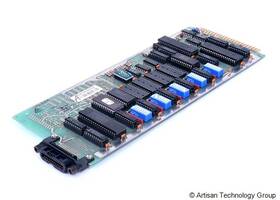
( Brand: Ad Data Systems ), ( Manufacturer Part Number: 330024 ), ( Part Type: Module ), ( Country Of Origin: United States ), ( Item Width: 14 )
Review AD DATA SYSTEMS Ieee-488/rs232-c Interface Module
The **Data 330024 IEEE-488/RS-232-C Interface Module** is a versatile and high-performance communication adapter designed to bridge the gap between modern instrumentation and legacy GPIB (IEEE-488) systems, while also offering robust RS-232 connectivity. This module serves as an essential intermediary for integrating older GPIB-based devices such as oscilloscopes, spectrum analyzers, power supplies, and data acquisition systems with contemporary computers, controllers, or industrial networks. Built with precision engineering, the module ensures reliable data transfer between devices operating under different communication protocols, making it indispensable in laboratories, manufacturing environments, and automated test setups.
At its core, the **Data 330024** features a **dual-port architecture**, combining a **GPIB (IEEE-488) interface** with an **RS-232 (serial) port**, allowing seamless connectivity to both GPIB instruments and traditional serial devices. The GPIB interface adheres strictly to the **IEEE-488.2 standard**, supporting all standard commands including **talk, listen, device clear, and remote enable** while also accommodating **8-bit parallel data transfer** at speeds up to **1 Mbps**, ensuring efficient communication with high-end instrumentation. The module s **active termination** capability eliminates signal degradation over long GPIB bus lengths, maintaining signal integrity even in complex multi-device setups.
On the **RS-232 side**, the module provides a **full-duplex, asynchronous serial interface** compatible with **EIA-232-F standards**, supporting data rates from **110 baud to 115,200 baud** with configurable parity, stop bits, and flow control (RTS/CTS or XON/XOFF). This flexibility makes it ideal for interfacing with legacy serial devices, PLCs, or custom control systems that rely on RS-232 communication. The module s **optically isolated RS-232 port** enhances noise immunity, protecting sensitive equipment from electrical interference in industrial or noisy environments.
Beyond its core functionality, the **Data 330024** incorporates **advanced features** that enhance usability and reliability. It includes **handshake signal monitoring** for both GPIB and RS-232, allowing for real-time error detection and troubleshooting. The module also supports **programmable timeouts** to prevent system hangs during communication failures, while its **auto-baud detection** simplifies setup when connecting to unknown RS-232 devices. For GPIB operations, it provides **addressable device control**, enabling precise targeting of specific instruments on the bus, which is crucial in multi-device test systems.
Designed with **durability and ease of use** in mind, the module features a **compact, rugged enclosure** suitable for both benchtop and embedded applications. Its **backplane or panel-mount options** allow for flexible integration into existing racks or control panels, while its **low-power consumption** ensures compatibility with a wide range of power supplies. The module s **user-friendly configuration** can be adjusted via **DIP switches, jumpers, or software utilities**, depending on the application, making it adaptable to both quick deployments and long-term, customized setups.
Whether used in **automated test systems, scientific research, industrial automation, or educational laboratories**, the **Data 330024 IEEE-488/RS-232-C Interface Module** serves as a reliable bridge between legacy and modern communication systems. Its **comprehensive protocol support, robust error handling, and versatile connectivity options** make it an indispensable tool for engineers, technicians, and researchers who require seamless integration of diverse instrumentation and control devices. With its **proven performance and adaptability**, this module ensures smooth, efficient, and dependable communication across a wide range of applications.
### **Pros and Cons of buying a Data 330024 (IEEE-488/RS-232-C Interface Module)**
#### **Pros:**1. **Compatibility with Legacy Systems** The module bridges IEEE-488 (GPIB) and RS-232 interfaces, allowing older instrumentation (such as oscilloscopes, spectrum analyzers, or data loggers) to communicate with modern computers or controllers that may lack native GPIB support. This is particularly useful in industrial, scientific, or educational environments where GPIB devices remain in use.
2. **Widespread Industry Adoption** IEEE-488 (GPIB) was a standard interface for test and measurement equipment for decades. Many high-end instruments (e.g., from Agilent/Keysight, Tektronix, or Fluke) still rely on GPIB, making this module a practical solution for maintaining compatibility without replacing entire systems.
3. **RS-232 as a Reliable Backbone** RS-232 is a robust serial communication standard that has been battle-tested for decades. While newer interfaces like USB or Ethernet are more common, RS-232 remains stable for certain applications, especially in environments where noise immunity or long cable runs are critical.
4. **Cost-Effective Upgrade** Purchasing this module is often cheaper than replacing legacy GPIB devices with newer USB/GPIB or Ethernet-based alternatives. It extends the lifespan of existing equipment without requiring a full system overhaul.
5. **Plug-and-Play Functionality** The module typically connects via standard serial ports (DB-9 or DB-25), making integration relatively straightforward for users familiar with RS-232 setups. Many include software drivers or support for common communication protocols (e.g., SCPI for test equipment).
6. **Backward Compatibility** If your lab or facility still relies on GPIB for certain instruments (e.g., in automated test setups or calibration workflows), this module ensures seamless communication without forcing a migration to newer standards prematurely.
7. **Support for Multiple Devices** Some GPIB interfaces (including this module) can handle multiple devices on the same bus, allowing for centralized control of several instruments simultaneously, which is useful in batch testing or data acquisition scenarios.
---
#### **Cons:**1. **Obsolete Interface Standards** Both IEEE-488 and RS-232 are outdated compared to modern standards like USB, Ethernet (LAN/GPIB over Ethernet), or PCIe. This can lead to compatibility issues with newer operating systems (e.g., Windows 10/11 may require additional drivers or virtual COM ports) or modern development environments.
2. **Limited Bandwidth** RS-232 operates at lower speeds (typically up to 115,200 baud) compared to USB (which can reach Mbps) or Ethernet (Gbps). For high-speed data acquisition or real-time processing, this module may become a bottleneck.
3. **Cable Length Limitations** RS-232 signals degrade over long distances (typically
4. **Driver and Software Complexity** While many GPIB/RS-232 modules come with drivers, configuring them can be more involved than plug-and-play USB devices. Users may need to manually set baud rates, parity, or handshaking protocols, increasing the risk of misconfiguration.
5. **Lack of Modern Features** Unlike USB or Ethernet interfaces, GPIB/RS-232 modules often lack built-in features like:- **Hot-swappable connectivity** (removing/adding devices without rebooting).
- **Power-over-Ethernet (PoE)** or built-in power supplies.
- **Support for advanced protocols** (e.g., TCP/IP, UDP, or modern SCPI extensions).
- **Firmware updates** (many legacy modules are no longer supported by manufacturers).
6. **Hardware Availability and Longevity** As industries migrate to USB/GPIB or Ethernet-based solutions, the availability of spare parts, technical support, or replacements for this module may decline over time. Manufacturers like Data (now part of National Instruments) may discontinue support, leaving users dependent on third-party vendors.
7. **Security Risks** RS-232 and GPIB are not designed with modern security in mind. Unauthorized access to a GPIB bus or serial port could potentially compromise connected instruments or data. Unlike Ethernet, there are no built-in encryption or authentication mechanisms.
8. **Integration Challenges with Modern Systems** Connecting this module to a modern computer may require:- **Virtual COM port emulation** (e.g., via drivers like FTDI or Prolific).
- **Custom scripting** (e.g., Python with pyvisa or LabVIEW) to interface with GPIB devices.
- **Compatibility issues** with newer operating systems (e.g., Linux may require additional kernel modules).
9. **No Built-in Error Handling** GPIB/RS-232 communication relies on manual error checking (e.g., parity bits, timeouts). Unlike USB or Ethernet, there s no built-in retry mechanism for failed transmissions, which can lead to data loss or intermittent failures.
10. **Limited Scalability** Expanding a GPIB network requires careful bus management (e.g., terminators, address conflicts). Adding more devices can complicate troubleshooting and reduce overall reliability compared to point-to-point Ethernet connections.
---
### **Ending Conclusion:**The **Data 330024 IEEE-488/RS-232-C Interface Module** is a **practical solution for maintaining compatibility with legacy GPIB instruments** in environments where upgrading to modern interfaces is impractical or costly. It excels in **industrial, scientific, or educational settings** where GPIB devices are still in use and where the simplicity of RS-232 communication is sufficient for the application. However, its **obsolete nature, limited bandwidth, and integration challenges** make it less ideal for **high-speed data acquisition, modern automation, or long-term scalability**.
For **new projects or long-term deployments**, prioritizing **USB/GPIB or Ethernet-based interfaces** (e.g., National Instruments PXI/GPIB, Agilent s USB-GPIB modules, or GPIB-over-Ethernet solutions) would be more future-proof. If you **must use this module**, ensure your system has:
- A **reliable RS-232 port** (or a USB-to-serial adapter with proper drivers).
- **Stable software support** (e.g., LabVIEW, Python with pyvisa , or manufacturer-specific tools).
- **Backup plans** for driver updates or hardware replacements.
---
### **Recommendation:** - **Buy the Data 330024 if:**- You have **legacy GPIB instruments** that cannot be replaced or upgraded.
- Your application **does not require high-speed data transfer** (e.g., slow control signals, simple data logging).
- You are working in a **controlled environment** (e.g., lab, factory floor) where RS-232/GPIB is already established.
- Cost is a **primary concern**, and the module fits within your budget for a temporary or transitional solution.
- **Avoid or Replace with Modern Alternatives if:**- You are **starting a new project** and can integrate **USB/GPIB or Ethernet-based interfaces**.
- Your workflow involves **high-speed data acquisition, real-time processing, or remote monitoring** (Ethernet is superior).
- You anticipate **long-term use** (modern interfaces have better support, scalability, and security).
- You need **plug-and-play simplicity** with **minimal driver configuration** (USB is easier than RS-232).
**Alternative Recommendations:**1. **For USB/GPIB:** National Instruments **USB-488A** or **NI GPIB-USB** modules offer better compatibility with modern OSes and software.
2. **For Ethernet/GPIB:** **GPIB-to-Ethernet converters** (e.g., Agilent s **34980A** or **NI GPIB Ethernet**) provide remote access and higher reliability.
3. **For RS-232 Alternatives:** If RS-232 is non-negotiable, consider **USB-to-serial adapters with FTDI chips** (e.g., FT232R) for better driver support and reliability.
Ultimately, weigh the **cost of migration** against the **long-term benefits** of modern interfaces. If the Data 330024 fits your immediate needs without forcing future upgrades, it remains a **viable stopgap solution**. Otherwise, investing in a **USB/GPIB or Ethernet-based interface** will yield better performance and longevity.
Details:
Are not included with this equipment unless pictured and/or listed in the above. Fast and hassle-free. Hours / Location.
part #: 330024 price
- $350.00
specifications pcbemdev:
- brand: Ad Data Systems
- mpn: 330024
- part type: Module
- country of origin: United States
- item width: 14
general pcbemdev:
- condition: Used
- Electronic Components Semiconductors > Circuit Boards Prototyping > Printed Circuit Boards PCBs
payments pcbemdev:
- credit card: Mastercard
- other
- wallet: Apple-pay
seller pcbemdev:
- # reviews: 17437
- city: Champaign, Illinois
- rating: 99.9%
offer pcbemdev:
- availability: In Stock
- options: Ship-to-home
- quantity: 1
- sold: 0
- started: February 26, 2026
returns pcbemdev:
- time: 30 Days
- policy: Returns Accepted
- method: Money back
- paid by: Buyer
shipping pcbemdev:
- cost: $31.82
- service: FedEx Ground / FedEx Home Delivery, FedEx Standard Overnight, FedEx Ground Economy
- transit: 4-8 Days
- class: Standard, One-day, Economy
- type: Calculated
- carrier: FedEx