DOVER 630CL28 Double Pcb Copper Mount Row Tie Points FR-4 54
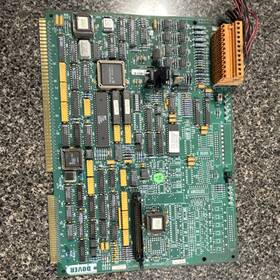
( Brand: Dover ), ( Manufacturer Part Number: 630CL28 ), ( Part Type: Tie Mount ), ( Mounting Style: Pcb Mount ), ( Pcb Type: Double-sided Pcb ), ( Number Of Tie-points: 54 ), ( Material: Fr-4, Copper )
Review DOVER Double sided Pcb Fr-4 Copper Mount Row 54 Tie points
The **Dover 630CL28 Double-Sided PCB FR-4 Copper Mount Row 54 Tie-Points** is a high-performance, precision-engineered prototyping and assembly tool designed for electronics engineers, hobbyists, and manufacturers seeking a reliable method to secure and stabilize printed circuit boards (PCBs) during soldering, testing, or assembly operations. Constructed from durable **FR-4-grade fiberglass-reinforced epoxy laminate**, this mounting row is engineered to withstand the thermal and mechanical stresses of repeated use while maintaining dimensional stability, ensuring consistent performance across extended projects. The **copper-clad substrate** provides excellent thermal conductivity, effectively dissipating heat away from sensitive components and reducing the risk of thermal damage during soldering or high-temperature processes. With a **double-sided design**, this tie-point row offers unparalleled versatility, allowing for the secure attachment of PCBs from both the top and bottom surfaces, which is particularly advantageous for complex assemblies requiring multi-layered support or when working with dense component layouts.
Featuring **54 evenly spaced tie-points**, the row is meticulously designed to accommodate a wide range of PCB sizes and configurations, from small prototype boards to larger, more intricate designs. Each tie-point is crafted from high-quality **copper alloy**, ensuring a strong, corrosion-resistant grip that resists warping or deformation over time. The **copper mount mechanism** integrates seamlessly with Dover s modular clamping system, allowing for quick and secure installation without the need for additional hardware, thereby streamlining workflows and minimizing setup time. The robust construction of the FR-4 base material also provides inherent electrical insulation, safeguarding against short circuits or unintended electrical interference during assembly or testing phases. Whether used in a professional lab, a dedicated workshop, or a DIY electronics setup, this tie-point row serves as an indispensable asset for anyone requiring a dependable, high-tolerance solution for PCB mounting and stabilization.
Ideal for applications such as **soldering stations, wave soldering machines, or automated assembly lines**, the Dover 630CL28 excels in environments where precision and repeatability are critical. Its compatibility with a variety of clamping systems ensures flexibility in integration with existing equipment, while its **durable, low-maintenance design** translates to long-term cost savings by reducing the need for frequent replacements or adjustments. Engineers and technicians will appreciate the **consistent spacing and alignment** of the tie-points, which eliminate the guesswork often associated with manual PCB securing methods, thereby enhancing productivity and reducing errors. Whether used for rapid prototyping, mass production, or educational purposes, this mounting row exemplifies Dover s commitment to delivering tools that combine **durability, precision, and ease of use** making it an essential component for anyone serious about achieving flawless PCB assembly results.
**Pros and Cons of buying a Dover 630CL28 Double-Sided FR-4 Copper Mount Row PCB**
### **Pros:**1. **High Density and Compact Design** The 630CL28 configuration offers 54 tie-points in a row, making it ideal for applications requiring a high number of connections in a limited space. This is particularly useful in prototyping, testing, or small-scale production where space efficiency is critical.
2. **FR-4 Material** FR-4 is a standard, flame-retardant epoxy glass fiber laminate widely used in PCB manufacturing. It provides good mechanical strength, thermal stability, and resistance to moisture, making it suitable for general-purpose applications.
3. **Copper Mounting** The copper mounting system ensures good electrical conductivity and mechanical stability. Copper is a reliable conductor, reducing signal loss and improving overall performance in circuits.
4. **Double-Sided Design** Having connections on both sides of the PCB allows for more complex circuit layouts, increased component density, and better routing flexibility. This is beneficial for multi-layer or mixed-signal designs.
5. **Modular and Reusable** The tie-point design allows for easy reconfiguration or reuse of the PCB for different projects, reducing long-term costs compared to permanently soldered prototypes.
6. **Compatibility with Breadboard and Prototyping** The modular nature of this PCB makes it compatible with breadboards, test fixtures, or other prototyping setups, facilitating iterative testing and development.
7. **Cost-Effective for Prototyping** While not as cheap as a simple breadboard, it offers a balance between flexibility and cost for small-scale or intermediate projects where a permanent PCB is not yet justified.
8. **Durability** The FR-4 substrate and copper mounting provide structural integrity, making it suitable for repeated use or testing under moderate conditions.
---
### **Cons:**1. **Limited to Tie-Point Connections** Unlike a fully etched PCB with solder pads, this design relies on physical tie-points, which may not be as precise or durable for high-frequency or high-power applications. Signal integrity could be compromised in sensitive circuits.
2. **No Soldering Flexibility** While the copper mounting provides stability, it may not allow for the same level of fine-pitch soldering or surface-mount component (SMC) integration as a traditional PCB. Components may need to be wired or soldered externally.
3. **Potential for Loose Connections** Over time, repeated insertion or removal of components or wires could lead to wear on the tie-points, risking intermittent connections or signal drops.
4. **Not Ideal for High-Voltage or High-Current Applications** The tie-point design may not handle high-voltage or high-current loads as effectively as a fully etched PCB with proper copper thickness and trace routing.
5. **Limited Customization** Unlike a custom PCB design, this product has a fixed layout (54 tie-points in a row). If your project requires a non-linear or irregular connection pattern, you may need additional wiring or adapters.
6. **Higher Cost Than Breadboards** While cheaper than a fully custom PCB, it is more expensive than a standard breadboard. For very simple projects, a breadboard may be a more cost-effective alternative.
7. **Physical Size Constraints** The fixed row length (630mm) may not fit all workspaces or project requirements, especially if you need a smaller or differently shaped PCB.
8. **No Built-In Ground Plane** Unlike some PCBs, this design lacks a ground plane, which could affect noise immunity and signal integrity in sensitive applications.
---
### **Conclusion:**The Dover 630CL28 double-sided FR-4 copper mount row PCB is a versatile tool for prototyping, testing, and small-scale projects where space efficiency and modularity are priorities. It strikes a balance between flexibility and structure, making it suitable for hobbyists, engineers, and small teams working on intermediate complexity circuits. However, it is not ideal for high-frequency, high-power, or permanently installed applications where a fully etched PCB would be more appropriate.
For projects requiring precise soldering, high-density component placement, or robust electrical performance, a custom PCB or a fully etched prototype board would be a better long-term solution. Conversely, if you need a reusable, space-saving alternative to breadboards for iterative testing, this PCB is an excellent choice.
### **Recommendation:** - **Buy this PCB if:**- You are prototyping a circuit that requires a linear connection layout (e.g., signal chains, sensor interfaces, or modular testing setups).
- You need a reusable, semi-permanent solution that balances flexibility and durability.
- Your project involves general-purpose electronics (e.g., Arduino-like projects, simple control circuits, or test fixtures) where tie-points are sufficient.
- You want to avoid the cost of a fully custom PCB while still having a more structured platform than a breadboard.
- **Avoid this PCB if:**- Your project involves high-frequency signals, high-power components, or sensitive analog circuits where signal integrity is critical.
- You require fine-pitch soldering, surface-mount components, or complex multi-layer routing.
- You need a permanent, mass-produced solution rather than a prototyping tool.
- Your workspace or project constraints require a smaller or differently shaped PCB.
For most hobbyist or educational projects, this PCB is a practical and cost-effective option. For professional or high-performance applications, consider supplementing it with a custom PCB or a fully etched prototype board.
Details:
Dover Double-Sided PCB 630CL28 FR-4 Copper Mount 2 Row 54 Tie-Points.
part #: 630cl28 price
- $380.00
specifications pcbemdev:
- brand: Dover
- mpn: 630cl28
- part type: Tie Mount
- mounting style: Pcb Mount
- pcb type: Double-sided Pcb
- number of tie-points: 54
- material: Fr-4, Copper
seller pcbemdev:
- # reviews: 0
- rating: 0.0%
- city: Brooklyn, New York
shipping pcbemdev:
- service: USPS Priority Mail
- carrier: USPS
- transit: 5-12 Days
- cost: $13.38
- type: Calculated
- class: Expedited
offer pcbemdev:
- started: February 7, 2026
- availability: In Stock
- sold: 0
- quantity: 1
- options: Ship-to-home
- best offers: True
payments pcbemdev:
- wallet: Google-pay
- credit card: Visa
- other
general pcbemdev:
- condition: Used
- Electronic Components Semiconductors > Circuit Boards Prototyping > Printed Circuit Boards PCBs
returns pcbemdev:
- policy: No Returns
Dover 630CL28 Is Similar To:
- Ec-13903-01 Dover Instrument Piggyback Pcb Circuit Board (30.6% similar) Ac Dover instrument EC piggyback pcb circuit board images to you are purchasing. Model: EC this circuit board is great condition and fully guaranteed. Gets you noticed...(March 29th, 2019)
- Dover 124566 Used 1988 Elevator Pcb Ac Timer 115v Obsolete Part Untested (33.8% similar) Used 1988 Dover elevator pcb ac timer 115V # 124566 untested...(March 2nd, 2025)
- Dover 113149 Used 1989 Elevator Pcb Diode Board Obsolete Part Untested (35.7% similar) Used 1989 Dover elevator pcb diode board # 113149 untested obsolete part...(March 2nd, 2025)
- Dover 6300cn5 Elevator Dmc Group Pcb Board Assfty With 36 Modules (38.8% similar) Pcb# 630BX35 in good working condition, recently removed from a unit for modernization. Dover elevator DMCA group pcb board ass'y# 6300CN5 w/ 36 modules dated 1992...(September 15th, 2025)
- Pcb 9740926 Cnwi Cross Wiring Interface Board Pt4 6300jl4 Dover 9740296 (11.4% similar) The pcb Conway cross wiring interface board PT4 6300JL4 is a printed circuit board manufactured by in the USA. This control board is used and untested...(November 9th, 2025)
- Dover 6300da3 Double-sided Pcb Motherboard 630cf24 Fr-4 Panel Mount 13 Row (62% similar) Dover double-sided pcb motherboard 6300DA3 630CF24 FR-4 panel mount 13 row...(February 6th, 2026)
- Dover 630ee20 Multilayer Pcb 1670genrad Fr-4 Copper Mount 2 Row 7 Tiepts (67.1% similar) Dover multiplayer pcb 630EE20 1670GENRAD FR-4 copper mount 2 row 7 tippets...(February 6th, 2026)
- Dover 6300de35 Rigid Pcb Circuit Board Fr-4 Copper Mount 2 Row 24 Tie-points (73.6% similar) Dover rigid pcb circuit board 6300DE35 FR-4 copper mount 2 row 24 tie-points...(February 6th, 2026)
- Dover Elevators 630bx35reva Double-sided Pcb Fr-4 Copper Panel Mount 9 Row 40 Tie-points (79.5% similar) Dover double-sided pcb 630BX35REVA FR-4 copper panel mount 9 row 40 tie-points...(February 6th, 2026)
- Dover 6300fx3 Electronic Door Board Double-sided Pcb Panel Mount Fr-4 Copper (54.2% similar) Dover 6300FX3 electronic door board double-sided pcb panel mount FR-4 copper...(April 7th, 2026)