ACROMAG 712-J Logic Control Board Pcb
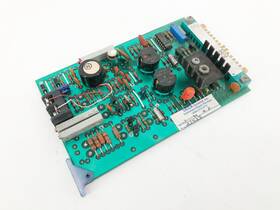
( Brand: Acromag ), ( Manufacturer Part Number: 712-J ), ( Part Type: Control Logic Board )
Review ACROMAG Logic Control Board Pcb 712j
The **Acromag 712-J Logic Control Board** is a high-performance, modular programmable logic controller (PLC) designed for industrial automation applications requiring robust, scalable, and reliable control solutions. Part of Acromag s versatile **700 Series** line, this **712-J** board serves as a compact yet powerful **CPU (Central Processing Unit)** module, engineered to deliver deterministic control, real-time processing, and seamless integration into distributed automation systems. Built on a **backplane-mounted PCB (Printed Circuit Board)** architecture, the 712-J features a **32-bit RISC processor** with a clock speed of **100 MHz**, ensuring rapid execution of control logic, ladder diagrams, and high-speed I/O operations. This board supports **real-time operating systems (RTOS)** and offers **deterministic timing** with cycle times as low as **100 microseconds**, making it ideal for applications where precision and responsiveness are critical, such as motion control, process automation, and machine monitoring.
The **712-J** is equipped with **onboard memory** comprising **512 KB of non-volatile RAM (NVRAM)** for program storage and **256 KB of static RAM (SRAM)** for data retention, ensuring that control logic and configuration data remain intact even during power interruptions. Additionally, it includes **16 KB of EEPROM** for firmware and configuration settings, providing long-term stability and ease of reprogramming. To enhance connectivity and expandability, the board features **two high-speed serial ports (RS-232/422/485)** with programmable baud rates, enabling seamless communication with **HMI (Human-Machine Interface) terminals, scanners, or other industrial devices**. For advanced diagnostics and remote monitoring, the 712-J includes **two isolated analog input channels (0 10 V or 4 20 mA)** and **two digital I/O points**, allowing for real-time feedback and status monitoring. These inputs can be used for analog sensor integration, temperature monitoring, or signal conditioning in hybrid control systems.
Designed with **industrial durability** in mind, the **712-J** operates within a **wide temperature range of -40 C to 85 C**, making it suitable for harsh environments such as manufacturing plants, oil and gas facilities, or outdoor automation setups. The board adheres to **IEC 61131-3** programming standards, supporting **ladder logic (LD), structured text (ST), function block diagrams (FBD), and instruction list (IL)**, allowing engineers to implement control logic using their preferred methodology. Its **modular design** enables easy integration into Acromag s **700 Series backplane systems**, where it can be paired with a variety of **I/O expansion modules**, **communication adapters**, or **specialized function boards** to create a fully customized control solution. Whether deployed in a **standalone configuration** or as part of a larger distributed control network, the **712-J** delivers **high-speed processing, deterministic control, and reliable performance**, making it a cornerstone for modern industrial automation applications.
### **Pros and Cons of buying a Acromag 712-J Logic Control Board (PCB 712J)**
#### **Pros**
1. **High Reliability and Durability** The Acromag 712-J is a rugged, industrial-grade control board designed for harsh environments, including temperature extremes, vibration, and electrical noise. Its robust construction ensures long-term performance in automated systems, manufacturing, and process control applications.
2. **Modular and Expandable Design** The board supports modular expansion through backplane connections, allowing users to integrate additional I/O modules, timers, counters, and communication interfaces (such as Ethernet, RS-232, or CAN) as needed. This flexibility makes it suitable for evolving system requirements.
3. **Wide Input/Output Options** The 712-J series offers a variety of digital and analog I/O configurations, including discrete I/O, relay outputs, and analog signals (e.g., 0-10V, 4-20mA). This versatility allows it to interface with sensors, actuators, and other control devices in diverse applications.
4. **Industrial-Grade Connectivity** The board supports multiple communication protocols, including Modbus RTU/TCP, Profibus, and DeviceNet, making it compatible with SCADA systems, PLCs, and other industrial networks. This ensures seamless integration into existing automation infrastructures.
5. **Low Latency and High Performance** Designed for real-time control, the 712-J provides fast processing and minimal response time, which is critical for applications requiring precise timing, such as motion control, robotics, or high-speed data acquisition.
6. **Easy Programming and Configuration** Acromag s software tools, such as the **Acromag Configuration Utility** and support for **Ladder Logic (IEC 61131-3)**, make programming and debugging straightforward. This reduces development time and lowers the learning curve for engineers familiar with PLC programming.
7. **Redundancy and Fault Tolerance** Some variants of the 712-J series support redundancy features, such as dual-power supply inputs or hot-swappable modules, which enhance system reliability in critical applications where downtime is unacceptable.
8. **Comprehensive Documentation and Support** Acromag provides detailed technical documentation, including wiring diagrams, datasheets, and application notes. Their customer support is known for being responsive, which is helpful for troubleshooting or customization needs.
9. **Compatibility with Legacy Systems** The 712-J is often used as a drop-in replacement for older control boards, making it a cost-effective upgrade for existing systems without requiring a full redesign.
10. **Cost-Effective for High-Volume Applications** While the initial purchase price may be higher than some consumer-grade alternatives, the long-term reliability and reduced maintenance costs make it economical for industrial applications where downtime carries significant financial penalties.
---
#### **Cons**
1. **Higher Upfront Cost** Compared to basic PLCs or consumer-grade microcontrollers, the Acromag 712-J is more expensive. This can be a barrier for small businesses or startups with limited budgets, especially if only a few units are needed.
2. **Complexity for Non-Experienced Users** The advanced features and modular nature of the 712-J require a good understanding of industrial automation principles. Users without prior experience in PLC programming or control systems may struggle with setup, configuration, or troubleshooting.
3. **Limited DIY Repairability** While the board is robust, complex issues (e.g., hardware failures in the backplane or communication modules) may require professional servicing. Acromag s repair turnaround times can sometimes be slow, leading to extended downtime if the board is critical to operations.
4. **Software Dependency** The full functionality of the 712-J relies on Acromag s proprietary software tools. Users must ensure compatibility with their existing development environment, which may require additional licensing or training.
5. **Power Requirements** The board typically requires a stable industrial power supply (e.g., 24V DC or 110/230V AC). Fluctuations or poor-quality power can affect performance, and users must invest in appropriate power conditioning equipment if their environment is unstable.
6. **Size and Space Constraints** The 712-J is a larger, rack-mountable unit, which may not be suitable for compact or space-limited applications. This could require additional enclosure space or creative mounting solutions.
7. **Learning Curve for Advanced Features** Features like advanced timing, high-speed I/O, or complex communication protocols (e.g., Profibus) may require additional training or documentation review, adding to the time investment for implementation.
8. **Potential for Obsolescence** While Acromag products are known for longevity, newer technologies (e.g., Ethernet/IP, OPC UA, or cloud-based control) may eventually render some features of the 712-J less relevant. Users must weigh whether the board s capabilities will remain sufficient for future needs.
9. **Limited Consumer Support** Acromag primarily targets industrial and commercial clients, so support for very niche or custom applications may not be as robust as with larger, more consumer-focused brands.
10. **Integration Challenges with Non-Standard Systems** If the system integrates with proprietary or non-standard devices, compatibility issues may arise, requiring additional development effort or custom interfaces.
---
### **Conclusion**
The **Acromag 712-J Logic Control Board (PCB 712J)** is a high-performance, industrial-grade control solution ideal for applications requiring reliability, modularity, and real-time processing. Its strengths lie in its durability, expandability, and compatibility with industrial communication protocols, making it a strong choice for manufacturing, automation, and process control environments.
However, its higher cost, complexity, and potential learning curve may not justify its use for small-scale or non-industrial projects. It is best suited for users with existing industrial infrastructure, technical expertise, or those planning long-term, high-reliability applications.
### **Recommendation**
- **Buy the Acromag 712-J if:**- You are working in an industrial or automated environment where reliability and expandability are critical.
- Your application requires real-time control, multiple I/O options, or compatibility with PLCs and SCADA systems.
- You have the budget and technical resources to handle programming, configuration, and potential maintenance.
- You need a long-term solution that can scale with future system upgrades.
- **Avoid the Acromag 712-J if:**- You are operating on a tight budget and can use a more cost-effective alternative (e.g., a basic PLC or microcontroller).
- Your project is small-scale, non-industrial, or lacks the technical expertise to manage the board s complexity.
- You require consumer-grade simplicity or frequent software updates (e.g., for IoT or cloud-based applications).
- Your system has space constraints or unstable power conditions that the board cannot accommodate.
For most **industrial automation, manufacturing control, or process automation applications**, the **712-J is a highly recommended choice** due to its balance of performance, durability, and flexibility. However, always evaluate your specific requirements and compare it with alternatives like **Siemens, Allen-Bradley (Rockwell), or Beckhoff** to ensure it meets your long-term needs.
Details:
Acromag 712-J Logic Control Board PCB 712J.
part #: 712 prices
- $39.95-$94.95
specifications pcbemdev:
- brand: Acromag
- mpn: 712-j
- part type: Control Logic Board
shipping pcbemdev:
- type: Calculated
- transit: 3-8 Days
- carrier: UPS
- cost: $0.00
- service: UPS Ground, UPS Next Day Air, UPS 2nd Day Air
- class: Standard, One-day, Expedited
payments pcbemdev:
- wallet: Google-pay
- credit card: Mastercard
- other
general pcbemdev:
- Electronic Components Semiconductors > Circuit Boards Prototyping > Printed Circuit Boards PCBs
- condition: Used
seller pcbemdev:
- city: Portland, Oregon
- # reviews: 14185
- rating: 100.0%
offer pcbemdev:
- quantity: 1
- availability: In Stock
- options: Ship-to-home
- sold: 0
- best offers: True
- started: May 18, 2026
returns pcbemdev:
- paid by: Seller
- method: Money back
- time: 30 Days
- policy: Returns Accepted
Acromag 712 Is Similar To:
- Acromag 1018-114d Circuit Board (52.1% similar) Stock #5421 location 1i b9 6 Acromag 1018-114D circuit board...(February 10th, 2025)
- Acromag 781ac 781-ac Power Supply 781-ac st Printed Control Module Circuit Board (41% similar) Acromag 781-AC power supply 781-AC/ST printed control module circuit board, stock # 5540, location: 1IC2...(March 7th, 2025)
- Moore Products 15645-1 Pcb Control Board Iss.2 Acromag Plc System 15227-152 (32.5% similar) The Moore products 15645-1 pcb control board ISS.2 is a high-quality electronic component manufactured in the USA. With its compact and versatile design, this pcb control board is a crucial component for businesses industrial setups looking to streamline operations enhance productivity. This unit is...(January 24th, 2026)
- Acromag Avme-9668 Perfect Condition Avme 9668 Vme Board P n 1018-830a (48.6% similar) Perfect working, extra clean ME board from Acromag, model acme 9668...(April 17th, 2026)