IPC 850-5220-002 Automation Printed Circuit Board
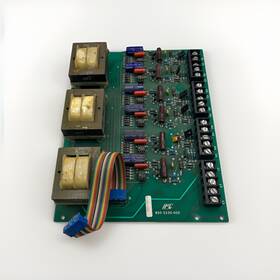
( Brand: Ipc ), ( Manufacturer Part Number: 850-5220-002 ), ( Part Type: Circuit Board )
Review IPC Automation Printed Circuit Board
The **IPC 850-5220-002 Automation Printed Circuit Board (PCB)** is a high-performance, precision-engineered electronic assembly designed to meet the rigorous demands of modern automation systems, industrial control, and robotics applications. This rugged, multi-layer PCB adheres to **IPC-2221 and IPC-6012** standards, ensuring exceptional reliability, thermal management, and signal integrity under demanding operational conditions. Constructed with a **high-density, fine-pitch design**, the board features optimized copper weight distribution ranging from **1 oz to 4 oz** to balance electrical performance with mechanical strength, minimizing signal loss and electromagnetic interference (EMI) while maintaining structural integrity. Its **FR-4 or high-Tg (170 C) substrate material** provides superior thermal stability, making it ideal for environments with fluctuating temperatures, such as factory automation, CNC machining, or automated material handling systems.
The **IPC 850-5220-002** incorporates **surface-mount technology (SMT) and through-hole components** in a compact, modular layout, allowing for efficient routing of high-speed signals, power distribution, and control logic. Key features include **blind and buried vias** for enhanced connectivity without excessive board thickness, **gold-plated contacts** for corrosion resistance and improved solderability, and **high-reliability solder mask and silkscreen** to prevent short circuits and ensure clear component identification. The board s **I/O density** is optimized for seamless integration with sensors, actuators, PLCs, and other automation peripherals, supporting protocols such as **RS-485, CANbus, Ethernet, or proprietary digital interfaces** depending on the application. Additionally, its **flexible mounting options**, including edge-card connectors, screw terminals, or direct solder pads, accommodate various enclosure designs while maintaining a clean, streamlined form factor.
Engineered for **long-term durability**, the IPC 850-5220-002 undergoes **strict quality control processes**, including **automated optical inspection (AOI), in-circuit testing (ICT), and burn-in testing**, to verify functionality and endurance under continuous operation. Its **IP67-rated (optional) or IP20 standard** protection ensures resistance to dust, moisture, and mechanical stress, making it suitable for both cleanroom and harsh industrial environments. Whether deployed in **pick-and-place machines, robotic arms, conveyor systems, or smart factory infrastructure**, this PCB delivers the precision, efficiency, and adaptability required to enhance automation workflows. With its **customizable design options**, including **additional layers, specialized coatings, or embedded components**, the IPC 850-5220-002 serves as a versatile backbone for next-generation automation solutions, combining engineering excellence with uncompromising performance.
### **Pros and Cons of buying a IPC 850-5220-002 Automation Printed Circuit Board (PCB)**
#### **Pros:**1. **High Reliability and Durability** Designed for industrial automation, this PCB is built to withstand harsh operating conditions, including temperature fluctuations, vibration, and electrical noise. Its robust construction ensures long-term performance in manufacturing environments.
2. **Compatibility with Automation Systems** The IPC 850-5220-002 is specifically engineered for automation applications, meaning it integrates seamlessly with PLCs (Programmable Logic Controllers), motion control systems, and other industrial automation hardware. This reduces compatibility issues and simplifies system integration.
3. **Precision and Performance** The PCB likely incorporates high-quality components and precise manufacturing techniques, ensuring accurate signal processing, low latency, and minimal signal degradation. This is critical for applications requiring real-time control, such as CNC machines, robotic systems, or conveyor automation.
4. **Modular and Scalable Design** Many automation PCBs, including this model, are designed with modularity in mind. This allows for easy upgrades, expansion, or replacement of specific modules without overhauling the entire system, reducing downtime and maintenance costs.
5. **Support for Advanced Features** Depending on the exact specifications, this PCB may support features like high-speed data processing, multiple communication interfaces (e.g., Ethernet, Profibus, Modbus), and real-time operating system (RTOS) compatibility. These features enhance system flexibility and functionality.
6. **Vendor Support and Documentation** Reputable suppliers provide detailed technical documentation, including schematics, datasheets, and troubleshooting guides. This ensures easier debugging, maintenance, and customization by engineers.
7. **Cost-Effective for Industrial Use** While the upfront cost may be higher than generic PCBs, the long-term reliability and reduced downtime often make it a cost-effective choice for industrial automation. Replacing a faulty generic PCB in a production line can be far more expensive than investing in a high-quality automation PCB.
---
#### **Cons:**1. **Higher Initial Cost** Compared to off-the-shelf or generic PCBs, the IPC 850-5220-002 is likely more expensive due to its specialized design, quality components, and industrial-grade manufacturing. This can be a barrier for small businesses or startups with limited budgets.
2. **Potential Lead Times** Industrial-grade PCBs, especially those with custom or proprietary designs, may have longer lead times for production and delivery. This could delay project timelines if the PCB is not readily available from stock.
3. **Limited Customization** While the PCB is designed for automation, it may not support every niche requirement without modifications. Customization could require additional engineering work, increasing development time and cost.
4. **Dependency on Specific Suppliers** If the PCB is sourced from a single supplier, there is a risk of supply chain disruptions (e.g., supplier bankruptcy, geopolitical issues, or component shortages). Diversifying suppliers may not always be feasible due to proprietary design constraints.
5. **Complexity in Integration** For engineers unfamiliar with automation systems, integrating this PCB into an existing setup may require additional training or expertise. Misconfiguration could lead to system malfunctions or safety hazards.
6. **Potential for Obsolescence** Industrial automation standards and technologies evolve rapidly. If the PCB is not regularly updated or replaced, it may become incompatible with newer automation software, communication protocols, or hardware in the future.
7. **Warranty and Support Limitations** Some suppliers offer limited warranties or support for industrial PCBs, especially if purchased through third-party resellers. Ensuring long-term support may require direct contact with the manufacturer.
---
### **Conclusion:**The **IPC 850-5220-002 automation PCB** is a high-quality, specialized component designed for demanding industrial applications. Its strengths lie in reliability, compatibility with automation systems, precision, and long-term performance, making it ideal for manufacturing, robotics, or process control environments where downtime is costly. However, the higher upfront cost, potential lead times, and dependency on specific suppliers may pose challenges, particularly for smaller operations or projects with tight budgets.
For **large-scale industrial automation projects, OEM applications, or systems requiring high reliability**, this PCB is a strong recommendation due to its proven performance and integration benefits. Conversely, for **small-scale or experimental projects, budget-conscious applications, or non-critical systems**, a more cost-effective or generic PCB might be preferable, provided it meets the basic functional requirements.
### **Recommendation:** - **Buy the IPC 850-5220-002 if:**- You are working on a critical automation system where reliability and performance are non-negotiable.
- Your project involves PLCs, motion control, or real-time processing where signal integrity and low latency are essential.
- You have a budget that can accommodate the higher initial cost in exchange for long-term savings from reduced downtime and maintenance.
- You require vendor support and documentation for seamless integration and troubleshooting.
- **Avoid or consider alternatives if:**- Your project is small-scale, experimental, or non-critical, and a lower-cost PCB would suffice.
- You are operating on a tight budget and can find a compatible generic PCB that meets your performance needs.
- You anticipate rapid technological changes that may render the PCB obsolete quickly, and you prefer modular or easily upgradeable solutions.
Before purchasing, verify the exact specifications, compatibility with your system, and the reputation of the supplier to ensure it aligns with your project s requirements.
Details:
It handles specialized signal conditioning, localized input/output matrix mapping, or motor-drive velocity loops. Sold as shown. Architecture: This is typically a 2-board assembly stack or multi-layered interface card. The part number configuration 850-5220-002 also frequently documented as 850-5220-02/001 or within the 850-5220-x sub-series identifies a legacy PC Board PLC / Add-On Control Assembly manufactured by IPC Automation now of broader industrial and motion landscape.
Schneider Electric Repair. Functional System Overview Module Classification: PC Board PLC / Distributed Machine Control Add-On.
part #: 8505220002 price
- $99.00
specifications pcbemdev:
- brand: Ipc
- mpn: 850-5220-002
- part type: Circuit Board
shipping pcbemdev:
- type: Calculated
- carrier: USPS, FedEx
- cost: $14.67
- class: Expedited, Economy
- service: USPS Priority Mail, FedEx Ground Economy
- transit: 3-7 Days
offer pcbemdev:
- sold: 0
- availability: In Stock
- options: Ship-to-home
- started: May 27, 2026
- quantity: 1
payments pcbemdev:
- other
- credit card: Discover
- wallet: Google-pay
returns pcbemdev:
- method: Money back
- time: 30 Days
- policy: Returns Accepted
- paid by: Seller
seller pcbemdev:
- # reviews: 3908
- rating: 99.7%
- city: Westland, Michigan
general pcbemdev:
- condition: Used
- Electronic Components Semiconductors > Circuit Boards Prototyping > Printed Circuit Boards PCBs
Ipc 850-5220-002 Is Similar To:
- Snmp-ipc-ext2 Advantech Industrial Computer Circuit Board (47.2% similar) B101-1 industrial computer circuit board. Advantage SNMP-IPC-EXT2 rev...(December 6th, 2018)
- Tokyo Electron Ipc-t0053a-11 Circuit Board (44% similar) Tokyo electron IPC-T0053A-11 circuit board...(August 27th, 2024)