LTX CORPORATION 860-0615-00 Smtc Hf Th Vac Controller Card 4002
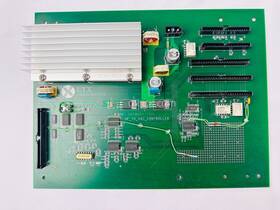
( Brand: Ltx Corporation ), ( Manufacturer Part Number: 860-0615-00 ), ( Part Type: Controller Card ), ( Unit Type: Unit )
Review LTX CORPORATION Smtc Hf Th Vac Controller Card
The **SMT 4002 HF TH VAC Controller Card (LTX 860-0615-00)** is a high-performance, precision-engineered control module designed for advanced thermal management and vacuum processing applications within industrial and research-grade systems. This compact yet robust card integrates seamlessly into LTX s 860-series controller platforms, offering a sophisticated solution for managing high-frequency (HF) thermal head (TH) and vacuum (VAC) control functions with exceptional accuracy and reliability. Engineered for environments demanding precise temperature regulation, such as semiconductor manufacturing, thin-film deposition, or materials science research, this controller card ensures optimal performance through its integrated feedback loops, real-time monitoring, and adaptive control algorithms. Its high-frequency capabilities enable rapid response times, minimizing thermal gradients and enhancing process consistency, while its vacuum control features facilitate precise pressure regulation, critical for applications requiring controlled atmospheres or low-pressure environments. The card s modular design allows for easy integration into existing systems, offering flexibility for customization and scalability to meet evolving operational demands. Built with durability in mind, it features robust shielding and high-quality components to withstand the rigors of continuous operation, ensuring long-term reliability in demanding industrial settings. Whether deployed in a cleanroom, research laboratory, or production facility, the SMT 4002 HF TH VAC Controller Card delivers a blend of precision, efficiency, and adaptability, making it an indispensable asset for engineers and technicians seeking to optimize their thermal and vacuum-based processes.
The **SMT-C4002 HF TH VAC Controller Card (LTX 860-0615-00)** is a specialized component used in semiconductor manufacturing, particularly for thermal head (TH) and vacuum control in pick-and-place machines, soldering systems, or other high-precision applications. Below is a detailed analysis of its pros and cons, followed by a conclusion and recommendation.
---
### **Pros**
1. **High Precision and Control**
The card is designed for fine-tuned thermal and vacuum control, which is critical in applications requiring consistent temperature and pressure management. This ensures reliability in processes like soldering, bonding, or material handling where deviations can lead to defects.
2. **Compatibility with LTX Systems**
As part of the LTX ecosystem (likely used in their pick-and-place machines or related equipment), it integrates seamlessly with existing hardware and software. This reduces the need for additional interfacing or retrofitting, simplifying maintenance and upgrades.
3. **Durability and Industrial Build**
Built for industrial use, the card is likely ruggedized to withstand harsh environments common in manufacturing settings, such as temperature fluctuations, electrical noise, and mechanical stress. This longevity can lower long-term replacement costs.
4. **Support for Advanced Features**
The "HF" (high frequency) designation suggests support for rapid thermal cycling or precise vacuum modulation, which can improve process speeds and efficiency in automated systems. This is particularly useful in high-volume production environments.
5. **Vendor Support and Warranty**
Purchasing from a reputable manufacturer like LTX comes with technical support, documentation, and warranty coverage. This can be invaluable for troubleshooting or addressing hardware failures, reducing downtime.
6. **Modularity and Upgradability**
The card s design may allow for easy replacement or upgrading within the system, enabling users to adapt to newer technologies or process requirements without overhauling the entire setup.
7. **Energy Efficiency**
Modern control cards often incorporate power-saving features or efficient drivers, which can reduce energy consumption in thermal and vacuum applications, lowering operational costs.
---
### **Cons**
1. **High Cost**
Specialized controller cards, especially those from established brands like LTX, can be expensive. The price may be prohibitive for small-scale operations or startups with limited budgets. The cost must be justified by the specific application s requirements.
2. **Limited Flexibility**
The card is likely optimized for LTX systems, which may restrict its use in non-LTX equipment. Users outside the LTX ecosystem may need additional adapters or compatibility workarounds, adding complexity and potential costs.
3. **Dependence on Proprietary Software**
LTX systems often require proprietary software for full functionality. This can create dependencies on the vendor for updates, support, or even basic operation, which may not be ideal for users seeking open or third-party alternatives.
4. **Potential for Obsolescence**
As technology evolves, older controller cards may become outdated, especially if they lack support for newer communication protocols (e.g., Ethernet/IP, USB 3.0) or advanced control algorithms. Users may need to invest in replacements sooner than expected.
5. **Learning Curve**
High-precision control systems can require specialized knowledge to configure, calibrate, and maintain. Training staff or hiring experts may add to the operational overhead, particularly for non-technical users.
6. **Single-Point Failure Risk**
If the card fails, it could halt production until repairs or replacements are made. While LTX likely offers reliable components, the risk of downtime remains a concern in critical manufacturing processes.
7. **Limited Customization**
The card s functionality may be fixed to specific applications (e.g., thermal heads, vacuum nozzles). Users with unique or non-standard requirements may find the card insufficient without additional modifications or external components.
---
### **Conclusion**
The **LTX 860-0615-00 (SMT-C4002 HF TH VAC Controller Card)** is a robust, high-performance solution for users within the LTX system ecosystem who prioritize precision, reliability, and integration with existing equipment. Its strengths lie in its industrial-grade build, compatibility, and advanced control capabilities, making it ideal for applications like semiconductor manufacturing, pick-and-place machines, or soldering systems where consistency is paramount.
However, the high cost, proprietary nature, and potential limitations in flexibility or long-term support may deter users outside the LTX environment or those with budget constraints. Additionally, the risk of obsolescence and the need for specialized expertise are factors to consider.
---
### **Recommendation**
**Buy the LTX 860-0615-00 if:**- You are already using or upgrading an LTX system and require precise thermal and vacuum control.
- Your application demands high reliability and consistency, such as in automated assembly or soldering.
- You can justify the cost based on long-term operational benefits (e.g., reduced defects, increased throughput).
- You have access to technical support or staff trained in LTX systems.
**Avoid or explore alternatives if:**- You are operating outside the LTX ecosystem and need broader compatibility.
- Your budget is limited, and you can find equally capable (or better) alternatives from other manufacturers (e.g., ASM, YAMAHA, or third-party vendors).
- You require extensive customization or non-standard functionality that this card does not support.
- You anticipate rapid technological changes in your industry, making long-term investment risky.
**Alternatives to Consider:**- **Third-party controllers:** Brands like **Omron, Siemens, or Beckhoff** offer programmable controllers with thermal/vacuum modules that may be more flexible or cost-effective.
- **Open-source/hybrid systems:** Platforms like **LabVIEW or PLC-based solutions** could provide similar control with greater adaptability.
- **Refurbished or used units:** If budget is a concern, check for certified refurbished LTX cards or compatible used equipment.
Ultimately, the decision should align with your specific application needs, budget, and long-term goals. For most LTX-compatible users, this card is a sound investment for precision-driven processes. For others, a cost-benefit analysis against alternatives is strongly advised.
Details:
LTX Corporation 860-0615-00 SMTC 4002 HF TH VAC Controller Card.
part #: 860061500 prices
- $17.98-$358.00
specifications pcbemdev:
- brand: Ltx Corporation
- mpn: 860-0615-00
- part type: Controller Card
- unit type: Unit
payments pcbemdev:
- credit card: Mastercard
- wallet: Paypal
- other
returns pcbemdev:
- paid by: Buyer
- policy: Returns Accepted
- time: 30 Days
- method: Money back
offer pcbemdev:
- options: Ship-to-home
- availability: In Stock
- sold: 0
- best offers: True
- started: May 1, 2026
- quantity: 1
seller pcbemdev:
- rating: 99.9%
- city: Richardson, Texas
- # reviews: 5888
shipping pcbemdev:
- type: Calculated
- class: Economy, Standard
- service: FedEx Ground Economy, UPS Ground, FedEx Ground / FedEx Home Delivery
- carrier: FedEx, UPS
- cost: $11.22
- transit: 4-10 Days
general pcbemdev:
- condition: Used
- Electronic Components Semiconductors > Circuit Boards Prototyping > Printed Circuit Boards PCBs
Ltx Corporation 860-0615-00 Is Similar To:
- 080478 Ltx Station Controller Board (49% similar) Ltx station controller board 080478RECEIVED this wrapped in anti-static...(September 29th, 2018)
- Ltx Corporation 865-2593-00 Circuit Board (55.8% similar) Ltx Corporation 865-2593-00 circuit board...(September 17th, 2024)
- Ltx Corporation 865-7477-01 Circuit Board (55.8% similar) Ltx Corporation 865-7477-01 circuit board, board...(September 17th, 2024)
- Ltx Corporation 865-2735-02 Circuit Board (57.7% similar) Ltx Corporation 865-2735-02 circuit board, board...(September 17th, 2024)
- Ltx Corporation 860-2759-01 Circuit Board (57.7% similar) Ltx Corporation 860-2759-01 circuit board...(September 17th, 2024)
- Ltx Corporation 865-7433-00 Circuit Board (55.8% similar) Ltx Corporation 865-7433-00 circuit board...(October 10th, 2024)
- Ltx Corporation 860-1545-00 Circuit Board (61.5% similar) Ltx Corporation 860-1545-00 circuit board...(December 6th, 2024)
- Ltx Corporation 860-1400-01 Circuit Board (59.6% similar) Ltx Corporation 860-1400-01 circuit board...(December 6th, 2024)
- Ltx 865-1008-00 Dual Dc Power Supply Converter Slot Card (42% similar) Ltx 865-1008-00 dual dc power supply converter slot card...(May 21st, 2025)