HITACHI Panel Driver Fpga Pcb Board 97-490883 TX76D01VM 0291 3418 EB01
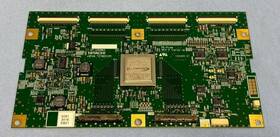
( Brand: Hitachi ), ( Manufacturer Part Number: 97490883 ), ( Part Type: Panel Driver Board )
Review HITACHI Panel Driver Fpga Pcb Board Part
The **Hitachi 97490883 Panel Driver FPGA PCB Board (Model 97-49080883, TX76D01VM, Part Numbers 0291/3418/EB01)** is a high-performance, industrial-grade electronic module designed for integration into human-machine interface (HMI) systems, control panels, and automation equipment. This compact yet robust board serves as a critical interface between a system s FPGA (Field-Programmable Gate Array) logic and external panel components, such as touchscreens, keypads, LEDs, or other input/output devices. Engineered with precision, the **TX76D01VM** architecture ensures seamless communication between the FPGA s programmable logic and the physical panel inputs/outputs, enabling real-time data processing, signal conditioning, and user interaction control.
At its core, the **97490883** board incorporates a **high-speed FPGA-based driver circuit**, optimized for low-latency operation and deterministic performance essential for applications in industrial automation, medical devices, or embedded control systems where timing and reliability are paramount. The PCB is built on a **multi-layer, high-density interconnect (HDI) substrate**, ensuring signal integrity and minimizing electromagnetic interference (EMI), which is critical in noisy industrial environments. The **0291/3418/EB01** variants may denote specific firmware revisions, mechanical adaptations, or additional peripheral support, such as enhanced I/O expansion or compatibility with Hitachi s proprietary panel driver protocols.
One of the standout features of this module is its **flexible I/O configuration**, allowing for customizable connections to a wide range of panel components, including resistive or capacitive touch sensors, push-button arrays, and status indicators. The board s **FPGA-driven logic** enables dynamic signal processing, such as debouncing, filtering, and protocol translation, reducing the burden on the host system while maintaining high responsiveness. Additionally, the **TX76D01VM** series is designed with **industrial-grade components**, including robust voltage regulators, signal conditioning amplifiers, and ESD protection circuits, ensuring durability in harsh operating conditions such as temperature extremes, vibration, or electrical noise.
For integration into larger systems, the **97490883** board provides a **standardized mounting interface**, often compatible with Hitachi s modular panel designs, allowing for easy assembly into enclosures or backplane systems. The **EB01** variant may include extended features such as **diagnostic LEDs, serial communication ports, or enhanced power management**, further simplifying troubleshooting and system diagnostics. Whether deployed in a **factory automation setup, a medical monitoring device, or a high-precision instrumentation system**, this FPGA-based panel driver board delivers the reliability, speed, and adaptability required to bridge the gap between digital logic and physical user interaction.
In summary, the **Hitachi 97490883 Panel Driver FPGA PCB Board** is a sophisticated, high-performance module that combines **FPGA-based signal processing, industrial-grade robustness, and flexible I/O capabilities** to enable seamless human-machine interaction in demanding applications. Its precision engineering and modular design make it an ideal choice for engineers seeking a dependable solution for integrating panel inputs and outputs into modern control systems.
### **Pros and Cons of buying a Hitachi 97490883 FPGA PCB Board (TX76D01VM, 0291, 3418, EB01)**
#### **Pros**
1. **Compatibility with Legacy Systems** This FPGA board is designed for Hitachi s TX-series (TX76D01VM) and is likely used in older industrial, telecom, or embedded systems. If you require a specific function (e.g., signal processing, protocol conversion, or real-time control) that this board supports, it may be the only viable option.
2. **Proven Reliability** Hitachi s FPGA solutions from this era (early 2000s) were widely deployed in industrial and telecom applications, suggesting a track record of durability in stable environments. If the board is in good condition, it may function reliably for years.
3. **Potential Cost Savings** If the board is no longer manufactured, purchasing a used or refurbished unit could be significantly cheaper than developing a custom FPGA solution from scratch. This is especially true if the board performs a critical function that is difficult to replicate.
4. **Access to Technical Documentation** Hitachi may still provide schematics, datasheets, or firmware for this model, depending on the user s relationship with the manufacturer or availability of archived resources. This can be useful for troubleshooting or integration.
5. **Specialized Functions** Some FPGA boards include hardwired accelerators (e.g., DSP cores, high-speed I/O, or protocol stacks) that are hard to replicate in modern FPGAs without significant effort. If the board s specific features are irreplaceable, it may be worth acquiring.
6. **Ease of Integration** If the board is designed to plug into an existing system (e.g., via backplane, PCI, or proprietary connectors), it may integrate seamlessly without requiring major modifications to the host hardware.
---
#### **Cons**
1. **Obsolescence and Lack of Support** This board is likely **end-of-life (EOL)** or **end-of-support (EOS)**, meaning Hitachi no longer produces replacements, firmware updates, or technical support. This increases the risk of failure without recourse.
2. **Difficulty in Sourcing Parts** Finding replacement components (e.g., FPGA chips, connectors, or passive elements) may be challenging due to long lead times or unavailability. Even if the board is functional now, future repairs could be impossible.
3. **Compatibility Issues with Modern Systems** If the board interfaces with newer hardware (e.g., USB, Ethernet, or high-speed buses), it may require adapters or custom interfaces, adding complexity and cost.
4. **Limited Availability and High Cost** Since this is an older, specialized part, it may be **expensive** if sourced from a broker or eBay. Prices can fluctuate wildly based on demand, and authenticating the board s origin and condition can be difficult.
5. **Risk of Counterfeit or Damaged Units** Without a trusted supplier, there is a risk of purchasing a **counterfeit, refurbished, or damaged** board. Testing functionality (e.g., via known-good firmware or test patterns) is essential but may not be feasible for all buyers.
6. **Lack of Modern Security Features** If the board is used in a networked or security-sensitive application, it may lack modern encryption, authentication, or vulnerability protections. Retrofitting security could be impractical.
7. **Training and Expertise Required** Working with this board may require **specialized knowledge** of Hitachi s FPGA toolchain (e.g., Hitachi H8S, TX-series development tools) or legacy VHDL/Verilog code. Finding engineers familiar with this ecosystem could be difficult.
8. **Environmental and Compliance Risks** Older electronics may contain **hazardous materials** (e.g., lead, brominated flame retardants) that violate modern regulations (e.g., RoHS). If disposal or recycling is needed later, compliance could be an issue.
---
### **Conclusion**
Buying the **Hitachi 97490883 FPGA PCB board (TX76D01VM, 0291, 3418, EB01)** is a **high-risk, high-reward** decision. It is **justified only if**:- The board performs a **critical, irreplaceable function** in your system.
- You have **no alternative** (e.g., no modern FPGA can replicate its exact behavior).
- You can **source it from a trusted supplier** and **verify its authenticity and condition**.
- You are prepared for **potential long-term maintenance challenges** (e.g., parts obsolescence, lack of support).
If the board is **not mission-critical**, alternatives should be explored first, such as:- **Modern FPGA replacements** (e.g., Xilinx Zynq, Intel Cyclone, or Altera SoC) with similar I/O and processing capabilities.
- **Software emulation** (if the board s logic can be replicated in FPGA/ASIC code).
- **Cloud or FPGA-as-a-service** solutions if the function can be offloaded.
---
### **Recommendation**
1. **Verify the Board s Necessity** Confirm that no modern alternative exists before purchasing. If the board is only used for a **non-critical or legacy function**, consider migrating to a supported platform.
2. **Source from a Trusted Supplier** If acquisition is unavoidable, buy from a **reputable electronics broker, Hitachi-authorized reseller, or a known collector** with a return policy. Avoid unknown sellers on general marketplaces.
3. **Test Thoroughly Before Deployment** Run **factory test patterns, known-good firmware, or benchmark workloads** to ensure the board functions as expected. Document its behavior for future reference.
4. **Plan for Obsolescence** Stock **critical spare parts** (e.g., FPGA chip, connectors) and consider **documenting the board s functionality** in case future repairs are needed.
5. **Evaluate Long-Term Costs** Factor in the **total cost of ownership**, including potential downtime, repair costs, and the risk of failure. If the board s value diminishes over time, weigh whether it is worth the investment.
6. **Consider a Migration Strategy** If possible, begin **planning a transition** to a modern FPGA or alternative solution to avoid future dependency on an unsupported component.
**Final Verdict:**Only proceed with this purchase if the board is **absolutely essential** and you have **mitigated the risks** (trusted source, testing, spare parts, migration plan). Otherwise, prioritize a **supported, future-proof alternative**.
Details:
Comes as pictured. Shipping Handling. 1841 W Carriage House Dr, Baton Rouge, LA 70815. Regardless of the origin equipment, documentation provided or identification appearing upon equipment described and offered here is in no way certified for, recommended for any specific use.
We acquired the unit in a state surplus sale. No other accessories. Inventory ID: WH2-Z2-Black Rack Board Box 10, 020326, BAE. Please see the pictures for cosmetic condition and components it comes with.
part #: 97490883 prices
- $38.89-$324.94
specifications pcbemdev:
- brand: Hitachi
- mpn: 97490883
- part type: Panel Driver Board
shipping pcbemdev:
- service: Standard
- transit: 3-8 Days
- type: Fixed
- cost: $15.00
- class: Standard
returns pcbemdev:
- paid by: Buyer
- policy: Returns Accepted
- method: Money back
- time: 30 Days
offer pcbemdev:
- quantity: 1
- availability: In Stock
- options: Ship-to-home
- started: February 3, 2026
- best offers: True
- sold: 0
general pcbemdev:
- Electronic Components Semiconductors > Circuit Boards Prototyping > Printed Circuit Boards PCBs
- condition: Used
seller pcbemdev:
- city: Baton Rouge, Louisiana
- rating: 100.0%
- # reviews: 2043
payments pcbemdev:
- wallet: Google-pay
- credit card: Discover
- other
Hitachi 97490883 Is Similar To:
- 01-20-00 Hitachi Seiki Cnc Board (31% similar) Often these items are priced at only a fraction of their normal cost...(September 1st, 2017)
- 06-19-00-01 Hitachi Seiki Cnc Board (30.3% similar) Often these items are priced at only a fraction of their normal cost...(November 2nd, 2017)
- 07n8101 Hitachi Pcb Ic35l120avva07-0 P-n (29% similar) Tested working guaranteed...(April 20th, 2017)
- 08k2769 Hitachi 60gb Ata Pcb (26.8% similar) This is for the printed circuit board model drive and not. I am easy to work with. Tested in perfect working condition. Our boards are all fully tested and in proper working order prior to listing. The last thing I want is an unhappy customer so would never intentionally ship a questionable item ...(January 22nd, 2018)
- 0a31048 Hitachi Pcb Hdd Hds728080pla380 (34.1% similar) Brand: Hitachi 80GB 5 model: HDS728080PLA380MPN: 0A31048MLC: BA1468CONNECTOR type: stopcock revision code: f 0A30363 01PCB sticker 0A29287 BA1686...(August 26th, 2017)
- 0a32328 Hitachi Pcb Hds728080pla380 Ba1869 (31.7% similar) Pcb has been tested brand: Hitachi 80GB if your HDD still does not work or spin then it is the mechanics of pcb...(January 28th, 2018)
- 0a33168 Hitachi Pcb Hdd Hds728080pla380 (34.1% similar) Brand: Hitachi 80GB 5 model: HDS728080PLA380MPN: 0A33168MLC: BA1868CONNECTOR type: stopcock revision code: f 0A30363 01PCB sticker 0A29287 BA1836...(August 26th, 2017)
- 0a33405 Hitachi Pcb Hdd Hdt725032vlat80 320gb (29.5% similar) 5 model: HDT725032VLAT80MPN: 0A33405MLC: BA2162CONNECTOR type: IDE pedicab revision code: f 0A29526 01PCB sticker 0A53035 BA2178. Brand: Hitachi 320GB...(March 5th, 2017)
- 0a35415 Hitachi Pcb Hdp725050gla360 Ba2727 (25.4% similar) If your HDD still does not work or spin then it is the mechanics of pcb. Pcb has been tested brand: Hitachi 500GB...(March 14th, 2017)
- 0a36888 Hitachi Pcb Hdp725025gla380 Ba2763 (30.2% similar) If your HDD still does not work or spin then it is the mechanics of pcb. Pcb has been tested brand: Hitachi 250GB...(August 24th, 2017)
- 0a37029 Hitachi Hdd Pcb Hcp725025glat80 250gb (27.9% similar) HDD is specific. 5 cinema star model: HCP725025GLAT80MPN: 0A37029MLC: BA2728CONNECTOR type: atypical revision code: 110 0A90028 01PCB sticker 0A29742 BA2631. Perfect for reuse or a donor drive brand: Hitachi 250GB...(February 17th, 2017)