FANUC A20B-2101-0371-06A Cpu Printed Circuit Board A20B-2101-0371/06A
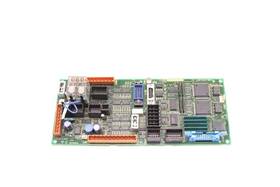
( Brand: Fanuc ), ( Manufacturer Part Number: A20B-2101-0371/06A ), ( Part Type: Circuit Board )
Review FANUC A20b-2101-0371/06a Main Cpu Printed Circuit Board
The **FANUC A20B-2101-0371/06A CPU Printed Circuit Board (PCB)** is a critical high-performance component designed exclusively for FANUC s **A20iB series CNC controllers**, serving as the central processing hub that orchestrates motion control, programming logic, and real-time communication within industrial automation systems. Engineered with precision and built to endure the rigorous demands of manufacturing environments, this PCB integrates a robust **32-bit floating-point processor** alongside high-speed memory modules, ensuring seamless execution of G-code, macro programs, and advanced motion control algorithms. The board features a **multi-layered substrate** with meticulously routed signal traces, optimized for low latency and high-speed data transfer, which is essential for maintaining tight tolerances in high-speed machining applications. Its **dual-core architecture** enhances computational efficiency, allowing for concurrent processing of multiple tasks such as spindle synchronization, toolpath interpolation, and servo control without sacrificing responsiveness. The PCB also incorporates **FANUC s proprietary communication interfaces**, including **FANUC NET, Ethernet/IP, and serial ports**, enabling seamless integration with PLCs, HMIs, and other peripheral devices, while supporting real-time diagnostics and remote monitoring capabilities. Built with **industrial-grade components**, including high-reliability capacitors, resistors, and connectors, this PCB is designed to withstand extended operational cycles, temperature fluctuations, and electromagnetic interference, ensuring long-term stability in harsh factory settings. Whether deployed in CNC lathes, milling machines, or multi-axis machining centers, the A20B-2101-0371/06A CPU PCB delivers the computational power and reliability required to drive modern manufacturing processes with precision and efficiency. For maintenance and upgrade purposes, this component is fully compatible with FANUC s diagnostic tools and software, allowing technicians to perform firmware updates, parameter adjustments, and fault isolation with ease. As a foundational element of the A20iB series, it exemplifies FANUC s commitment to innovation in CNC technology, providing users with a balance of performance, durability, and adaptability in automated production environments.
### **Pros and Cons of Buying a FANUC A20B-2101-0371/06A CPU Printed Circuit Board (PCB)**
#### **Pros:**1. **Compatibility with Older FANUC Systems** This PCB is designed for specific FANUC A-series CNC controllers (such as the A20iB), ensuring direct compatibility with machines that require this exact part. It avoids the need for costly retrofitting or third-party modifications.
2. **Reliability of FANUC Components** FANUC is a well-established brand in industrial automation, known for durable and high-performance hardware. A genuine or refurbished FANUC PCB is likely to function reliably if sourced from a reputable supplier.
3. **Long-Term Availability (If Authentic)** While FANUC has phased out some older models, this particular PCB may still be available through authorized distributors, resellers, or salvage yards. This reduces the risk of obsolescence compared to newer, discontinued parts.
4. **Potential Cost Savings Over New Replacement** If the original PCB is damaged or failing, replacing it with a used/refurbished unit can be significantly cheaper than purchasing a brand-new controller or full system upgrade.
5. **Preservation of Machine Functionality** Without this PCB, the CNC machine may not operate at all or could require expensive workarounds (e.g., using a different controller model). Replacing it restores full functionality without major system changes.
6. **Easier Troubleshooting and Repairs** Since the PCB is part of the original control system, technicians familiar with FANUC A-series machines can diagnose and repair issues more efficiently than with aftermarket or incompatible components.
---
#### **Cons:**1. **High Cost of Authentic Parts** Even if the PCB is used, genuine FANUC components can be expensive, especially if sourced directly from FANUC or authorized dealers. Prices may range from several hundred to over a thousand dollars depending on condition and demand.
2. **Limited Availability of Refurbished/Used Units** Finding a high-quality, tested, and compatible used PCB can be challenging. Some sellers may offer counterfeit or mismatched parts, leading to compatibility issues or premature failure.
3. **Risk of Counterfeit or Mismatched Parts** The market for used industrial components is prone to fraud. A PCB labeled as "A20B-2101-0371/06A" may not be genuine, could be a different revision, or may lack critical firmware support. This can cause software conflicts or hardware malfunctions.
4. **Compatibility Issues with Modified Systems** If the machine has undergone firmware updates, hardware modifications, or has been interfaced with non-FANUC components, the PCB may not work as expected. Testing is required to ensure proper integration.
5. **Potential for Hidden Damage** Used PCBs may have internal wear (e.g., degraded solder joints, capacitor leaks, or damaged traces) that isn t visible externally. Without professional inspection or testing, the unit may fail shortly after installation.
6. **Lack of Warranty or Support** Purchasing from a private seller or uncertified reseller typically means no warranty or technical support. If the PCB fails immediately or requires replacement, the buyer bears the full cost and risk.
7. **Firmware and Software Compatibility** Older FANUC controllers may require specific firmware versions. If the PCB lacks the correct firmware or is incompatible with the machine s current software, it may not function correctly, necessitating additional programming or updates.
8. **Environmental and Safety Concerns** If the PCB has been exposed to extreme conditions (e.g., moisture, dust, or electrical surges), it may pose safety risks or fail prematurely. Proper testing (e.g., continuity checks, voltage tolerance tests) is essential before installation.
---
### **Conclusion**
Buying a **FANUC A20B-2101-0371/06A CPU PCB** can be a practical solution for restoring functionality to an older CNC machine, especially if the original component is damaged or unavailable. However, the decision involves trade-offs between cost, reliability, and risk. The key factors to consider are:
- **Authenticity and condition** of the PCB (avoid counterfeit or damaged units).
- **Source credibility** (prefer authorized resellers, salvage yards, or reputable industrial part suppliers).
- **Compatibility** with the machine s firmware and existing hardware.
- **Testing and inspection** before installation to prevent unexpected failures.
If the PCB is critical to machine operation and replacement is unavoidable, prioritize **verified, tested, and warranted units** to minimize downtime and repair costs. For less critical applications, exploring alternative solutions (e.g., controller upgrades, third-party replacements) may be worth evaluating.
---
### **Recommendation**
1. **Verify the PCB s Authenticity** Confirm the exact part number, revision, and compatibility with your machine model. Request documentation (e.g., serial number, test reports) from the seller.
2. **Purchase from Trusted Sources**
- **Authorized FANUC distributors** (e.g., FANUC America, FANUC Europe, or local FANUC-certified dealers).
- **Reputable industrial salvage yards** (e.g., MachineToolShop, eBay with verified sellers, or specialized CNC part resellers).
- Avoid private sellers without a track record or physical inspection options.
3. **Inspect or Test the PCB**
- If possible, visually inspect for physical damage (burn marks, swollen capacitors, corrosion).
- Request a **functional test** (e.g., power-on self-test, communication checks with the CNC system) before purchasing.
- Consider hiring a **CNC technician** to verify compatibility and test the unit.
4. **Budget for Additional Costs**
- Account for **shipping, handling, or inspection fees**.
- Factor in **labor costs** for installation and testing by a professional.
- Have a **backup plan** (e.g., a rental machine or alternative controller) in case the PCB fails post-installation.
5. **Explore Alternatives**
- If the PCB is too expensive or unavailable, research **FANUC-compatible third-party controllers** (e.g., Siemens, Heidenhain, or aftermarket CNC systems).
- Consider **upgrading to a newer FANUC model** (e.g., A20iB-60, A20iB-80) if the machine is still viable for long-term use.
6. **Document the Process** Keep records of the purchase, inspection, and installation to aid future troubleshooting or warranty claims.
**Final Verdict:**If the PCB is **essential for machine operation**, **authentic, tested, and sourced responsibly**, it can be a cost-effective fix. However, if the risk of failure or counterfeit parts is too high, weigh the pros and cons against alternatives like upgrades or third-party solutions. Always prioritize **quality over cost savings** to avoid prolonged downtime or costly repairs.
Details:
part #: a20b2101037106a prices
- $429.95-$729.95
specifications pcbemdev:
- brand: Fanuc
- mpn: A20b-2101-0371/06a
- part type: Circuit Board
payments pcbemdev:
- wallet: Apple-pay
- other
- credit card: Mastercard
returns pcbemdev:
- paid by: Seller
- policy: Returns Accepted
- method: Money back
- time: 30 Days
shipping pcbemdev:
- cost: $23.36
- class: Standard, Expedited, One-day
- service: UPS Ground, USPS Priority Mail, UPS 2nd Day Air, UPS Next Day Air
- type: Calculated
- carrier: UPS, USPS
- transit: 3-6 Days
offer pcbemdev:
- quantity: 1
- availability: In Stock
- sold: 0
- best offers: True
- options: Ship-to-home
- started: April 25, 2026
general pcbemdev:
- condition: Used
- Electronic Components Semiconductors > Circuit Boards Prototyping > Printed Circuit Boards PCBs
seller pcbemdev:
- city: Warren, Michigan
- rating: 100.0%
- # reviews: 5677
Fanuc A20B-2101-0371-06A Is Similar To:
- 44a297032-g02 Ge Fanuc Circuit Control Board Arith (36.2% similar) What you see in the pictures is exactly will receive some listings have a single generic picture if there more than 1 available any questions, just through messaging and we respond as soon can...(January 26th, 2019)
- 44a297034-g03 Ge Fanuc Circuit Control Board (38.4% similar) What you see in the pictures is exactly will receive some listings have a single generic picture if there more than 1 available any questions, just through messaging and we respond as soon can...(January 26th, 2019)
- 44a717559-g01 Hlip1 44a719254-001 Fanuc Used Ge Circuit Board (37.3% similar) Shelving number O80...(March 6th, 2019)
- 44a719326-g01 Ge Fanuc Board Module Used (23.2% similar) Used, in great condition 092318V4...(September 23rd, 2018)
- A16b-1000-0030-06c Ge Fanuc Circuit Board Rack Backplane (34.2% similar) Ge Fanuc A16B 06C circuit board rack back plane...(September 20th, 2018)
- A16b-1010-0285-19b Fanuc Master Mother Pcb Board (35% similar) ...(February 18th, 2019)
- A16b-1200-0150-01a Fanuc Pcb Board In (30.4% similar) Stock buy cheap, tool crib. Template Fanuc PCB room A16B 01A in excellent shape...(June 7th, 2017)
- A16b-1200-0800-06a Fanuc Top Board For Servo Amplifier (23.9% similar) 50 22C this item is surplus stock in good used condition...(September 28th, 2018)
- A16b-1210-0350 Fanuc Pc Board Option (30.8% similar) Fanuc PC board option 1 A16B A16B12100350 in very good condition. From Fanuc stock tool crib, satisfaction guaranteed. New this unit costs 1,170...(June 9th, 2017)
- A16b-1211-0060 11c 4 30 Axis Fanuc Board Control Warranty Days (18.8% similar) Why not on our Facebook page we publish our listings, latest updates, deals and other related information. Sometimes it even makes a sense of humour. It makes sense. If something it's not listed, it's not included...(May 27th, 2015)
- A16b-1211-0300-04a Ge Fanuc Axis Control Board (37.6% similar) Please only place a bid if you're serious about buying an item. Its the fast, easy and secure way to pay online...(April 25th, 2019)