FANUC A20B-3900-0132 Circuit Board
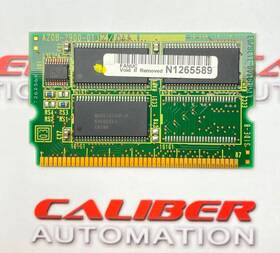
( Brand: Fanuc ), ( Manufacturer Part Number: A20B-3900-0132 ), ( Part Type: Circuit Board )
Review FANUC Circuit Board Used
The **Fanuc A20B-3900-0132** is a high-performance, precision-engineered circuit board designed exclusively for Fanuc CNC (Computer Numerical Control) systems, specifically tailored for the A20B series of controllers. This critical component serves as the backbone of the system s logic and communication functions, ensuring seamless operation between the machine s control unit and peripheral devices such as servo drives, spindle controls, and human-machine interfaces (HMIs). Manufactured to Fanuc s stringent quality standards, the A20B-3900-0132 incorporates advanced surface-mount technology (SMT) and hybrid circuit design, combining both digital and analog signal processing capabilities in a compact yet robust form factor. The board features a dense array of integrated circuits, including high-speed microprocessors, memory modules, and interface controllers, all optimized for real-time processing to minimize latency and maximize efficiency in industrial automation applications. Its robust construction, utilizing high-grade FR-4 or equivalent dielectric materials, ensures resistance to thermal fluctuations, electromagnetic interference (EMI), and mechanical stress, making it ideal for demanding environments such as machining centers, lathes, and robotic systems where reliability is paramount. The A20B-3900-0132 is equipped with multiple high-speed communication ports, including Ethernet, serial (RS-232/RS-422), and proprietary Fanuc interfaces, enabling seamless integration with external devices, PLCs, and networked systems. This board also supports advanced diagnostic and self-monitoring functions, allowing technicians to quickly identify and troubleshoot issues through built-in error codes and status indicators. Whether replacing a failed unit or upgrading an existing system, the A20B-3900-0132 is a mission-critical component that upholds the precision, speed, and dependability synonymous with Fanuc s reputation in industrial automation.
**Pros and Cons of Buying a Fanuc A20B-3900-0132 Circuit Board**
The **Fanuc A20B-3900-0132** is a control board used in Fanuc CNC systems, primarily for servo and spindle control. Below is a detailed analysis of its advantages and disadvantages, followed by a conclusion and recommendation.
---
### **Pros**
1. **Compatibility and Reliability**
- This board is designed specifically for **Fanuc Series 0i, 0i-Mate, 0i-D, and some 16i/18i models**, ensuring seamless integration with these systems. Fanuc is a well-established brand in industrial automation, and their components are generally reliable when properly maintained.
- The board s design is optimized for **high-performance machining**, making it suitable for applications requiring precise servo and spindle control.
2. **Availability of Support and Documentation**
- Fanuc provides extensive **technical documentation, wiring diagrams, and troubleshooting guides** for their components. This makes diagnostics and repairs easier for technicians with access to Fanuc resources.
- Many **authorized Fanuc service centers** and distributors can assist with installation, calibration, or replacement, reducing the risk of improper fitting or functionality issues.
3. **Long-Term Durability**
- Fanuc components are built to withstand **industrial environments**, including temperature fluctuations, electrical noise, and mechanical stress. The A20B-3900-0132, in particular, is a **high-quality printed circuit board (PCB)** with robust soldering and component placement.
- With proper care, these boards can last **decades**, making them a cost-effective investment for machinery that may remain in use for years.
4. **Resale and Trade-In Value**
- Since Fanuc equipment is widely used in manufacturing, **used or refurbished A20B-3900-0132 boards** can often be resold or traded in at a reasonable value. This reduces the risk of being stuck with an obsolete part.
- The board s **universal compatibility** with multiple CNC models increases its marketability if you decide to upgrade or sell your machine later.
5. **Reduced Downtime Compared to Generic Replacements**
- While **third-party or generic replacements** may be cheaper, they often lack the **exact pinout, firmware compatibility, or diagnostic tools** that Fanuc boards offer. Using an authentic Fanuc board minimizes the risk of **software conflicts, poor performance, or premature failure**.
- Many generic boards require **additional calibration or programming adjustments**, whereas a Fanuc board should **plug-and-play** with minimal setup.
6. **Warranty and Guarantee Options**
- Purchasing from an **authorized Fanuc distributor or service provider** may include a **limited warranty** (typically 1 2 years), covering defects in materials or workmanship. This provides peace of mind against early failures.
- Some sellers offer **return policies** or **money-back guarantees**, reducing the financial risk if the board arrives damaged or non-functional.
7. **Access to Firmware Updates**
- Fanuc occasionally releases **firmware updates** to improve performance, add features, or fix bugs. Authentic Fanuc boards can be **easily updated** through the CNC controller, ensuring compatibility with newer software versions.
- Generic boards may not support updates, leading to **deprecated functionality** over time.
---
### **Cons**
1. **High Upfront Cost**
- The **A20B-3900-0132 is significantly more expensive** than generic or aftermarket alternatives. Prices typically range from **$800 to $1,500 **, depending on the seller, condition, and whether it s new or refurbished.
- For businesses operating on tight budgets, this cost may be prohibitive, especially if the board is the only failing component in an otherwise functional machine.
2. **Limited Availability and Lead Times**
- Fanuc parts, especially older or discontinued models, can be **hard to find** from stock. Some distributors may require **weeks or even months** to source the board, causing **extended machine downtime**.
- Unlike generic parts, which are often in **immediate stock**, Fanuc components may need to be **special-ordered**, increasing project timelines.
3. **Potential for Overkill**
- If the **A20B-3900-0132 is being replaced due to a minor issue** (e.g., a single failed component like a capacitor or connector), purchasing the entire board may be **more expensive than necessary**. In such cases, **repairing or replacing only the faulty part** could be a more cost-effective solution.
- Some technicians may argue that **generic servo or spindle control boards** (from brands like **Siemens, Mitsubishi, or third-party CNC suppliers**) can serve the same function at a lower cost.
4. **Risk of Counterfeit or Damaged Units**
- The **used market for Fanuc parts is rife with counterfeit or improperly handled units**. Without proper inspection, a "refurbished" board may have:
- **Failed components** (e.g., blown capacitors, corroded traces).
- **Incorrect firmware** (leading to compatibility issues).
- **Physical damage** (bent pins, cracked solder joints).
- Buying from **unverified sellers** (e.g., eBay without Fanuc authentication, unknown online marketplaces) increases the risk of receiving a **non-functional or incompatible board**.
5. **Dependence on Fanuc-Specific Knowledge**
- Diagnosing and installing a Fanuc board requires **specialized training**. Without experience, technicians may:- **Miswire the board**, leading to electrical shorts or damage to the CNC system.
- **Fail to calibrate properly**, resulting in **poor servo performance or spindle errors**.
- **Overlook firmware compatibility issues**, causing the board to not communicate with the controller.
- This can lead to **additional repair costs** if a technician without Fanuc expertise attempts the installation.
6. **Environmental and Logistical Challenges**
- Fanuc boards are **not designed for extreme environments** (e.g., high humidity, dust, or temperature fluctuations). If the machine operates in such conditions, the board may **degrade faster** than expected.
- Shipping **high-value electronic components** can be risky if not handled properly, increasing the chance of **damage in transit**.
7. **Potential for Obsolete Models**
- While the **A20B-3900-0132 is still widely used**, some newer Fanuc models may have **different interface requirements**. If upgrading to a **more modern CNC system**, this board may become **incompatible without additional adapters or conversions**, reducing its long-term value.
---
### **Conclusion**
The **Fanuc A20B-3900-0132 circuit board** is a **high-quality, reliable, and long-lasting** component for Fanuc CNC systems. Its **authenticity, compatibility, and support** make it the **best choice for critical machining applications** where downtime cannot be tolerated. However, its **high cost, potential availability issues, and the need for specialized knowledge** can be significant drawbacks, especially for smaller shops or those on a tight budget.
For **most industrial applications**, the **pros outweigh the cons**, making it the **preferred option** when replacing a failed Fanuc servo/spindle control board. However, if the issue is **minor and the machine is older**, a **cost-benefit analysis** should be performed to determine whether repairing a specific component or investing in a generic alternative would be more economical.
---
### **Recommendation**
1. **Buy from an Authorized Fanuc Distributor or Service Center**
- To avoid counterfeit or damaged units, **purchase directly from a Fanuc-approved dealer** (e.g., **Fanuc America, local Fanuc service centers, or reputable distributors like CNC Zone, MachMotion, or Industrial Automation Direct**).
- Request a **certificate of authenticity** and **warranty** if available.
2. **Verify Compatibility Before Purchase**
- Confirm that the **A20B-3900-0132 is compatible** with your **exact CNC model and firmware version**. Some variants may require **additional adapters or software updates**.
3. **Consider Refurbished vs. New**
- If budget is a concern, a **tested and refurbished unit** from a **trusted seller** can offer significant savings while still providing reliability.
- Avoid "as-is" or "no-questions-asked" deals unless you have **expertise to verify functionality**.
4. **Evaluate Repair vs. Replacement**
- If the board failure is **isolated to a single component** (e.g., a failed capacitor, connector, or power supply), **repairing only that part** may be more cost-effective than replacing the entire board.
- Consult a **Fanuc-certified technician** to assess whether partial repair is feasible.
5. **Budget for Installation and Calibration**
- Even with an authentic board, **professional installation and calibration** may be required to ensure proper function. Factor these costs into your decision.
6. **Explore Generic Alternatives (If Applicable)**
- If the machine is **not critical to production** and downtime can be tolerated, **generic servo/spindle control boards** (e.g., from **Siem
Details:
FANUC A20B-3900-0132 Circuit Board USED.
part #: a20b39000132 prices
- $150.00-$336.99
specifications pcbemdev:
- brand: Fanuc
- mpn: A20b-3900-0132
- part type: Circuit Board
payments pcbemdev:
- credit card: Visa
- other
- wallet: Google-pay
shipping pcbemdev:
- type: Calculated
- class: Standard, One-day
- service: UPS Ground, UPS Next Day Air
- transit: 2-7 Days
- carrier: UPS
- cost: $8.62
returns pcbemdev:
- policy: No Returns
seller pcbemdev:
- # reviews: 1086
- rating: 100.0%
- city: Lake Zurich, Illinois
offer pcbemdev:
- sold: 0
- started: May 20, 2026
- quantity: 1
- options: Ship-to-home
- availability: In Stock
general pcbemdev:
- condition: Used
- Electronic Components Semiconductors > Circuit Boards Prototyping > Printed Circuit Boards PCBs
Fanuc A20B-3900-0132 Is Similar To:
- 44a297032-g02 Ge Fanuc Circuit Control Board Arith (44.9% similar) What you see in the pictures is exactly will receive some listings have a single generic picture if there more than 1 available any questions, just through messaging and we respond as soon can...(January 26th, 2019)
- 44a297034-g03 Ge Fanuc Circuit Control Board (45.8% similar) What you see in the pictures is exactly will receive some listings have a single generic picture if there more than 1 available any questions, just through messaging and we respond as soon can...(January 26th, 2019)
- 44a717559-g01 Hlip1 44a719254-001 Fanuc Used Ge Circuit Board (39.2% similar) Shelving number O80...(March 6th, 2019)
- 44a719326-g01 Ge Fanuc Board Module Used (40.5% similar) Used, in great condition 092318V4...(September 23rd, 2018)
- A03b-0807-c051 Ge Fanuc Input Module Used (40% similar) Fanuc AAD04A A03B-0807-C051 input module used this item is and in working condition...(November 6th, 2018)
- A16b-1000-0030-06c Ge Fanuc Circuit Board Rack Backplane (44.2% similar) Ge Fanuc A16B 06C circuit board rack back plane...(September 20th, 2018)
- A16b-1010-0285-19b Fanuc Master Mother Pcb Board (29.9% similar) ...(February 18th, 2019)
- A16b-1200-0150-01a Fanuc Pcb Board In (36.8% similar) Stock buy cheap, tool crib. Template Fanuc PCB room A16B 01A in excellent shape...(June 7th, 2017)
- A16b-1200-0800-06a Fanuc Top Board For Servo Amplifier (30.1% similar) 50 22C this item is surplus stock in good used condition...(September 28th, 2018)
- A16b-1210-0350 Fanuc Pc Board Option (37.3% similar) Fanuc PC board option 1 A16B A16B12100350 in very good condition. From Fanuc stock tool crib, satisfaction guaranteed. New this unit costs 1,170...(June 9th, 2017)
- A16b-1210-0480 02a Fanuc 1 Used (34.3% similar) The approximate shipping weight is 5 lbs. Unless described as new above, items are used. Shipping weight of this item is approximately 5 lbs. This item must be settled for immediately. All technical questions problems should be addressed through messages for the fastest possible service. Any damaged...(September 21st, 2017)