FANUC A20B-9001-0611-02A Devicenet Interface Board Pcb A20B-9001-0611/02A A20B-9001-0610/02A
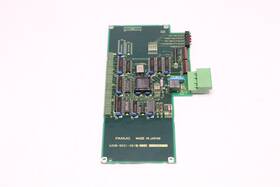
( Brand: Fanuc ), ( Manufacturer Part Number: A20B-9001-0611/02A ), ( Part Type: Board )
Review FANUC A20b-9001-0611/02a Devicenet Interface Board Pcb A20b-9001-0610/02a
The **FANUC A20B-9001-0611/02A DeviceNet Interface Board** and its accompanying **A20B-9001-0610/02A PCB** represent a critical component in FANUC s advanced automation and control systems, specifically designed to facilitate seamless communication between industrial robots, CNC machines, and other factory automation equipment via the **DeviceNet** protocol a robust, fieldbus-based network standard widely adopted in manufacturing environments. This interface board is engineered to integrate effortlessly with FANUC s A-series CNC controllers, such as the **A20iB**, enabling real-time data exchange, motion control synchronization, and coordinated operation between robotic arms, PLCs, or other intelligent devices on the network. The **A20B-9001-0611/02A** itself is a high-performance module that adheres to **DeviceNet s 250 kbps or 500 kbps** communication speeds, ensuring low-latency responses essential for precision applications like pick-and-place operations, material handling, or collaborative robotics. Its compact yet rugged design incorporates a **D-sub 9-pin connector** for direct DeviceNet connectivity, along with robust signal conditioning circuitry to mitigate noise and ensure reliable data transmission over extended distances, typically up to **500 meters** when properly terminated. The associated **A20B-9001-0610/02A PCB** serves as the foundational substrate, housing critical components such as the **DeviceNet transceiver, isolation circuitry, and signal amplification stages**, all of which work in tandem to maintain signal integrity while protecting the controller from voltage spikes or ground loops common in industrial settings. Together, these components enable FANUC s CNC systems to participate in **distributed automation architectures**, where devices communicate via a shared network rather than point-to-point wiring, reducing cabling complexity and improving system scalability. This interface is particularly valuable in **flexible manufacturing cells**, where dynamic reconfiguration of machinery is required, or in **multi-axis applications** where synchronized motion between robots and CNC tools is paramount. The board s compatibility with FANUC s **iPendant** and **Robotics software** further enhances its utility, allowing operators to monitor and control connected devices through a unified interface, while its **plug-and-play compatibility** minimizes downtime during installation or upgrades. Whether deployed in **automotive assembly lines, aerospace machining centers, or high-speed packaging systems**, this DeviceNet interface board ensures that FANUC s control systems remain at the forefront of industrial connectivity, bridging the gap between mechanical automation and digital intelligence with precision and reliability.
### **Pros and Cons of buying a FANUC A20B-9001-0611/02A (DeviceNet Interface Board) and A20B-9001-0610/02A (PCB)**
#### **Pros:**1. **Compatibility with FANUC Systems** These components are designed specifically for FANUC CNC controllers (such as the A20iB series), ensuring seamless integration without compatibility issues.
2. **DeviceNet Support** The A20B-9001-0611/02A provides DeviceNet communication, a robust industrial protocol widely used in automation, allowing for reliable data exchange with PLCs, sensors, and other devices.
3. **Original FANUC Quality** As genuine FANUC parts, they maintain high reliability, durability, and performance compared to aftermarket or generic alternatives.
4. **Warranty and Support** Purchasing directly from FANUC or an authorized distributor may include warranty coverage, technical support, and access to firmware updates.
5. **Long-Term Availability** FANUC parts are less likely to become obsolete compared to third-party replacements, ensuring continued availability for maintenance or upgrades.
6. **Standardized Performance** Since these are factory-certified, they meet FANUC s engineering standards, reducing the risk of malfunctions or compatibility problems.
7. **Ease of Installation** Designed to fit into FANUC s modular architecture, these components are straightforward to install with minimal additional configuration.
---
#### **Cons:**1. **High Cost** FANUC original parts are significantly more expensive than aftermarket or refurbished alternatives, which can be a financial burden for maintenance or upgrades.
2. **Limited Availability Outside Authorized Channels** Purchasing from unauthorized sellers may risk counterfeit or incompatible parts, so sourcing requires caution.
3. **Potential for Overkill** If the system only occasionally requires DeviceNet functionality, investing in this board may be unnecessary, leading to wasted expenditure.
4. **Depreciation** Like all electronics, these components may become outdated as newer FANUC models or communication protocols emerge, reducing long-term value.
5. **Dependence on FANUC Ecosystem** If the system relies heavily on FANUC-specific features, switching to third-party alternatives later may require additional reconfiguration or costs.
6. **Lead Times** FANUC parts may have longer delivery times compared to generic industrial components, which could disrupt production schedules.
7. **Complexity in Replacement** If the board fails, sourcing a replacement may require working through FANUC s distribution network, potentially involving higher costs or delays.
---
### **Ending Conclusion:**The **FANUC A20B-9001-0611/02A DeviceNet Interface Board and A20B-9001-0610/02A PCB** are high-quality, reliable components ideal for maintaining or upgrading FANUC CNC systems where DeviceNet integration is critical. Their primary advantages lie in **compatibility, durability, and support**, making them a strong choice for mission-critical applications. However, the **high cost, limited availability, and potential over-specification** for less demanding setups may deter some buyers.
For users with **strict reliability requirements, long-term system stability needs, or access to FANUC s support network**, these parts are justified. For others, **cost-effective alternatives (e.g., refurbished or third-party DeviceNet modules) may suffice** if budget constraints exist.
### **Recommendation:**- **Buy from an authorized FANUC distributor** to ensure authenticity and warranty coverage.
- **Verify system requirements** if DeviceNet is essential, the investment is worthwhile; otherwise, explore cheaper alternatives.
- **Consider refurbished or remanufactured options** if budget is a concern, but ensure they come from reputable sources.
- **Check for compatibility** with the specific FANUC model (A20iB series) to avoid mismatches.
- **Evaluate long-term costs** weigh the initial expense against potential downtime or inefficiencies from unreliable alternatives.
Ultimately, the decision depends on **budget, system criticality, and availability of alternatives**. For most industrial applications requiring FANUC s reliability, these parts remain the safest choice.
Details:
part #: a20b9001061102a prices
- $249.95-$674.95
specifications pcbemdev:
- brand: Fanuc
- mpn: A20b-9001-0611/02a
- part type: Board
shipping pcbemdev:
- service: UPS Ground, USPS Priority Mail, UPS 2nd Day Air, UPS Next Day Air
- carrier: UPS, USPS
- type: Calculated
- cost: $28.23
- transit: 3-6 Days
- class: Standard, Expedited, One-day
offer pcbemdev:
- sold: 0
- best offers: True
- availability: In Stock
- options: Ship-to-home
- started: April 25, 2026
- quantity: 1
general pcbemdev:
- Electronic Components Semiconductors > Circuit Boards Prototyping > Printed Circuit Boards PCBs
- condition: Used
seller pcbemdev:
- # reviews: 5677
- city: Warren, Michigan
- rating: 100.0%
payments pcbemdev:
- wallet: Apple-pay
- credit card: Diners-club
- other
returns pcbemdev:
- method: Money back
- paid by: Seller
- policy: Returns Accepted
- time: 30 Days
Fanuc A20B-9001-0611-02A Is Similar To:
- 44a297032-g02 Ge Fanuc Circuit Control Board Arith (34.1% similar) What you see in the pictures is exactly will receive some listings have a single generic picture if there more than 1 available any questions, just through messaging and we respond as soon can...(January 26th, 2019)
- 44a297034-g03 Ge Fanuc Circuit Control Board (32.5% similar) What you see in the pictures is exactly will receive some listings have a single generic picture if there more than 1 available any questions, just through messaging and we respond as soon can...(January 26th, 2019)
- 44a717559-g01 Hlip1 44a719254-001 Fanuc Used Ge Circuit Board (25% similar) Shelving number O80...(March 6th, 2019)
- 44a719326-g01 Ge Fanuc Board Module Used (23% similar) Used, in great condition 092318V4...(September 23rd, 2018)
- A16b-1000-0030-06c Ge Fanuc Circuit Board Rack Backplane (26.4% similar) Ge Fanuc A16B 06C circuit board rack back plane...(September 20th, 2018)
- A16b-1010-0285-19b Fanuc Master Mother Pcb Board (28.1% similar) ...(February 18th, 2019)
- A16b-1200-0150-01a Fanuc Pcb Board In (25.5% similar) Stock buy cheap, tool crib. Template Fanuc pcb room A16B 01A in excellent shape...(June 7th, 2017)
- A16b-1200-0800-06a Fanuc Top Board For Servo Amplifier (23.6% similar) 50 22C this item is surplus stock in good used condition...(September 28th, 2018)
- A16b-1210-0350 Fanuc Pc Board Option (25.7% similar) Fanuc pc board option 1 A16B A16B12100350 in very good condition. From Fanuc stock tool crib, satisfaction guaranteed. New this unit costs 1,170...(June 9th, 2017)
- A16b-1211-0060 11c 4 30 Axis Fanuc Board Control Warranty Days (20.7% similar) Why not on our Facebook page we publish our listings, latest updates, deals and other related information. Sometimes it even makes a sense of humour. It makes sense. If something it's not listed, it's not included...(May 27th, 2015)
- A16b-1211-0300-04a Ge Fanuc Axis Control Board (30.3% similar) Please only place a bid if you're serious about buying an item. Its the fast, easy and secure way to pay online...(April 25th, 2019)