ALTERA A305V1 Interface Circuit Board
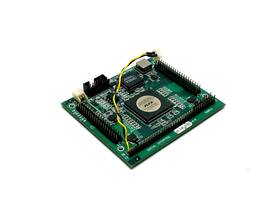
( Brand: Altera ), ( Manufacturer Part Number: A305V1 ), ( Part Type: Circuit Board )
Review ALTERA Serial Interface Circuit Board Assembly
The **Altera A305V1 Interface Circuit Board** is a high-performance, versatile development platform designed to bridge the gap between modern FPGA technology and real-world applications, making it an indispensable tool for engineers, hobbyists, and developers working with Altera (now Intel) Cyclone III FPGA devices. This compact yet robust board serves as a foundational platform for prototyping, education, and custom hardware design, featuring the **EP3C25F780C8N FPGA** a member of the Cyclone III family packed with 25,000 logic elements, 300Kb of embedded memory, and a rich array of programmable I/O options. The board s modular design ensures seamless integration with a wide range of peripherals, sensors, and actuators, enabling users to explore everything from digital signal processing and embedded systems to custom logic and high-speed communication protocols like PCI Express, Gigabit Ethernet, and USB 2.0.
At its core, the A305V1 is engineered for flexibility, offering a comprehensive suite of on-board resources that simplify complex design challenges. The board includes **two high-speed differential LVDS pairs**, ideal for interfacing with high-bandwidth peripherals such as ADCs, DACs, or FPGA-to-FPGA links, while **four general-purpose I/O banks** provide ample connectivity for digital signals, SPI, I2C, or UART interfaces. For analog applications, the board incorporates **two 12-bit, 10 MSPS ADCs** and **two 12-bit, 50 MSPS DACs**, allowing for precise analog-to-digital and digital-to-analog conversions with minimal external components. Additionally, the **on-board 32.768 kHz crystal oscillator** and **real-time clock (RTC) module** ensure accurate timing and low-power operation, making it suitable for applications requiring precise event timing or battery-backed functionality.
To facilitate seamless interaction with external systems, the A305V1 is equipped with a **microSD card slot** for non-volatile storage, enabling users to store firmware, configuration files, or data logs directly on the board. The board also features a **JTAG port** for programming and debugging via Quartus Prime or other FPGA development tools, along with a **USB-B connector** that supports both USB 2.0 host and device modes, allowing for easy communication with PCs or other USB-compatible devices. For power management, the board includes a **regulator module** capable of handling input voltages from 5V to 12V, ensuring stable operation across a wide range of power sources while minimizing heat dissipation.
Beyond its technical specifications, the A305V1 is built with durability and ease of use in mind. The board s **high-quality PCB layout** minimizes signal integrity issues, and its **through-hole and surface-mount component mix** allows for both prototyping flexibility and robust assembly. The inclusion of **user-accessible LEDs, push buttons, and a 16x2 character LCD display** provides immediate feedback and interaction, making it an excellent choice for educational projects or rapid prototyping. Whether used as a standalone development platform or as a core component in a larger system, the Altera A305V1 Interface Circuit Board delivers a powerful, all-in-one solution for bringing FPGA-based designs to life with precision, efficiency, and unmatched versatility.
The Altera A305V1 is an older FPGA development board based on the Cyclone III FPGA family, designed for educational and prototyping purposes. Below is a detailed analysis of its pros and cons, followed by a conclusion and recommendation.
---
**Pros:**1. **Affordability**: The A305V1 is a cost-effective option compared to newer FPGA boards, making it accessible for students, hobbyists, and small-scale projects. Its price is significantly lower than modern FPGA development kits with more advanced features.
2. **Educational Value**: The board is well-suited for learning FPGA fundamentals, including VHDL/Verilog programming, digital logic design, and basic embedded systems concepts. It includes essential peripherals like LEDs, switches, and a VGA output, which are ideal for teaching core principles.
3. **Simplicity**: The board is straightforward to use, with minimal complexity in terms of hardware and software setup. It lacks the advanced features of newer boards, which can be overwhelming for beginners. The Cyclone III FPGA itself is relatively easy to program and debug.
4. **Compatibility**: The board supports common development tools like Quartus Prime (Altera s IDE) and is compatible with a wide range of third-party tools and libraries. This makes it easier to find tutorials, forums, and community support.
5. **VGA Output**: The inclusion of a VGA output allows for basic graphics and video processing projects, such as displaying simple images, animations, or even retro games. This is a useful feature for educational projects that require visual output.
6. **Expandability**: The board features a variety of connectors, including a JTAG port, USB-B port, and expansion headers, which allow for additional peripherals or custom circuits to be integrated. This makes it adaptable for more advanced projects beyond basic learning.
7. **Documentation**: Altera (now part of Intel) provided comprehensive documentation and example designs for the A305V1, which is helpful for troubleshooting and project development. While support may be limited today, the existing resources are still valuable.
---
**Cons:**1. **Outdated Technology**: The Cyclone III FPGA family is now obsolete, with no new updates, drivers, or tools being developed for it. This means you won t benefit from advancements in FPGA technology, such as improved performance, lower power consumption, or newer features like PCIe or advanced DSP blocks.
2. **Limited Performance**: The A305V1 s FPGA has fewer logic elements, memory, and DSP slices compared to modern FPGAs. This limits the complexity and speed of projects you can undertake. For example, high-speed data processing, advanced signal processing, or complex embedded systems may not be feasible.
3. **No Modern Toolchain Support**: While Quartus Prime still supports Cyclone III devices, newer versions of the toolchain may lack optimizations or features tailored to modern FPGA workflows. This can make development less efficient or require workarounds for certain tasks.
4. **Limited Peripherals**: The board lacks modern interfaces such as USB 3.0, Gigabit Ethernet, or advanced communication protocols (e.g., PCIe, HDMI, or CAN bus). This restricts the types of projects you can build, particularly those requiring high-speed data transfer or advanced connectivity.
5. **Hardware Limitations**: The board s hardware is not designed for high-performance applications. For example, the lack of a high-speed ADC or DAC limits analog signal processing capabilities. Additionally, the power supply and cooling are not optimized for demanding workloads.
6. **Community and Support**: Since the board is outdated, active community support and forums may be scarce. While there are still resources available, they may not be as up-to-date or extensive as those for newer boards. This can make troubleshooting more challenging.
7. **No Future-Proofing**: Investing in the A305V1 means you won t be learning or working with the latest FPGA technologies. If you plan to pursue FPGA development professionally or for advanced projects, you may need to relearn concepts and tools for newer devices later.
---
**Conclusion:**The Altera A305V1 is a solid choice for beginners or educators who need a low-cost, simple FPGA board for learning basic digital design and embedded systems concepts. Its strengths lie in its affordability, educational value, and ease of use. However, its limitations such as outdated technology, limited performance, and lack of modern features make it unsuitable for advanced projects, professional development, or applications requiring high-speed or complex functionality. If your primary goal is to learn FPGA fundamentals, the A305V1 is a practical option. If you are aiming for professional work, research, or cutting-edge projects, investing in a newer FPGA board with modern features would be more beneficial.
---
**Recommendation:** - **Buy the A305V1 if:**- You are a beginner or student learning FPGA basics.
- You need a low-cost board for educational projects that don t require advanced features.
- You are working on simple digital logic, basic embedded systems, or VGA-based projects.
- You already have the necessary tools (Quartus Prime) and don t require modern peripherals.
- **Avoid the A305V1 if:**- You are pursuing professional FPGA development or advanced engineering projects.
- You need high-performance FPGAs with modern interfaces (e.g., USB 3.0, Gigabit Ethernet, PCIe).
- You plan to work with high-speed signal processing, complex DSP, or real-time systems.
- You want to future-proof your skills and invest in technology that will remain relevant for years to come.
For modern alternatives, consider FPGA boards like the **DE10-Lite (Cyclone V)**, **Basys 3 (Artix-7)**, **Nexys A7**, or **Intel Cyclone IV GX Starter Kit**, which offer better performance, more features, and ongoing support. If you are on a tight budget but still want a more modern board, the **DE0-Nano SoC (Cyclone V)** or **Arty A7 (Artix-7)** are excellent mid-range options.
Details:
Altera A305V1 Serial Interface Circuit Board Assembly. 3-N4F-75378-RB-GX. Shipping Services.
part #: a305v1 price
- $62.99
specifications pcbemdev:
- brand: Altera
- mpn: A305v1
- part type: Circuit Board
payments pcbemdev:
- credit card: Mastercard
- wallet: Paypal
- other
shipping pcbemdev:
- transit: 2-6 Days
- class: Standard, One-day, Expedited
- carrier: USPS, UPS
- service: USPS Ground Advantage, UPS Next Day Air, USPS Priority Mail, UPS Ground
- type: Calculated
- cost: $0.00
returns pcbemdev:
- policy: Returns Accepted
- method: Money back
- paid by: Seller
- time: 30 Days
general pcbemdev:
- Electronic Components Semiconductors > Circuit Boards Prototyping > Printed Circuit Boards PCBs
- condition: Used
offer pcbemdev:
- started: March 19, 2026
- sold: 0
- availability: In Stock
- quantity: 1
- best offers: True
- options: Ship-to-home
seller pcbemdev:
- city: Baroda, Michigan
- # reviews: 27616
- rating: 100.0%
Altera A305V1 Is Similar To:
- 6xx-40445r-0b Althp12-25173r Altera Hsmc Debug Breakout Board New (32.2% similar) Altera breakout debug board, standard 2X20 to HSBC connectors, new in original bag...(May 29th, 2016)
- De0-cv Altera Terasic Programmable Board With Solderless Breadboard Jumper Wire (34.8% similar) I will take best offer. This board has many features that allow users to implement a wide range of designed circuits, from simple circuits to various multimedia projects. So I am trying to sell it to get my money back so I can buy my principles of financial accounting McGuire online code and ...(September 12th, 2016)
- Pcie2.0 Xpressgx4-lp530he-gen2 Plda 20gbe Altera Stratix 4gx 530 Based Fpga Development Board (27.4% similar) 1X1, X4, x8 dual 10 gigabit Ethernet dual SPF supports 10GBASE Lr Sr Lr 1000BASE x and passive direct attach SPF cable built in self configure mode for 10G transceiver and SPF modules FGA configuration module power monitoring flash controller for FGA memory 2 x 1GB DDR3 dram or 2 x 256MB, 533MHZ, 32...(July 5th, 2016)