OTIS AAA26808TD Double Pcb Circuit Board Populated AAAS618TD1
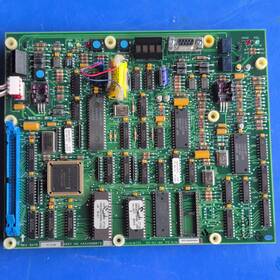
( Brand: Otis ), ( Manufacturer Part Number: AAA26808TD ), ( Part Type: Circuit Board ), ( Mounting Style: Panel Mount ), ( Pcb Type: Double-sided Pcb ), ( Number Of Rows: Multiple ), ( Material: Fr-4, Copper )
Review OTIS Double sided Pcb Circuit Board Populated Components
The **Otis AAA26808TD Double-Sided PCB Circuit Board (AAAS618TD1 Populated)** is a high-performance, precision-engineered electronic assembly designed for robust industrial or commercial applications requiring reliable signal processing, control, or power management. This double-sided printed circuit board (PCB) features a meticulously populated layout, integrating a variety of through-hole and surface-mount components to ensure optimal functionality and durability. The board s design adheres to strict manufacturing standards, with a robust copper-clad substrate that provides excellent thermal conductivity and electrical conductivity, minimizing signal loss and reducing the risk of overheating during prolonged operation. The double-sided configuration allows for efficient routing of high-speed signals and power traces, enhancing overall performance while maintaining a compact form factor.
The **AAAS618TD1** designation indicates a specialized variant of the AAA26808TD series, likely optimized for a particular application such as elevator control systems, where reliability and precision are paramount. The populated board includes a carefully selected array of components such as resistors, capacitors, diodes, transistors, connectors, and integrated circuits all strategically placed to minimize interference and maximize signal integrity. The through-hole and surface-mount hybrid assembly ensures mechanical stability, while the precise component placement reduces parasitic capacitance and inductance, which is critical for maintaining signal fidelity in demanding environments.
Constructed with high-quality materials, this PCB is built to withstand harsh operational conditions, including temperature fluctuations, vibration, and electrical noise, making it ideal for use in elevator systems, industrial automation, or other mission-critical applications. The board s design also incorporates protective measures such as reinforced solder joints and conformal coating-resistant pathways, further enhancing its resistance to environmental degradation. Whether used as part of a larger control module or integrated into a custom electronic system, the **Otis AAA26808TD (AAAS618TD1 Populated)** delivers dependable performance, ensuring seamless operation and long-term reliability in even the most challenging settings.
### **Pros and Cons of Buying a Populated Double-Sided PCB (Otis AAA26808TD, AAAS618TD1)**
#### **Pros:**1. **Time and Labor Savings** The board is already populated with components, eliminating the need for assembly, soldering, or testing individual parts. This significantly reduces development time, especially for small-scale projects or prototyping.
2. **Reduced Risk of Assembly Errors** Manual soldering can introduce defects, misalignments, or damaged components. A pre-populated board minimizes these risks, as the manufacturer has already verified the assembly.
3. **Faster Project Completion** If you re working on a tight deadline or need a functional prototype quickly, purchasing a populated board allows you to skip the assembly phase and focus on testing, integration, or further development.
4. **Access to High-Quality Components** The board likely comes with genuine, high-reliability components (depending on the seller), which may be better than sourcing parts yourself, especially if you lack access to premium suppliers.
5. **Cost Efficiency for Low-Volume Needs** If you only need a single unit or a small batch, buying a populated board may be cheaper than assembling it yourself, especially if you account for the cost of components, solder, tools, and potential mistakes.
6. **Pre-Tested Functionality** Reputable sellers often provide boards that have been tested for basic functionality, reducing the chance of receiving a defective unit out of the box.
7. **Easier Integration into Larger Systems** Since the board is ready to use, integrating it into an existing system (e.g., a robot, IoT device, or custom enclosure) is straightforward, with no additional assembly required.
---
#### **Cons:**1. **Higher Upfront Cost** Populated PCBs are significantly more expensive than bare (unpopulated) boards. If you plan to produce multiple units or need customization, buying populated boards for each iteration can become costly.
2. **Limited Customization** The board comes with pre-installed components, meaning you cannot modify or replace parts unless the seller allows it. If your project requires specific changes (e.g., different resistors, capacitors, or ICs), you may need to source a different board or assemble one yourself.
3. **Potential for Outdated or Non-Optimal Components** The manufacturer may have used standard or older component versions that are not ideal for your application. For example, they might have used cheaper or less efficient parts (e.g., larger capacitors, slower microcontrollers) that affect performance.
4. **No Control Over Component Quality** While some sellers provide high-quality parts, others may use subpar or counterfeit components, especially if the board is sourced from an untrusted supplier. This can lead to reliability issues or premature failure.
5. **Lead Times and Availability** Populated PCBs may have longer lead times than bare boards, as they require additional manufacturing steps. If the seller is backordered or the board is discontinued, you may struggle to find replacements.
6. **No Learning Opportunity** If your goal is to learn PCB assembly, soldering, or electronics troubleshooting, buying a populated board skips these educational steps. You miss out on hands-on experience with component placement, soldering techniques, and debugging.
7. **Potential for Hidden Costs** Some sellers charge extra for shipping, testing, or customization. Additionally, if the board requires additional connectors, enclosures, or power supplies, these may not be included, adding to the total cost.
8. **Limited Quantity Options** Most populated boards are sold in small quantities (e.g., single units or small batches). If you need bulk production, you would likely have to switch to a different supplier or assemble the boards yourself for economies of scale.
---
### **Ending Conclusion**
Buying a populated double-sided PCB like the Otis AAA26808TD or AAAS618TD1 can be a **practical and efficient solution** for specific use cases, particularly when speed, reliability, and convenience are prioritized over cost or customization. It is ideal for:
- **Prototyping** where quick iteration is needed.
- **Small-scale production** where assembly time is a bottleneck.
- **Projects where component quality and assembly integrity are non-negotiable** (e.g., mission-critical applications).
- **Individuals or teams without access to assembly tools or expertise**.
However, it is **not the best choice** if:- You require **customization or component changes**.
- You plan to **produce in large quantities**, making assembly in-house or with a contract manufacturer more cost-effective.
- You are **learning electronics** and want hands-on experience with assembly.
- You need **long-term reliability** and can verify component quality yourself.
---
### **Recommendation**
1. **If you need a single unit for testing or a quick prototype:**- **Proceed with purchasing the populated board** from a reputable seller (e.g., Digi-Key, Mouser, or a trusted Chinese supplier like AliExpress or LCSC). Verify reviews and return policies to ensure quality.
- **Check for documentation** (schematics, datasheets, or test reports) to confirm the board meets your requirements.
2. **If you plan to produce multiple units or require customization:**- **Consider ordering a bare PCB** and assembling it yourself or with a local electronics shop. This gives you full control over components and reduces costs at scale.
- **Evaluate contract manufacturers (CMs)** like JLCPCB, Seeed Studio, or OSH Park for bulk assembly services if you lack in-house capabilities.
3. **If you are unsure about component quality or functionality:**- **Request a sample or test report** from the seller before purchasing.
- **Compare prices** between populated and bare boards to ensure you are not overpaying for convenience.
4. **If this is an educational project:**- **Avoid buying populated boards** initially. Instead, practice assembly with a similar bare PCB to build skills in soldering, component selection, and troubleshooting.
5. **For long-term reliability-critical applications:**- **Source components independently** and assemble the board yourself or with a trusted CM to ensure only high-quality parts are used.
Ultimately, the decision depends on your **budget, timeline, technical needs, and long-term goals**. For most hobbyists or small-scale projects where speed is key, a populated board is a reasonable choice. For larger projects or those requiring flexibility, assembling your own or working with a CM may be more advantageous.
Details:
Otis 211 CPU. Removed from a running elevator due to modernization, but no guarantees. Double-Sided PCB Circuit Board AAA26808TD AAAS618TD1 Populated with Components. Board APPEARS to be in great shape.
part #: aaa26808td prices
- $149.99-$460.40
specifications pcbemdev:
- brand: Otis
- mpn: Aaa26808td
- part type: Circuit Board
- mounting style: Panel Mount
- pcb type: Double-sided Pcb
- number of rows: Multiple
- material: Fr-4, Copper
seller pcbemdev:
- # reviews: 10
- city: Clayton, North Carolina
- rating: 100.0%
offer pcbemdev:
- quantity: 1
- started: May 7, 2026
- sold: 0
- options: Ship-to-home
- best offers: True
- availability: In Stock
shipping pcbemdev:
- transit: 5-11 Days
- service: USPS Ground Advantage
- cost: $5.72
- class: Standard
- carrier: USPS
- type: Calculated
payments pcbemdev:
- other
- credit card: Visa
- wallet: Apple-pay
general pcbemdev:
- condition: Used
- Electronic Components Semiconductors > Circuit Boards Prototyping > Printed Circuit Boards PCBs
returns pcbemdev:
- policy: No Returns
Otis AAA26808TD Is Similar To:
- Otis Aba26800ajv Qty 2 Motion Logic Pc Board Aba610ajv1 Used (44.4% similar) You are viewing our listing of a qty...(December 3rd, 2024)
- Otis Elevator Co Aha26800any3 Co Nsaa Gcs Io Board (29.6% similar) Our knowledge on the previous use or history of item is extremely limited.units listed are untested unless explicitly stated otherwise in condition or above. AHA26800ANY3 NASA Cs Io board, the board is untested, there insignificant physical damage to the connection ports on unit. Otis elevator co. ...(October 2nd, 2025)
- Otis C9693a Lcb B9693a Elevator Co Cpu control Board Free Shipping O2 (27.3% similar) The CB B9693A Otis elevator co CPU/control board is a double-sided printed circuit board manufactured in the USA by. With free shipping included, this product offers a convenient solution for businesses and industrial settings in need of reliable electronic components. This control board is ...(October 16th, 2025)
- Otis Elevator Aba26800sb2 Pos Ref Pcb Lrvf Lvm 211 Elev Hoistway Tape B5 (36.5% similar) The elevator position reference printed circuit board pcb by Otis is designed for use with Lvov and LCM 211 elevator hoist way tapes. This rigid pcb features a track mount with four tie-points and operates at 24V. Made of plastic, this pcb is a reliable component for maintaining the proper ...(January 3rd, 2026)
- Pcb Aaa26800pz Otis Elevator Button Module Assy-aaa26800pz (25.5% similar) Good working condition...(January 29th, 2026)
- Otis Elevator 8121db-1 Board Sn Lr0060284 (27% similar) Shipped with USPS priority mail. Condition is used. Otis elevator 8121DB-1 board / Sn LR0060284...(February 15th, 2026)
- Otis Elevator Co Aaa610gk1 Co 8121bcf Main Board (30.1% similar) Main board main...(February 27th, 2026)
- Otis Aba610ts Elevator 211 I o Pcb Aba26800ts1 Used Sold As Parts Or Repair (34.2% similar) You are viewing our listing of a Otis elevator ABA610TS 211 i/o pcb ABA26800TS1 used, sold as parts or repair...(March 18th, 2026)
- Otis Elevator Company 26010-73 Vintage Control Board 5713744 Ero Mkp Capacitors B4 (29.9% similar) Note to builders/hobbyists: the euro KP 1845 capacitors on this board are highly sought after by audiophiles and electronics restorers for their excellent electrical properties. Condition: used, vintage. Sold as-is for parts, repair, or as a collectible/industrial display piece. Specifications: ...(March 24th, 2026)
- Otis Elevator Company Aaa26800ags1 Door Operator Board Aga610ags1 P.s B4 (40.5% similar) This is a genuine Otis elevator door operator control board, part of the motion / top-of-car integration series. It features a robust design including Motorola microprocessor and alters programmable logic for high-reliability performance in high-traffic buildings. This critical component manages the...(April 10th, 2026)