JEOL Analog Motherboard Board Card CP002761-03 CP002848-00 AD14CPU-MPU
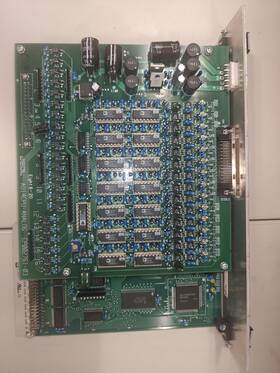
( Brand: Jeol ), ( Manufacturer Part Number: AD14CPU ), ( Part Type: Board Card )
Review JEOL Analog Motherboard Board Card
The **JEOL AD14CPU** is a high-performance analog motherboard card designed specifically for integration into JEOL s advanced analytical and scientific instrumentation systems, including electron microscopes, X-ray spectrometers, and other precision measurement platforms. This critical component serves as the central processing and control hub, facilitating real-time data acquisition, signal processing, and system coordination with unparalleled precision. Engineered with robust analog circuitry, the **AD14CPU** accommodates a wide range of input signals from high-speed voltage and current measurements to intricate waveform analysis while maintaining exceptional signal integrity and noise rejection. Its modular design allows for seamless compatibility with complementary JEOL modules such as the **CP002761-03** and **CP002848-00**, which enhance functionality by providing specialized signal conditioning, digital conversion, and interface capabilities. The **AD14CPU-MPU** variant further expands its versatility by incorporating a microprocessing unit, enabling sophisticated algorithm execution, adaptive filtering, and dynamic calibration adjustments, all of which are essential for optimizing performance in demanding research and industrial applications. Built to withstand the rigorous demands of laboratory environments, this board card features high-quality passive components, low-drift operational amplifiers, and precision resistors and capacitors, ensuring long-term stability and reliability. Whether deployed in electron microscopy for high-resolution imaging, spectroscopy for elemental analysis, or materials science for structural characterization, the **JEOL AD14CPU** delivers the computational and analog processing power required to push the boundaries of scientific discovery. Its meticulous engineering and adherence to JEOL s stringent quality standards make it an indispensable asset for researchers and engineers seeking to achieve the highest levels of measurement accuracy and system integration.
### **Pros and Cons of buying a JEOL AD14CPU Analog CPU Motherboard Card (CP002761-03, CP002848-00, AD14CPU-MPU)**
#### **Overview**
The JEOL AD14CPU is a specialized analog control unit (CPU) motherboard card designed for JEOL electron microscopes, particularly models like the JEM-2100, JEM-2010, and others in the JEOL 2000-series. It serves as the central processing unit for microscope control, beam alignment, and imaging functions. Below is a detailed analysis of its advantages and drawbacks.
---
### **Pros**
1. **Compatibility with JEOL Microscopes**
- The AD14CPU is specifically engineered for JEOL electron microscopes, ensuring seamless integration with models like the JEM-2100, JEM-2010, and others in the JEOL 2000-series. This eliminates the need for third-party adapters or modifications, reducing compatibility risks.
2. **Analog Control Precision**
- As an analog control unit, the AD14CPU provides precise control over beam alignment, lens currents, and imaging parameters. Analog systems are often favored in high-precision applications like electron microscopy for their stability and low latency compared to digital alternatives.
3. **Reliability and Durability**
- JEOL is a well-established manufacturer in the scientific instrumentation industry, known for building robust and long-lasting equipment. The AD14CPU is designed to withstand the demanding conditions of electron microscopy, including high vacuum environments and precise temperature control.
4. **Support for Legacy Systems**
- Many JEOL microscopes, particularly older models, rely on analog control units like the AD14CPU. Purchasing this component ensures continued functionality for legacy systems that may not be compatible with newer digital controllers.
5. **Technical Support and Documentation**
- JEOL provides extensive technical support, including manuals, troubleshooting guides, and spare parts. This can be invaluable for users who require detailed assistance in maintaining or repairing the microscope.
6. **Modular Upgradability**
- The AD14CPU can be paired with other JEOL components, such as the MPU (Microprocessor Unit) or additional analog/digital interfaces, allowing for system upgrades without replacing the entire controller.
7. **Lower Latency for Real-Time Control**
- Analog systems often have lower latency than digital ones, which is critical for real-time adjustments during microscopy. This can improve the responsiveness of the microscope during alignment or imaging tasks.
---
### **Cons**
1. **Limited Digital Integration**
- The AD14CPU is primarily an analog unit, which may limit its compatibility with modern digital imaging software or automated control systems. Users may need additional interfaces or converters to integrate it with contemporary data acquisition or analysis tools.
2. **Obsolete Technology**
- Analog control systems are increasingly rare in modern scientific instrumentation, which may pose challenges in terms of maintenance, spare parts availability, or training for newer technicians. Over time, finding qualified personnel familiar with analog systems could become difficult.
3. **Higher Maintenance Requirements**
- Analog circuits are more susceptible to drift, noise, and environmental factors (e.g., temperature fluctuations, electromagnetic interference) compared to digital systems. Regular calibration and maintenance may be required to ensure optimal performance.
4. **Potential for Compatibility Issues with Newer Microscopes**
- While the AD14CPU works well with older JEOL models, newer microscopes may require updated control units or software. Attempting to use an older analog CPU with a modern microscope could lead to functionality limitations or incompatibilities.
5. **Cost of Replacement Parts**
- As analog systems become less common, the cost of replacement parts or servicing may increase. Users should budget for potential future expenses related to maintenance or upgrades.
6. **Learning Curve for New Users**
- Operating an analog control system requires a deeper understanding of electronics and microscopy principles compared to digital interfaces. New users may need additional training to effectively utilize the AD14CPU.
7. **Limited Software Flexibility**
- Analog systems lack the software flexibility of digital controllers, which often include programmable features, scripting, and automated routines. Users may be restricted to manual adjustments or basic automation capabilities.
---
### **Conclusion**
The JEOL AD14CPU analog CPU motherboard card is a reliable and precise component for maintaining or restoring functionality to older JEOL electron microscopes. Its strengths lie in its compatibility with legacy systems, analog control precision, and the stability it provides for high-precision applications. However, its analog nature introduces challenges such as limited digital integration, higher maintenance requirements, and potential long-term obsolescence.
For users with older JEOL microscopes that rely on analog control, the AD14CPU remains a practical and effective solution. However, those working with newer or more modern microscopes may find that digital control units offer greater flexibility, ease of use, and future-proofing. Additionally, users should consider the long-term viability of analog systems in their laboratory and whether they are prepared for the maintenance and training requirements associated with them.
---
### **Recommendation**
1. **For Users with Legacy JEOL Microscopes:**- If you are operating an older JEOL microscope (e.g., JEM-2100, JEM-2010) that requires an analog control unit, the AD14CPU is a sound investment. Its compatibility, precision, and reliability make it a suitable choice for maintaining these systems. Ensure you have access to technical support and spare parts, and budget for regular maintenance to address potential drift or noise issues.
2. **For Users with Modern or Upgraded Microscopes:**- If your microscope is newer or you are considering upgrades, evaluate whether a digital control unit would better serve your needs. Digital systems offer greater flexibility, software integration, and automated features that can enhance productivity and ease of use. If you must use an analog system, consider pairing it with digital interfaces or converters to bridge the gap with modern tools.
3. **For Laboratories Planning Long-Term Use:**- Assess whether your laboratory s future needs align with analog or digital systems. If you anticipate upgrading equipment or adopting new technologies, investing in a digital control unit now may save costs and complications in the long run. Alternatively, if you are committed to maintaining legacy systems, the AD14CPU is a viable option with proper planning for maintenance and support.
4. **For Budget and Resource Constraints:**- If budget is a concern, the AD14CPU may be more affordable than newer digital units, especially if purchasing used or refurbished components. However, weigh this against the potential long-term costs of maintenance, training, and compatibility issues. In some cases, investing in a digital upgrade could prove more cost-effective over time.
Ultimately, the decision to purchase the JEOL AD14CPU should be based on your specific microscope model, laboratory needs, and long-term goals. For users with older JEOL microscopes, it remains a practical and effective choice, while those with newer systems or future-proofing in mind may benefit from exploring digital alternatives.
Details:
JEOL AD14CPU ANALOG CP002761-03 CP002848-00 AD14CPU-MPU Motherboard Board Card. Condition is Used. Shipped with USPS Ground Advantage.
part #: ad14cpu prices
- $1200.00-$1763.00
specifications pcbemdev:
- brand: Jeol
- mpn: Ad14cpu
- part type: Board Card
general pcbemdev:
- Electronic Components Semiconductors > Circuit Boards Prototyping > Printed Circuit Boards PCBs
- condition: Used
payments pcbemdev:
- wallet: Paypal
- other
- credit card: Mastercard
returns pcbemdev:
- policy: No Returns
shipping pcbemdev:
- service: USPS Ground Advantage
- transit: 5-8 Days
- class: Standard
- carrier: USPS
- cost: $11.01
- type: Calculated
offer pcbemdev:
- quantity: 1
- availability: In Stock
- started: March 11, 2026
- sold: 0
- options: Ship-to-home
seller pcbemdev:
- city: Middletown,
- rating: 100.0%
- # reviews: 6376
Jeol AD14CPU Is Similar To:
- Jeol Pp031860 Modular Control Pcb Board Pp03186-0 Mp-z03085t For Jsm-5900lv Microscope (26.8% similar) 1841 w carriage house Dr, baton rouge, la 70815. No other accessories. Comes as pictured. Shipping handling. Regardless of the origin equipment, documentation provided or identification appearing upon equipment described and offered here is in no way certified for, recommended for any specific use. ...(October 18th, 2025)
- Jeol Prtm040 Pcb Circuit Board Prt M-040 Pp02183-1 For Jsm-5900lv Microscope (26% similar) No other accessories. Shipping handling. We acquired the unit in a state surplus sale. 1841 w carriage house Dr, baton rouge, la 70815. Regardless of the origin equipment, documentation provided or identification appearing upon equipment described and offered here is in no way certified for, ...(October 18th, 2025)
- Jeol Mth820a Pcb Circuit Board Mth-820a Pp03162-1 Mp-z03085t For Jsm-5900lv Microscope (23.2% similar) Shipping handling. Comes as pictured. We acquired the unit in a state surplus sale. Inventory id: WH2-Z2-S12A board box 7, 101825, bar. Please see the pictures for cosmetic condition and components it comes with. Regardless of the origin equipment, documentation provided or identification appearing ...(October 18th, 2025)
- Jeol Pp03102a1 4 Pcs Pcb Board Pp03102a-1 Pp03102b-1 Pp03102c-1 Pp03102d-1 For Jsm-5900lv (22.8% similar) 1841 w carriage house Dr, baton rouge, la 70815. Please see the pictures for cosmetic condition and components it comes with. We acquired the units in a state surplus sale. Comes as pictured. Shipping handling. Inventory id: WH2-Z2-S12A board box 7, 101825, bar. No other accessories. Regardless of ...(October 18th, 2025)
- Jeol Pp031640 Pcb Circuit Board Part Pp03164-0 For Jsm-5900lv Microscope (30.7% similar) Regardless of the origin equipment, documentation provided or identification appearing upon equipment described and offered here is in no way certified for, recommended for any specific use. 1841 w carriage house Dr, baton rouge, la 70815. Shipping handling. We acquired the unit in a state surplus ...(October 26th, 2025)
- Jeol Mth794a Pcb Board Mth-794a Part Pp01161-2 Mp-z03085t For Jsm-5900lv Microscope (22.4% similar) For all others, there might extra. We acquired the unit in a state surplus sale. Inventory id: WH2-Z2-S12A board box 8, 102625, bar. Regardless of the origin equipment, documentation provided or identification appearing upon equipment described and offered here is in no way certified for, ...(October 26th, 2025)
- Jeol Bp101523-01 Controller Board (37.8% similar) Jeol BP101523-01 controller board, location: S-30...(May 4th, 2026)
- Jeol Bp101646-02 Mag Cont Control Board (39.3% similar) Jeol BP101646-02 mag cont control board, location: S-30...(May 4th, 2026)
- Jeol Bp101544-01 Clal Driver Circuit Board (35% similar) Jeol BP101544-01 call driver circuit board, location: S-30...(May 4th, 2026)
- Jeol Bp101521-03 Ol Cont Control Board (41.4% similar) Jeol BP101521-03 ol cont control board, location: S-30...(May 4th, 2026)
- Jeol Bp-101545-01 Clal Rly Control Board (32.2% similar) Jeol BP-101545-01 call rely control board, location: S-30...(May 4th, 2026)