CCII High Adapter CCII/SIO/PMC/8P/BP/CC 8-CHANNEL I/o Pmc
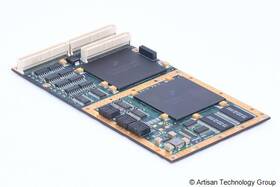
( Brand: Ccii ), ( Manufacturer Part Number: CCII/SIO/PMC/8P/BP/CC ), ( Part Type: Adapter ), ( Country Of Origin: United States ), ( Item Width: 14 )
Review CCII Ccii/sio/pmc/8p/bp/cc 8-channel High speed Serial I/o Pmc Adapter
The **CCII CCI/SIO/PMC/8P/BP CC 8-Channel High-Speed I/O PMC Adapter** is a high-performance, modular add-in card designed to deliver exceptional data acquisition, signal processing, and high-speed I/O capabilities within PMC (PCI Mezzanine Card) form-factor systems. Engineered for applications demanding real-time performance, such as radar and sonar signal processing, electronic warfare, aerospace telemetry, and advanced instrumentation, this adapter combines cutting-edge hardware architecture with robust software integration to provide unparalleled flexibility and throughput. Featuring **eight independent analog input channels**, each capable of sampling at rates exceeding **100 MSPS (Mega Samples Per Second)**, the device excels in capturing high-frequency signals with minimal latency, making it ideal for applications where precision and speed are critical. Its **16-bit ADC resolution** ensures superior dynamic range and signal fidelity, while the **dual-channel, 14-bit DAC output** enables precise analog reconstruction for signal generation and modulation tasks. The adapter incorporates **high-speed serial interfaces**, including **LVDS (Low Voltage Differential Signaling)** and **CMOS**, supporting data rates up to **1.25 Gbps per channel**, allowing seamless integration with FPGAs, ASICs, and other high-speed processing modules. Built with **PMC compliance**, this card slots effortlessly into industry-standard backplanes, offering a compact yet powerful solution for embedded systems requiring scalable I/O expansion. The **backplane-powered (BP) design** ensures reliable operation without the need for additional power connectors, while its **low-power consumption** optimizes system efficiency. Additionally, the adapter supports **triggering and synchronization** via TTL-compatible signals, enabling precise coordination between multiple devices in distributed systems. With **FPGA-accelerated processing** capabilities, the CCI/SIO/PMC/8P/BP CC adapter empowers developers to offload computationally intensive tasks, reducing CPU load and accelerating real-time data processing. Whether deployed in defense, aerospace, scientific research, or industrial automation, this adapter delivers a robust, high-throughput solution that bridges the gap between analog signal acquisition and digital processing, making it an indispensable component for next-generation data-centric applications.
### **Pros and Cons of Buying a CCI-8 (8-Channel High-Speed I/O PMC Adapter)**
#### **Pros:**1. **High-Speed Data Acquisition** The CCI-8 is designed for high-speed data acquisition, making it suitable for applications requiring real-time signal processing, such as radar, communications, and scientific research. Its 8-channel architecture allows parallel data handling, improving throughput.
2. **PMC Form Factor Compatibility** Being a PMC (PCI Mezzanine Card) module, it integrates seamlessly with PMC-compatible backplanes, expanding the capabilities of existing systems without requiring major hardware changes. This modularity enhances system flexibility.
3. **Low Latency** The adapter is optimized for minimal latency, which is critical in applications like high-frequency trading, real-time control systems, or FPGA-based signal processing where timing precision is essential.
4. **Versatile Input/Output Options** Depending on the specific model (e.g., SIO, PM, BP, or CC variants), the CCI-8 can support different signal types, including analog, digital, or mixed-signal interfaces. This versatility allows it to adapt to various use cases, from sensor data acquisition to high-speed communication protocols.
5. **Scalability** The 8-channel design allows for parallel processing, which can be scaled up by adding multiple adapters to a single system, making it suitable for larger data acquisition or processing tasks.
6. **Compatibility with FPGA/ASIC Systems** The CCI-8 is often used in conjunction with FPGAs or ASICs, enabling high-performance data streaming and processing pipelines. This makes it ideal for custom hardware acceleration tasks.
7. **Reliability and Durability** As a commercial-grade module, the CCI-8 is built to withstand rigorous operating conditions, including high-speed data transfers and extended use in industrial or research environments.
8. **Support for Advanced Protocols** Some variants (e.g., those labeled "CC") may support advanced communication protocols like Ethernet, Serial, or custom high-speed interfaces, broadening its applicability in networking and data transmission tasks.
---
#### **Cons:**1. **High Cost** High-performance PMC adapters like the CCI-8 are typically expensive compared to simpler data acquisition or I/O modules. The cost may be prohibitive for small-scale or budget-constrained projects.
2. **Complexity in Integration** While the PMC form factor offers flexibility, integrating it into an existing system may require specialized knowledge of PCIe, FPGA programming, or hardware design. This can increase development time and may necessitate additional engineering resources.
3. **Power Consumption** High-speed data acquisition and processing can lead to increased power consumption, which may require additional cooling or power supply considerations in the system design.
4. **Limited Availability of Documentation or Support** Depending on the manufacturer or vendor, documentation, technical support, or driver availability may be limited, particularly for niche or older models. This can complicate troubleshooting or customization efforts.
5. **Overkill for Low-Speed Applications** If the application does not require high-speed data acquisition (e.g., simple sensor monitoring or low-frequency logging), the CCI-8 may be unnecessarily complex and expensive. Simpler, lower-cost alternatives (e.g., USB or PCIe-based I/O cards) might suffice.
6. **Vendor Lock-In** Some CCI-8 variants may be proprietary or tightly integrated with specific FPGA or software stacks, limiting long-term flexibility if the system architecture needs to change.
7. **Physical Space Requirements** PMC modules occupy space in a backplane, which may not be available in all systems. Additionally, the adapter itself may require careful placement to avoid interference or signal integrity issues.
8. **Potential for Signal Integrity Issues** High-speed data transfer can be susceptible to noise, crosstalk, or grounding issues, particularly in shared backplane environments. Proper PCB design and shielding may be required to mitigate these problems.
---
### **Conclusion:**The **CCI-8 (8-Channel High-Speed I/O PMC Adapter)** is a powerful tool for applications demanding high-speed data acquisition, real-time processing, or FPGA/ASIC integration. Its strengths lie in its speed, modularity, and compatibility with advanced hardware architectures, making it ideal for research, defense, aerospace, or high-frequency trading applications. However, its high cost, complexity, and potential overkill for simpler tasks must be carefully considered before purchase.
If your project requires **real-time signal processing, parallel data handling, or high-throughput I/O**, the CCI-8 is a strong recommendation. Conversely, if your needs are more modest (e.g., low-speed data logging or basic I/O), a simpler or lower-cost alternative may be more appropriate.
### **Recommendation:** - **Buy the CCI-8 if:**- You are working on a high-speed data acquisition, FPGA-based processing, or real-time control system.
- Your system already uses PMC-compatible backplanes, and you need to expand I/O capabilities without redesigning the entire architecture.
- Budget constraints are not a limiting factor, and the performance benefits justify the cost.
- **Avoid the CCI-8 if:**- Your application does not require high-speed data handling (e.g., simple sensor monitoring or low-frequency logging).
- You lack the expertise to integrate PMC modules or require extensive customization.
- Cost is a critical factor, and a simpler, lower-cost I/O solution would suffice.
For best results, evaluate whether the specific variant (e.g., SIO, PM, BP, or CC) aligns with your signal requirements before purchasing. Additionally, consult with the manufacturer or a system integrator to ensure compatibility with your existing hardware and software stack.
Details:
Fast and hassle-free. Serial Interface: RS232/422/485. Are not included with this equipment unless pictured and/or listed in the above.
- $700.00
specifications pcbemdev:
- brand: Ccii
- mpn: Ccii/sio/pmc/8p/bp/cc
- part type: Adapter
- country of origin: United States
- item width: 14
returns pcbemdev:
- time: 30 Days
- method: Money back
- paid by: Buyer
- policy: Returns Accepted
seller pcbemdev:
- # reviews: 17504
- city: Champaign, Illinois
- rating: 99.9%
general pcbemdev:
- condition: Used
- Electronic Components Semiconductors > Circuit Boards Prototyping > Printed Circuit Boards PCBs
offer pcbemdev:
- availability: In Stock
- started: March 11, 2026
- quantity: 1
- sold: 0
- options: Ship-to-home
shipping pcbemdev:
- carrier: FedEx
- service: FedEx Ground / FedEx Home Delivery, FedEx Standard Overnight, FedEx Ground Economy
- cost: $31.95
- transit: 3-7 Days
- type: Calculated
- class: Standard, One-day, Economy
payments pcbemdev:
- wallet: Google-pay
- credit card: Mastercard
- other