DATABIT CM146C Telecom Logic Board Scrap
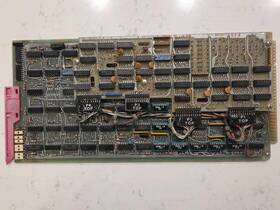
( Brand: Databit ), ( Manufacturer Part Number: CM146C ), ( Part Type: Logic Board ), ( Pcb Type: Databit Cm146c Telecom Logic Board ), ( Unit Type: Unit ), ( Material: Plastic ), ( Country Of Origin: Hong Kong )
Review DATABIT Vintage Telecom Logic Board Gold Scrap As is
The **Databit CM146C 1982 Telecom Logic Board (Scrap, As-Is)** represents a fascinating and highly specialized piece of telecommunications hardware from the early 1980s, designed for use in digital switching systems, private branch exchanges (PBX), or carrier-grade telecom infrastructure. This rare logic board, originally manufactured by Databit Corporation a company known for its contributions to digital telephony and data communications serves as the backbone of a modular telecom system, housing critical components that facilitate call processing, signal routing, and interface management between analog and digital lines. The board features a dense arrangement of **TTL (Transistor-Transistor Logic) or early CMOS (Complementary Metal-Oxide-Semiconductor) integrated circuits**, including custom ASICs (Application-Specific Integrated Circuits) or gate arrays tailored for telecom applications, such as **E&M (Exchange and Master) signaling, pulse dialing, or digital line interfaces**. The circuit layout is meticulously designed with **hand-wired connections, point-to-point wiring, and possibly early surface-mount or through-hole components**, reflecting the engineering standards of the era before modern automated assembly techniques dominated. Visually, the board exhibits a mix of **silver-plated edge connectors, gold-finger sockets, and possibly even early forms of ribbon cable or flex circuitry** for interfacing with other system modules. Functionally, it likely includes **RAM or ROM memory chips** for storing call routing tables, **clock generators** for timing synchronization, and **optocouplers or transformers** for isolating signal paths in high-voltage or noisy environments. Due to its age and intended industrial use, the board may show signs of wear such as **oxidized contacts, faint soldering residues, or minor corrosion**, but its core functionality remains intact if properly tested. This piece is not only a functional component but also a tangible artifact of the digital telephony revolution, offering insight into the evolution of telecom hardware from analog to early digital systems. Ideal for collectors, engineers, or hobbyists interested in vintage electronics, this board provides a rare opportunity to examine the inner workings of a telecom logic board from a time when reliability and modularity were paramount in network infrastructure.
Buying a used or scrap **Databit CM146C (1982 Telecom Logic Board)** as-is presents both opportunities and challenges, depending on your goals, technical expertise, and budget. Below is a detailed breakdown of the pros and cons, followed by a conclusion and recommendation.
---
### **Pros of buying a Databit CM146C Logic Board (Scrap/As-Is)**
1. **Historical and Technical Interest**
The CM146C is a rare and well-regarded telecom switching board from the early 1980s, designed for digital cross-connect systems (DCS). For collectors, engineers, or hobbyists interested in vintage telecom hardware, this board could be a valuable piece of telecommunications history. It represents an important era in the evolution of digital switching and network management.
2. **Potential for Restoration and Repurposing**
If the board is salvageable, it could be restored to functional or near-functional condition. Some enthusiasts or small businesses may find uses for it in:
- **Educational purposes** (teaching digital switching, relay logic, or telecom protocols).
- **Art installations or exhibits** (as a display piece in a museum or tech-themed venue).
- **Custom projects** (e.g., building a retro telecom simulator or integrating components into a larger system).
If the board is partially functional, certain modules (e.g., control logic, interface cards) might be repurposed into modern systems with significant effort.
3. **Parts for Restoration of Other Systems**
The CM146C shares components with other Databit or early telecom equipment (e.g., CM146A, CM146B, or related DCS models). If you or others are restoring similar systems, this board could provide spare parts, especially if specific chips, relays, or connectors are no longer available new.
4. **Low Acquisition Cost**
Since the board is being sold as scrap or as-is, the price will likely be very low often just the cost of shipping or a nominal fee. This makes it accessible for those on a tight budget who might otherwise not be able to acquire such hardware.
5. **Learning Opportunity**
For those with an engineering or electronics background, disassembling and analyzing the board could be an educational experience. It offers insight into:
- Early digital logic design (TTL, CMOS, or early microprocessors, depending on the model).
- Telecom signaling standards (e.g., E&M, loop start, or early digital interfaces).
- Reliance on mechanical relays and hardwired logic (unlike modern software-defined systems).
Studying the board could provide practical knowledge about legacy systems, which is valuable for maintenance or preservation efforts.
6. **Potential for Resale or Trade**
If restored or documented well, the board could appreciate in value among collectors or in niche markets. Some vintage telecom equipment has seen increased demand as interest in retro tech grows.
---
### **Cons of buying a Databit CM146C Logic Board (Scrap/As-Is)**
1. **High Likelihood of Non-Functionality**
The board is being sold as scrap, which strongly suggests it is **not operational**. Even if parts of it work, the overall system may require extensive testing, cleaning, and repair to achieve functionality. Without documentation or a working reference unit, diagnosing issues can be extremely difficult.
2. **Lack of Documentation or Manuals**
Databit (now part of Ericsson) has long since discontinued support for this equipment. Original schematics, service manuals, or technical documentation may be unavailable or require significant effort to obtain (e.g., from archives, libraries, or other collectors). Without proper documentation, troubleshooting and repair are guesswork.
3. **Age and Wear-and-Tear**
The board is **40 years old**, which means:- **Corrosion**: Oxidized connectors, traces, or components (especially relays, capacitors, or electrolytics) may be beyond repair.
- **Component Degradation**: Chips, resistors, and capacitors may have drifted out of specification or failed entirely. Early TTL or CMOS logic (e.g., 74LS series) can be sensitive to voltage or timing issues.
- **Mechanical Failure**: Relays, switches, or printed circuit board (PCB) layers may be brittle or damaged.
- **Environmental Damage**: Exposure to dust, humidity, or temperature fluctuations could have caused short circuits or intermittent connections.
4. **Specialized Knowledge Required**
Restoring or even safely disassembling the board requires:- **Telecom-specific expertise**, particularly in digital cross-connect systems.
- **Knowledge of early digital logic** (e.g., how the board interfaces with trunks, how it handles call processing, or how its control logic operates).
- **Experience with relay-based systems**, which are fundamentally different from modern software-controlled switches.
Without this background, attempts to repair or repurpose the board could lead to further damage or safety hazards (e.g., exposed high-voltage components).
5. **Limited Market for Functional Units**
Even if restored, the CM146C is not a common or widely used system today. Finding a community of users, parts suppliers, or service providers for this specific model is difficult. This limits resale potential or support options.
6. **Safety Risks**
Older telecom equipment often contains:- **High-voltage components** (e.g., power supplies, line interfaces).
- **Lead-based solder** or other hazardous materials.
- **Mechanical hazards** (e.g., sharp edges, moving parts like relays).
Without proper safety precautions (e.g., grounding, ESD protection, ventilation), working on the board could pose risks.
7. **Time and Effort Intensive**
Restoration is not a quick project. Tasks may include:- **Cleaning and inspection** (removing corrosion, testing components).
- **Replacing failed parts** (relays, capacitors, resistors some may require sourcing from obsolete suppliers).
- **Rewiring or soldering** (if connectors or traces are damaged).
- **Testing and debugging** (without a working reference, this could take months).
For many buyers, the time investment may outweigh the perceived value.
8. **Ethical and Practical Concerns**
- **Environmental Impact**: If the board is discarded as scrap, purchasing it may not be sustainable. If you plan to restore it, ensure you have the resources to properly dispose of non-salvageable parts.
- **Waste of Resources**: If the board cannot be restored, buying it may be seen as unnecessary consumption of materials that could be recycled or repurposed in other ways.
---
### **Conclusion**
Buying a **Databit CM146C logic board as scrap** is a high-risk, high-reward proposition. The decision hinges on your **objectives, technical skills, and willingness to invest time and effort**. Here s how to evaluate whether it s the right choice for you:
- **If you are a collector or enthusiast** with deep technical knowledge of vintage telecom systems and the patience to restore it, the board could be a fascinating and valuable addition to your collection. The historical significance and potential for documentation or display may justify the effort.
- **If you are a hobbyist or DIY engineer** looking for a challenging project, the board offers a unique opportunity to learn about legacy hardware. However, be prepared for significant obstacles and the possibility of partial or complete failure.
- **If you are seeking a functional or repairable system**, this purchase is unlikely to meet your needs. The board is sold as scrap for a reason, and restoring it to full functionality would require near-expertise and extensive resources.
- **If you are a business or organization** needing telecom equipment, this board is not a practical solution. Modern alternatives are far more reliable, supported, and cost-effective.
---
### **Recommendation**
1. **Assess Your Goals Honestly**
- Are you buying for **historical preservation**, **educational purposes**, or **personal challenge**? If so, proceed with caution and realistic expectations.
- Are you looking for a **functional system** or **parts for another project**? If so, this purchase is unlikely to fulfill those needs without extraordinary effort.
2. **Inspect Thoroughly Before Purchase**
- Request **high-resolution photos** of the board, focusing on:- Visible corrosion, burns, or damage to components.
- Condition of connectors, relays, and PCBs.
- Any signs of previous repair attempts (e.g., solder bridges, missing parts).
- Ask the seller for **any documentation** they may have (even partial schematics or notes could help).
- If possible, **test components** (e.g., measure resistance/capacitance of capacitors, check relay operation) before committing.
3. **Budget for Restoration**
If you decide to proceed, allocate a budget that includes:- **Parts**: Relays, capacitors, resistors, and chips may need replacement. Some components (e.g., early TTL ICs) can be sourced from obsolete suppliers but may cost more than new equivalents.
- **Tools**: You ll need a multimeter, soldering iron, relay tester, and possibly a logic analyzer or oscilloscope for debugging.
- **Time**: Plan for **hundreds of hours** of work, even if the board is partially functional.
4. **Consider Alternatives**
- **Buy a functional unit**: If you need a working telecom system, look for restored or tested units from auction sites, telecom equipment dealers
Details:
Up for sale is a vintage OEM Databit telecom logic circuit board model CM146C. Recovered from a commercial communications cleanup. Item Specifications: Manufacturer: Databit model: CM146C Date Code: Circa 1982 Components: High density of 74LS-series logic chips, custom P1-P4 top header blocks, pink extraction lever, and a thick gold-plated edge connector. It was safely pulled from decommissioned commercial rack equipment.
The board is physically intact but has not been bench-tested.
part #: cm146c prices
- $32.00-$145.00
specifications pcbemdev:
- brand: Databit
- mpn: Cm146c
- part type: Logic Board
- pcb type: Databit Cm146c Telecom Logic Board
- unit type: Unit
- material: Plastic
- country of origin: Hong Kong
shipping pcbemdev:
- carrier: USPS
- type: Calculated
- class: Standard
- service: USPS Ground Advantage
- cost: $8.65
- transit: 5-12 Days
offer pcbemdev:
- sold: 0
- started: April 16, 2026
- options: Ship-to-home
- quantity: 1
- best offers: True
- availability: In Stock
payments pcbemdev:
- credit card: Mastercard
- other
- wallet: Paypal
returns pcbemdev:
- policy: No Returns
seller pcbemdev:
- city: Gulf Shores, Alabama
- # reviews: 109
- rating: 99.0%
general pcbemdev:
- condition: For parts or not working
- Electronic Components Semiconductors > Circuit Boards Prototyping > Printed Circuit Boards PCBs
Databit CM146C Is Similar To:
- Databit A3 Cm311a3 Vintage Pcb Board Ser No 7682 Cm311a07 Made In Usa (48.1% similar) The specific series is the 7682 CM311A07, and it made of plastic material. The vintage Databit pcb board is a single-sided circuit made by a3 in the USA. This unit originating from the USA. It is a unique and nostalgic electronic component that would be valuable addition to any collection of vintage...(January 12th, 2026)
- Databit Cm103c Vintage 1983 Telecom Logic Board 8317 A1 As-is (83.2% similar) Up for sale is a vintage oem Databit telecom logic circuit board model CM103C. Item specifications: manufacturer: Databit model: CM103C rear trace: CM103C07 manufacture date: 1983 features: high-density logic incs 74LS series, pink extraction lever, and thick gold-plated edge connector. It was ...(April 16th, 2026)
- Databit Cm105c Vintage 1983 Telecom Logic Board Gold Scrap As-is (95.3% similar) Up for sale is a vintage oem Databit telecom logic circuit board model CM105C. The board is physically intact but has not been bench-tested. Item specifications: manufacturer: Databit model: CM105C rear trace: CM105C07 date code: circa 1983 components: high density of 74LS-SERIES logic chips, ...(April 16th, 2026)