GE DS200TCDAG1BHD Tcda Board Turbine Control Module I/o
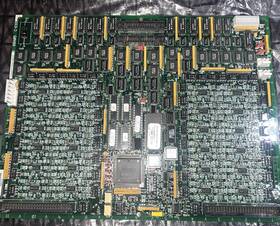
( Brand: Ge ), ( Manufacturer Part Number: DS200TCDAG1BHD ), ( Part Type: Control Board Module ), ( Country Of Origin: United States )
Review GE Tcda I/o Board Mark Turbine Control Module Oem
The **GE DS200TCDAG1BHD TC-DA I/O Board Turbine Control Module** is a high-performance, modular input/output (I/O) control component designed specifically for GE s DCS (Distributed Control System) architecture, particularly within the **DS2000 series**, to facilitate precise and reliable turbine control in power generation applications. This advanced board serves as a critical interface between the control system and the turbine s instrumentation, enabling seamless data acquisition, signal processing, and actuator control to optimize performance, safety, and efficiency. Engineered with robust analog and digital I/O capabilities, the DS200TCDAG1BHD integrates high-precision analog inputs for monitoring parameters such as temperature, pressure, flow rates, and speed, while its digital channels manage discrete signals like start/stop commands, alarms, and status indicators. The module s design emphasizes redundancy and fault tolerance, incorporating features such as self-diagnostic routines, error logging, and fail-safe mechanisms to ensure continuous operation even under adverse conditions. Built with GE s industry-leading reliability standards, this I/O board is constructed from high-grade materials and employs advanced shielding techniques to mitigate electromagnetic interference (EMI) and ensure signal integrity in demanding environments. Whether deployed in gas turbines, steam turbines, or combined cycle plants, the DS200TCDAG1BHD enhances operational flexibility by supporting scalable configurations, allowing engineers to tailor the system to specific turbine models and control requirements. Its seamless integration with GE s DCS platform enables real-time monitoring, predictive maintenance, and automated response to operational changes, contributing to increased uptime and reduced downtime. With a focus on both performance and longevity, this turbine control module is an essential component for modern power generation facilities seeking to balance efficiency with operational resilience.
### **Pros and Cons of buying a GE DS200TCDAG1BHD (TC-DA I/O Board, Turbine Control Module)**
#### **Pros**
1. **Compatibility and Integration**
- Designed specifically for GE s DCS (Distributed Control System) platforms, particularly the **DS2000 series**, ensuring seamless integration with existing systems.
- Supports **turbine control applications**, including steam turbines, gas turbines, and combined cycle plants, making it ideal for power generation environments.
- Works with **TC-DA (Turbine Control Digital Architecture)**, a robust control framework used in industrial turbine management.
2. **Reliability and Durability**
- Built to industrial standards, the module is designed for **harsh environments**, including high-temperature and high-vibration settings common in power plants.
- GE s reputation for **long-term reliability** in critical control systems reduces the risk of frequent failures.
- Backward and forward compatibility with other GE DCS components minimizes upgrade risks.
3. **Advanced Functionality**
- Provides **high-speed digital I/O** for precise turbine control, including analog and digital signals for monitoring and actuation.
- Supports **redundancy and fail-safe mechanisms**, improving system uptime and safety.
- Can interface with **protection systems, governor controls, and monitoring software**, enhancing overall turbine performance and efficiency.
4. **Support and Warranty**
- GE offers **technical support, documentation, and spare parts** through authorized distributors and service centers.
- Typically comes with a **warranty period** (varies by supplier), providing some assurance against manufacturing defects.
- Access to **GE s engineering resources** for troubleshooting and system optimization.
5. **Cost-Effectiveness in the Long Run**
- While the upfront cost may be high, its **longevity and reduced downtime** can justify the investment in large-scale industrial applications.
- Avoids the need for third-party modifications, reducing integration complexities and potential compatibility issues.
---
#### **Cons**
1. **High Initial Cost**
- The module is a **specialized industrial component**, and its price reflects its complexity, reliability, and brand reputation. Budget constraints may make it prohibitive for smaller operations or non-industrial applications.
- Additional costs may arise for **installation, calibration, and integration** with existing systems.
2. **Limited Availability and Lead Times**
- As a **discontinued or legacy model** (depending on the market), finding a new unit may require sourcing from **authorized distributors, surplus markets, or GE s inventory**.
- Long **lead times** for procurement can delay projects, especially in time-sensitive industrial deployments.
- Risk of **counterfeit or refurbished units** if purchased from untrusted sources, potentially compromising performance.
3. **Complexity in Maintenance and Training**
- GE s DCS systems require **specialized knowledge** for configuration, troubleshooting, and maintenance. Organizations without in-house expertise may need to **hire consultants or train personnel**, adding to operational costs.
- Documentation and software tools may be **outdated or require specific licenses**, complicating long-term support.
4. **Potential Obsolescence**
- While the DS2000 series is still used in many legacy plants, GE has shifted focus to newer platforms (e.g., **Proficy, GE Digital, or third-party DCS systems**).
- Future **software updates or hardware replacements** may not be supported, leading to compatibility issues with newer industrial standards.
- Upgrading to a modern system may eventually be necessary, incurring additional costs.
5. **Vendor Dependency**
- Relying on GE (or its distributors) for **parts, support, and upgrades** can create dependency risks. If GE reduces support for the DS2000, finding replacements or technical assistance may become difficult.
- Some distributors may **discontinue stocking** the module over time, further limiting availability.
6. **Physical and Logistical Challenges**
- The module is **industrial-grade**, meaning it may be **bulky, heavy, or require specialized handling** during installation.
- Shipping and installation in **remote or high-risk locations** (e.g., offshore platforms, remote power plants) can add logistical complexity and cost.
---
### **Conclusion**
The **GE DS200TCDAG1BHD (TC-DA I/O Board, Turbine Control Module)** is a **highly specialized, reliable, and robust** component designed for critical turbine control applications in industrial power generation. Its strengths lie in **seamless integration with GE s DCS ecosystem, durability, advanced control capabilities, and long-term reliability**, making it ideal for large-scale, mission-critical systems where uptime and precision are paramount.
However, the **high cost, limited availability, complexity of maintenance, and potential obsolescence** pose significant challenges, particularly for smaller operations, non-industrial users, or those without dedicated DCS expertise. The module is best suited for:
- **Existing GE DS2000-based plants** needing replacement or upgrade parts.
- **Organizations with in-house GE DCS support** and the resources to manage maintenance.
- **Applications where reliability outweighs cost**, such as power generation, oil & gas, or large industrial facilities.
For **new projects or non-GE environments**, evaluating **modern alternatives** (e.g., Siemens S7, Rockwell Automation, or cloud-based DCS solutions) may offer better long-term flexibility and cost efficiency.
---
### **Recommendation**
1. **If You Already Use GE DS2000:**- Proceed with purchasing the module from an **authorized GE distributor or surplus market** to ensure authenticity and warranty coverage.
- Verify **compatibility with your existing system** and consult GE s documentation or a certified technician for installation.
- Budget for **training or hiring support** if internal expertise is lacking.
2. **If Considering a New System:**- **Avoid this module** unless absolutely necessary. Instead, explore **modern DCS platforms** (e.g., GE s newer systems, Siemens PCS 7, or Emerson DeltaV) that offer better scalability, cloud integration, and long-term support.
- If turbine control is critical, **evaluate third-party I/O modules** that interface with newer DCS systems, reducing dependency on legacy hardware.
3. **For Budget or Non-Industrial Use:**- This module is **overkill** for small-scale or non-industrial applications. Consider **simpler, more affordable alternatives** (e.g., PLC-based solutions) unless turbine-specific control is mandatory.
4. **Long-Term Strategy:**- If your facility relies on the DS2000, **plan for a phased upgrade** to mitigate risks associated with obsolescence. GE may offer **transition programs** or compatibility tools for migrating to newer systems.
- Maintain **spare parts inventory** and **documentation** to reduce downtime in case of failures.
**Final Verdict:**The DS200TCDAG1BHD is a **strong choice for legacy GE DS2000 systems** where reliability and compatibility are non-negotiable. However, for new deployments or non-GE environments, the **cost and long-term risks** make it less ideal. Always weigh the **short-term needs against long-term maintainability** before committing.
Details:
GE DS200TCDAG1BHD board only. Normal signs of use from industrial environment. Connectors and components appear clean with no visible corrosion. DS200 series domestic build.
Compatible with gas and steam turbine control systems. The TCDA module handles digital/analog I/O, signal conditioning, and interface functions within the TMR control core. TCDA Digital/Analog I/O module. Sold as is, shown.
Item Details: This listing is for a GE DS200TCDAG1BHD TCDA I/O Board, part of the Mark V turbine control system. No bench testing has been performed. No bench testing performed. Condition Notes: Pulled from a working environment.
Supports TMR architecture. Clean connectors, no visible damage. Features: OEM GE Mark V control board.
part #: ds200tcdag1bhd prices
- $895.00-$1495.00
specifications pcbemdev:
- brand: Ge
- mpn: Ds200tcdag1bhd
- part type: Control Board Module
- country of origin: United States
returns pcbemdev:
- policy: No Returns
payments pcbemdev:
- wallet: Google-pay
- credit card: Diners-club
- other
seller pcbemdev:
- rating: 100.0%
- city: Addis, Louisiana
- # reviews: 357
offer pcbemdev:
- best offers: True
- started: May 3, 2026
- quantity: 1
- sold: 0
- availability: In Stock
- options: Ship-to-home
shipping pcbemdev:
- transit: 5-12 Days
- cost: $12.08
- service: USPS Ground AdvantaGe
- class: Standard
- carrier: USPS
- type: Calculated
General pcbemdev:
- Electronic Components Semiconductors > Circuit Boards Prototyping > Printed Circuit Boards PCBs
- condition: Used
Ge DS200TCDAG1BHD Is Similar To:
- 108298431 Ge Rpm Volta Peripheral Monitor Module (24.6% similar) For immediate attention, or to place an order, call 1 height . 63 inches ship weight 1 lbs, ea. Do not send cash or personal check without prior approval. All local pick-ups must be scheduled well in advance. Buyers should have cash in hand before buying...(August 3rd, 2018)
- 108298449 Ge Rpm Binary Peripheral Monitor Module (33% similar) All local pick-ups must be scheduled well in advance. For immediate attention, or to place an order, call 1 height . 63 inches ship weight 1 lbs, ea. Buyers should have cash in hand before buying. Do not send cash or personal check without prior approval...(August 3rd, 2018)
- 108469461 Ge Rpm Shunt Peripheral Monitor Module (28.1% similar) 63 inches ship weight 1 lbs, ea. Do not send cash or personal check without prior approval. For immediate attention, or to place an order, call 1 height . All local pick-ups must be scheduled well in advance. Buyers should have cash in hand before buying...(August 2nd, 2018)
- 108483538 Ge Rpm Temperature Peripheral Monitor Module (36.7% similar) 38 inches length for immediate attention, or to place an order, call 1 height . 63 inches ship weight 1 lbs, ea. Do not send cash or personal check without prior approval. All local pick-ups must be scheduled well in advance...(August 2nd, 2018)
- 188a1986g1 Ge Printed Circuit Board (25.7% similar) The moose is in...(November 8th, 2017)
- 188a1987g1 Ge Printed Circuit Board (25.7% similar) The moose is in...(November 8th, 2017)
- 193a9257g1 Ge Printed Circuit Board (25.7% similar) The moose is in...(November 9th, 2017)
- 194a3302g1 Ge Printed Circuit Board (25.7% similar) The moose is in...(November 8th, 2017)
- 194a3303g1 Ge Printed Circuit Board (25.7% similar) The moose is in...(November 7th, 2017)
- 194a3305g1 Ge Printed Circuit Board (25.7% similar) The moose is in...(November 8th, 2017)
- 194a3306g1 Ge Printed Circuit Board (25.7% similar) The moose is in...(November 9th, 2017)