DONG HAE SYSTEMS DSOVME-12JI Vme Opal Slot Board
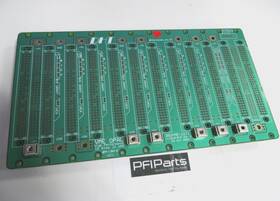
( Brand: Dong Hae Systems ), ( Manufacturer Part Number: DSOVME-12JI ), ( Model: VME OPAL DSOVME-12JI ), ( Type: Parts )
Review DONG HAE SYSTEMS Vme Opal Slot Board
The **Donghae DSOVME-12JI VME Opal 12-Slot Backplane** is a high-performance, modular VMEbus (Versa Module Europa) backplane designed to deliver unparalleled scalability, reliability, and flexibility for demanding embedded computing, industrial automation, and real-time data acquisition applications. Engineered with precision for modern system architectures, this 12-slot Opal-compliant backplane adheres to the **VME64x** standard while incorporating advanced features to optimize signal integrity, thermal management, and backplane connectivity. Its robust construction ensures compatibility with a wide range of VME-compatible modules, including single-width (SW), double-width (DW), and triple-width (TW) cards, making it an ideal choice for mission-critical environments where performance and expandability are paramount.
At the heart of the DSOVME-12JI lies a **12-slot backplane architecture**, featuring a symmetrical slot layout that maximizes module placement efficiency while maintaining optimal airflow for thermal dissipation. Each slot is meticulously designed to support high-speed data transfer, with **VME64x-compliant backplane buses** delivering up to **266 MB/s** of data throughput, ensuring seamless integration with modern FPGAs, DSPs, and high-performance I/O modules. The backplane incorporates **low-impedance signal traces** and **differential signaling paths** to minimize electromagnetic interference (EMI) and crosstalk, which is critical for applications requiring precise timing and low-latency operations. Additionally, the inclusion of **J1 and J2 connectors** for P2 and P1 backplane buses further enhances flexibility, allowing for the expansion of system capabilities without compromising performance.
Thermal management is a key consideration in the DSOVME-12JI, with a **passive cooling design** that leverages optimized slot spacing and heat dissipation channels to maintain stable operating temperatures even under heavy workloads. The backplane is constructed from high-quality, flame-retardant materials, ensuring durability in harsh industrial environments while meeting stringent safety and compliance standards such as **UL94-V0** and **RoHS**. For enhanced reliability, the backplane includes **backplane-mounted connectors** with gold-plated contacts, reducing signal degradation and ensuring long-term connectivity integrity. The modular design also supports **hot-swappable modules**, allowing for seamless upgrades or replacements without disrupting system operations a feature invaluable in 24/7 operational settings.
Beyond its technical specifications, the DSOVME-12JI is engineered with **future-proofing in mind**, offering compatibility with both legacy and next-generation VME modules. Its **Opal-compliant architecture** ensures seamless integration with advanced I/O systems, FPGA accelerators, and real-time processing units, making it a versatile solution for applications ranging from **defense and aerospace systems** to **scientific research and industrial automation**. Whether deployed in a compact embedded system or a large-scale data acquisition platform, this backplane delivers the robustness and adaptability required to meet the most rigorous performance demands. With its combination of high-speed data handling, thermal efficiency, and modular scalability, the Donghae DSOVME-12JI stands as a cornerstone for next-generation VME-based computing solutions.
### **Pros and Cons of buying a Dong Hae DSovme-12JI VME Opal 12-Slot Board**
#### **Pros:**1. **High Performance and Reliability** The DSovme-12JI is designed for industrial and embedded computing applications, offering robust performance with support for modern processors and memory configurations. It is built with high-quality components to ensure long-term stability.
2. **Scalability** With 12 VME slots, this board provides ample expansion options for various peripherals, I/O modules, and specialized cards, making it suitable for complex systems requiring parallel processing or multiple interfaces.
3. **Compatibility with VME Standard** Being a VME Opal-compliant board, it integrates seamlessly with existing VME-based systems, ensuring backward and forward compatibility with other VME modules and backplanes.
4. **Support for Modern Processors** Depending on the specific model and configuration, it may support recent Intel or AMD processors, enabling better computational power for real-time applications, data acquisition, or embedded control systems.
5. **Industrial-Grade Build** Designed for harsh environments, the board likely includes features such as extended temperature ranges, EMI shielding, and rugged construction, making it ideal for industrial, aerospace, or military applications.
6. **Flexible Memory and Storage Options** Supports high-capacity DDR4 or DDR5 memory (depending on the model) and may include onboard storage or PCIe slots for additional storage solutions, enhancing data processing capabilities.
7. **Real-Time Operating System (RTOS) Support** Many VME boards are optimized for real-time applications, making this board suitable for systems requiring deterministic performance, such as automation, robotics, or signal processing.
8. **Vendor Reputation** Dong Hae is a well-known manufacturer in the embedded computing industry, with a history of producing reliable and high-performance VME boards. Their technical support and documentation are generally strong.
---
#### **Cons:**1. **High Cost** VME-based systems, especially those with multiple slots and modern processor support, tend to be expensive compared to more common bus standards like PCIe or PCI. The DSovme-12JI may require a significant investment.
2. **Limited Availability of Parts** As VME is an older standard compared to PCIe or other modern interfaces, finding replacement parts, drivers, or specialized modules can be challenging. This may lead to longer lead times or higher costs for upgrades.
3. **Complexity in Design and Integration** VME systems often require specialized knowledge for setup, configuration, and troubleshooting. Engineers may need additional training or expertise to fully utilize the board s capabilities.
4. **Power Consumption** High-performance VME boards with multiple slots and modern processors can draw significant power, which may require careful power supply planning to avoid overheating or instability.
5. **Legacy Software Limitations** While VME is still used in niche industries, many modern software tools and development environments may not natively support VME. Custom drivers or legacy software may be required, adding complexity.
6. **Size and Form Factor Constraints** VME backplanes and boards are larger than modern PCIe or mini-ITX systems, which may limit deployment options in space-constrained environments.
7. **Potential for Obsolescence** Although VME is still relevant in certain industries, the trend in embedded computing is shifting toward more compact and energy-efficient standards (e.g., PCIe, Ethernet-based modules). Future-proofing may require additional investment in compatibility layers.
8. **Limited Consumer Market** Unlike consumer-grade motherboards, VME boards are primarily targeted at industrial, military, or scientific applications. This means fewer aftermarket upgrades, accessories, or community support compared to mainstream platforms.
---
### **Conclusion:**The **Dong Hae DSovme-12JI VME Opal 12-slot board** is a powerful and reliable choice for applications requiring high-performance, scalable, and rugged computing within the VME ecosystem. Its strengths lie in its industrial-grade construction, compatibility with legacy and modern systems, and support for complex parallel processing tasks. However, its high cost, limited availability of parts, and complexity make it less ideal for general-purpose or consumer-oriented projects.
This board is best suited for:- Industrial automation systems.
- Real-time embedded control applications.
- Aerospace, defense, or military systems requiring VME compatibility.
- High-performance data acquisition or signal processing systems.
- Legacy system upgrades where VME is still the standard.
For applications where cost, size, or modern software compatibility are priorities, alternatives like PCIe-based embedded boards or Ethernet-based industrial computers may be more practical.
---
### **Recommendation:**If your project **requires VME compatibility, high scalability, and industrial reliability**, the **DSovme-12JI** is a strong choice despite its drawbacks. Ensure that:
- Your budget accounts for the higher cost and potential long-term maintenance expenses.
- Your team has the expertise to integrate and troubleshoot VME systems.
- You have a clear plan for power management and thermal dissipation given the board s performance demands.
If you are working on a **modern or cost-sensitive project** where VME is not strictly necessary, consider evaluating alternatives such as:- **PCIe-based embedded boards** (e.g., from Advantech, Kontron, or MEN Micro) for better software support and lower costs.
- **Ethernet-based industrial computers** (e.g., BeagleBone, Raspberry Pi industrial variants, or ruggedized x86 systems) if real-time performance is not critical.
- **Modular FPGA or SoC-based systems** (e.g., Xilinx Zynq, Intel Cyclone) for highly specialized or parallel-processing needs.
Ultimately, the DSovme-12JI is a **specialized tool** best reserved for environments where its unique advantages outweigh its limitations. For most other applications, newer or more flexible platforms may offer better long-term value.
Details:
Model: DSOVME-12J1, condition: Used - working condition. The item has been used previously.
part #: dsovme12ji prices
- $220.00-$250.00
specifications pcbemdev:
- brand: Dong Hae Systems
- mpn: Dsovme-12ji
- model: Vme Opal Dsovme-12ji
- type: Parts
returns pcbemdev:
- time: 30 Days
- policy: Returns Accepted
- method: Money back
- paid by: Buyer
general pcbemdev:
- condition: Used
- Electronic Components Semiconductors > Circuit Boards Prototyping > Printed Circuit Boards PCBs
seller pcbemdev:
- # reviews: 191
- rating: 100.0%
- city: Longwood, Florida
offer pcbemdev:
- availability: In Stock
- sold: 0
- best offers: True
- quantity: 1
- started: March 27, 2026
- options: Ship-to-home
payments pcbemdev:
- credit card: Mastercard
- wallet: Apple-pay
- other
shipping pcbemdev:
- cost: $20.12
- class: Standard
- type: Calculated
- carrier: UPS
- transit: 4-8 Days
- service: UPS Ground
Dong Hae Systems DSOVME-12JI Is Similar To:
- Dang Yang E p Ml-1000 Dong E p Circuit Board Rev 1.0 40855-220-01 (24.1% similar) Need a part asap. Dong yang e circuit board, model #: ML-10 rev 1.0, 40855-220-01, used, untested, good cosmetic condition. Dong yang e ML-1000 circuit board rev 1.0 40855-220-01...(August 24th, 2024)