DIGIVAC DVG-6 Microprocessor Controlled Signal Vacuum Gauge Pcb Board
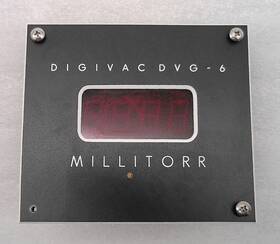
( Brand: Digivac ), ( Manufacturer Part Number: DVG-6 ), ( Part Type: Vacuum Signal Gauge Board ), ( Mounting Style: Panel Mount ), ( Pcb Type: Double-sided Pcb ), ( Series: K4sep Flextron ), ( Unit Type: Unit )
Review DIGIVAC Dvg6 Microprocessor controlled Mixed signal Vacuum Gauge Pcb Board
The **Digivac DVG-6 (DVG6) Microprocessor-Controlled Mixed-Signal Vacuum Gauge PCB Board** is a high-performance, precision-engineered solution designed for advanced vacuum measurement and control applications in scientific research, industrial manufacturing, semiconductor processing, and specialized laboratory environments. This cutting-edge board integrates a sophisticated mixed-signal architecture, combining analog and digital signal processing to deliver unparalleled accuracy, reliability, and flexibility in monitoring and regulating vacuum levels across a wide range of pressures from ultra-high vacuum (UHV) to rough vacuum conditions. At its core, the DVG-6 leverages a robust microprocessor for real-time data acquisition, signal conditioning, and intelligent calibration, ensuring consistent performance even in demanding environments where environmental noise, thermal fluctuations, or sensor drift could otherwise compromise measurement integrity.
The PCB board features a modular and scalable design, incorporating a high-precision capacitive or piezoelectric vacuum sensor interface, which is optimized for minimal hysteresis, fast response times, and superior long-term stability. Its mixed-signal architecture enables seamless integration with external sensors, allowing users to configure the system for specific applications, such as residual gas analysis, thin-film deposition, or vacuum chamber monitoring. The onboard analog-to-digital converter (ADC) and digital signal processor (DSP) facilitate high-resolution pressure readings, while the embedded firmware supports customizable calibration routines, linearization algorithms, and adaptive filtering to mitigate interference and enhance measurement fidelity. Additionally, the DVG-6 includes programmable gain amplifiers, low-noise preamplifiers, and digital compensation circuits to ensure that even the faintest pressure signals are accurately captured and processed without distortion.
For connectivity and data management, the DVG-6 offers multiple communication interfaces, including **I C, SPI, UART, and analog output (0-5V or 4-20mA)**, making it compatible with a broad spectrum of industrial controllers, data loggers, and SCADA systems. The board also supports **RS-232/485** for serial communication, enabling seamless integration with PLCs, PCs, or embedded systems for real-time vacuum monitoring and control. Its compact yet rugged PCB design ensures durability in harsh environments, with features such as overvoltage protection, ESD shielding, and temperature-compensated circuitry to maintain performance across a wide operational range. The DVG-6 further enhances usability with a **user-configurable display interface**, allowing for direct integration with LCDs or touchscreen panels for on-site visualization of pressure data, alarms, and system status.
Beyond its technical prowess, the DVG-6 is engineered for ease of implementation, offering a **development-friendly platform** with comprehensive documentation, including API references, calibration guides, and example code for popular microcontrollers and FPGA systems. Its open-architecture approach allows engineers to tailor the firmware for specialized applications, such as multi-sensor fusion, predictive maintenance algorithms, or adaptive control loops. Whether deployed in a **semiconductor fabrication line**, a **synchrotron accelerator**, or a **materials science lab**, the DVG-6 delivers a versatile, high-precision vacuum measurement solution that bridges the gap between analog sensing and digital intelligence, ensuring optimal performance in even the most exacting vacuum applications.
The **Digivac DVG-6 (DVG6) Microprocessor-Controlled Mixed-Signal Vacuum Gauge PCB Board** is a specialized component used for measuring low-pressure environments, commonly in applications like vacuum chambers, semiconductor manufacturing, or scientific research. Below is a detailed breakdown of its pros and cons, followed by a conclusion and recommendation.
---
### **Pros of the Digivac DVG-6 (DVG6) PCB Board**
1. **High Precision and Accuracy**
The DVG-6 is designed for precise vacuum measurement across a wide range of pressures, from high vacuum to rough vacuum. Its mixed-signal architecture allows for accurate readings even in dynamic or fluctuating environments, which is critical in applications requiring strict control (e.g., thin-film deposition, plasma etching, or LEED/Omicron systems).
2. **Microprocessor Control and Digital Output**
Unlike analog gauges, the DVG-6 uses a microprocessor to process signals, reducing drift and improving stability over time. It provides digital outputs (e.g., RS-232, USB, or analog voltage/current), making it compatible with modern data acquisition systems, PLCs, or lab automation software. This eliminates the need for manual readings and allows for real-time monitoring and logging.
3. **Wide Pressure Range**
The DVG-6 typically covers a broad range (e.g., 10 -6 to 10 3 mbar or Torr, depending on the sensor type paired with it), making it versatile for various vacuum applications. This range is often wider than that of standalone analog gauges, reducing the need for multiple gauges in a system.
4. **Compatibility with Multiple Sensor Types**
The DVG-6 is often paired with different vacuum sensors (e.g., Pirani, Penning, or cold cathode gauges) depending on the pressure range required. This modularity allows users to extend its functionality without replacing the entire gauge system.
5. **Low Power Consumption**
Being a digital and microprocessor-controlled unit, the DVG-6 generally consumes less power than analog gauges or traditional vacuum controllers, which can be advantageous for battery-powered or remote applications.
6. **Reduced Maintenance and Calibration Needs**
Digital gauges tend to require less frequent calibration compared to analog counterparts. The microprocessor can also compensate for minor sensor drift, improving long-term reliability.
7. **Integration with Automation Systems**
The digital interface (e.g., USB, RS-232, or Modbus) allows seamless integration with SCADA systems, lab automation software, or industrial control networks. This is particularly useful in manufacturing environments where vacuum processes are automated.
8. **Compact and Modular Design**
The PCB-based design of the DVG-6 makes it space-efficient and easier to integrate into existing systems. It can often be retrofitted into older setups that previously relied on standalone analog gauges.
9. **Diagnostic and Alarm Capabilities**
Many microprocessor-controlled gauges include built-in diagnostics, such as sensor health monitoring, over/under-range alarms, and fault detection. The DVG-6 likely offers similar features, enhancing system reliability.
10. **Future-Proofing**
Digital gauges are easier to upgrade or reprogram compared to analog units. If software or firmware updates are available, the DVG-6 can be enhanced without hardware changes.
---
### **Cons of the Digivac DVG-6 (DVG6) PCB Board**
1. **Higher Initial Cost**
Digital and microprocessor-controlled vacuum gauges are generally more expensive upfront than analog gauges. The cost of the DVG-6 PCB board, along with compatible sensors and additional interfacing hardware (e.g., USB adapters, communication modules), can add up quickly.
2. **Complexity in Setup and Calibration**
While digital gauges are more stable long-term, their initial setup can be more complex. Users may need to configure communication protocols, calibrate the system, and ensure compatibility with existing software. This requires technical expertise, especially for non-engineering personnel.
3. **Dependence on Power Supply**
The DVG-6 requires a stable power source (e.g., 5V, 12V, or 24V DC), which may not always be available in all vacuum systems. Analog gauges, while less precise, can often operate with minimal power or even passively.
4. **Potential for Software or Firmware Issues**
Digital systems are susceptible to software bugs, firmware corruption, or compatibility issues with other devices. If the DVG-6 lacks robust error handling or user support, it could lead to downtime or data loss.
5. **Limited Physical Indicators**
Unlike analog gauges with direct needle readings, the DVG-6 relies on digital displays or external software. In critical applications where immediate visual feedback is required (e.g., emergency shutdowns), this could be a drawback unless paired with a secondary display.
6. **Sensor Compatibility Limitations**
While the DVG-6 is modular, not all vacuum sensors may be compatible or easily interchangeable. Users must ensure that the chosen sensor (e.g., Pirani for rough vacuum, Penning for high vacuum) aligns with their application s requirements. Mismatched sensors can lead to inaccurate readings or damage.
7. **Potential Latency in Data Acquisition**
Digital systems may introduce slight delays in data processing or transmission, which could be problematic in ultra-fast or real-time critical applications (e.g., some plasma processing steps).
8. **Training and Skill Requirements**
Operating and maintaining a digital vacuum gauge requires familiarity with digital interfaces, communication protocols, and possibly programming (e.g., configuring serial communication settings). Analog gauges are simpler to use by comparison.
9. **Vendor Lock-In**
If the DVG-6 is proprietary or lacks open standards, users may face challenges in finding replacement parts, support, or alternative software in the future. This can be a risk if the manufacturer discontinues the product.
10. **Environmental Sensitivity**
Like all electronic components, the DVG-6 may be sensitive to electromagnetic interference (EMI), voltage spikes, or extreme temperatures. Proper shielding and environmental controls may be necessary to ensure reliable operation.
---
### **Conclusion**
The **Digivac DVG-6 (DVG6) Microprocessor-Controlled Mixed-Signal Vacuum Gauge PCB Board** is a sophisticated and versatile tool for applications requiring high precision, digital integration, and automation. Its microprocessor control, wide pressure range, and compatibility with modern systems make it ideal for scientific research, semiconductor manufacturing, or industrial processes where vacuum control is critical. However, its higher cost, complexity, and dependence on digital infrastructure may not justify its use in simpler or cost-sensitive applications where analog gauges suffice.
The decision to purchase the DVG-6 should be based on the specific needs of the application: - **Choose the DVG-6 if:**- You require precise, digital vacuum measurements with real-time monitoring and logging.
- Your system is already automated or requires integration with control software.
- You operate in a high-vacuum environment where analog gauges lack sufficient accuracy.
- Long-term stability and reduced maintenance are priorities.
- **Avoid or reconsider the DVG-6 if:**- Your budget is constrained, and analog gauges meet your accuracy requirements.
- Your application lacks the technical expertise to set up, calibrate, or troubleshoot digital systems.
- The system is temporary or low-cost, where the upfront investment in digital hardware is unwarranted.
- You require immediate, analog-style visual feedback without additional displays or software.
---
### **Recommendation**
For **new high-precision vacuum systems** (e.g., in semiconductor fabrication, thin-film deposition, or scientific research), the **DVG-6 is highly recommended** due to its accuracy, digital flexibility, and integration capabilities. Pair it with the appropriate sensor (e.g., Pirani for rough vacuum, Penning for high vacuum) and ensure compatibility with your existing control infrastructure.
For **budget-conscious or simple applications** (e.g., basic lab experiments, low-cost vacuum chambers, or hobbyist setups), an **analog vacuum gauge** or a lower-cost digital gauge may be more practical. Additionally, consider whether the DVG-6 is sold as a standalone board or requires additional components (e.g., sensor, power supply, communication module) to function fully budget for these extras.
If purchasing the DVG-6, verify:1. **Compatibility** with your existing sensors and control systems.
2. **Support and documentation** from the manufacturer, including calibration procedures and troubleshooting guides.
3. **Future scalability**, such as the availability of firmware updates or alternative communication protocols.
Ultimately, the DVG-6 is a **superior choice for advanced vacuum applications** where its advantages outweigh its complexities, but it is not necessary for all use cases.
Details:
Review all pictures for details. 30 Day Warranty. UPS Ground shipping within USA Domestic.
part #: dvg6 price
- $135.00
specifications pcbemdev:
- brand: Digivac
- mpn: Dvg-6
- part type: Vacuum Signal Gauge Board
- mounting style: Panel Mount
- pcb type: Double-sided Pcb
- series: K4sep Flextron
- unit type: Unit
shipping pcbemdev:
- service: UPS Ground
- cost: $0.00
- type: Fixed
- carrier: UPS
- class: Standard
- transit: 4-7 Days
returns pcbemdev:
- method: Money back
- policy: Returns Accepted
- time: 30 Days
- paid by: Buyer
seller pcbemdev:
- # reviews: 2298
- rating: 100.0%
- city: Baytown, Texas
offer pcbemdev:
- availability: In Stock
- started: June 5, 2026
- quantity: 2
- sold: 0
- best offers: True
- options: Ship-to-home
payments pcbemdev:
- other
- wallet: Paypal
- credit card: Visa
general pcbemdev:
- condition: Used
- Electronic Components Semiconductors > Circuit Boards Prototyping > Printed Circuit Boards PCBs