HP E2261A Quad Interface Module RS-232
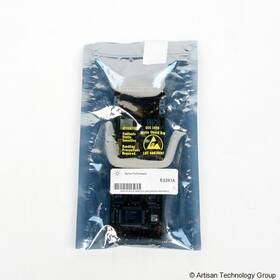
( Brand: Hp ), ( Manufacturer Part Number: E2261A ), ( Part Type: Module ), ( Item Length: 12 ), ( Country Of Origin: United States )
Review HP Quad Rs-232 Interface M module
The **HP E2261A Quad RS-232 Interface M-Module** is a high-performance, versatile communication interface designed to seamlessly integrate legacy serial devices into modern computing environments, particularly within enterprise networks, industrial automation systems, or legacy equipment modernization projects. Engineered by Hewlett Packard (now part of HP Enterprise), this M-Module is a compact yet robust solution that provides four independent RS-232 serial ports, each capable of operating at speeds up to **115.2 kbps**, making it ideal for applications requiring reliable, high-speed data transmission between serial devices and networked systems. Built with a **modular design**, the E2261A slots effortlessly into HP s ProLiant server chassis or other compatible M-Module-compatible platforms, offering a space-efficient alternative to traditional PCI or PCIe expansion cards while maintaining full compatibility with existing serial infrastructure.
At its core, the E2261A delivers **four fully isolated RS-232 ports**, each featuring **DTE (Data Terminal Equipment) or DCE (Data Circuit-terminating Equipment) functionality**, allowing for flexible connectivity to a wide range of devices, including printers, scanners, legacy terminals, industrial sensors, or medical equipment. Each port supports standard RS-232 signaling with **25-pin D-sub connectors**, ensuring backward compatibility with virtually any serial device while adhering to strict electrical specifications for reliable data transfer. The module s **hardware flow control (RTS/CTS)** and **software flow control (XON/XOFF)** options provide additional flexibility for managing data transmission in high-latency or noisy environments, reducing errors and improving overall system stability.
One of the standout features of the E2261A is its **low-latency, high-throughput performance**, which is critical for applications such as **real-time monitoring, automated testing, or remote device management**. The module is optimized for **minimal CPU overhead**, ensuring that serial communication does not bottleneck network or server performance, even when handling multiple concurrent connections. Additionally, the E2261A supports **asynchronous serial communication protocols**, including **XON/XOFF, DTR/DSR, and RTS/CTS**, which are essential for legacy systems requiring handshaking signals to synchronize data transfer. For environments where security is a concern, the module incorporates **hardware isolation** between ports, preventing ground loops and cross-talk that could compromise data integrity or introduce electrical interference.
Beyond its technical specifications, the HP E2261A is built with **enterprise-grade reliability**, featuring **commercial-grade temperature operation** (0 C to 55 C) and **extended operating lifespans**, making it suitable for 24/7 deployment in data centers, server rooms, or industrial control environments. The module s **hot-swappable design** allows for maintenance or upgrades without disrupting system operations, a critical feature in mission-critical applications where downtime is unacceptable. Furthermore, the E2261A is **driverless** in most modern operating systems, leveraging built-in support in **Windows, Linux, and other enterprise-grade OS platforms**, simplifying deployment and reducing IT overhead.
Whether used for **legacy system integration, industrial automation, or remote device connectivity**, the HP E2261A Quad RS-232 Interface M-Module serves as a bridge between older serial-based equipment and contemporary networked infrastructures. Its **compact form factor, high-speed performance, and robust build quality** make it an excellent choice for organizations seeking a scalable, future-proof solution for serial communication needs. By combining **versatility, reliability, and ease of integration**, the E2261A ensures seamless connectivity while minimizing complexity, making it a trusted component in both traditional and modern IT environments.
### **HP E2261A Quad RS-232 Interface M-Module: Pros and Cons**
#### **Pros**
1. **High-Speed Data Transfer** Supports up to **115.2 Kbps** per port, making it suitable for legacy serial devices that require reliable communication.
2. **Four Independent Ports** Provides four separate RS-232 connections, useful for connecting multiple devices simultaneously (e.g., printers, scanners, or legacy servers).
3. **Compatibility with HP ProLiant Servers** Designed as an **M-Module**, it integrates seamlessly with HP ProLiant servers (Gen6 and later), offering a direct expansion slot solution without additional PCIe cards.
4. **Low Latency** Since it operates at the hardware level, it minimizes software overhead, making it ideal for real-time applications.
5. **Reliable for Legacy Systems** Many older industrial, medical, or financial systems still rely on RS-232, and this module ensures backward compatibility.
6. **No Additional Power Required** Powered directly through the server s M-Module slot, reducing complexity in wiring.
7. **Durable Build** HP components are generally built for enterprise reliability, ensuring long-term performance in stable environments.
8. **Easy Installation** Plug-and-play design with minimal configuration required, reducing IT deployment time.
#### **Cons**
1. **Limited Speed for Modern Needs** At **115.2 Kbps**, it is **far slower** than modern USB or Ethernet interfaces (which often exceed **10 Mbps**). This makes it unsuitable for high-bandwidth applications.
2. **Obsolete Protocol** RS-232 is an **old standard** (dating back to the 1960s), and many newer devices use **USB, Ethernet, or USB-to-serial adapters** instead.
3. **No USB or Network Connectivity** Unlike newer alternatives, this module does not support **USB redirection** or **network-based serial over IP (SOIP)**, limiting remote access options.
4. **Hardware Dependency on HP Servers** Primarily designed for **HP ProLiant servers**, making it less flexible if you use non-HP hardware.
5. **No Virtualization Support** Unlike modern **USB-to-serial adapters** (e.g., USB-to-RS-232 dongles), this module does not work well with **virtual machines (VMs)** or **remote desktop environments**.
6. **Limited Availability & Support** As an older product, finding replacements or technical support may be difficult compared to newer, more widely available alternatives.
7. **No Built-in Diagnostics** Unlike modern network interfaces, there are **no built-in logging or diagnostic tools** for troubleshooting serial communication issues.
8. **Physical Port Limitations** The **DB-9 male connectors** may not be as durable as modern **USB-C or RJ-45** ports, increasing the risk of wear and tear over time.
---
### **Ending Conclusion**
The **HP E2261A Quad RS-232 Interface M-Module** remains a **practical solution for legacy environments** where **four simultaneous RS-232 connections** are needed on an **HP ProLiant server**. Its **high-speed (for RS-232 standards) and seamless integration** make it valuable for **industrial automation, medical devices, or financial systems** that still rely on serial communication.
However, for **modern IT infrastructures**, this module is **outdated and impractical**. The **lack of USB, Ethernet, or virtualization support**, along with **limited speed**, makes it unsuitable for **cloud computing, remote access, or high-bandwidth applications**. If you need **flexibility, scalability, or future-proofing**, newer **USB-to-serial adapters, USB-to-Ethernet converters, or virtual serial port solutions** would be a better choice.
---
### **Recommendation**
- **Buy the HP E2261A if:**- You are maintaining a **legacy HP ProLiant server environment** with **multiple RS-232 devices**.
- You require **four dedicated serial ports** with **minimal latency** for **industrial or specialized applications**.
- You have **no alternative** and must maintain **direct hardware-level serial communication**.
- **Avoid the HP E2261A if:**- You are working in a **modern IT setup** (cloud, virtualization, or remote access).
- You need **higher speeds** (USB 2.0/3.0 or Ethernet-based solutions are better).
- You require **USB redirection, virtual serial ports, or network-based serial over IP (SOIP)**.
- You are looking for **long-term scalability** modern alternatives will be more flexible.
#### **Alternatives to Consider:**- **For HP Servers:** **HP E2261B (USB-to-RS-232)** or **USB-based serial adapters** (if virtualization is needed).
- **For General Use:** **USB-to-RS-232 dongles (e.g., FTDI-based)** or **USB-to-Ethernet serial converters** (for remote access).
- **For Virtualization:** **USB-over-IP solutions** (e.g., **USB Network Gate**) or **virtual serial port drivers**.
If cost is not a concern and you **must** use RS-232 on an HP server, the **E2261A is a solid choice**. Otherwise, **modern alternatives will serve you better in the long run.**
Details:
The E2261A has four independently programmable RS-232 terminal interfaces. Fast and hassle-free. Because of its dense double-sided design, it is recommended for use with only the E2251A C-size M-Module carrier. Are not included with this equipment unless pictured and/or listed in the above.
The E2261A is a single-wide, register-based M-Module. HP E2261A Quad RS-232 Interface M-Module:: This Agent M-Module is sealed in manufacturers packaging.
part #: e2261a prices
- $195.00-$795.00
specifications pcbemdev:
- brand: Hp
- mpn: E2261a
- part type: Module
- item length: 12
- country of origin: United States
general pcbemdev:
- Electronic Components Semiconductors > Circuit Boards Prototyping > Printed Circuit Boards PCBs
- condition: Used
shipping pcbemdev:
- class: Standard, One-day, Economy
- type: Calculated
- cost: $25.01
- transit: 3-8 Days
- service: FedEx Ground / FedEx Home Delivery, FedEx Standard Overnight, FedEx Ground Economy
- carrier: FedEx
seller pcbemdev:
- # reviews: 17896
- rating: 99.8%
- city: Champaign, Illinois
offer pcbemdev:
- started: May 19, 2026
- quantity: 1
- options: Ship-to-home
- sold: 0
- availability: In Stock
returns pcbemdev:
- policy: Returns Accepted
- method: Money back
- paid by: Buyer
- time: 30 Days
payments pcbemdev:
- other
- credit card: Mastercard
- wallet: Apple-pay
Hp E2261A Is Similar To:
- Card Interface Printer Hp 02934-60053 Agilent Board Pcb Rs-232c 293x (29.6% similar) Connection ports are in excellent condition. Cosmetic scuffs scratches from handling. This unit has been used. Standard shipping prices are only good for the lower 48 states. Minimum handling charge is 75 onto a standard pallet and increases for custom pallet's. Soldering side is in excellent ...(May 1st, 2015)
- 05985-60301 Input Ms Board Output Pcb Card Module Printed Hp Circuit (24.1% similar) length in inches 12. Some signs of previous use. If in doubt, please before purchasing. Dimensions l x w xx 10 x all parts, including accessories and cables are only included if pictured or listed in the. Do not lift up on the top plastic sheet or it'll make a mess. This unit has been used. Save ...(May 7th, 2015)
- Agilent Card Printed Board Circuit Module Sampler Control Pcb Hp 18824-60100 (27.6% similar) If you do receive the package, submit clear images of the packaging box and damaged item from multiple angles. USPS or ups ground. Board components are in good condition. Cash is only accepted for will calls. Do not lift up on the top plastic sheet or it'll make a mess. Are only included if pictured...(May 1st, 2015)
- E2403a Hp 80486 Universal Interface Test (45% similar) Some items may fall outside of that realm. Hp E2403A universal interface test socket board new old stock store location Cr 1B5D absolute has used its best efforts to inspect the items for sale, create and furnish photographs that fairly adequately depict visual condition of at time sale...(February 20th, 2017)
- Hp 98256a 256k Ram Module For 200 Series Computers Vintage (34.7% similar) I have been in the test equipment sales service business for over 25 years. Reasonably priced test-equipment, quality service, and most of all honest business. I can also tell you what expect on an as-is item upon request. Hp 98256A 256K ram module. Most listings will have the units ailments ...(August 20th, 2024)
- Hp E1404a Rare 75000 Prototyping Module D (42% similar) This board does not seem to exist anywhere on the internet. Rare Hp 75000 E1404A prototyping module. If it is not pictured or stated as included, then included...(October 1st, 2024)
- Hp 24541-60031 Vectra 8 Bit Dual Serial Interface Card (46.8% similar) Please examine the photos as they are part of. We'll correct it to the best of our ability. Purchase it with the understanding that you know what you're buying and how to use. Inventory id: Milo 75 p3 lot of 1 q used condition...(November 2nd, 2024)
- Hp M1053-66415 Telemetry Interface Card Module (51.2% similar) Part number: n/a. Has some cosmetic scuffs and scratches. Associated stores: IMS.53188 LOC.41-G manufacturer: Hp. Sold as-is, as pictured. Notes: does not include stand...(December 1st, 2024)
- Hp 0950-4156 Vrm Pcb Ac dc Converter 40v In 2v Out Module (33% similar) Condition is used. 0950-4156 Hp VR PCB ac/dc converter 40V in 2v out module...(January 8th, 2025)
- Hp Agilent 04284-69505 Lcr Meter Interface Pcb Assembly Working Surplus (30.6% similar) Hp agent 04284-69505 Cr meter interface PCB assembly working surplus. Pictured test equipment is not included or available for sale. Serial numbers or country of manufacture may vary. Part no: 04284-69505THIS item is working surplus. The physical condition is good, but there are signs of previous ...(March 21st, 2025)
- Agilent 08590-60366 Hp Keysight Parallel Interface Board Used Pull Free Shipping (33.3% similar) Hp agent key sight 08590-60366 parallel interface board used pull free shipping, pull from working unit. Please see actual pictures. Items must be packaged properly and shipped to arrive undamaged ready for resale as sold. 8595E series. 30 day warranty. What you see is what get...(April 11th, 2025)