KUKA V1.60 Esc Control Pcb Board C13 A161.00.005.571
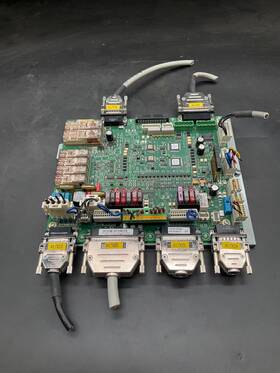
( Brand: Kuka ), ( Manufacturer Part Number: V1.60 ), ( Type: Other Electrical Components ), ( Dimensions: 11x10x2 ), ( State: Michigan ), ( Country: United States ), ( Storage Location: Nevada Mro Area Stock Cart 05 )
Review KUKA Esc C13 Control Pcb Board Used
The **KUKA ESC C13 V1.60 Control PCB Board (A161.00.005.571)** is a high-performance, industrial-grade printed circuit board designed as the core control module for KUKA s advanced robotics and automation systems, particularly within the ESC (Electronic System Controller) architecture. This sophisticated board serves as the backbone for motion control, communication, and processing in robotic applications, ensuring seamless integration with KUKA s KRC (KUKA Robot Controller) systems, such as the KRC4, KRC2, or other compatible controllers. Engineered with precision and built to withstand the rigorous demands of industrial environments, the ESC C13 board incorporates a robust **FPGA (Field-Programmable Gate Array)** and **DSP (Digital Signal Processor)** architecture, enabling real-time motion control, trajectory planning, and high-speed data processing with sub-microsecond latency. The board supports **KUKA s proprietary control algorithms**, allowing for smooth, synchronized movement across multiple axes while maintaining exceptional positional accuracy and repeatability critical for applications in pick-and-place systems, CNC machining, welding, assembly lines, and collaborative robotics.
At its core, the **A161.00.005.571** revision of the ESC C13 features a **multi-core processing system** optimized for handling complex control tasks, including path interpolation, servo control, and error compensation. The board interfaces with KUKA s **servo drives** via high-speed communication protocols such as **CANopen, EtherCAT, or RS-485**, ensuring low-latency, deterministic data exchange essential for dynamic robotic operations. Additionally, it supports **KUKA s proprietary KRC software environment**, enabling developers to program and fine-tune robotic behavior through intuitive tools like **KPP (KUKA Programming Platform)** or **KRL (KUKA Robot Language)**. The PCB is equipped with **high-density signal and power layers**, including reinforced grounding and decoupling capacitors to minimize electromagnetic interference (EMI) and ensure stable operation in noisy industrial settings.
For enhanced connectivity, the ESC C13 board integrates **multiple communication interfaces**, including **Ethernet (for KRC controller linkage), USB (for diagnostics and programming), and serial ports (for legacy or auxiliary devices)**. This modularity allows for seamless integration into larger automation networks, enabling real-time monitoring, remote diagnostics, and integration with **SCADA systems, PLCs, or cloud-based IoT platforms**. The board s **temperature-controlled design** with active cooling solutions and thermal management features ensures reliable performance across extended operational cycles, even in high-heat environments. Furthermore, the **A161.00.005.571** revision incorporates **firmware version 1.60**, which includes optimized control algorithms, improved fault detection mechanisms, and enhanced compatibility with newer KUKA robot models and peripherals.
This PCB board is not merely a control module but a **critical enabler of precision automation**, making it indispensable for manufacturers seeking to deploy **high-speed, high-precision robotic systems**. Whether deployed in **automotive assembly lines, electronics manufacturing, or logistics automation**, the ESC C13 provides the computational power and deterministic control necessary to execute complex tasks with unmatched efficiency. For technicians and engineers working with KUKA robotics, this board represents a **high-reliability, mission-critical component** one that demands careful handling, proper calibration, and adherence to KUKA s maintenance protocols to ensure longevity and peak performance. Its integration into a KUKA system transforms raw mechanical motion into **intelligent, adaptive automation**, setting a standard for industrial robotics control technology.
### **Pros and Cons of Buying a KUKA ESC C13 V1.60 Control PCB Board (A161.00.005.571)**
#### **Pros**
1. **Compatibility with KUKA Robots** This PCB board is designed specifically for the KUKA ESC C13 control system, ensuring seamless integration with compatible KUKA robots (such as KR series models). It is a direct replacement part, reducing the risk of incompatibility issues.
2. **Reliability and Durability** KUKA is a well-established brand in industrial robotics, known for producing high-quality control components. The ESC C13 system is widely used in automation, and this PCB board is a critical part of its functionality. If sourced from an authorized supplier, it should be built to withstand industrial environments.
3. **Performance Stability** The V1.60 firmware version suggests it is a mature and tested iteration of the control board. This version likely includes optimizations for motion control, safety functions, and communication protocols, ensuring smooth operation in robotic applications.
4. **Availability of Technical Support** KUKA provides extensive documentation, firmware updates, and technical support for its control systems. If you purchase from an official or reputable dealer, you may have access to troubleshooting resources, which can be invaluable for maintenance and repairs.
5. **Potential Cost Savings** If the original board fails, replacing it with a new or refurbished unit can be more cost-effective than purchasing a complete new control system. This is particularly useful for older KUKA robots still in service.
6. **Second-Hand Market Opportunities** Since KUKA robots are widely used, there is a secondary market for spare parts. You may find this PCB board at a lower price from refurbished sources, provided it is tested and compatible.
7. **Compatibility with KUKA s Software Ecosystem** The board works with KUKA s proprietary software (e.g., KUKA.SmartPAD, KUKA.RoboticsInterface) and programming languages (e.g., KRL, KPP). This ensures that your robot s programming and automation tasks remain unaffected.
---
#### **Cons**
1. **Limited Availability of New Units** KUKA has shifted focus to newer control architectures (e.g., KRC2, KRC4), and the ESC C13 system may no longer be actively supported in new production. Finding a new, original equipment manufacturer (OEM) unit could be difficult, increasing reliance on refurbished or third-party sources.
2. **Risk of Counterfeit or Low-Quality Parts** If purchasing from unverified sellers (e.g., eBay, Alibaba, or unknown resellers), there is a risk of receiving counterfeit or refurbished parts that may not function correctly. Counterfeit PCBs can fail prematurely or introduce compatibility issues.
3. **Firmware and Software Compatibility Issues** The V1.60 firmware may not be compatible with the latest versions of KUKA s software or newer robot models. Upgrading firmware could require additional costs or technical expertise, and some features may be deprecated.
4. **Depreciation and Obsolescence** As KUKA moves toward newer control systems, the demand for ESC C13 parts may decline, leading to higher prices for refurbished units or difficulty finding spare components in the future.
5. **Warranty and Support Limitations** If purchasing from a non-OEM source, warranty coverage may be minimal or nonexistent. KUKA s official support may not extend to refurbished or third-party units, leaving you responsible for troubleshooting and repairs.
6. **Potential for Hidden Damage** Refurbished or used PCBs may have hidden defects (e.g., damaged solder joints, failed capacitors, or wear on connectors). Without thorough testing, these issues could lead to system failures or reduced lifespan.
7. **Integration Challenges with Modern Systems** If your robot is part of a larger automation system that relies on newer communication protocols (e.g., Ethernet/IP, PROFINET), the ESC C13 s legacy interfaces (e.g., PROFIBUS, older Ethernet) may require additional adapters or middleware, adding complexity.
8. **Cost of Testing and Validation** Even if the PCB appears functional, integrating it into your robot may require testing to ensure it works correctly with your specific setup. This could involve downtime and additional labor costs.
---
### **Ending Conclusion**
Buying a KUKA ESC C13 V1.60 control PCB board (A161.00.005.571) can be a practical solution for repairing or upgrading an existing KUKA robot, especially if the original board has failed. The board offers reliability, compatibility, and access to KUKA s technical ecosystem, making it a sound choice for maintaining legacy systems. However, the challenges of sourcing genuine parts, potential compatibility issues with newer software, and the risk of counterfeit components must be carefully considered.
If you are certain about the board s compatibility with your robot and can source it from a trusted supplier (preferably KUKA-authorized or a reputable robotics parts dealer), the purchase is justified. Conversely, if you are unsure about the board s condition, lack technical support, or are considering long-term upgrades, it may be more prudent to explore alternatives such as refurbished complete control systems or transitioning to a newer KUKA architecture.
---
### **Recommendation**
1. **Verify Compatibility** Confirm that the PCB board (A161.00.005.571) matches your robot s model and firmware version. Check KUKA s documentation or consult with a technician to avoid mismatches.
2. **Source from Trusted Suppliers** Purchase from authorized KUKA dealers, robotics part resellers with good reviews, or certified refurbishers. Avoid unknown sellers to minimize the risk of counterfeit or damaged parts.
3. **Test Before Installation** If possible, test the PCB board in a controlled environment (e.g., with a spare robot or simulation) to ensure it functions correctly before integrating it into your production line.
4. **Consider Professional Installation** If you lack experience with robotics control systems, hire a certified technician to install and configure the board to avoid operational errors.
5. **Evaluate Long-Term Strategy** If your robot is approaching end-of-life or requires frequent repairs, weigh the costs of maintaining the ESC C13 system against upgrading to a newer KUKA control architecture (e.g., KRC2). A full system upgrade may be more cost-effective in the long run.
6. **Document and Backup** Maintain records of the board s serial number, firmware version, and installation details. Backup your robot s programs and configurations to prevent data loss during the replacement process.
By following these steps, you can mitigate risks and make an informed decision about whether to proceed with the purchase of the KUKA ESC C13 V1.60 control PCB board.
Details:
Stock #: IGAM3680029. Model: ESC C13 V1.60. It is designed for robotics control and signal interfacing within KUKA robotic systems, providing multi-channel communication, relay switching, I/O distribution through integrated connectors, fuses, onboard electronics. Overview:: Type: Other Electrical Components.
Specifications:: Weight.
part #: v160 prices
- $375.00-$1128.25
specifications pcbemdev:
- brand: Kuka
- mpn: V1.60
- type: Other Electrical Components
- dimensions: 11x10x2
- state: Michigan
- country: United States
- storage location: Nevada Mro Area Stock Cart 05
seller pcbemdev:
- city: Detroit, Michigan
- # reviews: 1716
- rating: 99.8%
general pcbemdev:
- condition: Used
- Electronic Components Semiconductors > Circuit Boards Prototyping > Printed Circuit Boards PCBs
payments pcbemdev:
- wallet: Apple-pay
- credit card: Mastercard
- other
offer pcbemdev:
- sold: 0
- started: June 4, 2026
- best offers: True
- quantity: 1
- options: Ship-to-home
- availability: In Stock
returns pcbemdev:
- paid by: Seller
- policy: Returns Accepted
- time: 30 Days
- method: Money back
shipping pcbemdev:
- type: Calculated
- transit: 2-5 Days
- service: UPS Ground, UPS Next Day Air, UPS Ground Saver, USPS Ground Advantage
- class: Standard, One-day, Economy
- cost: $13.62
- carrier: UPS, USPS
Kuka V1.60 Is Similar To:
- Kuka 71-039-276 Kvga Krc1 Interface Board Used (43.2% similar) Specifications:: type: interface cards. Ideal for integration into existing systems requiring reliable interface solutions. Model: Kuka 71-039-276 VGA KRC1 interface board by. Stock #:: IGAM0220088. Model: 71-039-276 VGA KRC1, used condition...(August 29th, 2024)
- Kuka 00-117-336 Interface Card Used (44% similar) Specifications:: type: interface cards. Contact for more details. Enhance your setup with this essential component. Stock #:: IGAM0220089. Manufacturer: Kuka, model: 00-117-336. Model: Kuka 00-117-336 interface card, used. Ideal for robotics and automation systems...(August 31st, 2024)
- Kuka 00-134-932 C13 Control Board Used (58.3% similar) Model: Kuka 00-134-932 C13 circuit board available for purchase. Stock #:: IGAM0220092. Manufactured by Kuka, this used model meets various application needs with reliability. Model: 00-134-932 C13. Enhance your systems with this dependable component. Specifications:: type: circuit boards...(August 31st, 2024)
- Kuka 00-127-755-0018 Safety Board Used (38.8% similar) Model number. Stock #:: IGAM0220093. Reliable Kuka quality, suitable for various applications. Specifications:: type: circuit boards. Model: Kuka used circuit board...(August 31st, 2024)
- Kuka Ecmbcmp00042000p Pcb Logic Board (35.3% similar) Refurbished refurbished units have been cleaned, inspected, and repaired as needed. New surplus these items are in new condition with zero or very minimal operating hours. Repair, refurbish or recycle industrial electronics automation. Used our used components are fully guaranteed to be in working ...(November 20th, 2024)
- Kuka 00-128-234 Safety Circuit Board With 00-113-032 0018 (34.4% similar) Part #: Kuka 00-128-234 for sale...(March 13th, 2025)
- Nachi Kvga1.0-71-039-276 Kuka Pc Board With 30 Days Warranty (25.2% similar) Packaging/handling/shipping: all items are packaged appropriately to protect the contents from shipping damage...(May 4th, 2025)
- Kuka 553.713-01 00-117-336 0018 Interface Card 5.04.058.668 0100 Used Dse-ibs (39.4% similar) There is 1 initially available. Specs: everything I know is pictured. Shipped day after order is completed. Location: AP3 b2 kc. Shipping: shipped Mon-Fri. Condition: excellent...(May 19th, 2025)