OR INDUSTRIAL COMPUTERS ETK4207 Graphics Card Pcb 3.1
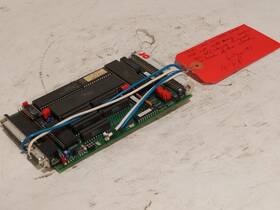
( Brand: Or Industrial Computers ), ( Manufacturer Part Number: ETK4207 ), ( Part Type: Card ), ( Country Of Origin: Germany )
Review OR INDUSTRIAL COMPUTERS Ver 3.1 Vintage Graphics Card Pcb Parts
The **Computers ETK 4207 3.1 Graphics Card PCB** is a rare and highly sought-after piece of vintage computer hardware, originating from the mid-1990s era when IBM-compatible PCs were rapidly evolving to support advanced graphical capabilities. This specific circuit board was designed to interface with IBM PS/2 models and compatible systems, offering enhanced graphics performance for the time, particularly for applications requiring higher resolutions and color depths than standard VGA could provide. The **ETK 4207** was engineered to operate under the **VESA Local Bus (VLB)** architecture, a precursor to modern PCI slots, which allowed it to deliver faster data transfer rates compared to traditional ISA-based graphics cards. The PCB itself is a meticulously crafted assembly, featuring a dense arrangement of surface-mount and through-hole components, including the **ET4000/ET4000W** chipset a popular choice for mid-range graphics acceleration during the early 1990s. This chipset was capable of driving resolutions up to **1024x768** in **256-color mode** (or lower resolutions with higher color depths) and supported features like **hardware acceleration for 2D operations**, which were essential for early multimedia applications, CAD software, and gaming.
Visually, the PCB exhibits a classic early-1990s aesthetic, with a mix of **green soldermask, silkscreened component labels, and a layout optimized for compactness**. The board typically measures around **6 inches in length** and **3 inches in width**, adhering to the standard **VLB slot form factor** of the time. Key components include the **ET4000 graphics processor**, **RAMDAC (RAM Display Address Counter) circuitry** for color signal processing, **VRAM (Video RAM) chips** (often 512KB or 1MB in capacity), and various supporting ICs like **BIOS ROMs** (commonly housed in a 28-pin DIP chip) for firmware storage. The presence of **passive components** such as resistors, capacitors, and inductors, along with **connectors for monitor outputs (typically 15-pin HD-15)**, further highlights its functional complexity. Due to its age, the PCB may exhibit signs of wear, such as **oxidized solder joints, faded silkscreen, or minor component degradation**, but when restored, it can function as a fascinating piece of retro computing history or as a unique addition to a VLB-era system build.
Beyond its technical specifications, the **ETK 4207** holds significant historical value as a relic of the **pre-PCI era**, when local bus architectures were the cutting edge of PC expansion technology. Collectors and enthusiasts appreciate its role in bridging the gap between the **ISA-based VGA cards of the late 1980s** and the **PCI graphics cards of the late 1990s**, making it a transitional yet pivotal component in the evolution of personal computer graphics. While modern systems no longer utilize VLB slots, the **ETK 4207 PCB** remains a fascinating subject for those interested in retro computing, offering a tangible connection to the era before high-speed PCI and AGP standards dominated the market. For those looking to revive or integrate it into a compatible system, careful restoration including **cleaning corroded contacts, replacing faulty capacitors, and verifying BIOS compatibility** is often required to ensure proper functionality. Whether as a museum piece, a component for a vintage system, or a curiosity for tech historians, the **Computers ETK 4207 3.1 Graphics Card PCB** stands as a testament to the ingenuity of early 1990s hardware design.
### **Pros and Cons of buying a ETK4207 3.1 (1994 Graphics Card PCB)**
#### **Pros:**1. **Historical and Collectible Value** The ETK4207 is a rare and well-regarded graphics card from the early 1990s, particularly valued by retro computing enthusiasts. It was used in high-end systems of its time, including some of the first 3D-accelerated cards before 3Dfx and NVIDIA dominated the market.
2. **Technical Significance** The card was one of the first to implement **3D acceleration** (though limited compared to later standards) and was used in early **Windows 95 gaming** and professional applications. It predates the VESA Local Bus (VLB) era and was a key transitional piece in graphics card evolution.
3. **Potential for Restoration and Modding** Since it is a PCB (Printed Circuit Board) rather than a complete card, it can be soldered onto modern motherboards (with proper compatibility) or used in a vintage system. Some hobbyists enjoy restoring and repurposing old hardware.
4. **Nostalgia Factor** For those who grew up with early 3D graphics or were involved in the early PC gaming scene, owning a piece of this history can be rewarding.
5. **Possible Resale or Trade Value** In the retro computing community, rare and well-preserved cards like this can fetch decent prices, especially if they are in working condition or have historical significance.
---
#### **Cons:**1. **Extremely Limited Functionality** The ETK4207 was a **2D-focused card** with **very basic 3D capabilities** (if any). It does not support modern standards like DirectX, OpenGL, or even modern 2D acceleration. Any attempt to use it in a modern system will be severely limited.
2. **No Practical Use in Modern Systems** Unlike some older cards (e.g., VGA or early AGP cards), this PCB is not compatible with modern motherboards or operating systems. It would require a **retro system** (such as a 486 or early Pentium) to function at all, and even then, performance would be negligible.
3. **High Risk of Damage or Non-Functionality** Old PCBs, especially from the mid-1990s, are prone to **electrolytic capacitor failure, corroded traces, or missing components**. Restoring one requires soldering skills and may not yield usable results.
4. **No Modern Drivers or Software Support** There are no modern drivers, BIOS updates, or software tools to make this card functional in any meaningful way. Even if it works, it will not integrate with contemporary operating systems.
5. **Cost vs. Value Mismatch** If purchased for **collecting purposes**, the price may be justified. However, if bought with the expectation of **practical use**, the investment is likely a waste unless you are a dedicated retro computing enthusiast with the means to test and restore it properly.
6. **Ethical and Environmental Concerns** Mining old electronics for parts can contribute to e-waste if not handled responsibly. If the PCB is salvaged from a discarded system, consider whether the environmental impact outweighs the personal value.
---
### **Ending Conclusion:**The **ETK4207 3.1 PCB** is a **highly specialized and niche purchase** with **almost no practical utility** in today s computing landscape. It is best suited for **collectors, historians, or hobbyists** who have a deep interest in early 3D graphics technology and are willing to invest time and effort into restoration. For anyone else, the cost and effort required to make it functional (if even possible) far outweigh the benefits.
If your primary goal is **gaming, productivity, or modern computing**, this purchase is **not recommended**. However, if you are **passionate about retro technology, electronics restoration, or historical computing**, it could be a worthwhile acquisition **provided you are prepared for the challenges of working with such an old and fragile component**.
### **Recommendation:**- **Buy only if:** You are a **retro computing enthusiast**, have experience with **PCB soldering and restoration**, and are willing to spend significant time testing and repairing it.
- **Avoid if:** You expect it to work in a modern system, need it for any practical purpose, or are not prepared for the possibility of it being **non-functional or difficult to restore**.
- **Alternatives:** If you want a **functional vintage graphics card**, consider **VGA cards (e.g., S3, ATI Mach64), early 3Dfx Voodoo series, or NVIDIA RIVA 128** these are more widely supported and have better historical relevance.
Ultimately, this purchase is **more about passion than practicality**. Proceed with caution and realistic expectations.
Details:
This vintage graphics card PCB is ideal for those looking to repair or replace parts in electronic equipment and supplies, particularly the business Industrial sectors. Installed a new card and the screen came back on. Handwritten note attached from 1997 reads: This graphics card was removed because the error screen did not come on. With its brand reputation and origin, this PCB offers a reliable high-quality option for circuit board prototyping needs.
Presumed to be broken and selling for parts/repair only. Free shipping. OR Industrial Computers ETK4207 Version 3.1 Vintage 1994 Graphics Card PCB. Please see photos for all components included on this assembly.
part #: etk4207 price
- $29.99
specifications pcbemdev:
- brand: Or Industrial Computers
- mpn: Etk4207
- part type: Card
- country of origin: Germany
seller pcbemdev:
- rating: 99.8%
- # reviews: 7752
- city: Chicago, Illinois
general pcbemdev:
- Electronic Components Semiconductors > Circuit Boards Prototyping > Printed Circuit Boards PCBs
- condition: For parts or not working
shipping pcbemdev:
- service: UPS Ground Saver
- carrier: UPS
- cost: $0.00
- transit: 3-6 Days
- class: Economy
- type: Calculated
offer pcbemdev:
- best offers: True
- availability: In Stock
- started: May 15, 2026
- options: Ship-to-home
- quantity: 1
- sold: 0
payments pcbemdev:
- other
- credit card: Diners-club
- wallet: Google-pay
returns pcbemdev:
- time: 30 Days
- policy: Returns Accepted
- paid by: Seller
- method: Money back
Or Industrial Computers ETK4207 Is Similar To:
- 138425547 Eaton Powerware Irc Industrial Relay Card 719896398244 (30% similar) Eaton power ware IRC Industrial relay card removed from functioning environment - please see images for more details. Our equipment sales install division helps you select the proper power needed to ensure your data meets strict protocols be compliant. Marketing, listing apps, application...(April 11th, 2018)
- Vm1012-c Or Industrial Computers Sbs V2.0 00757843 Vme Industrail (41.1% similar) ME Or Industrial Computers see manufacturers tag item condition actual pictures of the item is provided. Sb's VM1012 c V2...(October 20th, 2015)
- Rj-10296a Rayon Industrial Pcb Surface Clean Roller (26.8% similar) Buyer may inspect the equipment prior to purchase and placement of Order inspection is deemed a waiver buyers right. The air pressure and distributing board can also be easily checked. One 1 rayon RJ-10296A pcb surface clean roller model: RJ-10296ASERIAL number: RP017100AC110V 150VA removes dust and...(November 25th, 2018)
- 486-5x86 Industrial Sbc Ver Cpu Motherboard Circuit Board (39.1% similar) Ac Industrial 486 5X86 ABC ver g6 CPU motherboard circuit board images to you are purchasing. Shipping and handling is within the continental USA. Model: 486 5X86 ABC ver g6 this circuit board is in great condition and fully guaranteed...(July 24th, 2019)
- Krauss Maffei 5004769 5088020 Io 502 Industrial Computer Control I o Circuit Board Card (39.3% similar) It is in great cosmetic condition. The unit works, and was removed from a working environment. This is a krauts Mafia 5088020 Io 502 Industrial computer control i/o circuit board card...(April 17th, 2024)
- Industrial Dynamics 07342 Flap Logic Card (35.9% similar) Industrial dynamics 07342 flap logic card. Cut-off time is 4:00 pm et. Contact and support. Item location: A-252. Instant transfer from your bank account if eligible...(January 11th, 2025)
- Industrial Dynamics 08381 06974 Reject Delay Card (33.6% similar) Cut-off time is 4:00 pm et. Item location: A-251. Contact and support. Instant transfer from your bank account if eligible...(January 11th, 2025)
- Industrial Dynamics 41090 Assembly Cpu Card Lcd Tx test (39.7% similar) The unit appears to be in used condition. The unit may show slight signs of cosmetic wear from the previous owner such as scratching, discoloration, shelf wear, paint chipping and/or other markings that should not impact units performance. The unit includes everything shown in photos. Etch surplus ...(February 5th, 2025)
- Cognex Vm18a 203-0091-ra Pcb Industrial Vision I f Card 203-0060-r1 (32.2% similar) Please see all photos B26. The model VM18A 203-0091-RA is associated with cognacs Industrial vision systems and crucial for enabling seamless communication between various components in a manufacturing environment. It is likely used for interfacing with cameras, sensors, Or other components within ...(February 25th, 2025)
- Fuji Electric Fsb-088h Fsb 088h F763053 3 C Mount Board High-quality Industrial Pcb (19.9% similar) Quality assurance: manufactured by photoelectric, a trusted name in Industrial electronics. Application: suitable for various Industrial and electronic systems requiring robust pcb solutions. Fuji electric fab 088H / F763053 3 c mount board high-quality pcb for Industrial applications. Design: ...(April 4th, 2025)
- Lanner Ap-540 Industrial Control Mother Pcb Assembly Working Surplus (36.1% similar) Only items pictured are included: if a part is not pictured, Or mentioned above, then it included in the sale. Item condition: working, 90 day warranty. Sale details. The physical condition is good, but there are signs of previous use and handling. Serial numbers Or country of manufacture may vary. ...(May 1st, 2025)