GENERAL MICRO SYSTEMS GMS-V27-01-B Vme Module
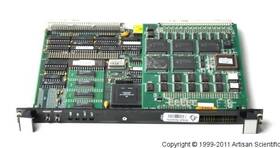
( Brand: General Micro Systems ), ( Manufacturer Part Number: GMS-V27-01-B ), ( Part Type: Module ), ( Country Of Origin: United States ), ( Item Width: 14 )
Review GENERAL MICRO SYSTEMS Vme Module
The **General Micro GM-SV27-01-B VME Module** is a high-performance, compact, and versatile single-board computer designed to deliver robust computing power within a VMEbus (Versa Module Europa) architecture, making it an ideal solution for demanding industrial, aerospace, defense, and scientific applications. Engineered with precision and reliability in mind, this module integrates cutting-edge hardware and software capabilities to provide seamless integration into complex VME-based systems. At its core, the GM-SV27-01-B leverages a modern, multi-core processor architecture, ensuring high-speed data processing, real-time performance, and efficient multitasking to handle the most computationally intensive workloads. Whether deployed in data acquisition systems, embedded control platforms, or high-speed signal processing environments, this module excels in delivering consistent and deterministic performance, critical for applications where timing and accuracy are non-negotiable.
Featuring a rich set of onboard peripherals and interfaces, the GM-SV27-01-B is equipped with multiple high-speed serial ports, including USB 3.0, Gigabit Ethernet, and PCI Express lanes, enabling seamless connectivity to a wide array of sensors, actuators, and external devices. Its robust I/O capabilities extend to high-speed digital and analog interfaces, including multiple GPIO lines, PWM outputs, and configurable ADC/DAC channels, allowing for direct integration with analog and digital signal sources without the need for additional expansion cards. The module also supports advanced communication protocols such as CAN, RS-232/422/485, and LVDS, further enhancing its versatility for applications requiring diverse communication requirements. With built-in memory options, including high-capacity DDR4 RAM and optional flash storage, the GM-SV27-01-B ensures fast data access and reliable program execution, even under heavy workloads.
Designed with ruggedness and reliability as top priorities, the GM-SV27-01-B adheres to strict industrial standards, including extended temperature operation ranges and robust EMI/EMC shielding, making it suitable for deployment in harsh environments such as aerospace, military, and industrial automation settings. The module s compact VME64x form factor ensures efficient use of space within a system chassis while maintaining full compatibility with existing VMEbus infrastructure. Additionally, the GM-SV27-01-B supports a wide range of real-time operating systems, including VxWorks, QNX, and Linux, providing developers with the flexibility to choose the optimal software environment for their specific application needs. With comprehensive development tools, extensive documentation, and a strong support ecosystem, this module empowers engineers and system integrators to rapidly prototype, deploy, and maintain high-performance embedded solutions with confidence.
Whether used as a standalone controller or as part of a larger distributed system, the **General Micro GM-SV27-01-B VME Module** stands out as a dependable and high-performance workhorse, bridging the gap between raw computational power and real-world application requirements. Its combination of advanced processing capabilities, flexible I/O options, and rugged design makes it a standout choice for developers and engineers seeking a reliable, scalable, and future-proof solution within the VMEbus ecosystem.
### Pros and Cons of buying a General Micro GM-SV27-01-B VME Module
#### **Pros:**1. **Compatibility and Standardization** The GM-SV27-01-B is a VME (Versa Module Europa) module, which is a widely adopted standard in industrial, aerospace, and embedded systems. This ensures broad compatibility with existing VME-based systems, reducing the need for custom interfaces or adapters.
2. **Reliability and Proven Performance** General Micro is a well-established manufacturer with a strong reputation for high-quality hardware. The GM-SV27-01-B is designed for rugged environments, offering stable operation in applications requiring long-term reliability, such as military, aerospace, or industrial automation.
3. **Flexibility in Data Handling** This module supports high-speed data acquisition and processing, making it suitable for applications requiring real-time signal processing, such as radar, test and measurement systems, or data logging. Its ability to interface with various sensors and instruments enhances its versatility.
4. **Backward and Forward Compatibility** The VME standard has been around for decades, and many legacy systems still rely on it. The GM-SV27-01-B can often be integrated into older systems while also supporting newer technologies where applicable, extending the lifespan of existing infrastructure.
5. **Support for High-Speed Data Transfer** Depending on the specific model and configuration, VME modules like this can handle data transfer rates that meet the demands of modern applications, though it may not match the raw speed of newer standards like PCIe or AXIe. However, for many industrial and embedded uses, it remains adequate.
6. **Modularity and Scalability** VME systems allow for the addition of multiple modules in a single chassis, enabling scalable solutions. This modularity makes it easier to upgrade or expand functionality without overhauling the entire system.
7. **Industrial-Grade Durability** The module is likely designed to withstand harsh conditions, including temperature extremes, vibration, and electromagnetic interference, which is critical for field-deployed or outdoor applications.
8. **Documentation and Community Support** As a mature standard, there is extensive documentation, forums, and community support available for troubleshooting and integration. General Micro also provides technical support, which can be invaluable for complex deployments.
---
#### **Cons:**1. **Aging Technology** VME is an older standard compared to modern alternatives like PCI Express (PCIe) or AXIe (Advanced Mezzanine Card). While VME remains robust, newer standards offer higher data throughput, lower latency, and more advanced features, which may limit the module s performance in cutting-edge applications.
2. **Limited Bandwidth Compared to Modern Standards** VME s maximum theoretical bandwidth (e.g., VME64x) is significantly lower than PCIe s (e.g., PCIe Gen 4 x16), which can be a bottleneck for high-speed data-intensive tasks. This may require additional buffering or external processing to keep up with modern demands.
3. **Higher Cost of Integration** While the module itself may be reasonably priced, integrating it into a system can be more complex and costly than plug-and-play solutions offered by newer standards. You may need additional cabling, backplanes, or power supplies, adding to the overall expense.
4. **Limited Availability of Newer Features** Modern applications often require features like advanced error correction, low-latency synchronization, or support for high-speed serial protocols (e.g., Ethernet, USB 3.0). VME modules may lack these features, requiring workarounds or additional hardware.
5. **Power Consumption and Heat Dissipation** Older bus standards like VME can be less efficient in terms of power consumption and heat generation compared to newer, more optimized interfaces. This may require additional cooling or power management in the system.
6. **Deprecation Risks** While VME is still widely used, there is a gradual shift toward newer standards in some industries. Over time, finding support, spare parts, or updated drivers for VME modules could become more difficult, potentially increasing long-term maintenance costs.
7. **Mechanical Constraints** VME backplanes and chassis can be bulky and less flexible than modern card formats (e.g., PCIe cards in a server). This may limit deployment options, especially in space-constrained environments.
8. **Software and Driver Complexity** Developing software for VME systems can be more complex than for modern standards, as it often requires lower-level programming (e.g., handling interrupts, memory-mapped I/O) and may lack the high-level abstractions provided by newer APIs.
---
### **Conclusion:**The General Micro GM-SV27-01-B VME module is a robust and reliable choice for applications where legacy VME systems are already in place, or where the module s ruggedness, compatibility, and proven performance are critical. It excels in industries like aerospace, defense, industrial automation, and test equipment, where stability and long-term support are prioritized over cutting-edge speed or features.
However, if your application requires high-speed data transfer, modern protocol support, or the latest hardware features, investing in a newer standard (e.g., PCIe, AXIe, or even FPGA-based solutions) may be more advantageous. The decision ultimately depends on your specific requirements:
- **Choose the GM-SV27-01-B if:** You need a proven, rugged, and compatible module for a VME-based system, and your data throughput and feature requirements align with VME s capabilities.
- **Avoid or supplement with newer technology if:** You require high-speed data handling, advanced features, or plan to future-proof your system for long-term scalability.
For most new projects, especially those not constrained by legacy systems, evaluating newer standards alongside VME is recommended to balance performance, cost, and long-term viability.
Details:
I/O Module: 10 Channels Part Number: 1009845-100. Fast and hassle-free. Are not included with this equipment unless pictured and/or listed in the above.
part #: gmsv2701 prices
- $900.00-$1200.00
specifications pcbemdev:
- brand: General Micro Systems
- mpn: Gms-v27-01-b
- part type: Module
- country of origin: United States
- item width: 14
payments pcbemdev:
- credit card: Discover
- wallet: Apple-pay
- other
general pcbemdev:
- condition: Used
- Electronic Components Semiconductors > Circuit Boards Prototyping > Printed Circuit Boards PCBs
shipping pcbemdev:
- class: Standard, One-day, Economy
- type: Calculated
- service: FedEx Ground / FedEx Home Delivery, FedEx Standard Overnight, FedEx Ground Economy
- cost: $31.95
- transit: 4-8 Days
- carrier: FedEx
offer pcbemdev:
- options: Ship-to-home
- availability: In Stock
- started: April 3, 2026
- sold: 0
- quantity: 1
returns pcbemdev:
- policy: Returns Accepted
- paid by: Buyer
- method: Money back
- time: 30 Days
seller pcbemdev:
- rating: 99.9%
- city: Champaign, Illinois
- # reviews: 17637
General Micro Systems GMS-V27-01 Is Similar To:
- 0660-01593 Applied Materials General Micro (29.9% similar) Info: the shipping price is only for us 48 contiguous states...(June 4th, 2017)
- 4501-6001 Adaptive Micro Systems Circuit Board Rev F (37.1% similar) A so please asap. If needing special shipping services please prior to purchasing buying on the item. We estimate shipping costs in order to keep shipping cost as minimal as possible. The photos that are provided are of the actual item...(December 26th, 2015)
- Acs755scb-050-pff Allegro New Micro Systems Linear All Effect Sensor Set Of (33.3% similar) All products are sold without an existing warranty. If the item is used or new without box open box, then you only will receive what pictured in listing. Be sure to see our full inventory of rose mount, Micro motion, Tokugawa, Allen-Bradley, undress hawser, etc...(February 4th, 2019)
- Gmssrpx-01-b Gmsv36-01 Hdp-cvd Vme Micro Controller Systems Board Mf Gmssrpx-01 General (39.4% similar) length in inches compatibility issues are not considered DOA. This unit has been used. DOA stands for dead on arrival, meaning that the item did not function properly when it arrived. 30 day DOA warranty this product carries a 30 day DOA warranty. All pictures are taken in house. Cash is only ...(September 28th, 2015)
- Gmssrpx-01-b Gmsv36-01-d General Micro Systems Hdp-cvd Vme Mf Controller Board (53.7% similar) This unit has been used. Lift foam out of box by grabbing 2ND plastic sheet from both sides. If in doubt, please before purchasing. Are only included if pictured or listed in. Our contact SC asset management, inc. If you accidentally peel the top plastic off, exposing the foam, just look for the ...(October 8th, 2015)
- Gmsv36-01-d-gmssrpx-01-b General Micro Systems Gmsv36-01-d (60.2% similar) Do not discard the packaging. Please review images thoroughly before purchasing. 30-DAY DOA warranty this product carries. width in inches: 19. Our contact: Rodney Wang SC asset management, inc. Cash is only accepted for will-calls in-person. DOA stands for dead on arrival, meaning that the item ...(March 27th, 2017)
- Fc1a-c1a1e Micro-1 Izumi Idec Plc 24vdc Module Input (39.2% similar) Great condition. Stored in Norma 4 enclosure nothing missing, all screws and covers are present...(August 31st, 2015)
- Mao15x Micro Automation Sink To Source Interface Module Used (36.2% similar) Everything is sold as seen...(June 14th, 2018)
- Oregon Micro Systems Pc46-42 Intelligent Motion Control Board (45.3% similar) In excellent condition. Step pulse rates of up to 522,000 pulses per second can be produced, and encoder signals 4 MHz are supported. Whats included. Guaranteed working. Specifications. Shipping, Argo-tech directly only ships to the USA...(May 3rd, 2024)
- General Micro Systems 97-2634-000 Sbc Computer Vme Card Amat 0195-14769 Surplus (54.8% similar) Part no: 97-2634-000. Item condition: working surplus, 90 day warranty. Serial numbers or country of manufacture may vary. Model no: V295. Pictured test equipment is not included or available for sale. Sale details. Only items pictured are included: if a part is not pictured, or mentioned above, ...(August 12th, 2024)
- General Micro Systems 90-2248-030 Sbc Single Board Computer Pcb Card V295 Spare (48.4% similar) Item condition: working surplus, 90 day warranty. The physical condition is good, but there are signs of previous use and handling. Sale details. Pictured test equipment is not included or available for sale. Part no: 90-2248-030. Model no: V295. Serial numbers or country of manufacture may vary. ...(November 7th, 2024)