TOKYO ELECTRON Interface Board PHA-017
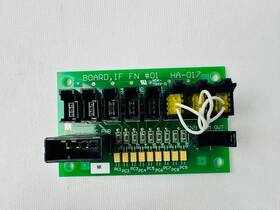
( Brand: Tokyo Electron ), ( Manufacturer Part Number: HA-017 ), ( Part Type: Board ), ( Unit Type: Unit )
Review TOKYO ELECTRON Interface Board
The **Tokyo Electron HA-017/PHA-017 Interface Board** is a high-performance, precision-engineered module designed to bridge the gap between advanced semiconductor manufacturing equipment and automated process control systems. Engineered for integration into Tokyo Electron s cutting-edge deposition and etching platforms, this interface board serves as the critical link between the machine s internal control logic and external process monitoring or automation networks. Built with a robust, modular architecture, the HA-017/PHA-017 ensures seamless data transmission, real-time feedback, and high-speed signal processing, making it indispensable for applications in semiconductor fabrication, thin-film deposition, and plasma etching. Its compact yet durable design allows for easy installation within tight equipment enclosures, while its compatibility with industry-standard communication protocols such as Ethernet, RS-485, and proprietary Tokyo Electron interfaces ensures seamless interoperability with existing factory automation systems.
At the heart of the HA-017/PHA-017 lies a sophisticated hybrid circuit assembly, combining analog and digital signal conditioning to deliver exceptional accuracy and reliability. The board features high-precision analog-to-digital converters (ADCs) and digital-to-analog converters (DACs) optimized for low-noise operation, ensuring that critical process parameters such as gas flow rates, plasma power, chamber pressure, and substrate temperature are measured and controlled with sub-millisecond latency. Additionally, its integrated error-checking mechanisms and redundant data pathways mitigate the risk of signal corruption, safeguarding against potential disruptions in high-stakes manufacturing environments. The PHA-017 variant further enhances functionality by incorporating programmable logic controllers (PLCs) and embedded firmware, enabling advanced diagnostic capabilities, adaptive control algorithms, and remote troubleshooting all of which contribute to improved yield and reduced downtime.
Beyond its technical prowess, the HA-017/PHA-017 is engineered with scalability and future-proofing in mind. Its modular design allows for easy upgrades, accommodating advancements in communication standards and process automation without requiring a complete system overhaul. The board s compliance with strict industry regulations, including those for electromagnetic compatibility (EMC) and environmental resilience, ensures consistent performance across diverse manufacturing settings, from cleanroom environments to high-vibration production lines. Whether deployed in a state-of-the-art fab facility or integrated into a retrofitted legacy system, the HA-017/PHA-017 stands as a testament to Tokyo Electron s commitment to precision, reliability, and innovation in semiconductor manufacturing technology. By providing a seamless interface between human oversight and automated execution, this interface board empowers engineers to achieve unparalleled levels of process control, ultimately driving the advancement of next-generation semiconductor devices.
The **Tokyo Electron HA-017/PHA-017 Interface Board** is a specialized component used primarily in semiconductor manufacturing, particularly for handling and aligning wafers in photolithography and other high-precision processes. Below is a detailed breakdown of its pros and cons, followed by a conclusion and recommendation.
---
### **Pros of buying a HA-017/PHA-017 Interface Board**
1. **High Precision and Compatibility**
The HA-017/PHA-017 is designed to interface with Tokyo Electron s **ALA series aligners** (e.g., ALA-550, ALA-600), ensuring seamless integration with existing systems. Its precision engineering minimizes misalignment errors, which is critical in photolithography where even micrometer-level deviations can affect yield.
2. **Durability and Reliability**
Built for industrial use, these boards are constructed with robust materials and are designed to withstand the harsh conditions of semiconductor fabrication, including vibrations, temperature fluctuations, and exposure to chemicals. Their longevity reduces downtime and maintenance costs over time.
3. **Compatibility with Advanced Wafer Handling**
The interface supports **wafer sizes from 200mm to 300mm**, making it versatile for modern fabrication lines. It is also compatible with **automated wafer loading systems**, improving throughput and reducing manual intervention.
4. **Minimal Maintenance Requirements**
Due to its modular design and high-quality components, the HA-017/PHA-017 requires relatively low maintenance. Regular calibration and cleaning are sufficient to keep it operational, which is cost-effective for large-scale production environments.
5. **Support for High-Speed Operations**
The board is optimized for high-speed wafer alignment and transfer, which is essential for increasing productivity in semiconductor manufacturing. This is particularly valuable in high-volume production lines where speed directly impacts output.
6. **Backward and Forward Compatibility**
While primarily designed for newer ALA systems, its robust design may also work with older models with minimal modifications. Additionally, Tokyo Electron s ecosystem ensures that future upgrades or replacements are straightforward.
7. **Brand Reputation and Support**
Tokyo Electron is a leading provider of semiconductor equipment, and their products benefit from extensive technical support, documentation, and a global network of service providers. This reduces the risk of unsupported or obsolete components.
---
### **Cons of buying a HA-017/PHA-017 Interface Board**
1. **High Initial Cost**
As a specialized, high-precision component, the HA-017/PHA-017 is expensive compared to generic or aftermarket alternatives. The cost may be prohibitive for small-scale labs or startups without substantial budgets for equipment.
2. **Limited Availability and Lead Times**
Being a niche component, it may not be readily available from all suppliers. Purchasing directly from Tokyo Electron or authorized distributors can result in longer lead times, potentially disrupting production schedules.
3. **Vendor Lock-In Risks**
The board is tightly integrated with Tokyo Electron s systems, which can create dependency on their ecosystem. Switching to a different aligner or supplier later may require significant reconfiguration or additional costs.
4. **Complex Installation and Calibration**
Due to its precision nature, installation and initial calibration may require specialized training or technical expertise. Improper setup can lead to performance issues or damage to the board or associated equipment.
5. **Potential for Obsolescence**
While Tokyo Electron s products are generally long-lasting, advancements in semiconductor technology may render older models (or their components) obsolete over time. This could necessitate upgrades sooner than expected.
6. **Limited Customization**
The HA-017/PHA-017 is designed for specific use cases within Tokyo Electron s aligners. Customization for non-standard applications (e.g., non-semiconductor industries) may not be feasible without significant modifications.
7. **Spare Parts and Repairs**
While durable, if the board fails, sourcing spare parts or repairs may be challenging due to its specialized nature. Costs for repairs or replacements could be high, especially if the component is no longer in active production.
---
### **Conclusion**
The **Tokyo Electron HA-017/PHA-017 Interface Board** is a high-quality, precision-engineered component ideal for semiconductor manufacturers using Tokyo Electron s aligners. Its strengths lie in its **reliability, compatibility, and performance**, making it a sound investment for large-scale production environments where precision and uptime are critical. However, its **high cost, limited availability, and potential vendor lock-in** may pose challenges, particularly for smaller operations or those with tight budgets.
For users already invested in Tokyo Electron s ecosystem, this board is a **reliable and efficient choice**. For others, evaluating alternatives (e.g., aftermarket boards, generic interfaces, or different aligner brands) may be more cost-effective, depending on specific needs and long-term goals.
---
### **Recommendation**
- **Buy the HA-017/PHA-017 if:**- You are already using Tokyo Electron s aligners and require a high-precision, durable interface.
- Your budget allows for the initial investment, and you prioritize long-term reliability and support.
- You operate in a high-volume semiconductor manufacturing environment where precision and speed are non-negotiable.
- **Consider alternatives if:**- You are a small lab or startup with limited funding and can explore more affordable or modular options.
- You are not locked into Tokyo Electron s ecosystem and can benefit from broader compatibility or lower costs with other brands.
- You anticipate frequent upgrades or changes in equipment, making vendor lock-in a concern.
- **Additional Steps Before Purchasing:**- Verify compatibility with your existing aligner model and consult Tokyo Electron s technical support to confirm specifications.
- Assess total cost of ownership, including installation, training, and potential future upgrades.
- Explore warranty and support options to mitigate risks of downtime or obsolescence.
In summary, the HA-017/PHA-017 is a **strong choice for established semiconductor manufacturers** but may not be the most practical option for all users. Careful evaluation of your specific needs and constraints is essential.
Details:
Tokyo Electron HA-017 PHA-017 Interface Board.
part #: ha017 prices
- $74.00-$100.00
specifications pcbemdev:
- brand: Tokyo Electron
- mpn: Ha-017
- part type: Board
- unit type: Unit
payments pcbemdev:
- credit card: Visa
- other
- wallet: Apple-pay
seller pcbemdev:
- city: Richardson, Texas
- # reviews: 5497
- rating: 99.8%
shipping pcbemdev:
- transit: 4-8 Days
- cost: $11.22
- carrier: FedEx, UPS
- class: Economy, Standard
- service: FedEx Ground Economy, UPS Ground, FedEx Ground / FedEx Home Delivery
- type: Calculated
returns pcbemdev:
- time: 30 Days
- paid by: Buyer
- policy: Returns Accepted
- method: Money back
offer pcbemdev:
- quantity: 1
- started: March 12, 2026
- sold: 0
- best offers: True
- availability: In Stock
- options: Ship-to-home
general pcbemdev:
- condition: Used
- Electronic Components Semiconductors > Circuit Boards Prototyping > Printed Circuit Boards PCBs
Tokyo Electron HA-017 Is Similar To:
- 1181-000450-14 Tokyo Electron Limited Rev Working When Removed (33.6% similar) To make an appointment please via messaging. For local customer carrier pickup, example DHL, ups, etc. Be assured that these were not done intentionally. Tokyo Electron limited MC-31039B rev 1E, gas, PCB assembly for TS4000Z-16 control unit tel part no: 14U31 hostel V1. Whenever possible, unique ...(October 31st, 2018)
- 340 Cvd-x Tokyo Electron Limited Tel Model Gas System Ctrl Unit Used (31.9% similar) Tel Tokyo Electron limited model 340 CVS-x 340CX gas system ctr unit, used includes: MC31007MC-31007MC-31009MC 3MC 1SG-2700...(January 8th, 2019)
- M340-cvd Tokyo Electron Limited Tel Model Gas System Ctrl Unit Used (32.1% similar) For local customer carrier pickup, example DHL, ups, etc. Whenever possible, unique identifiers such as part numbers, model etc. Be assured that these were not done intentionally. To make an appointment please via messaging. Buyer pays for return shipping...(October 31st, 2018)
- Mc-31002a Tokyo Electron Limited Tel (44.4% similar) Tel Tokyo Electron MC-31002A PM081006-0B PCB...(January 29th, 2018)
- Mc-31011a Tokyo Electron Limited Tel (44.4% similar) PCB, MC-31011A...(January 25th, 2018)
- Mc-31078b Tokyo Electron Limited W (45.6% similar) Tokyo Electron limited MC-31078B w MC-31127...(September 6th, 2017)
- M-340 Tokyo Electron Limited Tel Model Cx Gas System Ctrl Unit Used (32.1% similar) For local customer carrier pickup, for example DHL, ups, etc. Be assured that these were not done intentionally. To make an appointment please via messaging. Whenever possible, unique identifiers such as part numbers, model numbers, etc. Buyer pays for return shipping...(August 16th, 2016)
- Oriental Motor A7792-0407y2c-2 Driver Pcb Tel Tokyo Electron 5086-423845-11 New (32.3% similar) Part no: A7792-0407Y2C-2. Oriental motor A7792-0407Y2C-2 driver PCB tel Tokyo Electron 5086-423845-11 new. Tel Tokyo Electron part no: 5040-000167-11. The physical condition is great. Made in japan this oriental motor A7792-0407Y2C-2 driver PCB is new surplus. Pictured test equipment is not included...(November 14th, 2023)
- Tokyo Electron Hte-ac2-a-11 Tel Ac Control Board Pcb Working Surplus (47.8% similar) The physical condition is good, but there are signs of previous use and handling. Item condition: used working, 90 day warranty. Ac control board this tel Tokyo Electron HTE-AC2-A-11 control board PCB is used working surplus. Part no: HTE-AC2-A-11. Pictured test equipment is not included or ...(November 15th, 2023)
- Tokyo Electron E2b403-11 numc Tel Pcb Board Densan E208-000043-11 Working Spare (41.9% similar) The physical condition is good, but there are signs of previous use and handling. Model no: E208-000043-11. Sale details. Pictured test equipment is not included or available for sale. Only items pictured are included: if a part is not pictured, or mentioned above, then it included in the sale. Tel ...(November 21st, 2023)
- Tel Tokyo Electron 2980-092300-11 Chemical I o Pcb Tob1015 Cpc-t0015a-11 New (38% similar) Part no: 2980-092300-11. Tel Tokyo Electron 2980-092300-11 chemical i/o PCB TOB1015 CPC-T0015A-11 new. Sale details. Serial numbers or country of manufacture may vary. Pictured test equipment is not included or available for sale. Model no: TOB1015. The physical condition is great. Only items ...(December 8th, 2023)