GED DESIGN IOB2-1.2 Pcb Circuit Board Board.
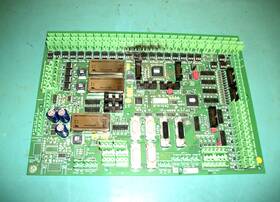
( Brand: Ged Design ), ( Manufacturer Part Number: IOB2-1.2 ), ( Part Type: Circuit Board )
Review GED DESIGN Pcb Circuit Board. Parts Only
The **GED Design IOB2-1.2 PCB Circuit Board** is a high-performance, modular input/output expansion board meticulously engineered for industrial automation, data acquisition, and control systems requiring robust signal conditioning, digital interfacing, and analog processing capabilities. This versatile board is designed to seamlessly integrate with a wide range of microcontrollers, FPGAs, and embedded systems, offering a scalable solution for applications demanding precise I/O management, such as motor control, sensor interfacing, PLC expansion, or custom automation setups. Built upon a **double-sided, high-density FR-4 substrate** with **1.6mm thickness**, the PCB features a **2.54mm pitch through-hole and surface-mount component layout**, ensuring mechanical stability and flexibility for both prototyping and mass production. The board incorporates a **24-bit ADC (Analog-to-Digital Converter)** with programmable gain amplifiers (PGAs) for high-resolution analog signal acquisition, capable of handling inputs ranging from 5V to 10V with minimal noise and drift, making it ideal for measuring weak signals from thermocouples, strain gauges, or high-impedance sensors. For digital I/O, the IOB2-1.2 provides **isolated and non-isolated GPIO lines**, configurable as inputs, outputs, or PWM signals, with **optocoupler isolation** on critical lines to protect against voltage spikes and ground loops, enhancing system reliability in harsh environments. Additionally, the board includes **RS-485/RS-422 communication interfaces**, supporting full-duplex serial communication at speeds up to **115.2 kbps**, enabling seamless integration with industrial protocols like Modbus RTU or Profibus for distributed control systems. To further enhance functionality, the IOB2-1.2 features **configurable digital filters, debouncing circuits, and programmable pull-up/pull-down resistors**, allowing developers to fine-tune signal integrity and reduce false triggers in noisy environments. The board s **low-power design** minimizes heat dissipation, with passive cooling achieved through optimized component placement and thermal vias, while its **compact form factor** (approximately **100mm x 70mm**) maximizes space efficiency in embedded systems. GED Design has incorporated **ESD protection circuits** on all I/O lines to safeguard sensitive components during handling and operation, and the board adheres to **CE, FCC, and RoHS compliance standards**, ensuring global market readiness. Whether deployed in **automotive testing rigs, renewable energy monitoring systems, or precision robotics**, the IOB2-1.2 delivers a blend of **precision engineering, modular flexibility, and industrial-grade durability**, making it an indispensable tool for engineers and developers seeking a reliable, high-performance I/O expansion solution.
**Pros and Cons of buying a GED Design IOB2-1.2 PCB Circuit Board**
The GED Design IOB2-1.2 is a modular, high-density input/output (I/O) board commonly used in industrial automation, data acquisition, and control systems. Below is a detailed analysis of its advantages and disadvantages.
### **Pros**
1. **High Density and Compact Design**
The IOB2-1.2 is designed for high-density I/O integration, allowing users to maximize space efficiency in control panels or racks. Its modular nature enables easy expansion without excessive wiring clutter.
2. **Versatile Input/Output Options**
This board supports a wide range of analog and digital I/O signals, including:- Analog inputs (voltage/current)
- Digital inputs/outputs (TTL, relay, or sink/source)
- Counter/timer functions
- Some models include communication interfaces (e.g., RS-232, RS-485)
This flexibility makes it suitable for various industrial applications, from process control to machine monitoring.
3. **Compatibility with GED Design Systems**
The IOB2-1.2 is part of GED Design s modular ecosystem, which often integrates seamlessly with their PLCs, HMIs, and other control components. This reduces integration complexity and ensures standardized communication protocols.
4. **Reliability and Industrial Build**
Designed for harsh environments, the IOB2-1.2 typically features robust construction, including:- Protection against electrical noise and interference
- Wide operating temperature ranges
- Durable connectors and mounting options
This makes it suitable for factory floors, outdoor installations, and other demanding settings.
5. **Scalability and Modularity**
The ability to stack multiple IOB2 modules allows users to scale their I/O requirements without over-provisioning. This modular approach simplifies system upgrades and maintenance.
6. **Support for Advanced Features**
Depending on the specific model, the IOB2-1.2 may include features such as:- High-speed data acquisition
- Built-in filtering for analog signals
- Support for fieldbus protocols (e.g., Profibus, Modbus)
These features enhance precision and efficiency in automation tasks.
7. **Vendor Support and Documentation**
GED Design provides technical documentation, software tools, and customer support, which can be valuable for troubleshooting, programming, and system integration.
---
### **Cons**
1. **Limited Availability and Vendor Dependency**
GED Design is a niche vendor, particularly outside certain regions (e.g., North America, Europe). Finding authorized distributors or replacement parts may be challenging compared to more mainstream brands like Siemens, Allen-Bradley, or Beckhoff. This dependency can lead to longer lead times or difficulties in sourcing spares.
2. **Potential Learning Curve**
Users unfamiliar with GED Design s ecosystem may require additional training to fully utilize the IOB2-1.2 s capabilities. Programming, configuration, and troubleshooting often rely on proprietary software or tools, which may not be as widely documented as those from larger vendors.
3. **Cost Considerations**
While the IOB2-1.2 offers high functionality, its pricing may be higher than alternatives from more established brands. The cost of licensing software, additional modules, or support services can add up, especially for small-scale or budget-conscious projects.
4. **Compatibility Issues with Third-Party Systems**
If integrating with non-GED Design hardware (e.g., PLCs from other manufacturers), users may encounter compatibility challenges. Protocol conversions or custom interfaces might be necessary, increasing complexity and potential downtime.
5. **Limited Long-Term Support**
Smaller vendors like GED Design may discontinue products over time, leaving users with outdated technology or unsupported firmware. This risk is higher than with larger, more stable vendors that offer extended product lifecycles.
6. **Physical Constraints**
The compact design, while beneficial for space efficiency, can also make installation and wiring more challenging. Users may need to carefully plan cable management and terminal block configurations to avoid congestion or signal degradation.
7. **Software and Firmware Dependencies**
The performance of the IOB2-1.2 often relies on up-to-date firmware and software. Outdated versions may lack critical features, security patches, or bug fixes, potentially leading to system instability or security vulnerabilities.
---
### **Conclusion**
The GED Design IOB2-1.2 is a powerful and versatile I/O module ideal for users deeply embedded in GED Design s ecosystem who prioritize high-density, modular, and feature-rich solutions. Its strengths lie in its compact design, wide I/O support, and industrial reliability, making it well-suited for applications where space and functionality are critical.
However, its niche vendor status, potential compatibility issues, higher cost, and dependency on proprietary tools present significant drawbacks. Users should carefully weigh these factors against their project requirements, budget, and long-term support needs.
### **Recommendation**
- **Buy the IOB2-1.2 if:**- You are already using GED Design s PLCs or control systems and need seamless integration.
- Your application demands high-density I/O in a compact form factor with advanced features (e.g., high-speed analog inputs, counters, or communication interfaces).
- You have access to technical support and are willing to invest in training or documentation.
- Your project timeline and budget can accommodate potential delays in sourcing or vendor-specific challenges.
- **Consider alternatives if:**- You require broader vendor support, easier availability, or long-term product lifecycle guarantees. Brands like Siemens (ET 200SP), Allen-Bradley (CompactLogix with I/O modules), or Beckhoff (Terminal Blocks) may offer more stability.
- Your budget is constrained, as these alternatives might provide comparable functionality at a lower cost.
- You need plug-and-play compatibility with mainstream PLCs or SCADA systems, where proprietary modules could introduce unnecessary complexity.
- Your application is mission-critical and cannot tolerate risks associated with vendor dependency or outdated software.
For most industrial automation projects, a balanced approach such as using GED Design for specialized I/O needs while pairing it with more widely supported PLCs may mitigate risks while leveraging its strengths. Always conduct thorough due diligence, including vendor reviews, pilot testing, and cost-benefit analysis before committing to the IOB2-1.2.
Details:
See photos for exact item, what is included, condition, and details. 1 tiny component has burnt - see photos photo makes it much worse than is in person but gets the point across. Join us in the green movement and remember your three Rs REDUCE, REUSE, RECYCLE, while saving money environment. Includes: GED DESIGN IOB2-1.2 Pcb Circuit Board.
GREAT unit for the tech Savoy to replace one tiny component.
part #: iob212 prices
- $424.15-$1999.99
specifications pcbemdev:
- brand: Ged Design
- mpn: Iob2-1.2
- part type: Circuit Board
general pcbemdev:
- Electronic Components Semiconductors > Circuit Boards Prototyping > Printed Circuit Boards PCBs
- condition: For parts or not working
returns pcbemdev:
- policy: No Returns
shipping pcbemdev:
- transit: 3-9 Days
- service: UPS Ground, USPS Priority Mail
- class: Standard, Expedited
- cost: $25.74
- carrier: UPS, USPS
- type: Calculated
offer pcbemdev:
- best offers: True
- started: February 4, 2026
- options: Ship-to-home
- availability: In Stock
- quantity: 1
- sold: 0
payments pcbemdev:
- other
- credit card: Discover
- wallet: Apple-pay
seller pcbemdev:
- rating: 99.6%
- city: Tampa, Florida
- # reviews: 5829
Ged Design IOB2-1.2 Is Similar To:
- Ged Desiogn 34446357 Design 34446357-iob-2-1.2 Printed Circuit Board Z5543046-p1 Pcb Iob2-1 (52.9% similar) Etch surplus Rochester, NY, shipping: charged according to location. Will come as shown and with what is pictured. May show minor imperfections but nothing that will impact performance. Title, for sale is a Ged Design 34446357-IOB-2-1.2 printed circuit board Z5543046-P1 pcb IOB2-1, item appears used...(April 10th, 2025)