FKN SYSTEK K4000-L18 Motorized Linear Blade Pcb Depanelizer
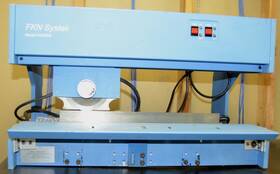
( Brand: Fkn Systek ), ( Manufacturer Part Number: K4000-L18 ), ( Part Type: Linear Blade ), ( Series: Fkn Systek K4000 ), ( Unit Type: Unit ), ( Operating Voltage: 120/240 ), ( Item Height: 17 Inches ), ( Item Length: 28 Inches ), ( Country Of Origin: United States ), ( Item Width: 15 Inches ), ( California Prop 65 Warning: Contains Matter, Which Is Known To The State Of California To Warp Space And Time. )
Review FKN SYSTEK K4000 Motorized Linear circular Blade Pcb Depanelizer
The **FKN SYSTEK K4000-L18 Motorized Linear-Circular Blade PCB Depanelizer** is a high-precision, industrial-grade automated system designed to efficiently and accurately separate printed circuit boards (PCBs) from their carrier panels with minimal risk of damage. Engineered for high-volume production environments, this advanced depanelizer combines cutting-edge motorized technology with a versatile blade system to deliver consistent, repeatable results across a wide range of PCB sizes and configurations. The machine features a robust **linear-circular blade mechanism**, allowing for both straight-line cuts and precise circular or radial separations, making it ideal for complex panel layouts, including those with vias, through-holes, or intricate routing patterns. Its **K4000 series** architecture ensures smooth, vibration-free operation, reducing the likelihood of board misalignment or chipping, while the **L18 model** accommodates larger panels up to **18 inches in width**, expanding its applicability to mid-sized and high-density manufacturing processes. Equipped with **adjustable cutting parameters**, including speed, depth, and pressure, operators can fine-tune the system for different PCB materials such as FR-4, Rogers, or flexible substrates ensuring optimal performance without compromising material integrity. The depanelizer integrates seamlessly with automated pick-and-place machines and SMT lines, offering **pluggable connectivity** for easy integration into existing production workflows, while its **user-friendly interface** allows for intuitive programming and real-time monitoring. Built with durability in mind, the K4000-L18 features a **stainless steel construction** and sealed components to withstand the demands of continuous operation in cleanroom or high-reliability environments. Whether used in prototyping, low-to-medium volume production, or automated assembly lines, this depanelizer represents a sophisticated solution for manufacturers seeking to enhance efficiency, reduce manual labor, and maintain the highest standards of precision in PCB processing.
### **Pros and Cons of buying a FKN Systek K4000-L18 (Motorized Linear-Circular Blade PCB Depanelizer)**
#### **Pros**
1. **Precision and Efficiency** The motorized linear and circular blade system allows for highly accurate and repeatable depanelizing, reducing manual errors and improving throughput. The automated motion ensures clean cuts without excessive force, minimizing PCB damage.
2. **Versatility** The dual-blade system (linear and circular) accommodates various PCB shapes, including rectangular, square, and round panels. This flexibility makes it suitable for prototyping and mass production alike.
3. **Reduced Labor Costs** Automating the depanelizing process eliminates the need for manual cutting, saving time and labor expenses. Operators can focus on other tasks while the machine handles repetitive cutting operations.
4. **Consistency and Repeatability** Unlike manual depanelizing, which can vary in quality, this machine ensures uniform cuts every time, leading to more reliable final products.
5. **Compatibility with SMD and Through-Hole PCBs** The design supports both surface-mount and through-hole components, making it adaptable to a wide range of PCB types.
6. **Safety Features** Modern depanelizers like this one typically include safety guards, emergency stop buttons, and possibly automated blade retraction to prevent accidents during operation.
7. **Integration with Manufacturing Lines** The K4000-L18 can be integrated into automated production lines, working alongside pick-and-place machines, testers, and other equipment for seamless PCB assembly.
8. **Minimized PCB Damage** The controlled blade motion reduces the risk of chipping, cracking, or misalignment compared to manual cutting tools.
9. **Adjustable Settings** The machine likely offers programmable parameters for blade speed, pressure, and cutting paths, allowing operators to optimize performance for different PCB materials and thicknesses.
10. **Long-Term Durability** High-quality industrial machines like the K4000-L18 are built to last, with sturdy construction and replaceable components, reducing downtime from wear and tear.
---
#### **Cons**
1. **High Initial Cost** Motorized depanelizers are significantly more expensive than manual tools or basic automated alternatives. The upfront investment may be prohibitive for small-scale operations or startups.
2. **Maintenance Requirements** Like any precision machine, the K4000-L18 will require regular maintenance, including blade sharpening, lubrication, and occasional calibration. Poor maintenance can lead to reduced performance or downtime.
3. **Learning Curve** Operators may need training to properly set up and operate the machine, especially when adjusting for different PCB sizes or materials. Inefficient use could lead to wasted material or damaged boards.
4. **Space Constraints** Industrial depanelizers require dedicated workspace. Smaller labs or workshops may not have the physical room to accommodate the machine comfortably.
5. **Blade Wear and Replacement Costs** High-quality blades degrade over time, especially when cutting through tougher materials like thick copper or reinforced substrates. Replacing blades can add to operational costs.
6. **Limited Customization for Unconventional PCBs** While versatile, the machine may struggle with highly irregular or complex PCB shapes that deviate from standard formats. Custom programming might be required, adding complexity.
7. **Dependency on Power Supply** Unlike manual tools, the K4000-L18 requires a stable electrical supply. Power outages or voltage fluctuations could disrupt operations.
8. **Potential for Overcutting** If not properly calibrated, the motorized blades might cut slightly beyond the intended lines, leading to wasted material or the need for additional trimming.
9. **Resale Value Decline** Industrial machinery depreciates over time. If the machine is no longer needed, reselling it may not recover the full initial cost.
10. **Potential for Overkill in Small Operations** For very small-scale production (e.g., hobbyist or low-volume prototyping), a manual depanelizer or a simpler automated tool might suffice without the added expense and complexity.
---
### **Conclusion**
The **FKN Systek K4000-L18** is a high-performance, motorized depanelizer that excels in precision, efficiency, and versatility, making it ideal for medium to large-scale PCB manufacturing. Its ability to handle diverse PCB shapes, reduce labor costs, and minimize human error justifies the investment for businesses with significant production volumes. However, the high upfront cost, maintenance needs, and learning curve may pose challenges for smaller operations or those with limited budgets.
For **small-scale or hobbyist users**, a manual depanelizer or a lower-cost automated alternative might be more practical. For **commercial PCB manufacturers, contract assemblers, or high-volume producers**, the K4000-L18 represents a valuable long-term investment in productivity and quality.
### **Recommendation**
- **Buy if:**- You operate at scale (medium to large production volumes).
- You prioritize precision, repeatability, and labor efficiency.
- Your workspace and budget can accommodate the initial cost and maintenance.
- You work with a variety of PCB shapes and need automation.
- **Avoid if:**- You are a small-scale operator or hobbyist with limited production needs.
- Your budget is tight, and you cannot justify the upfront expense.
- Your PCBs are mostly simple, uniform shapes where a manual or simpler automated tool would suffice.
- You lack the technical expertise to maintain and operate the machine effectively.
For businesses that meet the criteria, the **K4000-L18 is a strong choice** for improving depanelizing efficiency and quality. For others, exploring alternative tools or phased investment (e.g., starting with a manual setup before upgrading) may be more practical.
Details:
The K4000 motorized linear blade depanelizer is designed for flexible, high volume simulation of scored and skip CBS. Simply place, the scored section of PCB onto linear blade and step on foot, switch to bring circular carriage across top scoreline, split panels. Standard setting is to close the gap point where a piece of paper, placed on linear blade will cause circular rotate when, traveling across. The top circular blade can be adjusted up and down to, provide a cutting gap most suitable for the panel being simulated.
part #: k4000l18 price
- $2500.00
specifications pcbemdev:
- brand: Fkn Systek
- mpn: K4000-l18
- part type: Linear Blade
- series: Fkn Systek K4000
- unit type: Unit
- operating voltage: 120/240
- item height: 17 Inches
- item length: 28 Inches
- country of origin: United States
- item width: 15 Inches
- california prop 65 warning: Contains Matter, Which Is Known To The State Of California To Warp Space And Time.
offer pcbemdev:
- options: Ship-to-home
- availability: In Stock
- sold: 0
- quantity: 1
- started: February 27, 2026
returns pcbemdev:
- paid by: Buyer
- policy: Returns Accepted
- time: 30 Days
- method: Money back
payments pcbemdev:
- credit card: Diners-club
- wallet: Google-pay
- other
shipping pcbemdev:
seller pcbemdev:
- city: Orem, Utah
- # reviews: 2097
- rating: 100.0%
general pcbemdev:
- condition: Used
- Electronic Components Semiconductors > Circuit Boards Prototyping > Printed Circuit Boards PCBs