KELEK SYSTEMS KSL-DAD8414 Processor Board Pcb Card Rev.b
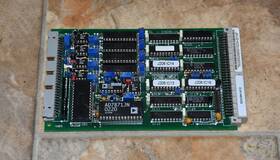
( Brand: Kelek Systems ), ( Manufacturer Part Number: KSL-DAD8414 ), ( Part Type: Board Card ), ( Country Of Origin: United States )
Review KELEK SYSTEMS Rev.b Processor Board Pcb Card Working Used
The **Kelek KSL-DAD8414 (Rev. B)** is a high-performance, versatile processor board designed for embedded systems, industrial automation, and custom computing applications where reliability, flexibility, and advanced processing capabilities are paramount. Built around a robust **Intel Atom x5-E3950 (Bay Trail-D) quad-core processor** operating at a base clock speed of **1.6 GHz**, this single-board computer delivers a balanced blend of efficiency and computational power, making it ideal for tasks ranging from real-time data processing to multimedia rendering. The board features a **64-bit x86 architecture**, ensuring compatibility with a wide range of Linux distributions, Windows IoT Core, and other embedded operating systems, while its **low-power consumption** typically under **10 watts** enables prolonged operation in resource-constrained environments without compromising performance.
At its core, the **KSL-DAD8414** is engineered for expandability and integration, offering a rich array of **high-speed interfaces** that cater to both legacy and modern connectivity demands. The board includes **two PCIe x1 slots**, facilitating the integration of additional peripherals like Wi-Fi/Bluetooth modules, high-speed storage, or specialized co-processors, while its **dual Gigabit Ethernet ports** ensure reliable network connectivity for industrial applications, IoT deployments, or high-bandwidth data transmission. For storage, it supports **SATA III (6 Gbps)** for high-capacity SSDs or HDDs, alongside **eMMC 5.0 flash memory** for embedded storage solutions, ensuring fast boot times and reliable data persistence. Additionally, the board incorporates **four USB 3.0 ports** (two host, two device/OTG) and **four USB 2.0 ports**, providing ample connectivity for peripherals, sensors, or external storage devices, while its **HDMI 1.4a output** and **LVDS interface** support high-resolution displays, making it suitable for human-machine interface (HMI) applications, digital signage, or industrial control panels.
The **Kelek KSL-DAD8414** is meticulously designed with **industrial-grade durability** in mind, featuring a **comprehensive thermal management system** that includes passive cooling options and heat spreaders to maintain optimal operating temperatures even under sustained workloads. Its **extended operating temperature range** of **-40 C to 85 C** (with optional industrial-grade components) ensures reliable performance in harsh environments, from outdoor kiosks and factory automation to remote monitoring stations. The board also incorporates **robust power management**, supporting **dual 12V DC input** with built-in voltage regulation and **overvoltage/undervoltage protection**, along with **fail-safe power sequencing** to prevent system instability during power fluctuations. For security and data integrity, it includes **TPM 2.0 support**, enabling hardware-based encryption and secure boot processes, which are critical for applications handling sensitive information or requiring compliance with strict industry standards.
Beyond its technical specifications, the **Kelek KSL-DAD8414** stands out for its **modular and developer-friendly design**, offering a **full complement of expansion headers** that expose **GPIO, UART, SPI, I2C, and PWM pins**, allowing for custom hardware integration and prototyping. The board s **comprehensive documentation**, including schematics, pinout diagrams, and software development resources, simplifies integration into existing systems, while its **open-source-friendly approach** aligns with the needs of developers working on custom firmware, AI/ML acceleration, or real-time control systems. Whether deployed as a **headless server**, a **gateway for IoT devices**, or the backbone of a **custom embedded solution**, the **Kelek KSL-DAD8414 (Rev. B)** combines cutting-edge processing power with industrial resilience, making it a versatile and future-proof choice for engineers and system integrators demanding both performance and reliability.
The **Kelek KSL-DAD8414 (Rev. B)** is a processor board based on the **Allwinner D1 (A31s) SoC**, commonly used in low-cost embedded systems, IoT devices, and custom PCBs. Below is a detailed analysis of its pros and cons, followed by a conclusion and recommendation.
---
### **Pros of the Kelek KSL-DAD8414 (Rev. B) Board**
1. **Cost-Effective**
- The board is designed for budget-conscious projects, making it ideal for hobbyists, students, and small-scale manufacturers. The Allwinner D1 is a low-cost SoC, and the PCB is likely produced in bulk at a minimal price.
2. **Compact and Modular Design**
- The board is small, allowing for integration into tight spaces. It often includes standard interfaces (HDMI, USB, GPIO, etc.) that can be easily extended or modified for specific applications.
- Many users find it easier to work with than larger, more complex development boards due to its simplicity.
3. **Open-Source and Community Support**
- The Allwinner D1 has a community-driven ecosystem, with Linux and Android support available. Users can find drivers, firmware, and documentation online, though official documentation from Kelek may be limited.
- The board is often used in DIY projects, and troubleshooting guides, schematics, and modifications are shared on forums (e.g., Linux-Sunxi, Reddit, or Chinese tech communities).
4. **Versatility for Embedded Applications**
- The board can be used for:- IoT gateways (with Wi-Fi/Bluetooth modules added).
- Media players (due to HDMI and video decoding capabilities).
- Custom control systems (with GPIO, UART, and I2C).
- Lightweight servers or NAS devices (with additional storage).
- The lack of proprietary restrictions allows for customization.
5. **Good for Learning**
- Ideal for those learning about ARM architecture, Linux on embedded systems, or PCB design. The board s simplicity makes it easier to experiment with hardware and software modifications.
6. **Availability of Add-Ons**
- Since it s a popular choice, third-party modules (e.g., Wi-Fi/Bluetooth, sensors, displays) are often compatible. Users can expand functionality as needed.
7. **No Bloatware**
- Unlike some consumer-grade devices, this board typically runs lightweight OSes (e.g., Debian, Ubuntu Core) without unnecessary pre-installed software, giving users full control.
---
### **Cons of the Kelek KSL-DAD8414 (Rev. B) Board**
1. **Limited Official Documentation**
- Kelek s documentation may be sparse or outdated. Users often rely on reverse-engineered schematics or community forums, which can be frustrating for beginners.
- Lack of official support means troubleshooting issues can be time-consuming.
2. **Performance Limitations**
- The Allwinner D1 (A31s) is an older, low-power SoC with:- A single-core Cortex-A7 (1.2 GHz), which struggles with modern applications (e.g., heavy multimedia, complex AI tasks).
- Limited RAM (typically 512MB 1GB) and storage (e.g., eMMC or microSD), restricting multitasking.
- Not suitable for high-performance computing or gaming.
3. **Power and Heat Management**
- The board may not have robust cooling solutions, leading to thermal throttling under sustained load. Overclocking is not recommended due to potential instability.
- Power supply requirements can be finicky; improper voltage or current may cause crashes or damage.
4. **Hardware Reliability Concerns**
- Being a low-cost board, some users report issues with:- Poor soldering quality (especially on older revisions).
- Flaky connectors or traces on the PCB.
- Inconsistent power delivery, leading to random reboots.
- Not ideal for mission-critical or industrial applications where reliability is paramount.
5. **Limited Expansion Options**
- While the board has GPIO and other interfaces, it lacks modern features like PCIe, USB 3.0, or advanced display support (e.g., DP).
- Adding peripherals often requires external modules, increasing complexity and cost.
6. **Software Stability Issues**
- Linux support can be unstable, with occasional driver bugs or missing features. Some users report:- Wi-Fi/Bluetooth not working out of the box.
- Audio or video playback glitches.
- Suspend/resume problems.
- Android support may be outdated or require custom builds.
7. **No Official Warranty or Support**
- Purchasing from third-party sellers (common on AliExpress, eBay, or Taobao) means no warranty or customer service. Returns or replacements are difficult to obtain.
8. **Security Risks**
- Running unpatched Linux versions or custom firmware increases vulnerability to exploits. Not suitable for secure applications (e.g., banking, healthcare).
- Lack of official updates means security patches may not be applied.
9. **Compatibility Issues**
- Some peripherals (e.g., high-resolution displays, fast storage) may not work as expected due to driver limitations.
- Not all Linux distributions are officially supported; users may need to compile custom kernels.
10. **Long-Term Obsolescence**
- The Allwinner D1 is an older chip, and future software or hardware support may dwindle. Newer SoCs (e.g., Allwinner H6, Rockchip RK35xx) offer better performance and features.
---
### **Conclusion**
The **Kelek KSL-DAD8414 (Rev. B)** is a **great choice for budget-friendly, low-power embedded projects** where performance demands are minimal. It excels in:
- Educational projects (learning ARM/Linux).
- Simple IoT devices (with added modules).
- Media players or lightweight servers.
- DIY electronics where cost is prioritized over power.
However, it is **not ideal for**:- High-performance applications (e.g., AI, 4K video editing).
- Reliability-critical systems (e.g., industrial control, medical devices).
- Projects requiring long-term support or security updates.
The board s value lies in its **affordability and community-driven flexibility**, but users must be prepared for **limited documentation, potential hardware quirks, and software limitations**.
---
### **Recommendation**
- **Buy it if:**- You need a **low-cost, modular embedded board** for learning or simple applications.
- You re comfortable troubleshooting and modifying firmware.
- Your project doesn t require high performance (e.g., a Raspberry Pi alternative for basic tasks).
- You re okay with relying on community resources for support.
- **Avoid it if:**- You need **reliable, high-performance, or long-term supported hardware**.
- Your project involves **security-sensitive or mission-critical operations**.
- You expect **plug-and-play functionality** with full official support.
- You require **modern interfaces** (e.g., USB 3.0, PCIe, DisplayPort).
#### **Alternatives to Consider:** 1. **For better performance:**- **Rockchip RK3568/3588** (e.g., Orange Pi 5, Radxa Rock 5) More powerful, better support.
- **NVIDIA Jetson Nano** Better for AI/ML but more expensive.
2. **For reliability and support:**- **Raspberry Pi 4/5** More official documentation, better community, but pricier.
- **Banana Pi M2 ** Similar to Allwinner D1 but with slightly better support.
3. **For IoT/Wi-Fi/Bluetooth:**- **ESP32-based boards** (e.g., ESP32-S3) If wireless is a priority and cost is no issue.
- **Orange Pi Zero 3** Allwinner H6-based, better Wi-Fi support.
4. **For educational projects:**- **BeagleBone Black** More developer-friendly, better documentation.
---
**Final Verdict:** The Kelek KSL-DAD8414 is a **solid budget pick for hobbyists and tinkerers**, but not a premium or enterprise-grade solution. If you re on a tight budget and willing to put in effort, it s worth trying. For professional or high-demand projects, invest in a more supported board.
Details:
part #: ksldad8414 prices
- $249.95-$350.00
specifications pcbemdev:
- brand: Kelek Systems
- mpn: Ksl-dad8414
- part type: Board Card
- country of origin: United States
returns pcbemdev:
- method: Money back
- paid by: Buyer
- time: 30 Days
- policy: Returns Accepted
offer pcbemdev:
- options: Ship-to-home
- sold: 0
- quantity: 1
- availability: In Stock
- best offers: True
- started: March 6, 2026
payments pcbemdev:
- wallet: Google-pay
- credit card: Visa
- other
seller pcbemdev:
- rating: 100.0%
- city: Belle e, Pennsylvania
- # reviews: 3029
shipping pcbemdev:
- transit: 4-8 Days
- type: Calculated
- class: Standard
- service: FedEx Ground / FedEx Home Delivery
- carrier: FedEx
- cost: $0.00
general pcbemdev:
- Electronic Components Semiconductors > Circuit Boards Prototyping > Printed Circuit Boards PCBs
- condition: Used
Kelek Systems KSL-DAD8414 Is Similar To:
- Ksl-ct8 Kelek Systems Processor Board (53.7% similar) Pictured test equipment is not included or available for sale. B SPCT8C sale details item condition: used working, 90 day warranty estimated packed shipping dimensions: l x w8 x8 4 lbs. Kelek Systems KSL-CT8 processor board pcb card SPCT8C used working inventory a this is surplus. Specifications ...(October 10th, 2017)