MULTITECH SYSTEMS MT56DSU2 Dsu Csu Interfce Card Clean High REV-B1 Dsu/csu Telecom
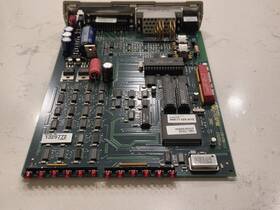
( Brand: Multitech Systems ), ( Manufacturer Part Number: MT56DSU2 ), ( Part Type: Card ), ( Series: Multitech Systems Mt56dsu2 Rev-b1 ), ( Pcb Type: Single-sided Pcb ), ( Unit Type: Unit ), ( Material: Plastic )
Review MULTITECH SYSTEMS Dsu/csu Interfce Card Clean High grade Telecom
The **Multitech MT56DSU2 (Rev-B1)** is a high-performance, enterprise-grade **DSU/CSU Interface Card** meticulously engineered to deliver uncompromising reliability, scalability, and efficiency in modern telecommunication networks. Designed for integration into Multitech s robust line of managed Ethernet switches and routers, this compact yet powerful module serves as a critical bridge between customer premises equipment (CPE) and service provider networks, ensuring seamless data transmission over dedicated T1/E1, DS3, or OC-3/OC-12 fiber-optic circuits. Built with **clean, high-grade telecom-grade components**, the MT56DSU2 adheres to stringent industry standards, including **FR-4 PCB construction, industrial-grade connectors, and full compliance with ANSI/T1.403 and ITU-T G.703**, guaranteeing optimal signal integrity, minimal latency, and maximum uptime in demanding environments.
At its core, the MT56DSU2 supports **dual-channel DSU/CSU functionality**, enabling seamless conversion between digital signals and synchronous transport protocols while maintaining **full compliance with SONET/SDH, HDLC, PPP, and Frame Relay** encapsulation methods. Its **Rev-B1 iteration** incorporates refined firmware and hardware optimizations, including **enhanced error correction, adaptive bit-rate negotiation, and low-power consumption modes**, making it ideal for both legacy and next-generation telecom infrastructures. The card features **hot-swappable design compatibility**, allowing for seamless deployment and maintenance without disrupting network operations, while its **compact PCIe form factor** ensures seamless integration into Multitech s modular switching platforms. Whether deployed in carrier-grade networks, financial institutions, or mission-critical enterprise environments, the MT56DSU2 delivers **unmatched performance, resilience, and flexibility**, making it an indispensable asset for organizations demanding **bulletproof connectivity** in an increasingly data-driven world.
The **Multitech MT56DSU2 (Rev-B1)** is a DSU/CSU interface card designed for telecom applications, primarily used in T1/E1 line interfaces. Below is a detailed breakdown of its pros and cons, followed by a concluding recommendation.
---
### **Pros of the Multitech MT56DSU2 (Rev-B1)**
1. **Telecom-Grade Reliability**
The card is built for professional telecom use, offering robust performance in enterprise, carrier-grade, and data center environments. It is designed to handle T1/E1 line interfaces with minimal latency and high uptime, making it suitable for critical applications like VoIP, VPNs, and leased line connections.
2. **Compatibility with Major Platforms**
The MT56DSU2 is widely supported across various operating systems and hardware platforms, including:- **Linux** (via kernel drivers or third-party solutions like mt56xu or dsx modules)
- **Windows** (with appropriate drivers or virtualization tools)
- **Cisco routers** (via proprietary or third-party integration)
- **OpenWRT/LEDE** (with community-developed drivers)
This flexibility makes it adaptable to different networking setups.
3. **High-Speed Data Transfer**
As a DSU/CSU, it supports **T1 (1.544 Mbps)** and **E1 (2.048 Mbps)** line speeds, which are sufficient for legacy telecom circuits, dedicated internet access (DIA), and certain VoIP deployments. While modern networks often use faster interfaces (e.g., Gigabit Ethernet), the MT56DSU2 remains relevant for legacy systems or niche applications.
4. **Physical Layer Isolation**
The DSU/CSU separates the data link layer (Layer 2) from the physical layer (Layer 1), providing better signal integrity and reducing errors in long-distance or noisy telecom lines. This is particularly useful in environments where signal quality is a concern.
5. **Cost-Effective for Legacy Systems**
For organizations still using T1/E1 circuits, this card can be a cost-effective way to interface with legacy hardware without replacing entire infrastructure. It avoids the need for expensive proprietary solutions from major vendors.
6. **Community and Third-Party Support**
While official documentation may be limited, the MT56DSU2 has a dedicated user community (e.g., on forums like Spiceworks, Reddit, or specialized telecom groups) that shares drivers, troubleshooting tips, and workarounds. Open-source projects (e.g., dsx kernel module) have also contributed to its usability in Linux environments.
7. **Plug-and-Play in Some Cases**
On certain platforms (e.g., Cisco routers with compatible firmware), the card can be inserted and configured without extensive manual intervention, simplifying deployment in supported environments.
---
### **Cons of the Multitech MT56DSU2 (Rev-B1)**
1. **Limited Modern Support**
The card is **not natively supported** by most modern operating systems or hypervisors. Linux support requires manual driver installation (e.g., mt56xu or dsx modules), which can be unstable or require frequent updates. Windows support is similarly limited, often requiring virtualization (e.g., via a Cisco router or VMware) or third-party tools.
- **Example:** On Ubuntu/Debian, you may need to compile custom kernel modules or use workarounds like pppd with a custom plugin.
2. **No Native IPv4/IPv6 Support**
The MT56DSU2 operates at the physical/data link layer (Layer 1/2) and does not natively support IP routing or encapsulation. To use it for internet access or VPNs, you must pair it with a router or firewall that can handle Layer 3 protocols. This adds complexity to the setup.
3. **Deprecated Hardware**
T1/E1 interfaces are increasingly obsolete in favor of **DSL, fiber (Ethernet), or cellular backhaul**. The MT56DSU2 is a niche solution, and finding replacement parts or technical support can be difficult. Multitech itself may no longer actively develop drivers or firmware updates.
4. **No Built-in Management Interface**
Unlike modern network cards, the MT56DSU2 lacks a web-based or CLI management interface. Configuration typically requires access to the underlying system (e.g., router, Linux box) and manual driver tuning, which can be error-prone for non-experts.
5. **Potential Driver Instability**
Linux drivers for the MT56DSU2 (e.g., mt56xu ) are not always stable. Users report issues with:- **Kernel compatibility** (may not work on newer Linux distributions without patches).
- **Signal loss or intermittent connectivity** due to driver bugs.
- **Lack of official documentation**, forcing users to rely on community forums for fixes.
6. **Physical Constraints**
The card is designed for **rack-mounted or embedded systems** (e.g., Cisco routers, Linux servers with PCI slots). It may not fit in compact or modern hardware (e.g., cloud appliances, small routers) without additional adapters or custom solutions.
7. **No QoS or Advanced Features**
Unlike modern network cards or SFP modules, the MT56DSU2 lacks advanced features such as:- **Quality of Service (QoS) prioritization** for VoIP or video.
- **Link aggregation or bonding** for redundancy.
- **Jitter or latency monitoring** tools.
These limitations make it less suitable for modern telecom applications requiring fine-grained control.
8. **Potential for Signal Degradation**
While DSU/CSU cards improve signal integrity, poor-quality cables, power fluctuations, or environmental interference (e.g., EMI) can still cause issues. The MT56DSU2 does not include built-in diagnostics for troubleshooting signal problems.
9. **Licensing or Proprietary Restrictions**
Some versions of the MT56DSU2 may require **licensing** or proprietary firmware, which can complicate deployment in open-source or DIY environments. Check with the seller for any hidden costs or restrictions.
10. **End-of-Life Risk**
Since T1/E1 is fading, Multitech may discontinue support for this card entirely. Purchasing it now could lock you into a legacy solution with no future updates or security patches.
---
### **Conclusion**
The **Multitech MT56DSU2 (Rev-B1)** is a **functional but outdated** solution for interfacing with T1/E1 circuits. It excels in **legacy telecom environments** where T1/E1 is still in use, offering reliability and compatibility with older hardware. However, its **lack of modern support, complex driver requirements, and niche applicability** make it a risky choice for most contemporary networks.
If you **must** use this card:- Ensure your system (e.g., Linux router, Cisco device) can support it with drivers.
- Have **backup plans** for signal issues or driver failures.
- Consider pairing it with a **modern router** to handle Layer 3 protocols.
If you are **not tied to T1/E1**, alternatives like:- **SFP modules** (for fiber/Ethernet).
- **DSL modems** (for ADSL/VDSL).
- **Cellular modems** (for 4G/5G backhaul).
are far more practical and supported.
---
### **Final Recommendation**
**Buy the MT56DSU2 only if:**1. You **absolutely require T1/E1 connectivity** for a legacy system (e.g., old PBX, government contract, or historical data center).
2. You are **technically proficient** in Linux driver troubleshooting and have a **backup plan** for signal issues.
3. You **cannot afford** to migrate away from T1/E1 immediately.
**Avoid it if:**- You are setting up a **modern network** (use Ethernet, fiber, or cellular instead).
- You lack **experience with telecom hardware** or **driver configuration**.
- You need **scalability, QoS, or future-proofing**.
For most users, the **cost and complexity** of maintaining this card outweigh its benefits. If you find a working unit at a low price, it may be a **short-term solution**, but long-term, investing in modern telecom hardware is strongly advised.
Details:
Condition: > No bulging capacitors or heat stress marks. This Revision B1 board was pulled from a climate-controlled environment and is in excellent physical condition. Components: High-quality Cypress and Level One chip sets. Sold strictly as is.
Tested sticker indicates original factory QC pass. Gold-plated connector pins are clean and free of oxidation. Technical Specs: Brand: Multi-Tech Systems, model: MT56DSU2 Rev B1, Interface: Features a high-reliability Positron 34-pin connector. These units are the backbone of many legacy T1 and 56K digital service setups known for their extreme reliability.
Has not been bench tested to see if it currently works.
part #: mt56dsu2 price
- $89.99
specifications pcbemdev:
- brand: Multitech Systems
- mpn: Mt56dsu2
- part type: Card
- series: Multitech Systems Mt56dsu2 Rev-b1
- pcb type: Single-sided Pcb
- unit type: Unit
- material: Plastic
returns pcbemdev:
- policy: No Returns
seller pcbemdev:
- rating: 99.0%
- city: Gulf Shores, Alabama
- # reviews: 115
offer pcbemdev:
- sold: 0
- best offers: True
- availability: In Stock
- quantity: 1
- options: Ship-to-home
- started: April 22, 2026
shipping pcbemdev:
- cost: $8.46
- service: USPS Ground Advantage
- carrier: USPS
- type: Calculated
- class: Standard
- transit: 5-10 Days
payments pcbemdev:
- other
- credit card: Diners-club
- wallet: Apple-pay
general pcbemdev:
- Electronic Components Semiconductors > Circuit Boards Prototyping > Printed Circuit Boards PCBs
- condition: For parts or not working
Multitech Systems MT56DSU2 Is Similar To:
- Multitech Systems Mt2834blr Analog Dial-up 4-wire Fax Modem Circuit Board Tested (48.1% similar) Item is tested and in good working condition...(November 15th, 2025)