MOTOROLA MVME400 Dual Port Module RS-232C
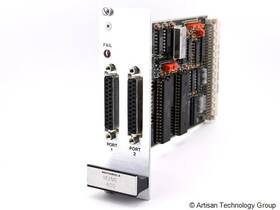
( Brand: Motorola ), ( Manufacturer Part Number: MVME400 ), ( Part Type: Module ), ( Item Length: 12 ), ( Country Of Origin: United States )
Review MOTOROLA Dual Rs-232c Serial Port Module
The **Motorola MVME400 Dual RS-232C Port Module** is a high-performance, compact expansion card designed to enhance communication capabilities for Motorola s MVME400 VMEbus single-board computer (SBC) platform. Engineered for industrial, aerospace, and embedded systems applications, this module provides two fully isolated, asynchronous serial communication ports compliant with the **RS-232C standard**, delivering robust connectivity for data acquisition, telemetry, and peripheral interfacing. Each port operates independently at speeds up to **115.2 kbps**, supporting a wide range of baud rates, data bits (5 8), parity options (even, odd, none, mark, space), and stop bits (1 2), ensuring compatibility with virtually any serial device or protocol. The module features **hardware flow control** (RTS/CTS) on both ports, enabling reliable data transmission in high-noise or latency-sensitive environments, while its **optically isolated drivers and receivers** protect against electrical interference, voltage spikes, and ground loops critical for rugged or distributed systems. Built on Motorola s proven **68000-based architecture**, the module integrates seamlessly with the MVME400 s VMEbus interface, offering direct access to system resources via **DMA (Direct Memory Access)** for high-throughput data transfers without CPU intervention. Additionally, the module includes **programmable interrupt levels** and **FIFO buffers** to minimize CPU overhead, making it ideal for real-time applications such as SCADA systems, robotics, or military-grade command-and-control platforms. With its **low-power consumption**, **wide operating temperature range** (typically 40 C to 85 C), and **industrial-grade reliability**, this module is a versatile solution for developers seeking to extend serial communication functionality in resource-constrained or mission-critical environments. Whether deployed in a factory automation setup, a remote sensing network, or a space-qualified system, the MVME400 Dual RS-232C Port Module delivers the durability, flexibility, and performance required to meet demanding communication requirements.
The **Motorola MVME400 Dual RS-232C Port Module** is a legacy VMEbus serial communication module designed for industrial and embedded applications. Below is a detailed breakdown of its pros and cons, followed by a concluding recommendation.
---
### **Pros of the Motorola MVME400 Dual RS-232C Port Module**
1. **Reliability and Durability**
The module is built for rugged industrial environments, with robust construction and long-term availability from Motorola s legacy product line. Many users report stable performance over extended periods, especially in mission-critical applications.
2. **Dual RS-232 Ports**
The module provides two independent serial ports, which is useful for connecting to multiple devices simultaneously without requiring additional hardware. This is particularly beneficial in systems requiring parallel communication (e.g., logging, data acquisition, or control interfaces).
3. **VMEbus Compatibility**
The module integrates seamlessly with VMEbus-based systems, which were widely used in industrial automation, military, aerospace, and scientific computing. If your system already relies on VMEbus, this module avoids the need for costly upgrades or protocol conversions.
4. **Legacy Software Support**
Many industrial control systems, SCADA platforms, or custom applications developed in the 1990s and early 2000s were designed to work with VMEbus hardware. This module ensures backward compatibility with such systems, reducing the risk of obsolescence-related failures.
5. **Low Latency and High Performance**
For real-time applications (e.g., sensor data acquisition, motor control, or telemetry), the module offers low-latency serial communication, which is critical in time-sensitive operations.
6. **Modular Upgradeability**
VMEbus systems often allow for modular upgrades, meaning you can replace or add components without overhauling the entire system. This module can be paired with other VMEbus peripherals (e.g., A/D converters, FPGAs, or I/O modules) for expanded functionality.
7. **Proven Track Record**
Motorola (now part of NXP) has a history of producing high-quality industrial hardware. While the module is no longer in active production, its reputation for reliability persists among users who have deployed it in long-term projects.
---
### **Cons of the Motorola MVME400 Dual RS-232C Port Module**
1. **Obsolescence and Discontinuation**
The most significant drawback is that the module is **discontinued**, meaning:- No new production runs, leading to potential supply chain issues.
- Limited or no official technical support from the manufacturer.
- Difficulty finding replacement parts (e.g., connectors, capacitors, or firmware updates) if the module fails.
- Risk of **EOL (End of Life)** status, where even third-party suppliers may phase out support.
2. **Lack of Modern Features**
The module lacks modern communication protocols (e.g., USB, Ethernet, or USB-to-serial conversion), which are now standard in most applications. If your system requires connectivity to contemporary devices (e.g., USB-based sensors or IP networks), this module may not integrate easily.
3. **Limited Software Drivers**
While the module works with legacy operating systems (e.g., VxWorks, QNX, or older versions of Linux), finding updated or compatible drivers for modern OS environments (e.g., Windows 10/11, Linux kernels > 5.x) can be challenging. Custom driver development may be required.
4. **Physical and Electrical Constraints**
- The module uses **D-sub connectors** (typically DB-25), which are less durable than modern connectors (e.g., RJ-45 or USB Type-A/B).
- RS-232 is a **single-ended** protocol with limited noise immunity compared to modern differential standards (e.g., RS-485), making it more susceptible to interference in harsh environments.
- Power requirements may not align with modern power supply standards, necessitating additional adapters or converters.
5. **High Cost of Replacement Parts**
Since the module is obsolete, spare parts (e.g., replacement boards, connectors, or firmware) can be **extremely expensive** or unavailable. This increases long-term maintenance costs.
6. **Limited Scalability**
Modern systems often require **Ethernet-based serial gateways** (e.g., USB-to-Ethernet converters) or **PCIe/PCI cards** for better performance and flexibility. The VMEbus architecture is outdated compared to PCIe or PCI, limiting scalability for new applications.
7. **Training and Expertise Gaps**
Finding engineers or technicians familiar with VMEbus systems is increasingly difficult, as the technology has been largely replaced by more modern buses (e.g., PCIe, PXI, or FPGA-based solutions). This can complicate troubleshooting and system integration.
8. **No Built-in Diagnostics**
Unlike modern hardware, the MVME400 lacks advanced diagnostic tools (e.g., onboard LEDs, logging, or remote monitoring). Debugging issues may require external tools or manual inspection.
---
### **Conclusion**
The **Motorola MVME400 Dual RS-232C Port Module** remains a **viable choice** for systems that are:- Already running on VMEbus and require minimal serial communication.
- Part of a **long-term legacy project** where obsolescence is not a critical concern.
- Operating in **stable, controlled environments** with no need for modern connectivity.
- Supported by **in-house expertise** in VMEbus systems.
However, for **new projects, modern applications, or environments requiring scalability, cost efficiency, or future-proofing**, this module is **not recommended**. The risks of obsolescence, lack of support, and compatibility issues with contemporary hardware and software outweigh its benefits.
---
### **Recommendation**
1. **If You Must Use the MVME400:**- **Document everything** (wiring, firmware versions, software dependencies) to ensure smooth operation.
- **Stock up on spare parts** (e.g., connectors, capacitors) from trusted third-party suppliers or eBay (with caution).
- **Consider a backup solution** (e.g., a USB-to-serial adapter or a modern VMEbus-compatible module if available).
- **Plan for migration** to a more modern bus (e.g., PCIe) in the future to avoid future downtime.
2. **For New or Modern Applications:**- **Replace with a USB-to-serial adapter** (e.g., FTDI or Prolific chips) if only basic serial communication is needed.
- **Use an Ethernet-based serial gateway** (e.g., USB-to-Ethernet or RS-232-to-Ethernet converters) for networked applications.
- **Explore PCIe or FPGA-based solutions** if high-speed, low-latency serial communication is required.
- **Consider a modern VMEbus alternative** (e.g., **ADLINK s VME6307** or **MEN s VX1700**) if you must stay on VMEbus but need better support and features.
3. **For Legacy Systems with No Immediate Replacement Plan:**- **Archive the system** and treat it as a **historical or backup solution** rather than a long-term operational component.
- **Train personnel** to handle the module s quirks and document all workarounds.
- **Monitor for third-party support** (e.g., retrocomputing or industrial electronics forums) in case of failures.
### **Final Verdict:**The **MVME400 Dual RS-232C Port Module is a good short-term solution for legacy VMEbus systems** but is **not a sustainable long-term choice** due to obsolescence risks. For any new development or critical applications, **modern alternatives should be prioritized**. If you are committed to keeping the module operational, **proactive planning for parts and migration is essential**.
Details:
Fast and hassle-free. Part Number: 01-W3432B01. Condition: Used and in Excellent Condition. Are not included with this equipment unless pictured and/or listed in the above.
part #: mvme400 prices
- $870.00-$995.00
specifications pcbemdev:
- brand: Motorola
- mpn: Mvme400
- part type: Module
- item length: 12
- country of origin: United States
general pcbemdev:
- Electronic Components Semiconductors > Circuit Boards Prototyping > Printed Circuit Boards PCBs
- condition: Used
returns pcbemdev:
- time: 30 Days
- method: Money back
- policy: Returns Accepted
- paid by: Buyer
offer pcbemdev:
- options: Ship-to-home
- quantity: 1
- availability: In Stock
- sold: 0
- started: May 28, 2026
shipping pcbemdev:
- cost: $25.01
- service: FedEx Ground / FedEx Home Delivery, FedEx Standard Overnight, FedEx Ground Economy
- type: Calculated
- class: Standard, One-day, Economy
- carrier: FedEx
- transit: 4-7 Days
seller pcbemdev:
- # reviews: 17946
- rating: 99.8%
- city: Champaign, Illinois
payments pcbemdev:
- wallet: Paypal
- credit card: Discover
- other
Motorola MVME400 Is Similar To:
- Card Serial 01-w3503b-04f Circuit Controller Module Vme Board Motorola Pcb (16.4% similar) width in inches dimensions l x w xx x all parts, including accessories and cables are only included if pictured or listed in the. USPS or ups ground. Our contact SC asset management, inc. DOA stands for dead on arrival, meaning that the item did not function properly when it arrived. Soldering ...(May 5th, 2015)
- 01-w3378f-04f Motorola Mcp750 Cpci Board Sbc Module (44.4% similar) Please for a return shipping label if you wish to return a purchased item to us. Please for a return shipping label if you wish to return a purchased item to us. Ed equipment sales can't find the answer you're looking for. This unit is used and untested. The bureaus of us. It is being sold as shown ...(October 14th, 2016)
- 10332-10250 Adept Technology Motorola Processor Module New (35.8% similar) ...(June 22nd, 2018)
- 10332-48712 Adept Technology Motorola Processor Module New (35.8% similar) ...(June 22nd, 2018)
- Motorola 140-5524-000c 021-5295000b Pcb Module (51.1% similar) Country club. Discounts for local pick-ups 140-5524-000C b PCB. Guaranteed not to be DOA. Military installation...(January 11th, 2025)
- Motorola 5184530t0 8482985y01 Cln6960d Cae020mrf1 Control Module Board Sale (42.3% similar) Priced for a discounted sale, this product offers great value those in need of durable and dependable circuit board their prototyping or business operations. The Motorola 5184530T0, 8482985Y01, CLN6960D, CAE020MRF1 control module board is a high-quality printed circuit board designed for electronic ...(November 8th, 2025)
- Motorola 0054865-k Cln1293a Cah040g9p5 Cln6961e Control Module Board Sale (39.7% similar) With the trusted brand of Motorola, this control module board is a reliable and efficient option for various electrical equipment supplies in industrial business sectors. The Motorola 0054865-K, CLN1293A, CAH040G9P5, CLN6961E control module board is a highly sought-after printed circuit board ...(November 8th, 2025)
- Motorola Cln7396a C2099764 Circuit Board Module Sale (44% similar) With a focus on performance and longevity, these circuit board modules are valuable addition to any electronics project. These high-quality circuit boards are specifically manufactured by Motorola, ensuring reliability and compatibility with various electronic devices. The Motorola CLN7396A and ...(November 12th, 2025)
- Motorola 01-w1668b46a Motorola wavetek Vme Cpu Board Module Jdsu Pathtrak (38% similar) Removed from working CDs HCU-1500 Patrick modular controller. Most of the items are shipped same day purchase. 01-W1668B46A. Motorola/wavelike vme CPU board module...(February 4th, 2026)
- Motorola Mvip-301 Ip-serial Module (63.4% similar) Are not included with this equipment unless pictured and/or listed in the above. Hours / location. Fast and hassle-free. Part number: 01-W2541D01A, 94054D...(April 3rd, 2026)
- Motorola Mvip-302 Industrypack Octal Serial Interface (51.5% similar) Fast and hassle-free. Are not included with this equipment unless pictured and/or listed in the above. Hours / location...(April 3rd, 2026)