KONE Double Pcb Copper Printed Circuit Board USP31594 P31513
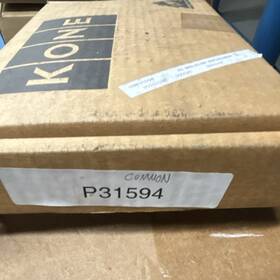
( Brand: Kone ), ( Manufacturer Part Number: P31594 ), ( Part Type: Circuit Board ), ( Pcb Type: Double-sided Pcb ), ( Material: Copper )
Review KONE Double sided Pcb Copper Printed Circuit Board
The **Kone P31594 USP31594 P31513 Double-Sided PCB Copper Printed Circuit Board** is a high-performance, precision-engineered component designed to meet the rigorous demands of modern electronics manufacturing. This printed circuit board (PCB) is crafted with meticulous attention to detail, featuring a **double-sided copper laminate construction** that ensures superior electrical conductivity and signal integrity. The board is built upon a robust **FR-4 glass-epoxy substrate**, a material renowned for its excellent mechanical strength, thermal stability, and resistance to moisture and chemical corrosion, making it ideal for applications requiring durability and reliability in challenging environments. The copper foil, typically **1 oz (35 m) or 2 oz (70 m) thick**, is evenly distributed across both sides of the board, providing ample conductive pathways for complex circuit designs while minimizing signal loss and electromagnetic interference (EMI). This construction is particularly advantageous for applications in **industrial automation, medical devices, automotive electronics, and telecommunications**, where consistent performance under varying conditions is critical.
The **P31594 USP31594 P31513** model is engineered with **high-precision drilling and plating techniques**, ensuring that vias and through-hole connections are uniformly plated with copper to maintain low resistance and high conductivity. The board s **solder mask layer**, often applied in a variety of colors (such as green, blue, or white), not only enhances visual clarity for assembly but also acts as a protective barrier against oxidation and short circuits. Additionally, the **silk-screen layer** allows for clear and durable labeling of component placement, reducing errors during assembly and improving manufacturability. Whether used in **high-frequency circuits, power distribution systems, or sensor interfaces**, this PCB delivers exceptional performance with minimal signal degradation, thanks to its optimized impedance control and consistent dielectric properties.
For applications requiring **high-density interconnects or mixed-signal designs**, the **P31594 USP31594 P31513** can be further customized with **fine-line traces** (as narrow as 5 mils or 0.127 mm) and **microvias**, enabling compact yet highly functional circuit layouts. The board s **lead-free solderable finish**, such as **ENIG (Electroless Nickel Immersion Gold) or OSP (Organic Solderability Preservatives)**, ensures compatibility with modern lead-free soldering processes while maintaining reliability in high-temperature environments. Furthermore, its **rigid construction** allows for easy integration into enclosures or stackable assemblies, making it a versatile choice for both prototyping and mass production. With its combination of **high-quality materials, precise manufacturing tolerances, and adaptability to diverse electronic systems**, this double-sided copper PCB is a cornerstone for engineers seeking a balance of performance, reliability, and cost-effectiveness in their designs.
### **Pros and Cons of Buying a Double-Sided Copper Printed Circuit Board (PCB) Kone P31594, USP31594, P31513**
#### **Pros**
1. **Increased Circuit Density**
Double-sided PCBs allow for twice the number of traces and components compared to single-sided boards. This is particularly useful in compact designs where space is limited, such as in consumer electronics, IoT devices, and embedded systems.
2. **Better Signal Integrity and Performance**
With two layers of copper traces, signal routing becomes more flexible, reducing crosstalk and interference. This is advantageous for high-speed digital circuits, analog signals, and RF applications where signal integrity is critical.
3. **Cost-Effective for Complex Designs**
While the initial cost per board may be slightly higher than single-sided PCBs, the ability to integrate more functionality on a single board can reduce the need for additional components or multiple PCBs, lowering overall system costs in many cases.
4. **Versatility in Design**
Double-sided PCBs can be used for a wide range of applications, from simple prototypes to advanced electronic systems. They are commonly found in power supplies, motor controls, communication modules, and even some automotive electronics.
5. **Easier Manufacturing for Small to Medium Production Runs**
For quantities that do not justify multi-layer PCBs (4 layers), double-sided PCBs offer a cost-effective middle ground. They are widely supported by PCB manufacturers, including Kone s offerings (P31594, USP31594, P31513), which likely include automated drilling and plating processes.
6. **Compatibility with Standard Manufacturing Processes**
These boards can be easily fabricated using standard etching, drilling, and plating techniques, making them accessible for both prototyping and small-scale production.
7. **Reduced Board Size**
By utilizing both sides of the PCB, designers can minimize the physical footprint of their product, which is beneficial for portable or space-constrained applications.
---
#### **Cons**
1. **Higher Initial Cost Compared to Single-Sided PCBs**
Double-sided PCBs are more expensive to manufacture than single-sided ones due to additional drilling, plating, and assembly steps. This cost difference may be a limiting factor for very low-volume or simple designs.
2. **Complexity in Design and Assembly**
Routing traces on both sides requires careful planning to avoid short circuits, especially near vias (holes connecting the layers). Poor design can lead to increased manufacturing defects or rework, adding to costs.
Assembly also becomes slightly more challenging, as components must be placed on both sides, potentially requiring pick-and-place machines with higher precision.
3. **Limited to Two Layers**
While double-sided PCBs offer more flexibility than single-sided ones, they still have fewer layers than multi-layer PCBs (4 layers). For highly complex circuits (e.g., advanced FPGA designs, high-density connectors, or high-speed differential pairs), multi-layer boards may be necessary, increasing costs further.
4. **Potential for Manufacturing Defects**
Drilling and plating both sides introduce more steps where errors can occur, such as misaligned holes, incomplete plating, or copper bridging. This increases the risk of defective boards, especially in high-volume production.
5. **Signal Integrity Limitations for High-Frequency Applications**
While double-sided PCBs improve routing flexibility, they may still struggle with high-frequency signals (e.g., GHz-range RF or high-speed digital signals) where controlled impedance and layer stacking are critical. Multi-layer PCBs with proper grounding and power planes are often preferred in such cases.
6. **Through-Hole Components Require Careful Placement**
Components with through-hole pins (e.g., connectors, inductors, or certain ICs) must be placed on one side to avoid interference with traces on the opposite side. This can complicate layout and may require additional design iterations.
7. **Limited to Non-Planar Components**
Some components (e.g., large transformers or heat sinks) may not fit neatly on a double-sided PCB without extending beyond the board s boundaries, requiring additional mounting solutions.
---
### **Conclusion**
Double-sided copper PCBs like the **Kone P31594, USP31594, or P31513** are a practical choice for many electronic designs, offering a balance between cost, performance, and flexibility. They excel in applications where space is limited, signal routing complexity is moderate, and multi-layer PCBs are unnecessary. However, they are not ideal for highly complex or high-frequency designs, where multi-layer boards would be more appropriate.
For **prototyping, small to medium production runs, or designs requiring moderate circuit density**, double-sided PCBs are a cost-effective and reliable option. For **high-volume production, high-speed digital/RF applications, or extremely dense circuits**, the added complexity and cost of multi-layer PCBs may justify the investment.
---
### **Recommendation**
- **Buy a double-sided PCB (e.g., Kone P31594/USP31594/P31513) if:**- Your design requires more than a single layer but does not need 4 layers.
- You are working on a project with moderate trace density (e.g., motor drivers, power supplies, simple embedded systems).
- You need a cost-effective solution for small to medium production runs.
- Signal integrity is not critical for high-frequency applications.
- **Consider a multi-layer PCB instead if:**- Your design involves high-speed digital signals, RF circuits, or complex routing that requires controlled impedance and layer stacking.
- You are producing in very high volumes where the cost per unit of a multi-layer PCB becomes comparable to double-sided.
- The circuit requires dense component placement that cannot be accommodated on two layers.
- **For prototyping or low-volume testing:**Double-sided PCBs are a good starting point before committing to multi-layer production. Ensure your design includes proper clearance around vias, adequate spacing for traces, and careful component placement to minimize assembly issues.
- **When sourcing from Kone or similar manufacturers:**Verify their capabilities for double-sided PCBs, including minimum hole sizes, copper weight, and plating quality. Request samples or prototypes to test manufacturability before full production. Additionally, compare quotes from multiple suppliers to ensure competitive pricing.
Details:
KONE P31594 USP31594 P31513 Double-Sided PCB, Copper Printed Circuit Board.
part #: p31594 price
- $289.96
specifications pcbemdev:
- brand: Kone
- mpn: P31594
- part type: Circuit Board
- pcb type: Double-sided Pcb
- material: Copper
seller pcbemdev:
- rating: 0.0%
- city: Grandview, Texas
- # reviews: 0
payments pcbemdev:
- other
- credit card: Visa
- wallet: Google-pay
offer pcbemdev:
- availability: In Stock
- started: February 27, 2026
- best offers: True
- options: Ship-to-home
- quantity: 1
- sold: 0
general pcbemdev:
- condition: Used
- Electronic Components Semiconductors > Circuit Boards Prototyping > Printed Circuit Boards PCBs
shipping pcbemdev:
- transit: 5-11 Days
- cost: $8.81
- service: USPS Ground Advantage
- carrier: USPS
- type: Calculated
- class: Standard
returns pcbemdev:
- policy: No Returns
Kone P31594 Is Similar To:
- Kone P24323 Relay Circuit Board (48.1% similar) This offer is for a Kone P24323 relay circuit board. 30-DAY DOA guarantee. Good used condition...(August 28th, 2024)
- Kone Pn-t7-3 Montgomery Logic Card Circuit Board Plc P-15761 Wl48-2 (38.6% similar) Serious buyers only. Shipping price listed is based on delivery within the contiguous us only. Please disregard the number and letter in parenthesis it is for office use. Note all drives must to be connected power for at least 4 hours prior operation. If this action is not taken, it can ruin the ...(September 5th, 2024)
- Kone Km1376517h02 Montgomery Circuit Board P 24325 (42.3% similar) Kone Montgomery circuit board 24325. This circuit board is out of a running elevator that came up for modernization...(November 19th, 2024)
- Kone P-30387 Montgomery Msu Elevator Circuit Board (42.3% similar) Board out of a running elevator up for mod. Montgomery Kone mus elevator circuit board P-30387...(November 19th, 2024)
- Kone Km713700g11 Elevators Lcefcb Ic2 Assembly Board 713703 H05 Pcb (31.4% similar) Part #: Kone KM713700G11 for sale...(June 13th, 2025)
- Montgomery P-24259 Kone montgomery Elevator Escal Brake Relay Circuit Board Pcb (28.9% similar) Up for sale is this pre-owned Montgomery elevator brake board...(June 21st, 2025)
- Kone Km51585004 Pc Board Input Miprom Ac dc 24 110 (29.3% similar) Suitable for Kone control and door systems that use the mi prom input board verify compatibility with your controller model before purchase. Replaces Kone USP29629002 and USP29630001. This is the genuine Kone replacement input pc board KM51585004, mi prom input board for ac/dc 24 110...(September 12th, 2025)
- Kone 838773h04 Lce Adon Board For Parts Or Repair (29.5% similar) I do not work on these or test them, sold exactly as received. Cosmetically it looks like has some heat behind the white blocks burn marks etc. This is sold for parts or repair none working, remove from service one more malfunctions...(December 16th, 2025)
- Kone Km1115077h02 Elevator Board Lce Adon3 (31.3% similar) Units are sold in as is condition, and shown photos of the listing.items include everything. Sold as is in photos. Kone elevator board KM1115077H02 Luce ADON3, the board is untested, there insignificant physical damage to the or connection ports on. Our knowledge on the previous use or history of ...(December 29th, 2025)
- Kone 713723h04 Elevators Lcecob Ic4 Pcb Board (37.3% similar) Was working when removed was...(February 1st, 2026)
- Kone Km802890g11 Elevator 802893h03 Top Circuit Board With Free Shipping (38.6% similar) Kone elevator KM802890G11 802893H03 top circuit board with free shipping...(March 10th, 2026)