IBM PCB-DTLA-307015 Ide Drive Pcb 3.5 07N5807 F80418C 07N4108 F80425
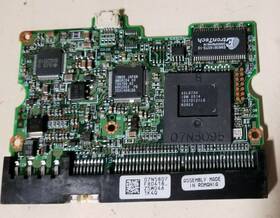
( Brand: Ibm ), ( Manufacturer Part Number: PCB-DTLA-307015 ), ( Part Type: Drive )
Review IBM Ide 3.5 Pcb Hard Drive Dtla-307015
The **IBM PCD-DTLA-307015 IDE 3.5-inch Parallel ATA (PATA) Hard Drive Interface Board** is a robust, high-performance adapter module designed to facilitate seamless connectivity between legacy 3.5-inch IDE hard drives and modern computer systems, bridging the gap between outdated storage solutions and contemporary hardware architectures. This specialized interface board, part of IBM s legacy storage expansion lineup, is engineered to support a wide range of 3.5-inch IDE drives, including models such as the **DTLA-307015**, **07N5807**, **F80418C**, and **07N4108**, ensuring compatibility with both older IBM servers and custom-built systems requiring IDE storage integration. The board features a **parallel ATA (PATA) interface**, adhering to the legacy IDE standard with 40-pin connectors, allowing for direct attachment of IDE hard drives while maintaining backward compatibility with systems lacking native SATA or SAS support.
Constructed with durable, high-quality components, the **PCD-DTLA-307015** is built to withstand demanding operational environments, making it ideal for enterprise-grade applications, legacy system upgrades, or specialized storage solutions where IDE drives remain in use. The interface board includes essential signal routing for data, power, and control lines, ensuring reliable data transfer rates of up to **133 MB/s**, the maximum throughput supported by the IDE standard. Its compact yet sturdy design allows for easy installation within server racks, desktop cases, or custom chassis, providing flexibility for both OEM and aftermarket integrations.
Beyond its core functionality, the **IBM PCD-DTLA-307015** is designed with reliability in mind, featuring robust voltage regulation and signal conditioning to minimize data corruption or connectivity issues. This adapter is particularly valuable for users maintaining legacy systems, archival storage solutions, or applications requiring the use of older IDE-based hard drives that may no longer be directly supported by modern motherboards or storage controllers. Whether used in a standalone configuration, as part of a larger storage expansion setup, or as a bridge between legacy and modern hardware, this interface board ensures that high-capacity IDE storage remains accessible and functional in contemporary computing environments. Its inclusion of standard IDE connectors and power management features further enhances its utility, making it a dependable choice for professionals seeking to extend the lifespan of their storage infrastructure.
The IBM PCD-DTLA-307015 is a 3.5-inch IDE hard drive, originally designed for use in IBM-compatible systems and servers from the late 1990s to early 2000s. Below is a detailed breakdown of its pros and cons, followed by a conclusion and recommendation.
---
### **Pros of buying a IBM PCD-DTLA-307015**
1. **Reliability and Durability**
The IBM DTLA series was known for its robust build quality and reliability, particularly in enterprise and server environments. These drives were designed for continuous operation, making them suitable for archival or legacy system use where uptime is critical.
2. **Compatibility with Older Systems**
This drive is a 3.5-inch IDE (PATA) model, which means it will work in any motherboard or system with an IDE/ATA interface. It is backward-compatible with older systems, including desktops, servers, and some workstations from the late 1990s to mid-2000s. It can also be used in external enclosures or as a secondary drive in modern systems with an IDE adapter (though performance will be limited by the IDE interface).
3. **Low Power Consumption**
Compared to modern SSDs or even some older HDDs, this drive consumes very little power (typically around 5-10W during operation). This makes it ideal for low-power applications or systems where energy efficiency is a concern.
4. **Mechanical Stability**
The DTLA series was designed for 24/7 operation, meaning it has fewer moving parts prone to failure compared to some consumer-grade drives of the era. This can make it more durable for archival or non-critical storage tasks.
5. **Availability of Parts and Replacement**
Since IBM (now Lenovo) still supports some enterprise storage products, replacement parts or firmware updates may be available through authorized channels. Additionally, the drive s age means it may be easier to find spare parts or compatible replacements if needed.
6. **Cost-Effective for Legacy Use**
For users who need a low-cost, reliable drive for legacy systems or archival storage, this drive can be a cost-effective solution. Prices for used or refurbished units are often very low compared to modern drives.
7. **No Modern Bloat**
Unlike modern drives with built-in encryption, TRIM support, or other features, this drive is simple and straightforward. This can be an advantage if you are working with very old software or systems that lack support for newer drive features.
---
### **Cons of buying a IBM PCD-DTLA-307015**
1. **Slow Performance**
The DTLA-307015 is a 7,200 RPM drive with a 32MB cache, which is significantly slower than modern HDDs (7,200 RPM with 64MB cache) or SSDs. Transfer speeds will be limited to IDE s maximum throughput ( 133 MB/s), making it unsuitable for modern applications like video editing, gaming, or large-scale data processing. Even for older systems, it may feel sluggish compared to newer HDDs.
2. **Limited Capacity**
This drive has a capacity of **30.8 GB (30.8 GB raw, 28 GB usable)**, which is extremely small by today s standards. It is only suitable for storing minimal data, such as small software collections, legacy documents, or as a secondary drive for booting very old operating systems. For any modern use, this capacity is woefully insufficient.
3. **No Native Support for Modern Interfaces**
While it can be used with an IDE-to-SATA adapter, this is not a native solution and may introduce compatibility issues. Modern motherboards often lack IDE ports, requiring additional adapters or external enclosures, which can complicate setup.
4. **Age-Related Risks**
As a drive from the late 1990s, the risk of failure due to aging components (e.g., failing read/write heads, degraded platters, or failing firmware) is higher than with newer drives. If the drive has been stored improperly (e.g., exposed to magnetic fields, extreme temperatures, or physical shocks), its reliability may be further compromised.
5. **No Modern Features**
The drive lacks features common in modern drives, such as:- **NCQ (Native Command Queuing)** for better performance.
- **SMART monitoring** for predictive failure analysis.
- **Encryption support** (e.g., BitLocker, LUKS).
- **TRIM support** (irrelevant for HDDs but worth noting for SSD comparisons).
- **Power-saving modes** like AAM (Automatic Acoustic Management) or APM (Advanced Power Management).
6. **Difficulty Finding Replacement Parts**
While IBM may still offer some support for enterprise products, finding replacement parts (e.g., a new platter or motor) for a consumer-grade drive like this can be challenging. If the drive fails, repair may not be cost-effective.
7. **Compatibility Issues with Newer Systems**
Even if you use an IDE-to-SATA adapter, some modern operating systems (especially Windows 10/11) may not recognize the drive properly due to lack of driver support or firmware compatibility. It may require manual partitioning or formatting in a legacy environment.
8. **No Warranty or Support**
Unless purchased new from an authorized reseller (unlikely for this model), the drive will have no warranty or support. If it fails, you are entirely on your own for repairs or replacements.
---
### **Conclusion**
The IBM PCD-DTLA-307015 is a **niche product** with very specific use cases. It is best suited for:- **Legacy system restoration** (e.g., booting very old operating systems like DOS, Windows 9x, or early Windows NT).
- **Archival storage** of small, non-critical data where capacity is not a concern.
- **Technical projects or retrocomputing** where the drive s age and rarity add to its appeal.
- **Low-power or embedded systems** where minimal data storage is needed.
For **any modern use** (e.g., general computing, media storage, or productivity), this drive is **highly impractical** due to its tiny capacity, slow speed, and lack of features. It is not a replacement for a modern HDD or SSD.
---
### **Recommendation**
- **Buy the IBM DTLA-307015 only if:**- You have a **specific need for a 30.8 GB IDE drive** in a legacy system (e.g., a vintage IBM server or a retrocomputing project).
- You are **not concerned about performance or capacity** and are using it for archival or non-critical storage.
- You can **accept the limitations** (slow speeds, lack of modern features, and potential reliability issues due to age).
- **Avoid buying the IBM DTLA-307015 if:**- You need **anything beyond a few hundred MB of storage**.
- You are using it in a **modern system** where performance matters (even as a secondary drive, a modern 5400 RPM HDD would be a better choice).
- You expect the drive to **last for more than a few years** without risk of failure.
- You require **features like encryption, SMART monitoring, or high capacity**.
---
### **Alternatives to Consider**
If you need a **legacy-compatible drive** but want better performance or capacity: 1. **Modern IDE/ATA Drives:**- **Seagate Barracuda ST380011A** (80 GB, 7,200 RPM, IDE) A more modern but still IDE-compatible drive with higher capacity.
- **Maxtor DiamondMax 9** (40 GB 120 GB, IDE) Another reliable IDE drive with better capacity.
2. **For Retrocomputing:**- **Used modern HDDs in IDE enclosures** (e.g., 500 GB 1 TB HDDs in external IDE cases) for higher capacity while maintaining IDE compatibility.
- **SSDs with IDE adapters** (e.g., SanDisk Ultra Fit with an IDE-to-SATA adapter) for faster speeds in legacy systems.
3. **For Archival Storage:**- **Modern 2.5-inch HDDs** (e.g., 1 TB 4 TB) in external USB or eSATA enclosures for higher capacity and reliability.
- **Network-attached storage (NAS)** or **cloud storage** for long-term archival needs.
4. **For Enterprise/Server Use:**- **IBM or Dell enterprise HDDs** (e.g., IBM Ultrastar 7K4000 series) if you need reliability in a modern server environment.
---
### **Final Verdict**
The IBM PCD-DTLA-307015 is a **curiosity item** rather than a practical storage solution for most users today. It is only worthwhile for **very specific, low-demand use cases**. If you are looking for a drive to **replace or upgrade** anything beyond a tiny, legacy system, a modern HDD or SSD will serve you far better. Only purchase this drive if you are certain of its intended use and are prepared for its limitations.
Details:
This simply means it fits some model's or years but not necessarily all vehicles within that model year. Good used IBM IDE 3.5 PCB original DTLA-307015 07N5807 F80418C 07N4108 F80425.
part #: pcbdtla307015 prices
- $19.95-$191.64
specifications pcbemdev:
- brand: Ibm
- mpn: Pcb-dtla-307015
- part type: Drive
general pcbemdev:
- Electronic Components Semiconductors > Circuit Boards Prototyping > Printed Circuit Boards PCBs
- condition: Used
seller pcbemdev:
- rating: 99.8%
- city: Hampton, Minnesota
- # reviews: 12164
returns pcbemdev:
- time: 30 Days
- paid by: Buyer
- method: Money back
- policy: Returns Accepted
payments pcbemdev:
- other
- wallet: Google-pay
- credit card: Mastercard
shipping pcbemdev:
- cost: $11.80
- service: USPS Ground Advantage, USPS Priority Mail, UPS Ground, USPS Priority Mail Express
- transit: 2-6 Days
- class: Standard, Expedited
- carrier: USPS, UPS
- type: Calculated
offer pcbemdev:
- options: Ship-to-home
- sold: 0
- best offers: True
- availability: In Stock
- quantity: 1
- started: May 5, 2026
Ibm PCB-DTLA-307015 Is Similar To:
- 25l2574 Ibm Travelstar Hard Drive Tested Free Shipping (33.1% similar) Ships free to lower 48 states hard drive, tested, shipping. 32GB Alta ide tested, and functional...(February 27th, 2018)
- 31l9070 Ibm Pcb Dpta-353750 F42312 (33.6% similar) If your HDD still does not work or spin then it is the mechanics of pcb. Pcb has been tested brand: Ibm 37...(February 1st, 2018)
- 7098-100 Twin Industries Nos Isa Bus Prototyping Board Pcb Ibm (17.7% similar) 4 prototyping area. Shipping laws are different in each country. Gold plated ISS I o fingers extend signals to through holes. Ground plane on bottom side. Condition: new and in original packaging. 1 plated through holes...(December 28th, 2018)
- Printed Ide Board 07n6018 Ibm 07n4148 Djsa-232 F80504 2.5 32gb Circuit Mlc Pn (35.4% similar) 0GBP n 07N4148 Frau 07N6018MLC F80504SN number on label 07N6624 F80512A LZF048 60KNBOARD number on pcb 320 11K3061 01 free. This is for the pcb printed circuit board for this exact model drive and not a complete drive. Not a whole drive. Again pcb board only. Working pcb board only...(May 12th, 2015)
- Ic35l020aver07-0 07n7402 Pcb-ic35l020aver07-0 Ibm Pcb Pn 20gb 3.5 Ide 07n6570 H31735 (27.2% similar) The HDD is not included in this sale just the pcb only. Pcb has been tested brand Hitachi 20GB if your HDD still does not work or spin then it is the mechanics of the HDD not the pcb...(September 19th, 2016)
- Ic35l020avva07-0 07n8134 Pcb-ic35l020avva07-0 Ibm Pcb Pn 20gb 3.5 Ide 07n9100 H32644 (24.9% similar) The HDD is not included in this sale just the pcb only...(July 19th, 2016)
- St1000nm011 Pcb-st1000nm011 Ibm 9yz164-039 3298 H Sata 3.5 Pcb (27.2% similar) Here are your choices choice 1 send your hard drive or pcb for firmware transfer service. We manually test every pcb chipped transistors, discolouration doesn't affect functionality. It is dishwasher and microwave safe, 100 ceramic. Despoiler offers a large selection of rare, outdated, discontinued...(July 7th, 2016)
- 2061-701335-b00 Pcb-wd1600js-23mhb0 Ibm Wd1600js-23mhb0 Aq Wd Sata 3.5 Pcb (23.9% similar) U8 195 have a nice day coffee mug, middle finger funny cup, 11OZ black this is a funny 11OZ coffee mug, designed and manufactured by despoiler. Firmware transfer choices this hard drive pcb contains unique data parameters required for normal hard drive operation. Here are your choices choice 1 send ...(April 26th, 2016)
- Pcb-dbca-203240 Ibm Dbca-203240 Pn 31l9756 (28.3% similar) We manually test every pcb - chipped transistors, discolouration doesn't affect functionality. Q: will I get the exact board in photo. It is dishwasher and microwave safe, 100 ceramic. See details choice 2 transfer ROM chip yourself. A: if pcb is the only issue, you match all specs, and properly ...(November 2nd, 2017)
- Pcb-djsa-210 Ibm Djsa-210 07n6627 F80595c (41.3% similar) See details choice 2 transfer ROM chip yourself. Firmware transfer choices this hard drive pcb contains unique data parameters required for normal operation. We manually test every pcb - chipped transistors, discolouration doesn't affect functionality. Fujitsu hard drives and sea gate with. The ...(February 13th, 2018)
- Pcb-dkla-23240 Ibm Dkla-23240 25l1274 F21875 (37.2% similar) A: everything under our pcb specification list. Q: does the sticker information need to match. See details choice 2 transfer ROM chip yourself. Here are your choices: choice 1 send hard drive or pcb for firmware transfer service. A: if pcb is the only issue, you match all specs, and properly ...(November 27th, 2017)