TEL TOKYO ELECTRON PDS-BX03E2954 Single Board Vme Card 2L80-007073-12
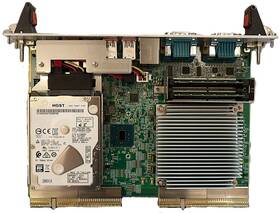
( Brand: Tel Tokyo Electron ), ( Manufacturer Part Number: PDS-BX03E2954 ), ( Part Type: Board Card ), ( Category: Semiconductor Tools Systems And Components )
Review TEL TOKYO ELECTRON Single Board Computer Sbc Vme Card Working
The **TEL Tokyo Electron PDS-BX03E2954 (2L80-007073-12)** is a high-performance, single-board VME (Versa Module Europa) card designed for demanding industrial, aerospace, and scientific applications where real-time data acquisition, processing, and control are critical. This compact yet robust module integrates a powerful **ARM Cortex-A53 quad-core processor** running at up to **1.2 GHz**, paired with **16 GB of DDR4 SDRAM** and **16 GB of eMMC flash memory**, ensuring seamless multitasking and reliable storage for embedded systems. The card features a **dual-core NVIDIA Tegra T210 GPU**, enabling accelerated graphics and computational tasks, making it ideal for applications requiring real-time visualization or AI/ML inference at the edge.
The PDS-BX03E2954 is built on a **VME64x-compatible backplane interface**, supporting high-speed data transfer rates of up to **1.0 Gbps per slot**, while its **PCIe Gen 2 x4 interface** provides additional bandwidth for high-throughput peripherals. The board includes a rich set of **I/O interfaces**, including **two Gigabit Ethernet ports** (with optional PoE support), **two USB 3.0 ports**, **two HDMI 2.0 outputs**, and **two MIPI-DSI display interfaces**, catering to applications that demand both high-speed networking and high-resolution multimedia output. For precise timing and synchronization, it incorporates a **high-precision 1 PPS (Pulse Per Second) input/output** and **GPS-disciplined clocking**, making it suitable for timing-sensitive applications in telecommunications, radar systems, or automated test equipment.
Security and reliability are prioritized with **hardware-based encryption (AES-256)**, **secure boot**, and **TPM 2.0 support**, ensuring data integrity and protection against unauthorized access. The board also features **industrial-grade temperature tolerance**, operating reliably within a wide range of **-40 C to 85 C**, and includes **redundant power inputs** (12V or 24V DC) for fault-tolerant operation in harsh environments. With its **Linux-based OS support** (including Yocto, Buildroot, and custom RTOS options) and **real-time extensions**, the PDS-BX03E2954 is engineered for developers and engineers who require a flexible, scalable, and high-performance single-board computer within a VME chassis, bridging the gap between standalone embedded systems and modular industrial computing architectures.
### **Pros and Cons of buying a Telco Tokyo Electron PDS-BX03E2954 (2L80-007073-12) Single-Board VME Card**
#### **Pros**
1. **High Performance and Speed**
The PDS-BX03E2954 is designed for high-speed data acquisition and processing, featuring a **PCI Express (PCIe) Gen 3 x8 interface**, which ensures fast data transfer rates (up to **8 GT/s per lane**). This makes it suitable for applications requiring real-time signal processing, such as radar, telecommunications, and industrial automation.
2. **Versatile and Modular Design**
As a **single-board VME (Versa Module Europa) card**, it integrates multiple functions into a compact form factor, reducing the need for additional hardware. The VME bus is widely used in embedded systems, military/aerospace, and scientific research, ensuring compatibility with existing systems.
3. **Support for High-Resolution Data Streams**
The card is capable of handling **high-bandwidth data streams**, making it ideal for applications like **digital signal processing (DSP), FPGA-based systems, and high-speed oscilloscope data logging**. The inclusion of **FPGA logic** allows for customizable signal processing pipelines.
4. **Reliability and Durability**
Telco Tokyo Electron is a reputable manufacturer known for producing **industrial-grade hardware**, which suggests robust build quality, long-term stability, and resistance to environmental factors (if properly cooled and powered).
5. **Compatibility with FPGA and DSP Processing**
The card likely includes **FPGA fabric** (e.g., Xilinx or Altera/Intel FPGA), allowing users to implement custom logic for real-time filtering, decoding, or protocol conversion. This flexibility is valuable in **telecommunications, radar, and defense applications**.
6. **Backward and Forward Compatibility**
VME-based systems have been around for decades, meaning this card can integrate with older VME-based setups while also supporting modern PCIe interfaces for data transfer.
7. **Potential for Cost-Effective Upgrades**
If your system already uses VME, replacing an older module with this high-performance card can **extend the lifespan of your system** without requiring a full hardware overhaul.
---
#### **Cons**
1. **High Cost**
Single-board VME cards, especially those with **PCIe Gen 3 x8 and FPGA integration**, are **expensive**. The price may be prohibitive for small businesses, research labs with limited budgets, or hobbyist projects.
2. **Complexity in Integration**
VME systems can be **challenging to set up**, especially for those unfamiliar with embedded computing. Proper **power supply, cooling, and bus arbitration** must be managed correctly to avoid system instability.
3. **Limited Availability of Documentation and Support**
Older or niche VME cards may have **outdated documentation** or **limited vendor support**, making troubleshooting difficult. Telco Tokyo Electron is a reputable brand, but finding specialized technical resources might still be a hurdle.
4. **Power and Cooling Requirements**
High-performance FPGA and PCIe-based cards generate **significant heat**, requiring adequate **cooling solutions** (e.g., active heatsinks, fans). Improper cooling can lead to **thermal throttling or hardware failure**.
5. **Potential for Obsolescence**
While VME is still used in some industries, **PCIe and AXIe (Advanced Mezzanine Card) are becoming more dominant** in modern high-speed data acquisition systems. Future-proofing may require additional adapters or migration to newer standards.
6. **Software Dependency**
The card s full functionality may rely on **proprietary or third-party software** (e.g., FPGA design tools, VME bus drivers). Licensing costs for FPGA toolchains (e.g., Vivado, Quartus) can add to the overall expense.
7. **Limited Market for Refurbished Units**
Unlike consumer electronics, **refurbished VME cards are rare**, meaning you may have to purchase new units at full price. This can be a disadvantage if you re looking for a budget-friendly option.
---
### **Conclusion**
The **Telco Tokyo Electron PDS-BX03E2954 (2L80-007073-12) VME card** is a **high-performance, modular solution** ideal for **industrial, military, aerospace, and scientific applications** requiring **high-speed data acquisition and FPGA-based processing**. Its **PCIe Gen 3 x8 interface, FPGA integration, and VME compatibility** make it a strong choice for systems where **real-time processing and reliability** are critical.
However, the **high cost, integration complexity, and potential for obsolescence** mean it is **not suitable for all applications**. It is best suited for **enterprise-level users, research institutions, or defense contractors** with existing VME infrastructure and the resources to manage its requirements.
---
### **Recommendation**
**Buy this card if:**- You are working in an **industrial, military, or aerospace environment** where **VME compatibility and high-speed data processing** are essential.
- Your system **already uses VME**, and this upgrade will **extend its operational lifespan** without a full replacement.
- You have **FPGA expertise** or can allocate resources for **software development and testing**.
- Budget is **not a constraint**, and you can justify the **high initial cost** with long-term benefits.
**Avoid this card if:**- You are a **small business, startup, or hobbyist** with limited budget and technical resources.
- Your application can be served by **more modern interfaces** (e.g., **PCIe, AXIe, or USB 3.0/4.0**).
- You lack **experience with VME systems** and cannot invest in **training or support**.
- Future-proofing is a concern, and you may need to **migrate to newer standards** in the next few years.
**Alternatives to Consider:**- If **PCIe-based solutions** are sufficient, look into **FPGA mezzanine cards (FMC, AMC)** or **PCIe-based data acquisition cards** (e.g., from National Instruments, Keysight, or Xilinx).
- For **lower-cost VME options**, check for **used or refurbished units** from trusted vendors.
- If **real-time processing is needed but VME is unnecessary**, consider **FPGA-based single-board computers (SBCs)** like the **Xilinx Zynq or Intel Cyclone FPGA platforms**.
Ultimately, this card is a **premium choice for specialized high-performance applications** but may not be the best fit for general-purpose or budget-conscious projects.
Details:
Sale Details. Serial numbers or country of manufacture may vary. Model No: CONT EPD C5K. TEL Tokyo Electron 2L80-007073-12 Single Board Computer SBC VME Card Working.
TEL Tokyo Electron Part No: 2L80-007073-12. Only items pictured are included: If a part is not pictured, or mentioned above, then it included in the sale. Processor: Undetermined. The physical condition is good, but there are signs of previous use and handling.
This item is working surplus. Part No: PDS-BX03E2954. Pictured test equipment is not included or available for sale.
part #: pdsbx03e2954 prices
- $5003.26-$8002.26
specifications pcbemdev:
- brand: Tel Tokyo Electron
- mpn: Pds-bx03e2954
- part type: Board Card
- category: Semiconductor Tools Systems And Components
payments pcbemdev:
- credit card: Discover
- wallet: Apple-pay
- other
shipping pcbemdev:
- cost: $0.00
- service: FedEx Ground / FedEx Home Delivery
- class: Standard
- type: Calculated
- transit: 3-7 Days
- carrier: FedEx
seller pcbemdev:
- rating: 99.6%
- # reviews: 10136
- city: Albuquerque, New Mexico
offer pcbemdev:
- sold: 0
- started: February 23, 2026
- best offers: True
- availability: In Stock
- quantity: 1
- options: Ship-to-home
general pcbemdev:
- condition: Used
- Electronic Components Semiconductors > Circuit Boards Prototyping > Printed Circuit Boards PCBs
returns pcbemdev:
- paid by: Buyer
- time: 60 Days
- policy: Returns Accepted
- method: Money back
Tel Tokyo Electron PDS-BX03E2954 Is Similar To:
- 340 Cvd-x Tokyo Electron Limited Tel Model Gas System Ctrl Unit Used (31.6% similar) Tel Tokyo Electron limited model 340 CVS-x 340CX gas system ctr unit, used includes: MC31007MC-31007MC-31009MC 3MC 1SG-2700...(January 8th, 2019)
- M340-cvd Tokyo Electron Limited Tel Model Gas System Ctrl Unit Used (31.8% similar) For local customer carrier pickup, example DHL, ups, etc. Whenever possible, unique identifiers such as part numbers, model etc. Be assured that these were not done intentionally. To make an appointment please via messaging. Buyer pays for return shipping...(October 31st, 2018)
- Mc-31002a Tokyo Electron Limited Tel (34.9% similar) Tel Tokyo Electron MC-31002A PM081006-0B PCB...(January 29th, 2018)
- Mc-31011a Tokyo Electron Limited Tel (34.9% similar) PCB, MC-31011A...(January 25th, 2018)
- M-340 Tokyo Electron Limited Tel Model Cx Gas System Ctrl Unit Used (31.8% similar) For local customer carrier pickup, for example DHL, ups, etc. Be assured that these were not done intentionally. To make an appointment please via messaging. Whenever possible, unique identifiers such as part numbers, model numbers, etc. Buyer pays for return shipping...(August 16th, 2016)
- Oriental Motor A7792-0407y2c-2 Driver Pcb Tel Tokyo Electron 5086-423845-11 New (32% similar) Part no: A7792-0407Y2C-2. Oriental motor A7792-0407Y2C-2 driver PCB Tel Tokyo Electron 5086-423845-11 new. Tel Tokyo Electron part no: 5040-000167-11. The physical condition is great. Made in japan this oriental motor A7792-0407Y2C-2 driver PCB is new surplus. Pictured test equipment is not included...(November 14th, 2023)
- Tokyo Electron Hte-ac2-a-11 Tel Ac Control Board Pcb Working Surplus (46.8% similar) The physical condition is good, but there are signs of previous use and handling. Item condition: used working, 90 day warranty. Ac control board this Tel Tokyo Electron HTE-AC2-A-11 control board PCB is used working surplus. Part no: HTE-AC2-A-11. Pictured test equipment is not included or ...(November 15th, 2023)
- Tokyo Electron E2b403-11 numc Tel Pcb Board Densan E208-000043-11 Working Spare (47.3% similar) The physical condition is good, but there are signs of previous use and handling. Model no: E208-000043-11. Sale details. Pictured test equipment is not included or available for sale. Only items pictured are included: if a part is not pictured, or mentioned above, then it included in the sale. Tel ...(November 21st, 2023)
- Tel Tokyo Electron 2980-092300-11 Chemical I o Pcb Tob1015 Cpc-t0015a-11 New (43.4% similar) Part no: 2980-092300-11. Tel Tokyo Electron 2980-092300-11 chemical i/o PCB TOB1015 CPC-T0015A-11 new. Sale details. Serial numbers or country of manufacture may vary. Pictured test equipment is not included or available for sale. Model no: TOB1015. The physical condition is great. Only items ...(December 8th, 2023)
- Ckd Amc-d-x1 Valve Pump Control Pcb Tel Tokyo Electron 012-007150-1 New Surplus (37.9% similar) Made in japan this CD valve AMC-D-X1 pump control PCB is new surplus. Model no: Mac-d. Pictured test equipment is not included or available for sale. Sale details. Tel Tokyo Electron part no: 012-007150-1. The physical condition is great. Part no: AMC-D-X1. CD valve AMC-D-X1 pump control PCB Tel ...(December 23rd, 2023)
- Tokyo Electron Hte-ta3-a-11 Tel Ac Control Board Tab1900 (41.1% similar) Tel PCB, ac control board, TA19 HTE-TA3-A-1, used as is no way to test...(January 21st, 2024)