PCB PN-200917 Board U-211
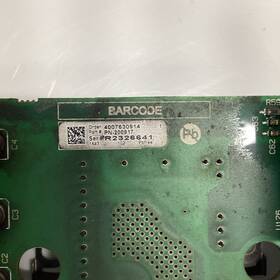
( Brand: Pcb ), ( Manufacturer Part Number: PN-200917 ), ( Part Type: Board )
Review PCB Board
The **PCB (Printed Circuit Board) with Part Number PN-200917, designated as the U-211 board**, is a high-performance, multi-layered electronic assembly meticulously engineered for applications demanding precision, reliability, and compact integration. Designed with a robust **4-layer construction**, this board features a **1.6mm substrate thickness** optimized for thermal dissipation and mechanical stability, ensuring consistent performance under demanding operational conditions. The PCB incorporates **high-density interconnect (HDI) technology**, enabling intricate routing with microvias and blind vias that maximize component density while minimizing signal degradation. Its **FR-4 glass-epoxy material** provides an ideal balance of mechanical strength, chemical resistance, and thermal stability, making it suitable for both indoor and outdoor environments.
The U-211 board is equipped with a **highly optimized signal integrity layout**, featuring **differential pairs, controlled impedance traces, and impedance-matching components** to support high-speed data transmission and analog signal processing. Critical areas are reinforced with **gold-plated through-hole vias and surface-mount pads**, ensuring reliable electrical connections and resistance to corrosion. Additionally, the board includes **ground planes and power planes** strategically distributed to minimize electromagnetic interference (EMI) and noise, which is essential for sensitive applications such as industrial control systems, automotive electronics, or telecommunications infrastructure.
For connectivity, the U-211 board offers a variety of **I/O interfaces**, including **USB Type-C, HDMI, Ethernet (RJ45), and GPIO headers**, allowing seamless integration with a wide range of peripherals and communication protocols. The board also incorporates **low-dropout regulators (LDOs) and voltage converters** to provide stable power distribution across sensitive components, while **overcurrent and overtemperature protection circuits** enhance durability and prevent catastrophic failures. The **silkscreened component legend** and **reference designators** are clearly marked for easy assembly and troubleshooting, ensuring a streamlined manufacturing and maintenance process.
Designed with **modular flexibility** in mind, the U-211 board supports **hot-swappable connectors** and **expansion slots**, making it adaptable for future upgrades or custom configurations. Its **compact form factor** typically measuring around **120mm x 80mm** allows for efficient space utilization in embedded systems, IoT devices, or custom enclosures without compromising functionality. The board s **conformal coating option** further enhances protection against moisture, dust, and chemical exposure, extending its operational lifespan in harsh environments.
Whether deployed in **industrial automation, medical devices, aerospace avionics, or consumer electronics**, the U-211 PCB delivers a blend of **high reliability, signal integrity, and thermal management** that meets stringent industry standards. Its **RoHS-compliant materials** and **lead-free soldering** ensure compliance with global environmental regulations, while its **long-term availability** guarantees consistent supply chain support. With a focus on **precision engineering and performance optimization**, this board serves as a foundational component for developers seeking a dependable, high-efficiency solution in their electronic designs.
### **Pros and Cons of buying a PCB (PN-200917, Board U-211)**
#### **Pros:**1. **Compatibility and Reliability** If this PCB is part of a known, well-documented system (e.g., a specific industrial, automotive, or consumer electronics application), it may offer proven stability and functionality. Many manufacturers release detailed schematics, datasheets, or community support for such components, reducing the risk of compatibility issues.
2. **Cost-Effectiveness** If the board is a standard or widely available part, purchasing it directly (rather than sourcing from a custom manufacturer) could be more affordable. Bulk availability may also reduce per-unit costs.
3. **Performance and Features** Depending on its intended use, the PCB may include optimized circuitry, efficient power management, or specialized functions (e.g., signal processing, connectivity modules) that justify its inclusion in a design.
4. **Ease of Integration** If the board is designed as a modular component (e.g., a daughterboard, expansion card, or standalone unit), integrating it into a larger system may be simpler than designing a custom PCB from scratch.
5. **Warranty and Support** Reputable suppliers often provide warranties, technical support, or replacement parts, which can be valuable for troubleshooting or long-term maintenance.
6. **Regulatory Compliance** If the PCB meets industry standards (e.g., FCC, CE, RoHS, or automotive-grade certifications), it may reduce the need for additional compliance testing in your final product.
---
#### **Cons:** 1. **Limited Customization** The PCB may not align perfectly with your specific requirements. Key limitations could include:- Insufficient I/O ports, connectors, or signal types.
- Fixed voltage or power constraints that don t match your needs.
- Lack of support for newer protocols or higher-speed interfaces.
- Hardcoded firmware or non-upgradeable components.
2. **Obsolescence Risk** If the board is an older model or from a discontinued product line, finding replacement parts, firmware updates, or technical support could become difficult over time. Manufacturers may phase out support, leaving you dependent on third-party suppliers.
3. **Dependence on Supplier** If the PCB is sourced from a single vendor, supply chain disruptions (e.g., manufacturing delays, geopolitical issues, or vendor bankruptcy) could lead to production halts. Diversifying suppliers may be necessary but could increase costs.
4. **Licensing or IP Restrictions** Some PCBs may include proprietary firmware, algorithms, or intellectual property (IP) that requires licensing fees or usage restrictions. Ensure you have the legal right to use the board in your application.
5. **Hidden Costs** Additional expenses may arise from:- Required accessories (e.g., specific connectors, shields, or mounting hardware).
- Customization workarounds (e.g., modifying traces, adding jumpers, or using adapters).
- Shipping or lead-time delays if the board is not stocked locally.
6. **Technical Limitations** The board s specifications might not meet your performance demands, such as:- Inadequate processing power or memory for your application.
- Poor thermal management leading to overheating.
- Noise or interference issues in sensitive environments.
7. **Lack of Documentation** If the PCB lacks detailed schematics, errata, or community resources, debugging or extending its functionality could be challenging. Reverse-engineering may be required, which can be time-consuming and error-prone.
8. **Compatibility with Other Components** Even if the PCB itself works, it may not integrate smoothly with other parts of your system. For example:
- Mechanical incompatibilities (e.g., mounting holes, form factor).
- Electrical mismatches (e.g., voltage levels, signal timing).
- Software incompatibilities (e.g., driver requirements, API limitations).
---
### **Conclusion**
Buying the **PCB (PN-200917, Board U-211)** can be a pragmatic choice if it directly addresses your project s needs with minimal trade-offs. It offers reliability, cost savings, and ease of integration for applications where the board s features are non-negotiable. However, if your project requires significant customization, long-term support, or cutting-edge performance, the limitations of a pre-designed board may outweigh its benefits.
The decision hinges on whether the **pros outweigh the cons** for your specific use case. Conduct thorough research into:- The board s exact specifications and compatibility with your system.
- The supplier s reputation, lead times, and support policies.
- The availability of alternatives (e.g., newer models, custom PCBs, or modular solutions).
- Potential long-term costs (e.g., maintenance, upgrades, or replacements).
---
### **Recommendation**
1. **Verify Compatibility** Confirm that the board s I/O, power requirements, and form factor align with your design. Test it in a prototype or simulation if possible.
2. **Assess Long-Term Viability** Check if the manufacturer or community provides updates, support, or alternative versions. Avoid committing to a board with unclear future availability.
3. **Evaluate Customization Needs** If the board lacks critical features, weigh the cost of workarounds (e.g., adding external components) against the cost of designing a custom PCB.
4. **Diversify Suppliers** If the board is mission-critical, identify backup suppliers to mitigate supply chain risks.
5. **Consider Alternatives** Explore newer or more flexible options (e.g., FPGA-based boards, modular platforms, or open-source designs) if the current board s limitations are dealbreakers.
6. **Budget for Hidden Costs** Account for additional expenses like connectors, development tools, or potential rework in your project planning.
**Final Verdict:**- **Proceed with Purchase** if the board is a perfect fit for your project, the supplier is reliable, and long-term support is assured.
- **Avoid or Modify** if the board s limitations are critical, alternatives exist, or the risks (e.g., obsolescence, compatibility issues) outweigh the benefits.
- **Prototype First** if possible order a single unit to test functionality before committing to bulk purchases.
Details:
The PN-200917 PCB Board is a printed circuit board designed by the brand. With its quality construction and compatibility with various electronic components, the PN-200917 PCB Board is a valuable tool for businesses individuals involved in electrical equipment supplies. This board is suitable for electronic components and semiconductors, providing a reliable platform circuit prototyping assembly.
specifications pcbemdev:
- brand: Pcb
- mpn: Pn-200917
- part type: Board
payments Pcbemdev:
- credit card: Diners-club
- wallet: Paypal
- other
shipping Pcbemdev:
- transit: 4-10 Days
- class: Standard
- carrier: USPS
- service: USPS Ground Advantage
- cost: $0.00
- type: Fixed
offer Pcbemdev:
- options: Ship-to-home
- sold: 0
- started: February 21, 2026
- quantity: 1
- availability: In Stock
- best offers: True
seller Pcbemdev:
- city: Erie, Pennsylvania
- # reviews: 1436
- rating: 99.9%
general Pcbemdev:
- condition: Used
- Electronic Components Semiconductors > Circuit Boards Prototyping > Printed Circuit Boards PCBs
returns Pcbemdev:
- paid by: Seller
- time: 30 Days
- method: Money back
- policy: Returns Accepted
Pcb PN-200917 Is Similar To:
- 0-51839-7 Reliance Irch Pcb Circuit Board (30.3% similar) Please for shipping cost. This listing is for one item at a time only. Reliance itch Pcb circuit board manufacturer refurbished in original box, sold as is. This listing is for one item at a time only...(December 4th, 2018)
- 001788l Opto Digital Pcb Circuit Board (31.7% similar) Opt 22 001788L digital Pcb circuit board...(January 16th, 2019)
- 001788m Opto Digital Pcb Circuit Board (31.7% similar) Opt 22 001788M digital Pcb circuit board...(January 16th, 2019)
- Card Serial 01-w3503b-04f Circuit Controller Module Vme Board Motorola Pcb (20.2% similar) width in inches dimensions l x w xx x all parts, including accessories and cables are only included if pictured or listed in the. USPS or ups ground. Our contact SC asset management, inc. DOA stands for dead on arrival, meaning that the item did not function properly when it arrived. Soldering ...(May 5th, 2015)
- Materials Pcb Applied Assembly Board 0100-09123 Wafer Sensor (30.6% similar) Pcb assembly wafer sensor board Pcb assay wafer sensor board manufacturer applied materials condition new, in original bag. Re stocking fees may apply...(June 4th, 2015)
- Controller Hp Mainframe 01090-66501 Lc Board 1090 Ctl Pcb Agilent (28.9% similar) Standard shipping prices are only good for the lower 48 states. If in doubt, please before purchasing. Dimensions l x w xx 13 x all parts, including accessories and cables are only included if pictured or listed in the. Please by sending a message through or calling. Hp agent CT mainframe controller...(May 7th, 2015)
- 02-810002-00 Liebert Scr Driver Pcb Board Used Great Condition (25.3% similar) Liberty scar driver Pcb board used great condition free shipping...(April 9th, 2018)
- Card Interface Printer Hp 02934-60053 Agilent Board Pcb Rs-232c 293x (34.4% similar) Connection ports are in excellent condition. Cosmetic scuffs scratches from handling. This unit has been used. Standard shipping prices are only good for the lower 48 states. Minimum handling charge is 75 onto a standard pallet and increases for custom pallet's. Soldering side is in excellent ...(May 1st, 2015)
- Card Board Varian Graphics Pcb Color 03-907588-00 Electronic Printed Circuit (15.8% similar) All pictures are taken in house. Dimensions l x w x8 x x 5/8 all parts, including accessories and cables are only included if pictured or listed in the. 30 day DOA warranty this product carries a 30 day DOA warranty. Minimum handling charge is 75 onto a standard pallet and increases for custom ...(May 13th, 2015)
- Detector Start Electron Remote Hp 05971-60009 Agilent Board Apg Pcb Ionization (27.2% similar) Board components are undamaged and in good condition. Please by sending a message through or calling. If in doubt, please before purchasing. Minimum handling charge is 75 onto a standard pallet and increases for custom pallet's. USPS or ups ground. Your satisfaction is extremely important to us. Are...(May 6th, 2015)
- 05985-60301 Input Ms Board Output Pcb Card Module Printed Hp Circuit (21.5% similar) length in inches 12. Some signs of previous use. If in doubt, please before purchasing. Dimensions l x w xx 10 x all parts, including accessories and cables are only included if pictured or listed in the. Do not lift up on the top plastic sheet or it'll make a mess. This unit has been used. Save ...(May 7th, 2015)