PEP SC-232 Interface Piggyback Txd Rxd Dtr Cts Signals RS232
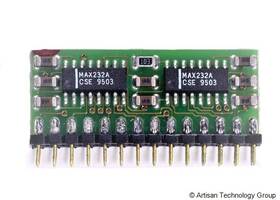
( Brand: Pep ), ( Manufacturer Part Number: SC-232 ), ( Part Type: Signal ), ( Country Of Origin: United States ), ( Item Length: 12 )
Review PEP Rs232 Interface Piggyback Txd Rxd Dtr And Cts Signals
The **PEP SC-232 RS-232 Interface Piggyback Module** is a versatile and compact add-on solution designed to seamlessly integrate RS-232 serial communication capabilities into embedded systems, microcontrollers, or single-board computers that lack native serial ports. This high-quality piggyback module serves as a direct interface between a host device s logic-level signals (typically 3.3V or 5V TTL) and the standard RS-232 voltage levels ( 7.5V to 15V), enabling reliable serial data transmission over longer distances or through legacy equipment. Built with precision engineering, the SC-232 features a robust **DB-9 male connector** on one end, adhering to the industry-standard RS-232 pinout, while its **piggyback design** allows for easy soldering or direct mounting onto a breadboard, PCB, or modular carrier board via a **2x5-pin header** (or equivalent) for the transmit (TXD), receive (RXD), data terminal ready (DTR), and clear-to-send (CTS) signals, along with optional ground and power connections. This modular approach eliminates the need for bulky external adapters or additional circuit boards, making it an ideal choice for prototyping, industrial automation, IoT devices, or retrofitting older systems with modern serial communication needs.
Under the hood, the SC-232 incorporates a **high-performance RS-232 transceiver chip**, such as the MAX3232 or its equivalent, which efficiently converts between TTL and RS-232 voltage levels while providing robust signal integrity and noise immunity. The module supports standard RS-232 data rates up to **115,200 baud** (or higher, depending on the specific transceiver used), ensuring compatibility with most serial protocols, including UART, ASCII, and custom binary formats. Its **bidirectional signal handling** allows for full-duplex communication, enabling simultaneous transmission and reception of data without interference. Additionally, the inclusion of **DTR and CTS handshaking lines** facilitates flow control in applications requiring reliable data transfer, such as serial printers, modems, or industrial sensors. The piggyback design also accommodates flexible power options, often drawing power directly from the host system s logic supply (3.3V or 5V) or via an external connection, depending on the implementation.
For developers and engineers, the SC-232 offers a **plug-and-play convenience** that simplifies the integration of serial communication into minimalist or resource-constrained projects. Whether used in a Raspberry Pi, Arduino, STM32, or custom PCB, the module s compact footprint and straightforward wiring make it an excellent choice for both rapid prototyping and permanent installations. Its **low-power operation** and minimal component count further enhance its appeal for battery-powered or space-sensitive applications. When paired with the appropriate RS-232 cable and termination (such as a DB-9 female connector on the other end), the SC-232 enables seamless connectivity to serial devices like terminals, modems, PLCs, or legacy equipment, bridging the gap between modern microcontroller ecosystems and traditional serial interfaces. Overall, this piggyback module represents a cost-effective, reliable, and adaptable solution for anyone seeking to extend serial communication capabilities without sacrificing performance or design flexibility.
The **PEP SC-232 RS-232 Interface Piggyback Module** is a device designed to convert serial signals (TXL, RXL, DTR, CTS, etc.) into RS-232-compatible levels for communication between microcontrollers (like Arduino, ESP32, or STM32) and RS-232 devices (e.g., modems, printers, or legacy equipment). Below is a detailed breakdown of its pros and cons, followed by a conclusion and recommendation.
---
### **Pros of the PEP SC-232 Module**
1. **Simplifies RS-232 Communication**
The module handles the voltage level conversion required for RS-232 (which uses 5V to 15V signals) from the microcontroller s TTL/CMOS levels (0V 5V). This eliminates the need for manual level shifting or external MAX232/SP3232 chips, saving PCB space and complexity.
2. **Piggyback Design**
The piggyback form factor allows it to be easily mounted on top of a microcontroller board (e.g., Arduino Uno) without requiring additional soldering or breadboarding. This is convenient for prototyping and quick setups.
3. **Supports Full Handshake Signals**
The module includes all essential RS-232 signals:- **TXD (Transmit Data)** and **RXD (Receive Data)** for bidirectional communication.
- **DTR (Data Terminal Ready)** and **CTS (Clear To Send)** for hardware flow control, which is useful for devices requiring handshake signals (e.g., some modems or industrial equipment).
This makes it more versatile than simpler TX-only modules.
4. **Low Cost**
Compared to buying individual level-shifting chips (like MAX232) or dedicated RS-232 modules, this piggyback module is often cheaper and more accessible for hobbyists and small-scale projects.
5. **Easy to Use**
No additional components (like capacitors) are required for basic operation, as the module internally handles the charge pump or voltage inversion needed for RS-232 compatibility. Plug-and-play functionality reduces setup time.
6. **Compatible with Common Microcontrollers**
Works seamlessly with Arduino, ESP32, STM32, and other microcontrollers that output TTL-level signals. The module s pinout is straightforward, with labeled connections for easy wiring.
7. **Space-Efficient for Prototyping**
For temporary setups or testing, the piggyback design avoids the need for a separate breakout board, making it ideal for rapid iteration.
---
### **Cons of the PEP SC-232 Module**
1. **Limited Current and Voltage Handling**
The module is not designed for high-speed or high-current applications. RS-232 is inherently a low-speed protocol (typically up to 115.2 kbps), but the module may struggle with very high baud rates or long cable runs due to signal degradation. For speeds above 230.4 kbps, external drivers or differential signaling (like RS-485) may be necessary.
2. **No Built-in Protection Against ESD or Noise**
RS-232 signals are susceptible to electrical noise, especially over long cables. The module lacks built-in ESD protection or filtering, which could lead to data corruption or damage to the microcontroller if exposed to harsh environments (e.g., industrial settings or outdoor use).
3. **Dependence on Microcontroller s DTR/CTS Pins**
While the module supports DTR and CTS for handshake, some microcontrollers (e.g., Arduino Nano) may not have all these pins available. Users must ensure their microcontroller has the required pins or use software flow control (XON/XOFF) as an alternative.
4. **No Built-in Power Regulation**
The module typically requires a stable 5V supply (often derived from the microcontroller s VCC). If the microcontroller s power is unstable or noisy, the RS-232 signals may suffer. For robust applications, an external power supply or decoupling capacitors may be needed.
5. **Physical Fragility**
As a piggyback module, it is not as rugged as a soldered-on breakout board. Repeated insertion/removal can damage the pins or the module itself, especially if force is applied. It is not ideal for high-vibration environments.
6. **Limited Long-Distance Performance**
RS-232 has a maximum recommended cable length of 15 meters (50 feet) for reliable communication. Beyond this, signal integrity degrades due to capacitance and resistance in the cable. For longer distances, consider RS-485 or optical isolation.
7. **No Built-in Diagnostics**
Unlike professional RS-232 transceivers (e.g., FTDI chips), this module does not provide built-in status LEDs or error reporting. Troubleshooting issues like signal corruption or connection problems can be more difficult without visual feedback.
8. **Potential Latency with Handshake Signals**
If using hardware flow control (DTR/CTS), there may be slight delays in data transmission due to the handshake process. For high-speed or real-time applications, this could be a minor drawback.
---
### **Conclusion**
The **PEP SC-232 RS-232 Interface Piggyback Module** is a practical and cost-effective solution for hobbyists and developers who need to interface a microcontroller with RS-232 devices quickly and without complex circuitry. Its piggyback design, support for full handshake signals, and ease of use make it ideal for prototyping, small-scale projects, or applications where RS-232 s limitations (low speed, short distance) are acceptable.
However, it is not suitable for high-speed, high-reliability, or industrial applications where noise immunity, long-distance communication, or robust protection are critical. For such cases, dedicated RS-232 transceivers (e.g., MAX232 with external capacitors), RS-485 modules, or USB-to-serial adapters (like FTDI chips) would be better choices.
---
### **Recommendation**
- **Use the PEP SC-232 Module When:**- You need a quick and simple way to connect a microcontroller to an RS-232 device (e.g., a legacy printer, modem, or serial terminal).
- Your project involves low-speed communication (up to 115.2 kbps) and short cable lengths (
- You are prototyping and want to avoid soldering or external level-shifting chips.
- You require hardware flow control (DTR/CTS) for compatibility with specific devices.
- **Avoid the PEP SC-232 Module When:**- You need high-speed communication (above 230.4 kbps) or long cable runs.
- Your application is exposed to electrical noise, ESD, or harsh environments.
- You require robust diagnostics, status LEDs, or error reporting.
- You are building a production device where reliability and ruggedness are critical.
- **Alternatives to Consider:**- For **higher speeds or longer distances**, use an **RS-485 module** (e.g., MAX485) with differential signaling.
- For **USB-based serial communication**, use an **FTDI chip** (e.g., FT232RL) for better reliability and diagnostics.
- For **industrial or noisy environments**, opt for a **MAX232-based breakout board** with proper decoupling and shielding.
- For **Arduino compatibility**, consider the **Arduino RS232 Shield** if you need a more integrated solution.
In summary, the PEP SC-232 module is a **good choice for simple, low-speed RS-232 applications** but should not be relied upon for demanding or professional-grade setups. Always test signal integrity and communication stability in your specific use case.
Details:
Are not included with this equipment unless pictured and/or listed in the above. Condition: Used and in Excellent Condition. Fast and hassle-free.
part #: sc232 prices
- $125.00-$995.00
specifications pcbemdev:
- brand: Pep
- mpn: Sc-232
- part type: Signal
- country of origin: United States
- item length: 12
general pcbemdev:
- Electronic Components Semiconductors > Circuit Boards Prototyping > Printed Circuit Boards PCBs
- condition: Used
payments pcbemdev:
- other
- wallet: Paypal
- credit card: Diners-club
seller pcbemdev:
- rating: 99.9%
- # reviews: 17772
- city: Champaign, Illinois
returns pcbemdev:
- paid by: Buyer
- policy: Returns Accepted
- time: 30 Days
- method: Money back
shipping pcbemdev:
- type: Calculated
- carrier: FedEx
- class: Standard, One-day, Economy
- service: FedEx Ground / FedEx Home Delivery, FedEx Standard Overnight, FedEx Ground Economy
- transit: 3-7 Days
- cost: $25.01
offer pcbemdev:
- availability: In Stock
- started: April 29, 2026
- quantity: 15
- options: Ship-to-home
- sold: 0
Pep SC-232 Is Similar To:
- Pep Sc-422 Rs-422 Interface Piggyback Module (65.5% similar) Fast and hassle-free. Condition: used and in excellent condition. Are not included with this equipment unless pictured and/or listed in the above...(April 30th, 2026)