IEE Circuit Board 59
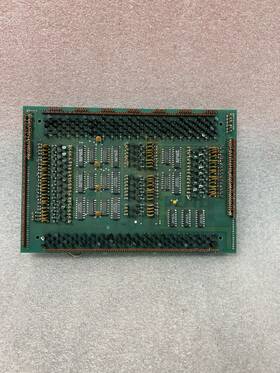
( Brand: Iee ), ( Manufacturer Part Number: 05464ASSY251 ), ( Part Type: Circuit Board ), ( Country Of Origin: United States )
Review IEE 05464assy 251 59 Circuit Board
The **IEE 05464ASSY251 (05464ASSY251-59-01)** is a high-performance, precision-engineered circuit board assembly designed for demanding industrial, automotive, or specialized electronic applications. This modular assembly integrates a robust combination of surface-mount and through-hole components, meticulously arranged to optimize signal integrity, thermal management, and reliability in compact form factors. The board features a **multi-layer FR-4 substrate** with reinforced copper traces, ensuring minimal signal loss and electromagnetic interference (EMI) suppression, making it ideal for environments where stability and performance are critical. Its design incorporates **high-density interconnects (HDI)** for efficient routing of complex circuitry, accommodating a variety of sensors, microcontrollers, power management ICs, and analog/digital interfaces.
The assembly leverages **lead-free soldering** and **conformal coating** to enhance durability against moisture, vibration, and temperature fluctuations, ranging from -40 C to 105 C, depending on the application. Key components may include **low-dropout regulators (LDOs)**, **high-speed ADCs/DACs**, **CAN/FlexRay communication modules**, or **motor driver ICs**, all strategically placed to minimize parasitic capacitance and inductance. The board s **gold-finger connectors** or **high-reliability solder pads** ensure secure mating with host systems, while **surface-mount resistors, capacitors, and inductors** are precision-trimmed for optimal performance. Additionally, the assembly may incorporate **passive EMI filters** or **ferrite beads** to mitigate noise in sensitive signal paths, making it suitable for automotive ECUs, industrial automation, or aerospace-grade electronics.
For enhanced functionality, the **IEE 05464ASSY251** may include **programmable logic devices (PLDs)**, **flash memory modules**, or **real-time clock (RTC) circuits**, depending on the specific variant. The board s compact footprint and **right-angle or through-hole mounting options** allow for flexible integration into tight spaces, while its **RoHS-compliant materials** ensure compliance with global environmental regulations. Whether deployed in **automotive powertrain systems, HVAC controls, or high-speed data acquisition units**, this assembly delivers a balance of precision, efficiency, and longevity, making it a versatile solution for engineers seeking a reliable, off-the-shelf component for their next-generation electronic designs.
### **Analysis of buying a Circuit Board (IEE 05464/ASY251, Model 05464/ASY251-59-01)**
#### **Overview**
The part number **05464/ASY251-59-01** appears to be a specialized circuit board, likely from a manufacturer like **IEE (International Electronics & Engineering)** or a similar supplier. These boards are often used in industrial, automotive, or medical applications, depending on their function (e.g., power conversion, signal processing, or control modules). Below is a detailed breakdown of the pros and cons of purchasing this component, followed by a conclusion and recommendation.
---
### **Pros of Buying This Circuit Board**
1. **Proven Reliability and Performance**
- If this board is from a reputable manufacturer (e.g., IEE or a well-known supplier), it likely undergoes rigorous testing for durability, temperature resistance, and electrical performance. Many industrial-grade boards are designed to operate in harsh environments (e.g., wide temperature ranges, vibration, or humidity), making them suitable for long-term use.
- The part number suggests it may be a **production-ready** component, meaning it has been used in existing systems without major issues. This reduces the risk of early failure compared to custom or untested designs.
2. **Compatibility with Existing Systems**
- If you are replacing a failed or outdated board, this part may be **directly interchangeable** with the original, saving time and effort in redesign or modification. Compatibility is often verified by the manufacturer or through datasheets.
- The suffix **-59-01** may indicate a specific revision or variant optimized for certain applications (e.g., higher power, different input/output requirements). Checking the datasheet will confirm whether it fits your system s requirements.
3. **Cost-Effectiveness for Bulk or Repetitive Use**
- For manufacturers or businesses that require **high volumes** of this board, purchasing directly from the supplier (or an authorized distributor) can be cost-effective due to bulk discounts or long-term contracts.
- Avoiding custom PCB fabrication (which can be expensive for small batches) makes this a practical choice for production environments.
4. **Support and Warranty**
- Reputable suppliers often provide **technical support**, troubleshooting guides, and warranties. This can be invaluable if issues arise post-purchase. Some manufacturers also offer **return policies** or replacements for defective units.
- If the board is used in critical applications, warranty coverage can mitigate risks associated with failure.
5. **Time Savings**
- Designing and prototyping a custom PCB can take weeks or months, depending on complexity. Purchasing an off-the-shelf board allows immediate integration into your project, reducing development time.
- No need for sourcing individual components (resistors, capacitors, ICs, etc.) the board is pre-assembled and tested.
6. **Documentation and Datasheets**
- Legitimate suppliers provide **comprehensive documentation**, including:- Electrical specifications (voltage, current, frequency ranges).
- Mechanical dimensions (for mounting and compatibility).
- Environmental ratings (temperature, humidity, shock resistance).
- Pinout diagrams and signal descriptions.
- This documentation ensures you can integrate the board correctly without guesswork.
7. **Potential for Customization (If Available)**
- Some manufacturers offer **customizable options** for specific variants of the same base board (e.g., different input/output connectors, firmware updates, or additional features). Verify if this applies to your part number.
---
### **Cons of Buying This Circuit Board**
1. **Limited Flexibility**
- Off-the-shelf boards are **not customizable** to your exact specifications. If your application requires unique features (e.g., specific signal processing, additional I/O, or non-standard power requirements), you may need to modify the board or use a different solution.
- Example: If the board lacks a required communication protocol (e.g., CAN bus, Ethernet), you may need to add external components or use a different model.
2. **Potential for Obsolescence**
- Some manufacturers discontinue older part numbers over time, especially if demand drops. Before purchasing, check:- Whether the supplier still supports this model.
- If there are **upgraded replacements** with better features.
- The **end-of-life (EOL) status** (if available).
- If the board is discontinued, future repairs or replacements could become difficult or expensive.
3. **Dependence on Supplier**
- If the supplier goes out of business or stops production, you may face **supply chain disruptions**. This is a risk for critical applications where downtime is costly.
- Some suppliers require **minimum order quantities (MOQs)**, which may not be feasible for small-scale projects.
4. **Potential for Overkill or Underutilization**
- The board may have **features you don t need**, leading to unnecessary complexity or cost. For example:- Higher power ratings than required.
- Unused I/O pins or communication interfaces.
- Conversely, it might **lack critical features** (e.g., insufficient current handling, wrong voltage levels), forcing you to use additional components.
5. **Cost for Small Quantities**
- While bulk purchases are cost-effective, buying **single units or small quantities** can be expensive due to:- High per-unit pricing from distributors.
- Shipping costs for small orders.
- Custom PCB fabrication may become cheaper for very small runs (e.g., 1 10 units).
6. **Integration Challenges**
- Even if the board is mechanically compatible, **software or firmware compatibility** may require additional work. For example:- The board might require **proprietary drivers** or SDKs.
- You may need to **reverse-engineer** signal protocols if documentation is incomplete.
- Physical connectors or mounting holes might not align perfectly with your enclosure, requiring custom adapters.
7. **Limited Warranty or Support for Custom Use Cases**
- Warranties often cover **manufacturing defects** but may not apply if the board is used in an unapproved way (e.g., beyond specified temperature ranges or with non-compliant power supplies).
- Technical support may be limited to basic troubleshooting, leaving you to debug complex issues independently.
8. **Potential for Counterfeit or Low-Quality Units**
- Purchasing from **unauthorized resellers** or gray-market suppliers risks receiving **counterfeit or refurbished units** that may fail prematurely or lack performance guarantees.
- Always buy from **official distributors** or trusted suppliers with return policies.
---
### **Key Considerations Before Purchase**
1. **Verify the Datasheet and Specifications**
- Confirm that the board meets your **voltage, current, temperature, and mechanical requirements**.
- Check for **pinout diagrams** and **signal descriptions** to ensure compatibility with your system.
- Look for **certifications** (e.g., UL, CE, ISO) if your application requires compliance.
2. **Check Supplier Reputation**
- Purchase from **authorized distributors** or the manufacturer s official website to avoid counterfeits.
- Read **reviews or case studies** from other customers using the same board.
- Ensure the supplier offers **technical support** and **warranty coverage**.
3. **Assess Long-Term Availability**
- Contact the supplier to confirm the **EOL status** and future availability.
- Ask if they offer **alternative models** or **upgrade paths** if this part becomes obsolete.
4. **Evaluate Total Cost of Ownership (TCO)**
- Compare the **upfront cost** with **long-term costs**, including:- Maintenance and repair expenses.
- Potential downtime if the board fails.
- Costs of additional components needed for integration.
- For critical applications, factor in **spare parts** or redundancy strategies.
5. **Test Before Full Commitment**
- If possible, **request a sample** or **evaluate a used/refurbished unit** to test performance in your environment.
- For high-stakes applications, consider **prototyping with a similar board** before committing to bulk orders.
6. **Consider Alternatives**
- **Custom PCB Design**: If the board is too expensive or lacks flexibility, designing a custom PCB may be more cost-effective for small or unique applications.
- **Modular Solutions**: Some manufacturers offer **plug-and-play modules** that can be combined to build a system without relying on a single proprietary board.
- **Open-Source or Off-the-Shelf Alternatives**: Check if there are **compatible open-source designs** or other brands with similar functionality.
---
### **Conclusion**
Buying the **IEE 05464/ASY251-59-01 circuit board** can be a **practical and efficient choice** if:- You need a **reliable, pre-tested component** for an existing system.
- The board **exactly matches** your requirements in terms of performance, compatibility, and environmental conditions.
- You can source it from a **trusted supplier** with good support and long-term availability.
- The **cost-benefit ratio** favors off-the-shelf over custom solutions for your volume needs.
However, it may **not be the best option** if:- You require **custom features or modifications** that the board cannot accommodate.
- The supplier has a **poor reputation for support or reliability**.
- The board is **obsolete or difficult to source** in the long term.
- A **custom or modular solution** would be more
Details:
The brand IEE ensures reliability and performance, making this circuit board a trusted choice for wide range of electronic projects prototyping. This essential electronic component is designed for use in various electrical equipment and supplies, making it a valuable asset businesses industrial applications.
part #: 05464assy251 price
- $599.99
specifications pcbemdev:
- brand: Iee
- mpn: 05464assy251
- part type: Circuit Board
- country of origin: United States
returns pcbemdev:
- method: Money back
- paid by: Buyer
- time: 60 Days
- policy: Returns Accepted
payments pcbemdev:
- credit card: Diners-club
- wallet: Google-pay
- other
shipping pcbemdev:
- transit: 3-9 Days
- cost: $0.00
- service: USPS Ground Advantage
- type: Fixed
- carrier: USPS
- class: Standard
seller pcbemdev:
- city: Champaign, Illinois
- rating: 98.9%
- # reviews: 1651
general pcbemdev:
- Electronic Components Semiconductors > Circuit Boards Prototyping > Printed Circuit Boards PCBs
- condition: Used
offer pcbemdev:
- availability: In Stock
- options: Ship-to-home
- started: May 18, 2026
- quantity: 1
- sold: 0
- best offers: True
Iee 05464ASSY251 Is Similar To:
- Iee 05464assy31862-03 Circuit Board 31785-02 (66% similar) Iee 05464ASSY31862-03 circuit board 31785-02. Need a part asap. Iee circuit board, model #: 05464ASSY31862-03, 31785-02, used, untested, good cosmetic condition...(August 9th, 2024)
- Iee 05464assy31740-02 Circuit Board 03601-86 (63.8% similar) Need a part asap. Iee circuit board, model #: 05464ASSY31740-02, part 03601-86, used, untested, good cosmetic condition. Iee 05464ASSY31740-02 circuit board 03601-86...(August 16th, 2024)
- Iee 05464assy33473-01 Circuit Board (70.6% similar) It serves as a control or interface module within various electronic applications, ensuring reliable performance in demanding environments.part number: 05464ASSY33473-01MANUFACTURER: Iee function: control/interface for industrial automation systems form factor: printed circuit board PCB mounting: ...(June 30th, 2025)