HITACHI BBDS-11 Interface Board
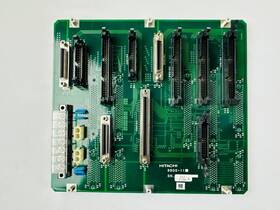
( Brand: Hitachi ), ( Manufacturer Part Number: BBDS-11 ), ( Part Type: Board ), ( Series: Hitachi Bbds-11 ), ( Unit Type: Unit ), ( Country Of Origin: Japan )
Review HITACHI Interface Board
The **Hitachi BBDS-11 Interface Board** is a high-performance, versatile peripheral interface module designed to facilitate seamless communication between Hitachi s proprietary **BB-series** (such as the BB1000 or BB2000) and external systems, including computers, industrial controllers, or other digital devices. Engineered with precision for reliability and flexibility, this board serves as a critical bridge in applications requiring robust data transfer, real-time control, or integration with legacy or modern systems. Built on a robust PCB with meticulous component placement, the BBDS-11 incorporates a **parallel interface** optimized for Hitachi s proprietary bus architecture, ensuring compatibility with a wide range of Hitachi-based systems while maintaining backward and forward compatibility with updated firmware or software revisions.
At its core, the BBDS-11 features a **high-speed data transfer protocol**, capable of handling bidirectional communication at rates sufficient for demanding industrial or scientific applications. The board is equipped with **dedicated I/O ports**, including address/data lines, control signals, and handshake lines, all meticulously routed to minimize signal degradation and maximize throughput. Its design incorporates **optical isolation** for critical signal lines, enhancing noise immunity and ensuring stable operation in electrically noisy environments, such as factory floors or laboratory settings. Additionally, the board supports **programmable handshake protocols**, allowing users to configure timing and synchronization parameters to match the requirements of connected devices, whether they are slower legacy systems or faster modern interfaces.
For enhanced usability, the BBDS-11 includes **configurable jumpers and DIP switches**, enabling users to tailor the board s behavior without requiring soldering or complex reconfiguration. These switches can adjust parameters such as **address mapping, data width, or interface timing**, making the board adaptable to a variety of system setups. The board also provides **status LEDs** for real-time monitoring of data flow, power status, and interface activity, which aids in troubleshooting and ensures operational transparency. To further enhance its utility, the BBDS-11 is housed in a **durable, low-profile enclosure** with standard mounting holes, allowing for easy integration into racks, panels, or custom chassis designs.
Beyond its technical specifications, the BBDS-11 is notable for its **compatibility with Hitachi s software development tools**, including compilers and debuggers, which streamline the process of integrating the board into larger systems. Whether used for **data acquisition, process control, or automation**, this interface board ensures that Hitachi-based systems can interact seamlessly with external hardware, expanding their functionality without compromising performance. Its modular design also makes it an ideal choice for developers and engineers looking to extend the capabilities of Hitachi s BB-series processors in custom applications, from embedded systems to high-performance computing environments. With a focus on **reliability, flexibility, and ease of integration**, the Hitachi BBDS-11 Interface Board stands as a dependable solution for bridging the gap between Hitachi s robust processing units and the broader digital ecosystem.
The Hitachi BBDS-11 Interface Board is a specialized hardware component designed to interface with Hitachi s legacy mainframe systems, particularly those using the BBDS (Basic Business Data System) architecture. Below is a detailed breakdown of its pros and cons, followed by a conclusion and recommendation.
---
**Pros:**1. **Compatibility with Legacy Systems:** The BBDS-11 is specifically engineered to work with Hitachi s older mainframe environments, such as the M-series or S-series systems. If your organization relies on these platforms for critical operations, this board ensures seamless connectivity and data transfer.
2. **Reliability and Stability:** Hitachi hardware is known for its robustness, particularly in enterprise environments where uptime is critical. The BBDS-11 is designed to handle high-volume transactions and long-term operation without frequent failures, provided it is maintained properly.
3. **Direct Integration:** The board provides a direct interface between modern systems (e.g., servers, workstations, or storage devices) and legacy Hitachi mainframes. This can simplify data migration or integration tasks compared to using third-party adapters or emulation software, which may introduce latency or compatibility issues.
4. **Support for Legacy Protocols:** The BBDS-11 supports older communication protocols and data formats used in Hitachi mainframes. This is invaluable for organizations that cannot afford to fully migrate away from legacy systems immediately, as it allows them to continue using existing applications without major overhauls.
5. **Potential Cost Savings:** In some cases, purchasing the BBDS-11 may be more cost-effective than investing in full-scale emulation software or cloud-based legacy system solutions, especially if the hardware is already in use or can be repurposed within the organization.
6. **Physical Presence in Data Centers:** For organizations with strict compliance or security requirements, having a physical interface board in the data center may be preferable to relying on remote emulation services, which could introduce network vulnerabilities or latency concerns.
---
**Cons:**1. **High Cost:** The BBDS-11 is a specialized piece of hardware, and purchasing it may involve significant upfront costs, especially if it is no longer in mass production. Additionally, sourcing spare parts or replacements could be expensive or difficult over time.
2. **Limited Availability:** As Hitachi s mainframe ecosystem continues to shrink, finding authorized dealers, technicians, or support resources for the BBDS-11 may become increasingly challenging. This could lead to longer downtimes if issues arise or if maintenance is required.
3. **Depreciation:** Legacy hardware like the BBDS-11 loses value over time, particularly as organizations migrate to modern systems. Investing in it may not yield long-term financial benefits, especially if the hardware becomes obsolete or unsupported.
4. **Maintenance and Training Challenges:** Staff familiar with Hitachi s legacy systems may be retiring or leaving the industry, making it harder to find personnel with the expertise to manage or troubleshoot the BBDS-11. Training new employees on these systems can be time-consuming and costly.
5. **Integration Complexity:** While the BBDS-11 provides direct connectivity, integrating it with modern infrastructure (e.g., virtualized environments, cloud platforms, or newer operating systems) can be complex. Compatibility issues may arise, requiring additional middleware or custom solutions.
6. **Security Risks:** Legacy hardware often lacks modern security features, such as encryption, multi-factor authentication, or regular firmware updates. This can expose the system to vulnerabilities if not properly secured, particularly in environments handling sensitive data.
7. **Scalability Limitations:** The BBDS-11 may not scale well with modern demands for high availability, distributed processing, or cloud-based workloads. Organizations growing their operations may find that the hardware becomes a bottleneck rather than a solution.
8. **Vendor Support Uncertainty:** Hitachi s support for legacy products like the BBDS-11 is likely limited or non-existent. Without vendor-backed warranties or technical support, organizations bear the full responsibility for maintenance, repairs, and troubleshooting.
---
**Conclusion:**The Hitachi BBDS-11 Interface Board is a practical solution for organizations that are deeply invested in Hitachi s legacy mainframe systems and lack the resources or urgency to migrate entirely to modern platforms. Its strengths lie in reliability, direct integration, and compatibility with older Hitachi environments, making it ideal for short-term or transitional use. However, the long-term drawbacks including high costs, limited availability, maintenance challenges, and security risks make it a less attractive option for forward-looking organizations. If your organization s primary goal is to preserve legacy functionality without significant disruption, the BBDS-11 may be justified. Conversely, if the goal is to future-proof operations, invest in modernization, or reduce technical debt, alternative approaches such as emulation software, cloud-based legacy solutions, or gradual migration would likely be more sustainable.
---
**Recommendation:**1. **Assess Your Long-Term Strategy:** If your organization plans to migrate away from Hitachi mainframes within the next 3 5 years, investing in the BBDS-11 may not be the most strategic choice. Prioritize solutions that align with your modernization roadmap.
2. **Evaluate Total Cost of Ownership (TCO):** Calculate the full financial and operational costs of acquiring, maintaining, and supporting the BBDS-11 over time. Compare this to the costs of emulation software (e.g., Hitachi s own emulation tools or third-party solutions like Micro Focus or CA Technologies) or cloud-based legacy system services. Often, emulation or cloud solutions provide better long-term flexibility and cost efficiency.
3. **Explore Emulation or Hybrid Solutions:** If full migration is not immediately feasible, consider emulation software that allows you to run legacy Hitachi applications on modern hardware. This approach retains compatibility while reducing reliance on physical hardware. Hybrid solutions combining emulation with gradual data migration can also mitigate risks.
4. **Leverage Cloud-Based Legacy Services:** Vendors like Hitachi, IBM, or specialized cloud providers offer legacy system emulation services hosted in the cloud. These solutions eliminate the need for physical hardware like the BBDS-11 while providing scalability, security updates, and vendor support.
5. **Audit Your Legacy Dependencies:** Conduct a thorough audit to identify which applications or data on your Hitachi mainframe are critical and which can be deprecated or replaced. Focus resources on preserving only the most essential legacy functions.
6. **Plan for Skills Gap:** If you proceed with the BBDS-11, invest in training current staff or hiring consultants with expertise in Hitachi legacy systems. Alternatively, partner with vendors or service providers that specialize in legacy system support.
7. **Consider Refurbished or Used Hardware:** If budget is a concern, explore purchasing refurbished or used BBDS-11 units from trusted sources. However, weigh the risks of reliability and support against the cost savings.
8. **Engage with Hitachi s Support:** If you decide to proceed, contact Hitachi directly to inquire about extended support, documentation, or partnerships with authorized service providers. Their insights may help you make an informed decision about the board s viability for your use case.
**Final Verdict:** The Hitachi BBDS-11 Interface Board is a viable stopgap for organizations locked into legacy Hitachi systems but facing significant trade-offs in cost, scalability, and long-term maintainability. For most organizations, especially those with growth or modernization goals, investing in emulation, cloud-based legacy solutions, or gradual migration is likely the more sustainable path. Only proceed with the BBDS-11 if your organization has no viable alternatives, a clear exit strategy, and the resources to manage its limitations.
Details:
Hitachi BBDS-11 Interface Board.
part #: bbds11 prices
- $175.00-$375.00
specifications pcbemdev:
- brand: Hitachi
- mpn: Bbds-11
- part type: Board
- series: Hitachi Bbds-11
- unit type: Unit
- country of origin: Japan
returns pcbemdev:
- policy: Returns Accepted
- paid by: Buyer
- method: Money back
- time: 30 Days
offer pcbemdev:
- quantity: 1
- started: February 21, 2026
- sold: 0
- availability: In Stock
- options: Ship-to-home
- best offers: True
general pcbemdev:
- Electronic Components Semiconductors > Circuit Boards Prototyping > Printed Circuit Boards PCBs
- condition: Used
payments pcbemdev:
- wallet: Google-pay
- credit card: Discover
- other
shipping pcbemdev:
- type: Calculated
- cost: $11.22
- class: Economy, Standard
- transit: 4-10 Days
- service: FedEx Ground Economy, UPS Ground, FedEx Ground / FedEx Home Delivery
- carrier: FedEx, UPS
seller pcbemdev:
- # reviews: 5327
- city: Richardson, Texas
- rating: 99.8%
Hitachi BBDS-11 Is Similar To:
- 01-20-00 Hitachi Seiki Cnc Board (50.8% similar) Often these items are priced at only a fraction of their normal cost...(September 1st, 2017)
- 06-19-00-01 Hitachi Seiki Cnc Board (48.5% similar) Often these items are priced at only a fraction of their normal cost...(November 2nd, 2017)
- 0f10383-jpt39c0c9b 0f10383 Hitachi Deskstar 1tb 7200rpm Hdd Pcb Board Only (32.4% similar) Working pull, includes PCB, screws and sticker from associated HDD. Up for bids is a Hitachi 1TB 0F10383 PCB board only...(January 31st, 2016)
- 10-07-04-01b Hitachi Seiki Cnc Board Pzo (45.1% similar) Often these items are priced at only a fraction of their normal cost...(September 19th, 2018)
- 10-08-05-01b Hitachi Seiki Cnc Board (47.8% similar) Often these items are priced at only a fraction of their normal cost...(December 14th, 2017)
- 10-34-03-00 Hitachi Seiki Cnc Board (48.5% similar) Often these items are priced at only a fraction of their normal cost...(July 18th, 2017)
- 10-37-00-01 Hitachi Seiki Cnc Board (48.5% similar) Often these items are priced at only a fraction of their normal cost...(November 7th, 2017)
- 10-43-00-01 Hitachi Seiki Opio-l4 Board (42.9% similar) Help sell shipping-globally. Often these items are priced at only a fraction of their normal cost...(March 31st, 2017)
- 13-19-00-00 Hitachi Seiki Cnc Board Pzj (45.7% similar) Often these items are priced at only a fraction of their normal cost...(September 25th, 2018)
- 13g0208 01 Hitachi Pcb Circuit Hard Drive Controller Board (44.9% similar) Again, your satisfaction is guaranteed. Carefully removed directly from an original unit. Notice sometimes mistakes can occur. PCB board only. Anything not mentioned or pictured is included and does pertain to item...(June 21st, 2018)
- 16-06-02-00 Hitachi Seiki Cnc Board (48.5% similar) Often these items are priced at only a fraction of their normal cost...(September 4th, 2017)