MILLAR CVT1011 Elevator Board
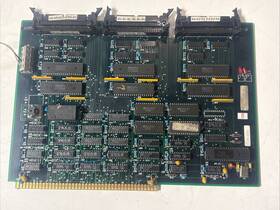
( Brand: Millar ), ( Manufacturer Part Number: CVT1011 ), ( Part Type: Board )
Review MILLAR Elevator Board
The **Millar CVT1011 Elevator Board** is a high-performance, versatile control module designed for precision elevator and hoist applications, offering seamless integration with modern automation systems while delivering exceptional reliability and efficiency. Engineered with advanced digital signal processing and robust feedback mechanisms, this elevator board excels in managing variable frequency drives (VFDs) and servo motors, ensuring smooth, responsive operation across a wide range of industrial and commercial elevator systems. Its compact yet durable design incorporates a high-density circuit layout, optimized for minimal power consumption while maintaining superior torque control, making it ideal for applications requiring precise speed and position regulation. The CVT1011 features an intuitive user interface with programmable parameters, allowing for easy customization of acceleration, deceleration, and braking profiles to match specific load requirements, whether in residential, commercial, or high-traffic environments. Built with high-grade components and reinforced insulation, this board is engineered to withstand harsh operating conditions, including temperature fluctuations and electrical noise, ensuring long-term stability and reduced maintenance downtime. Additionally, its modular architecture supports seamless expansion with optional communication protocols such as Profibus, Modbus, or Ethernet/IP, enabling seamless integration into larger building automation networks. Whether deployed in new installations or retrofitted into existing systems, the Millar CVT1011 delivers unmatched performance, energy efficiency, and operational flexibility, making it a cornerstone for modern elevator control solutions.
**Pros and Cons of buying a Millar CVT1011 Elevator Board**
The Millar CVT1011 is a popular elevator board (or controller) used in vintage and modern elevator systems, particularly in residential and light-commercial applications. Below is a detailed breakdown of its advantages and disadvantages.
---
### **Pros**
1. **Compatibility and Reliability**
The CVT1011 is designed to work with a wide range of elevator systems, including those manufactured by Millar, Otis, and other brands. It is widely used in retrofitting older elevators, making it a trusted choice for technicians and elevator companies. Its reliability is well-documented, especially in applications where consistent performance is critical.
2. **Cost-Effective for Retrofitting**
For older elevator systems, replacing the entire controller can be expensive. The CVT1011 often serves as a cost-effective alternative to fully modernizing the system. It can extend the lifespan of an existing elevator without requiring a complete overhaul, saving on labor and material costs.
3. **Proven Performance in Residential and Light-Commercial Use**
This board is frequently used in residential buildings, small offices, and light-commercial applications. Its performance in these settings is well-established, with users reporting smooth operation and minimal downtime when properly installed and maintained.
4. **Availability of Parts and Support**
Due to its popularity, the CVT1011 and its components are relatively easy to source. There is a large community of technicians and suppliers who understand its workings, which can simplify troubleshooting and repairs. Millar and third-party suppliers often provide technical support, schematics, and replacement parts.
5. **Flexibility in Customization**
The CVT1011 can be configured to work with various types of elevator machinery, including hydraulic and traction systems. It supports different control schemes, such as manual, automatic, and group control, making it adaptable to diverse elevator configurations.
6. **Energy Efficiency Improvements**
Modern versions of the CVT1011 (or compatible firmware updates) may include features that improve energy efficiency, such as regenerative braking or optimized speed control. This can reduce operational costs over time, particularly in frequently used elevators.
7. **Long-Term Availability**
Unlike some newer or proprietary controllers that may become obsolete quickly, the CVT1011 has been around for decades. This ensures that it will remain available for repairs and replacements for the foreseeable future, reducing the risk of being stranded with an unsupported system.
---
### **Cons**
1. **Age and Obsolescence Concerns**
While the CVT1011 is reliable, it is not a cutting-edge controller. It lacks some of the advanced features found in modern elevator systems, such as advanced diagnostics, IoT integration, or AI-driven predictive maintenance. Over time, its lack of modern safety or efficiency features may become a limitation.
2. **Limited Integration with Modern Systems**
If the elevator is part of a larger building automation system (e.g., BMS, fire safety integration, or smart building platforms), the CVT1011 may not seamlessly integrate with these systems. Modern elevators often require controllers that support open protocols like BACnet or Modbus for full integration.
3. **Higher Maintenance Requirements**
Older controllers like the CVT1011 may require more frequent maintenance compared to modern, self-diagnosing systems. Technicians may need to rely more on manual checks and traditional troubleshooting methods, which can increase labor costs over time.
4. **Dependence on Skilled Technicians**
The CVT1011 s complexity means that repairs and installations often require technicians with specialized knowledge of elevator control systems. Finding qualified personnel may be challenging in some regions, leading to higher service costs or delays.
5. **Potential for Compatibility Issues**
While the CVT1011 is versatile, there can be compatibility issues when retrofitting it into systems with non-standard wiring, machinery, or safety devices. Custom wiring or additional components may be required, adding to the installation cost and complexity.
6. **Limited Software Updates**
Unlike modern controllers that receive firmware updates for bug fixes or security patches, the CVT1101 s software is largely static. Any issues discovered after installation may not be addressable without manual workarounds or hardware modifications.
7. **Regulatory and Safety Compliance Risks**
Elevator systems must comply with evolving safety regulations (e.g., ASME A17.1 in the U.S., EN 81 in Europe). While the CVT1011 meets current standards, future updates to regulations may require additional modifications or replacements, potentially rendering the board less future-proof.
---
### **Conclusion**
The Millar CVT1011 elevator board is a robust and reliable choice for retrofitting or maintaining older elevator systems, particularly in residential and light-commercial settings. Its widespread use, ease of repair, and cost-effectiveness make it a practical option for many applications. However, its age and lack of modern features may limit its suitability for buildings requiring advanced automation, integration with smart systems, or long-term scalability.
For **short-term or cost-sensitive projects**, especially in legacy systems, the CVT1011 is an excellent investment. It offers a balance of performance, availability, and reliability. However, if the elevator is part of a **modern building with advanced requirements** (e.g., energy management, IoT connectivity, or compliance with the latest safety standards), investing in a newer, more flexible controller may be justified in the long run.
---
### **Recommendation**
- **Buy the Millar CVT1011 if:**- You are retrofitting an older elevator system and need a proven, cost-effective solution.
- The elevator is in a residential or light-commercial setting with minimal automation needs.
- You have access to skilled technicians familiar with elevator control systems.
- You prioritize reliability and long-term availability over cutting-edge features.
- **Consider an alternative controller if:**- The elevator is part of a smart building or requires integration with modern systems.
- You anticipate significant upgrades or expansions in the future that may require more advanced control features.
- The building has strict energy efficiency or safety compliance requirements that the CVT1011 cannot meet.
- You are working in a region where finding qualified technicians for the CVT1011 is difficult or costly.
For most **legacy elevator retrofits**, the CVT1011 remains a strong recommendation due to its track record. However, always conduct a thorough assessment of your specific system s needs before making a final decision.
Details:
Item is working condition.Sold AS IS/AS Pictured.This unit has been pulled from environment.
part #: cvt1011 price
- $650.00
specifications pcbemdev:
- brand: Millar
- mpn: Cvt1011
- part type: Board
seller pcbemdev:
- rating: 100.0%
- # reviews: 368
- city: Riverside, New Jersey
returns pcbemdev:
- time: 30 Days
- method: Money back
- paid by: Buyer
- policy: Returns Accepted
general pcbemdev:
- Electronic Components Semiconductors > Circuit Boards Prototyping > Printed Circuit Boards PCBs
- condition: Used
shipping pcbemdev:
- type: Calculated
- cost: $23.28
- class: Standard
- transit: 3-7 Days
- carrier: FedEx
- service: FedEx Ground / FedEx Home Delivery
payments pcbemdev:
- wallet: Paypal
- credit card: Mastercard
- other
offer pcbemdev:
- best offers: True
- sold: 0
- options: Ship-to-home
- availability: In Stock
- quantity: 1
- started: March 24, 2026
Millar CVT1011 Is Similar To:
- Millar Cvt1017 Elevator Rev A Board (87.5% similar) Item is working condition.sold as is/as pictured.this unit has been pulled from environment...(March 24th, 2026)