SAMSUNG J9060395A.H4 Techwin Vme Axis Board Unit
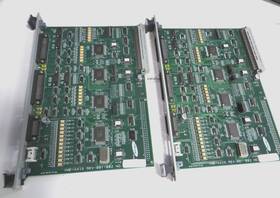
( Brand: Samsung ), ( Manufacturer Part Number: J9060395A.H4 ), ( Model: VME-AXIS J9060395A.H4 ), ( Series: Samsung Techwin Vme-axis J9060395a.h4 H3 ), ( Type: Parts ), ( Country Of Origin: United States )
Review SAMSUNG Techwin Vme axis Board Unit
The **Samsung J9060395A.H4 TechWin VME-Axis Board Unit** is a high-performance, modular input/output (I/O) expansion solution designed for industrial automation, embedded control systems, and real-time motion control applications. Part of Samsung TechWin s robust VME (Versa Module Europa) series, this board serves as a versatile interface for integrating axis control signals, enabling seamless communication between motion controllers, PLCs, and other industrial automation hardware. Engineered with precision and reliability in mind, the J9060395A.H4 is built to handle demanding environments where low latency, high-speed data acquisition, and deterministic control are critical. Its compact yet robust design ensures easy integration into VME-based systems, providing up to **16 digital I/O channels** (configurable as inputs or outputs) along with **4 high-speed encoder inputs** (supporting incremental or absolute encoders) and **2 analog input channels** (for position feedback or sensor signals). The board s **32-bit VME64x bus interface** ensures high-speed data transfer, making it ideal for applications requiring real-time motion control, such as CNC machines, robotics, semiconductor manufacturing equipment, and automated testing systems.
One of the standout features of the J9060395A.H4 is its **flexible configuration options**, allowing users to tailor the board s functionality to specific application needs. The digital I/O channels support **TTL/CMOS-compatible signals**, enabling direct interfacing with a wide range of sensors, switches, and actuators, while the encoder inputs accommodate **quadrature signals** (up to 1 MHz) for high-resolution position feedback. The analog inputs, with a resolution of **12-bit**, provide accurate signal conditioning for applications requiring precise measurement or control. Additionally, the board includes **interrupt-driven data acquisition**, ensuring minimal processing delay and optimal system responsiveness. Built with **industrial-grade components**, the J9060395A.H4 operates reliably within a temperature range of **-10 C to 60 C**, making it suitable for harsh factory floor conditions where temperature fluctuations and electromagnetic interference are common.
For developers and engineers, the J9060395A.H4 offers **comprehensive software support**, including **Samsung TechWin s VME driver libraries** and **RTOS-compatible APIs**, ensuring seamless integration with real-time operating systems such as VxWorks, QNX, or Linux. The board s **VMEbus compliance** adheres to **P1014 standards**, guaranteeing compatibility with a wide range of VME-based backplanes and host systems. Whether deployed in a **multi-axis motion control system**, a **high-speed data acquisition setup**, or an **automated inspection platform**, this board delivers the performance and reliability required to meet the most stringent industrial automation demands. With its **modular design, high-speed data handling, and robust construction**, the Samsung J9060395A.H4 TechWin VME-Axis Board Unit stands as a dependable solution for engineers seeking precision, flexibility, and scalability in their motion control applications.
### **Pros and Cons of buying a Samsung J9060395A.H4 (Techwin VME-Axis Board Unit)**
#### **Pros:**1. **Compatibility with VME Systems** The board is designed for VME (Versa Module Europa) backplanes, a standard in industrial and embedded computing, making it suitable for applications requiring high-speed data acquisition, control, or signal processing.
2. **Axis-Based Control** The "VME-Axis" designation suggests it supports motion control via the **Axis framework**, a widely used open-source tool for motion control systems. This can simplify integration with CNC machines, robotics, or automated testing equipment.
3. **High Performance** VME systems are known for their **low-latency, high-throughput** capabilities, making this board suitable for real-time applications such as:
- **Industrial automation** (e.g., CNC machining, pick-and-place robots)
- **Scientific instrumentation** (e.g., data acquisition in physics or medical imaging)
- **Defense and aerospace** (where deterministic timing is critical)
4. **Backward and Forward Compatibility** VME is a mature standard with decades of development, meaning it can interface with legacy systems while also supporting modern advancements in FPGA-based processing.
5. **Modularity** VME systems allow for easy expansion by adding more modules (e.g., I/O, DSP, or FPGA cards) to a single chassis, improving system flexibility.
6. **Deterministic Timing** VME s **P2/P1 bus architecture** ensures predictable data transfer, which is crucial for applications requiring strict timing synchronization.
7. **Support for High-Speed Data** The board can handle **parallel data streams** at high speeds, useful for:- **Waveform generation**
- **High-speed digitizers**
- **Motor control with precise feedback loops**
8. **Potential for FPGA Integration** If the board includes FPGA acceleration (common in VME motion control cards), it can offload complex computations, improving efficiency in real-time systems.
9. **Industrial-Grade Reliability** VME systems are often built for rugged environments, making this board suitable for factory automation, test equipment, or field deployments.
10. **Developer and User Communities** VME has a **long-standing user base**, meaning documentation, forums, and third-party support are widely available.
---
#### **Cons:**1. **Aging Technology** VME is **not a cutting-edge standard** compared to modern alternatives like **PCIe, Ethernet-based (e.g., EtherCAT, PROFINET), or USB 3.0/Thunderbolt**. This may limit scalability for future-proof applications.
2. **Higher Cost of Entry** VME systems require:- A **VME chassis** (which can be expensive)
- **Specialized knowledge** for setup and troubleshooting
- **Additional modules** (e.g., I/O, power supplies) to build a functional system
This makes the **total cost of ownership (TCO) higher** than simpler, modern alternatives.
3. **Limited Availability of New Developments** Unlike PCIe or Ethernet-based systems, **few new VME-specific innovations** are introduced, meaning performance gains come from incremental improvements rather than revolutionary changes.
4. **Complexity in Setup** Configuring a VME system requires:- Proper **cabling (P2/P1 connectors)**
- **Jumper settings** for bus arbitration
- **Driver and firmware tuning**
This can be **more challenging** than plug-and-play solutions like USB or PCIe.
5. **Power and Heat Considerations** VME backplanes and modules can **consume significant power** and generate heat, requiring proper **cooling solutions** in industrial environments.
6. **Dependence on Legacy Software** While Axis is open-source, **legacy motion control software** may not be as optimized for modern OSes (e.g., Linux vs. Windows). Some proprietary VME tools may also be outdated.
7. **Limited Portability** VME systems are **rack-mounted**, making them less portable than USB or Ethernet-based solutions, which can be used in laptops or compact embedded systems.
8. **Potential for Obsolescence** While VME is still used in niche industries, **many manufacturers have shifted to PCIe, FPGA-on-module (e.g., Xilinx Zynq), or Ethernet-based motion control** (e.g., EtherCAT). This could make future upgrades or replacements more difficult.
9. **Single-Point Failure Risk** In a VME system, a **single faulty module** can disrupt the entire backplane, whereas modular Ethernet or PCIe systems often allow for hot-swapping.
10. **Learning Curve for New Engineers** If your team lacks experience with **VME, Axis, or real-time motion control**, training costs and downtime may increase.
---
### **Conclusion**
The **Samsung J9060395A.H4 (Techwin VME-Axis Board Unit)** is a **specialized, high-performance motion control and data acquisition board** best suited for **industrial automation, scientific research, or defense applications** where **deterministic timing, parallel processing, and VME compatibility** are critical.
However, its **aging technology, high cost, and complexity** make it a **poor choice** for:- **Consumer or general-purpose computing**
- **Applications where Ethernet, USB, or PCIe would suffice**
- **Teams without VME expertise**
- **Future-proof systems requiring scalability**
If your project **requires real-time motion control, high-speed data acquisition, or integration with existing VME infrastructure**, this board is a **strong contender**. Otherwise, **modern alternatives like EtherCAT-based motion controllers, FPGA modules (e.g., Xilinx Zynq), or PCIe-based data acquisition cards** may offer **better long-term flexibility and cost efficiency**.
---
### **Recommendation**
**Buy this board if:**You are working in an **industrial automation, scientific, or defense application** where **VME is already in use**.
Your system **requires Axis-based motion control** with **low-latency, parallel processing**.
You have **existing VME infrastructure** and **experienced engineers** to manage setup and troubleshooting.
The **performance benefits of VME** (e.g., deterministic timing, modular expansion) outweigh the **higher cost and complexity**.
**Avoid this board if:**You are looking for a **cost-effective, plug-and-play solution** (consider **EtherCAT, USB 3.0, or PCIe alternatives**).
Your team lacks **VME or real-time motion control expertise**.
The application can be **satisfied by modern standards** (e.g., Ethernet-based motion control, FPGA-on-module solutions).
You anticipate **future upgrades** that may not be compatible with VME.
**Alternative Considerations:**- **For industrial motion control:** **EtherCAT-based controllers** (e.g., Beckhoff, Siemens) offer **lower latency, easier integration, and better scalability**.
- **For high-speed data acquisition:** **PCIe-based digitizers** (e.g., National Instruments, PXI) or **FPGA modules** (e.g., Xilinx Zynq UltraScale ) provide **modern flexibility**.
- **For embedded systems:** **USB 3.0 or Ethernet-based motion controllers** (e.g., OpenCM, Arduino-compatible boards) reduce complexity.
**Final Verdict:**This is a **niche, high-performance board** with **limited mainstream appeal**. Justify its purchase based on **specific VME requirements** otherwise, **modern alternatives will likely serve you better in the long run**.
Details:
Model: Axis H3, condition: Used - working condition. The item has been used previously.
part #: j9060395ah4 prices
- $250.00-$275.00
specifications pcbemdev:
- brand: Samsung
- mpn: J9060395a.h4
- model: Vme-axis J9060395a.h4
- series: Samsung Techwin Vme-axis J9060395a.h4 H3
- type: Parts
- country of origin: United States
general pcbemdev:
- Electronic Components Semiconductors > Circuit Boards Prototyping > Printed Circuit Boards PCBs
- condition: Used
offer pcbemdev:
- started: March 24, 2026
- best offers: True
- sold: 0
- quantity: 1
- options: Ship-to-home
- availability: In Stock
returns pcbemdev:
- method: Money back
- paid by: Buyer
- policy: Returns Accepted
- time: 30 Days
seller pcbemdev:
- city: Longwood, Florida
- rating: 100.0%
- # reviews: 189
payments pcbemdev:
- wallet: Apple-pay
- credit card: Mastercard
- other
shipping pcbemdev:
- class: Standard
- carrier: UPS
- cost: $24.45
- type: Calculated
- transit: 3-8 Days
- service: UPS Ground
Samsung J9060395A.H4 Is Similar To:
- M7s2 Sata Hm500ji 2.5 88i8823-tfj2 Rev.04 S1pme Chip Samsung Board Pbc 500gb (23.4% similar) No exception. Talbot dressmaker offer template ship script. 5, HM500JI for data recovery, only PCB board not the HDD model M7S2 S1PME rev. No exception. 04 on chip 88I8823 TFJ2 the board is tested and is fully working. Please immediately for instructions...(May 29th, 2015)
- Bf41-00082a Samsung Pcb Board Rev (38.6% similar) Anything not mentioned or pictured is included and does pertain to item. Again, your satisfaction is guaranteed. PCB board only. Carefully removed directly from an original unit. Notice sometimes mistakes can occur...(June 20th, 2018)
- Bf41-00108 Samsung Pcb Board Rev (39% similar) PCB board only. Notice sometimes mistakes can occur. Carefully removed directly from an original unit. Anything not mentioned or pictured is included and does pertain to item. Again, your satisfaction is guaranteed...(June 22nd, 2018)
- Bf41-00163a Samsung Pcb Circuit Board Sm Rev (40.4% similar) PCB board only. Again, your satisfaction is guaranteed. Notice sometimes mistakes can occur. Anything not mentioned or pictured is included and does pertain to item. Carefully removed directly from an original unit...(June 21st, 2018)
- Pcb Sata 0.2 Samsung Board 640gb Bf4100315a Rev Hm641ji 2.5 (29.4% similar) Please immediately for instructions. No exception...(May 21st, 2015)
- Pl40s Rev 04 Ts-m-8v01c Samsung Hdd Pcb Circuit Hard Drive Controller Board (28.8% similar) Notice sometimes mistakes can occur. Carefully removed directly from a working unit. Anything not mentioned or pictured is included and does pertain to item. Again, your satisfaction is guaranteed. Tested fully functional...(June 22nd, 2018)
- St750lm022 Hn-m750mbb 2ar10001 Samsung 750gb Sata Hard Drive Disk Hdd Pcb Board For Repair (31.4% similar) Only ship in us. I only ship PCB board for repair. PCB specification model ST750LM022 part number Han M750MBB As capacity 750GB please see pictures for more details. Notice first picture just show buyers what PCB look like. Not hard drive...(February 15th, 2016)
- Bf41-00157a Samsung Hm160hc Pcb Board Sata 2.5 160gb (41.2% similar) 03 on chip 88I6726S TFJ1 the board is tested and is fully working. Please immediately for instructions. 5 for data recovery, only PCB board not the HDD model BF41 00157A mango rev. Talbot dressmaker offer template ship script...(March 29th, 2016)
- Bf41-00306a Mercury Rev.07 Samsung Pcb 250 320 500 640gb Hdd 2.5 Sata Board Only (29.2% similar) You should buy this board only if you are sure that the problem with your drive is the board. This board won't repair physical damage or bad sectors, blocks or other mechanical issues such as failed drive motor and heads. Each board has it's own chip that will only work with the drive it initially ...(November 18th, 2015)
- Bn44-00201a Samsung Pc Board (38.5% similar) This is working unit tested...(September 12th, 2016)
- Bp94-02327a Samsung Assembly Printed Circuit Board Pcb S Led Drive Hl61a750a (34.9% similar) Samsung BP94 02327A assembly printed circuit board cabled drive HL61A750A was tested and works...(January 8th, 2016)