TERATRONIK GMBH D5013 Pcb Circuit Board LVDS-CARRIER9
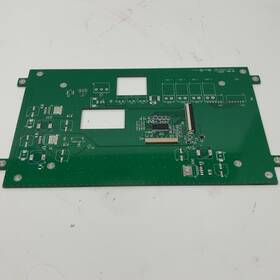
( Brand: Teratronik Gmbh ), ( Manufacturer Part Number: D5013 ), ( Part Type: Circuit Board ), ( Listingtype: Fixedpriceitem ), ( Listingduration: Gtc ), ( Mounting Style: Chassis Mount ), ( Operating Voltage: 24 V ), ( Material: Fr-4 ), ( Pcb Type: Carrier Board ), ( Country Of Origin: Germany ), ( Series: Lvds-carrier9 ), ( Unit Type: Unit )
Review TERATRONIK GMBH Pcb Circuit Board Green
The **Teratronik GmbH D5013 LVDS-Carrier9 PCB** is a high-performance, modular carrier board engineered for advanced signal transmission and processing applications, particularly within industrial automation, medical imaging, and high-speed data acquisition systems. Designed with precision and reliability in mind, this circuit board serves as a robust platform for integrating Low Voltage Differential Signaling (LVDS) interfaces, enabling seamless communication between microcontrollers, FPGAs, and other digital logic components. The D5013 LVDS-Carrier9 features a meticulously laid-out PCB with high-density interconnects, optimized for minimal signal degradation and electromagnetic interference (EMI) suppression, ensuring stable and high-fidelity data transfer even under demanding operational conditions. Its compact yet versatile form factor accommodates a wide range of LVDS transceivers, converters, and differential drivers, making it an ideal solution for applications requiring real-time signal integrity, such as high-resolution video processing, sensor interfacing, or high-speed serial communication protocols like PCI Express or Ethernet.
Constructed with high-quality materials, including FR-4 or specialized high-frequency laminates, the D5013 LVDS-Carrier9 PCB incorporates blind and buried vias for enhanced signal routing efficiency, reducing crosstalk and improving overall electrical performance. The board s modular design allows for easy customization, with configurable pinouts and mounting options to accommodate various connector types, including high-speed differential pairs, power rails, and ground planes. Additionally, it includes integrated decoupling capacitors and impedance-controlled traces to mitigate noise and ensure signal integrity across the operating frequency spectrum, typically supporting data rates up to several gigabits per second. Suitable for both prototyping and production environments, the D5013 LVDS-Carrier9 is built to withstand rigorous environmental conditions, offering robust protection against thermal fluctuations, vibration, and electrical surges, making it a dependable choice for embedded systems and industrial-grade applications.
For engineers and designers seeking a flexible yet high-performance solution, the Teratronik D5013 LVDS-Carrier9 PCB stands out as a versatile tool for developing sophisticated signal processing systems. Its compatibility with a variety of LVDS-compatible ICs, along with its scalable architecture, allows for seamless integration into larger system designs, whether for custom control panels, high-speed data acquisition setups, or advanced imaging systems. With its emphasis on signal integrity, reliability, and modularity, this carrier board represents a strategic investment for developers aiming to push the boundaries of performance in their applications while maintaining cost-effectiveness and ease of implementation.
**Pros and Cons of buying a Teratronik GmbH D5013 LVDS-Carrier9 PCB Circuit Board**
The **Teratronik GmbH D5013 LVDS-Carrier9** is a specialized PCB designed for Low Voltage Differential Signaling (LVDS) applications, often used in industrial, automotive, or high-speed data transmission systems. Below is a detailed analysis of its advantages and disadvantages.
---
### **Pros**
1. **High-Speed Data Transmission**
The PCB is optimized for LVDS, which provides robust, high-speed signal integrity with low power consumption. This makes it suitable for applications requiring reliable data transfer over long distances or in noisy environments.
2. **Industrial-Grade Quality**
Teratronik is known for manufacturing high-reliability components, particularly in automotive and industrial sectors. The D5013 PCB likely adheres to strict quality standards, including compliance with **AEC-Q100** (automotive) or **IPC-6012** (industrial PCBs), ensuring durability and long-term performance.
3. **Modular and Scalable Design**
The "LVDS-Carrier9" suggests it may be part of a modular system, allowing for easy integration into larger assemblies. This flexibility can simplify upgrades or expansions of existing systems.
4. **Low Power Consumption**
LVDS technology inherently consumes less power compared to traditional high-speed interfaces (e.g., RS-485 or LVDS alternatives), which can be advantageous for battery-powered or energy-efficient applications.
5. **Signal Integrity and Noise Immunity**
LVDS uses differential signaling, which inherently reduces electromagnetic interference (EMI) and crosstalk. This is critical in environments with high electrical noise, such as automotive or industrial settings.
6. **Compatibility with Modern Protocols**
The PCB may support high-speed communication protocols like **CAN FD, Ethernet (e.g., 100BASE-T1), or FlexRay**, depending on the specific implementation. This makes it versatile for automotive and industrial networking.
7. **Long-Term Availability**
Teratronik is a well-established manufacturer, and their components often have extended lifecycle support, reducing the risk of obsolescence.
8. **Support for High-Density Connectivity**
The design likely includes high-pin-count connectors or via structures, enabling compact and efficient signal routing in space-constrained applications.
9. **Temperature and Environmental Resistance**
Industrial PCBs are typically designed to operate within a wide temperature range (e.g., -40 C to 105 C) and resist moisture, vibration, and other harsh conditions.
10. **Vendor Support and Documentation**
Teratronik provides detailed datasheets, schematics, and technical support, which can simplify integration and troubleshooting for engineers.
---
### **Cons**
1. **High Cost**
Specialized PCBs, particularly those optimized for LVDS or industrial applications, tend to be more expensive than generic FR-4 PCBs. The cost may be prohibitive for low-volume or non-critical applications.
2. **Limited Availability Outside Specialized Markets**
The D5013 may not be widely stocked by distributors like Digi-Key or Mouser, requiring direct purchase from Teratronik or authorized resellers. This can lead to longer lead times.
3. **Complex Design and Integration Challenges**
LVDS requires precise impedance matching, controlled impedance traces, and proper termination. Designing or integrating this PCB may require specialized knowledge, increasing development time and potential for errors.
4. **Potential for Overkill in Simple Applications**
If the application does not require high-speed differential signaling (e.g., a low-speed sensor interface), the cost and complexity of LVDS may not justify its use. A simpler interface (e.g., UART or SPI) could suffice.
5. **Dependence on Teratronik s Ecosystem**
If the PCB is part of a proprietary system (e.g., Teratronik s automotive solutions), switching vendors or suppliers later may be difficult due to compatibility issues.
6. **Lead Time and Stock Constraints**
Industrial-grade PCBs often have longer production cycles, and stock levels may be limited. This could delay projects with tight timelines.
7. **Potential for Obsolescence**
While Teratronik components are generally long-lived, rapid advancements in technology (e.g., transition to higher-speed interfaces like PCIe or USB-C) could render the D5013 obsolete over time.
8. **Additional Components May Be Required**
The PCB may need supporting components (e.g., transceivers, terminators, or connectors) that are not included, adding to the overall cost and complexity.
9. **Limited Customization Options**
If the PCB does not meet exact mechanical or electrical requirements, modifications may be difficult or costly, as Teratronik may not offer extensive customization services.
10. **Potential for Learning Curve**
Engineers unfamiliar with LVDS or Teratronik s products may require training or additional resources to implement the PCB correctly, increasing project overhead.
---
### **Ending Conclusion**
The **Teratronik GmbH D5013 LVDS-Carrier9 PCB** is a high-quality, specialized component ideal for applications demanding **high-speed, reliable, and noise-resistant data transmission**, particularly in **automotive, industrial, or aerospace environments**. Its strengths lie in **signal integrity, durability, and compatibility with modern communication protocols**, making it a strong choice for mission-critical systems where performance and longevity are prioritized.
However, the **higher cost, complexity, and potential overkill for simpler applications** make it less suitable for low-budget or low-speed projects. Engineers should carefully evaluate whether the PCB s advantages outweigh its drawbacks based on their specific use case.
---
### **Recommendation**
**Buy the Teratronik D5013 LVDS-Carrier9 if:**- You are developing an **automotive, industrial, or high-reliability system** requiring LVDS or similar high-speed differential signaling.
- Signal integrity, EMI resistance, and long-term durability are critical.
- You have the budget and expertise to integrate a specialized PCB without significant additional costs or delays.
- The PCB is part of a **pre-existing Teratronik ecosystem** (e.g., automotive control units, industrial networking).
**Avoid or Consider Alternatives if:**- Your application requires **low-speed or simple interfaces** (e.g., UART, SPI), where a generic PCB would suffice.
- Budget constraints make the higher cost of the D5013 impractical.
- You lack experience with **LVDS design or Teratronik s products**, as integration challenges could arise.
- The PCB s lead time or availability poses a risk to your project timeline.
**Alternatives to Consider:**- **Generic LVDS PCBs** from distributors like **Digi-Key, Mouser, or LCSC** if customization is not required.
- **High-speed serial interfaces** like **PCIe, USB 3.0, or Ethernet PHY modules** if LVDS is not strictly necessary.
- **Simpler differential interfaces** (e.g., RS-485) for lower-speed applications where cost is a concern.
- **Modular carrier boards** from other vendors (e.g., **TE Connectivity, Molex, or Amphenol**) if Teratronik s ecosystem is not mandatory.
In summary, the D5013 is a **premium choice for demanding applications** but may not be the most cost-effective or practical solution for all projects. A thorough evaluation of requirements and constraints is essential before proceeding with the purchase.
Details:
It is an LVDS carrier board. Some components are populated as shown in the images. This listing is for a Teratronik D5013 LVDS-Carrier9 Printed Circuit Board PCB. Manufactured by Teratronik GmbH, this 2013 design features multiple voltage rails including 24V, 12V, and 5V connection points.
Please verify compatibility with your system based on the model number D5013. Condition: Used surplus with minor surface scratches and handling wear.
part #: d5013 prices
- $49.95-$175.00
specifications pcbemdev:
- brand: Teratronik Gmbh
- mpn: D5013
- part type: Circuit Board
- listingtype: Fixedpriceitem
- listingduration: Gtc
- mounting style: Chassis Mount
- operating voltage: 24 V
- material: Fr-4
- pcb type: Carrier Board
- country of origin: Germany
- series: Lvds-carrier9
- unit type: Unit
payments pcbemdev:
- other
- wallet: Apple-pay
- credit card: Visa
general pcbemdev:
- condition: Used
- Electronic Components Semiconductors > Circuit Boards Prototyping > Printed Circuit Boards PCBs
seller pcbemdev:
- city: Seattle, Washington
- # reviews: 529
- rating: 100.0%
offer pcbemdev:
- availability: In Stock
- sold: 0
- options: Ship-to-home
- quantity: 2
- started: May 2, 2026
returns pcbemdev:
- time: 30 Days
- method: Money back
- policy: Returns Accepted
- paid by: Seller
shipping pcbemdev:
- transit: 5-11 Days
- type: Calculated
- cost: $0.00
- class: Standard
- carrier: USPS
- service: USPS Ground Advantage
Teratronik Gmbh D5013 Is Similar To:
- Teratronik 12127 Industrial Controller Circuit Board Pcb 24v 2015 Gmb (54.7% similar) Up for sale is a Teratronik 12127 industrial controller pcb. Model: 12127. Brand: Teratronik. Features a 24V power input marking. Condition: used, appears to be a clean pull from working environment. The unit includes multiple green terminal blocks, various pin connectors, and integrated circuits ...(May 2nd, 2026)