ACROLOOP PC8KI0-1 Motion Control Board PC8K10-1
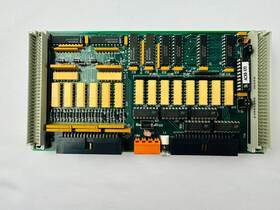
( Brand: Acroloop ), ( Manufacturer Part Number: PC8KI0-1 ), ( Part Type: Control Board ), ( Unit Type: Unit )
Review ACROLOOP Motion Control Board
The **Acroloop PC8KI0-1** and **PC8K10-1** are high-performance, industrial-grade motion control boards designed for precision automation, robotics, and advanced CNC applications, offering unmatched reliability and flexibility for demanding control systems. These compact yet robust boards are engineered to deliver seamless integration with Acroloop s suite of servo drives, enabling real-time motion control with exceptional accuracy, repeatability, and responsiveness. The **PC8KI0-1** serves as a versatile 8-axis motion controller, ideal for applications requiring synchronized multi-axis movement, such as pick-and-place systems, 3D printing, or multi-spindle machining, while the **PC8K10-1** extends this capability with an additional 10-axis configuration, catering to even more complex kinematic setups like articulated robotic arms, gantry systems, or high-speed packaging machinery. Both models feature a modular architecture, allowing users to customize their control system with optional I/O expansion modules, analog/digital inputs and outputs, and high-speed encoder interfaces, ensuring compatibility with a wide range of sensors and actuators.
At the heart of these boards lies a powerful, real-time-capable processor optimized for motion control algorithms, enabling smooth trajectory planning, velocity profiling, and closed-loop feedback with minimal latency. The **PC8KI0-1** and **PC8K10-1** support advanced motion features such as jerk control, velocity and acceleration ramping, and dynamic feed-forward compensation, which are essential for reducing mechanical stress, improving surface finish in machining operations, and enhancing the overall efficiency of automated processes. Their robust design incorporates industrial-grade components, including high-speed FPGA-based signal processing and deterministic communication protocols like EtherCAT, ensuring deterministic motion synchronization and ultra-low jitter critical for applications where timing precision is non-negotiable. The boards also provide extensive diagnostic and monitoring capabilities, including real-time error logging, fault detection, and health status reporting, which simplify troubleshooting and maintenance in harsh industrial environments.
For seamless integration into larger automation systems, the **PC8KI0-1** and **PC8K10-1** offer a variety of communication interfaces, including Ethernet (for high-speed data transfer), USB (for configuration and programming), and serial ports (for legacy system compatibility). Their intuitive software stack, which includes Acroloop s proprietary motion control software as well as support for third-party PLCs and motion programming environments, ensures compatibility with existing automation frameworks while providing the flexibility to implement custom control logic. Additionally, both models support a wide range of servo drives, enabling users to scale their system from lightweight, high-speed applications to heavy-duty, torque-intensive tasks with ease. Whether deployed in a cleanroom environment, a high-vibration factory floor, or a precision laboratory, these motion control boards deliver the performance, durability, and adaptability required to meet the most rigorous industrial and research demands.
### **Pros and Cons of buying a Acroloop PC8KI0-1 / PC8K10-1 Motion Control Board**
#### **Pros**
1. **High Performance and Precision** The PC8KI0-1 and PC8K10-1 are designed for high-speed motion control, making them suitable for applications requiring smooth, accurate movements such as CNC machining, 3D printing, and robotics. The PC8KI0-1 supports up to 8 axes at 100 kHz, while the PC8K10-1 extends this to 10 axes, allowing for complex multi-axis coordination.
2. **Scalability and Flexibility** These boards are modular and can be expanded with additional I/O modules, enabling integration with sensors, encoders, and other peripherals. This makes them adaptable for both small-scale and large-scale industrial applications.
3. **High-Speed Data Processing** The boards feature fast FPGA-based processing, which minimizes latency and ensures real-time control. This is crucial for applications where timing and synchronization are critical, such as CNC milling or high-speed pick-and-place systems.
4. **Compatibility with Popular Motion Control Software** Acroloop s boards are designed to work seamlessly with motion control software like **LinuxCNC**, **Mach3**, **GRBL**, and **TinyG**, making them accessible for both hobbyists and professionals. They also support **EtherCAT** and **CANopen** for industrial networking.
5. **Reliability and Durability** Built with industrial-grade components, these boards are designed to withstand harsh environments, including temperature fluctuations and electrical noise. This makes them suitable for long-term use in manufacturing and automation settings.
6. **Open-Source and Customizable** The boards support open-source firmware and software, allowing users to modify and optimize motion profiles for specific applications. This flexibility is beneficial for developers and engineers who need fine-tuned control.
7. **Good Documentation and Community Support** Acroloop provides detailed documentation, tutorials, and active community forums, which can be helpful for troubleshooting and implementation. The open-source nature also means a wealth of third-party resources and modifications are available.
8. **Cost-Effective for High-End Applications** While these boards are more expensive than basic motion controllers (e.g., Arduino-based solutions), they offer significantly better performance and reliability for professional use. They can reduce the need for additional external controllers or interfaces, saving on long-term costs.
---
#### **Cons**
1. **Steep Learning Curve** For beginners or those unfamiliar with FPGA-based motion control or Linux-based systems, setting up and configuring these boards can be challenging. Requires knowledge of motion control algorithms, PLC programming, or scripting (e.g., Python for LinuxCNC).
2. **Higher Initial Cost** Compared to simpler motion controllers (e.g., Arduino stepper drivers or cheap CNC boards), the PC8KI0-1 and PC8K10-1 are more expensive. The PC8KI0-1 starts around **$300 $500**, and the PC8K10-1 can exceed **$600 $800**, depending on configuration and accessories.
3. **Requires Additional Hardware** These boards are not standalone; they need a compatible **FPGA development board** (e.g., Basys 3, Nexys 4, or a custom carrier board) and a **power supply** (often 12V or 24V). This adds to the overall cost and complexity of setup.
4. **Limited Built-In I/O** While the boards support high-speed motion control, they may require additional modules for extra digital I/O, analog inputs, or relay outputs. This can increase the system s complexity and cost.
5. **Software Dependency** Performance heavily relies on the choice of motion control software. Poorly configured software (e.g., incorrect tuning in LinuxCNC) can lead to jerky movements, overheating, or system instability. Requires tuning expertise.
6. **Not Plug-and-Play for Beginners** Unlike simpler CNC controllers (e.g., GRBL on an Arduino), these boards cannot be used "out of the box" without significant configuration. Users must compile firmware, set up motion profiles, and calibrate axes manually.
7. **Potential Overkill for Small Projects** If you re working on a small hobbyist project (e.g., a simple 3-axis CNC router or a small robot), the PC8KI0-1 or PC8K10-1 may be more powerful than necessary. A cheaper alternative (e.g., a **Mach3-compatible board** or **Raspberry Pi GRBL**) might suffice.
8. **FPGA Knowledge Helpful (But Not Always Required)** While not strictly necessary, understanding FPGA basics (e.g., Verilog/VHDL) can speed up customization. Users without this background may rely on community firmware, which limits full customization.
---
### **Conclusion**
The **Acroloop PC8KI0-1 / PC8K10-1** is an excellent choice for **professionals, advanced hobbyists, and industrial applications** requiring high-speed, multi-axis motion control with precision and reliability. Its strengths lie in **scalability, real-time performance, and compatibility with open-source and industrial software**, making it ideal for CNC machining, robotics, and automation projects where accuracy and speed are critical.
However, it is **not the best fit** for beginners, small-scale projects, or those on a tight budget. The **learning curve, higher cost, and requirement for additional hardware** make it less accessible compared to simpler alternatives. If you re already experienced with motion control systems or working on a complex, high-performance project, these boards will deliver outstanding results. For beginners or simpler applications, a **Mach3-compatible board, GRBL-based setup, or a Raspberry Pi CNC controller** may be more practical.
---
### **Recommendation**
- **Buy the PC8KI0-1 / PC8K10-1 if:**- You need **high-speed, multi-axis motion control** (8 10 axes).
- You re working on **CNC machining, industrial robotics, or automation** where precision and reliability are non-negotiable.
- You re comfortable with **Linux-based systems, motion control software (LinuxCNC, Mach3), and basic FPGA concepts**.
- You plan to **scale your project** and need a future-proof solution.
- **Consider alternatives if:**- You re a **beginner** and want a simpler, more affordable setup (e.g., **GRBL on Arduino, Mach3 with a parallel port board, or a Raspberry Pi CNC**).
- Your project is **small-scale** (e.g., a single-axis 3D printer or basic robot).
- You don t need **EtherCAT or high-frequency updates** (a **TMC2209/TMC5160 stepper driver** with an Arduino may suffice).
- Budget is a **major constraint** (cheaper options like **Breakout Boards for CNC** or **Smoothieboard** exist).
For most **serious CNC or robotics enthusiasts**, the PC8KI0-1 is a **strong investment** that will outperform cheaper controllers in the long run. For casual users or small projects, however, the **cost and complexity may not justify the purchase**. Always weigh your project s requirements against the board s capabilities before committing.
Details:
Acroloop PC8KI0-1 PC8K10-1 Motion Control Board.
part #: pc8ki01 price
- $606.40
specifications pcbemdev:
- brand: Acroloop
- mpn: Pc8ki0-1
- part type: Control Board
- unit type: Unit
seller pcbemdev:
- rating: 99.8%
- city: Richardson, Texas
- # reviews: 5369
shipping pcbemdev:
- type: Calculated
- carrier: FedEx, UPS
- cost: $11.22
- transit: 4-7 Days
- service: FedEx Ground Economy, UPS Ground, FedEx Ground / FedEx Home Delivery
- class: Economy, Standard
offer pcbemdev:
- sold: 0
- options: Ship-to-home
- availability: In Stock
- started: February 27, 2026
- quantity: 1
- best offers: True
payments pcbemdev:
- other
- credit card: Visa
- wallet: Paypal
returns pcbemdev:
- policy: Returns Accepted
- paid by: Buyer
- time: 30 Days
- method: Money back
general pcbemdev:
- Electronic Components Semiconductors > Circuit Boards Prototyping > Printed Circuit Boards PCBs
- condition: Used